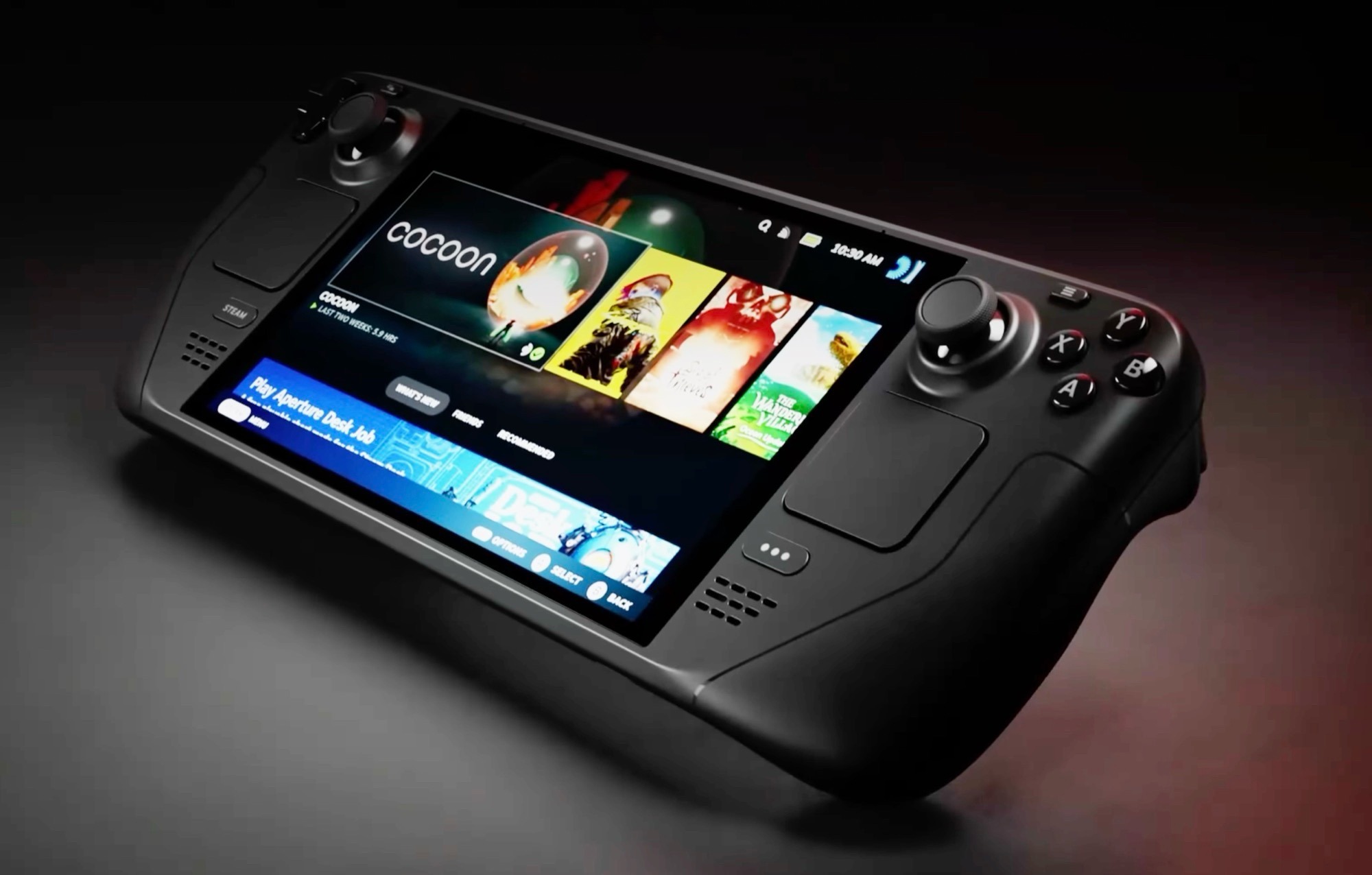
The Steam Deck 2 RAM crisis has not changed what Valve wants from the device, but the company is still waiting for the right combination of performance, efficiency and price before it commits to a launch.
Speaking to IGN, Valve software developers Pierre-Loup Griffais and Jeff Leinbaugh said the memory crisis had not altered the product’s goals. Griffais answered “Not really” when asked whether the shortage had affected the plans.

Steam Deck 2 RAM crisis has not changed Valve’s goals
Griffais said Valve still wants a clear performance improvement from a future handheld rather than a small upgrade that brings new compromises. The company is looking at the same performance and user-experience targets it has described previously.
“It’s just a matter of looking at the current conditions and seeing how and when we can deliver something like that. But from what we’re working on, as far as the user experience goes and what the product that we’re trying to build goes, it’s very similar goals.”
Pierre-Loup Griffais, speaking to IGN
That separates the product brief from the launch timing. Valve is not saying that the memory market is irrelevant; it is saying the shortage has not changed the device it is trying to build.
The distinction matters because component costs have already affected Valve’s wider hardware plans. The Steam Machine, Steam Frame and Steam Controller were delayed after the company ran into memory and storage supply problems, according to IGN’s earlier interview.
No Steam Deck 2 release date has been announced
Valve has not announced a release window, price or specifications for the Steam Deck 2. In its previous update, Griffais said the company was getting closer but still needed hardware that could deliver a meaningful generational improvement without pushing power consumption and battery life in the wrong direction.
That remains the reason to wait for the Steam Deck 2 RAM crisis to ease. Valve does not appear interested in shipping a faster handheld simply because a newer chip is available. The processor also needs to make sense inside a portable device and at a price buyers will accept.
The current Steam Deck has already felt the pressure from higher component costs. IGN reports that the 512GB Steam Deck OLED, which previously cost $549, has risen to $789. tbreak’s earlier coverage tracked the original price increase, while Valve has separately described RAM suppliers offering little room to negotiate on costs in its Steam Machine planning. Valve previously said the Steam Deck 2 was getting closer, but it still had no release window.
A new Steam Deck would therefore have to clear two hurdles: it needs to be meaningfully better than the current model, and it cannot arrive at a price that makes the upgrade difficult to justify. Valve has not said when it will reach that point.
Valve’s latest comments leave the Steam Deck 2 in active development with its goals intact, but without a timetable. The Steam Deck OLED remains the company’s current handheld while it waits for the hardware and supply conditions to line up.
Has the RAM crisis changed Valve’s Steam Deck 2 plans?
Valve says the shortage has not changed the product goals or user experience it wants from the Steam Deck 2.
When will the Steam Deck 2 be released?
Valve has not announced a Steam Deck 2 release window.
Why is Valve waiting to launch the Steam Deck 2?
Valve wants a clear generational performance improvement without sacrificing handheld efficiency, battery life or an acceptable price.