Valve offered a blunt account of what buying RAM looks like during the current memory shortage, claiming that suppliers effectively present companies with a price and allocation that they must either accept or risk losing access altogether.
Speaking to Gamers Nexus (via Kotaku) during its Steam Machine review, Valve engineer Pierre-Loup Griffais said the company had been unable to lock in long-term contracts with memory manufacturers.
“There’s no contracts. There’s nothing,” Griffais said, explaining that suppliers instead provide Valve with a new price and a fixed quantity that it can purchase each month.
The arrangement is apparently not much of a negotiation. Valve can accept the offer or decline it, but Griffais claimed that saying no could mean the supplier “never” speaks to the company again.
RAM suppliers control both price and availability
The comments paint a particularly harsh picture of the current memory market, where a relatively small number of manufacturers, including Samsung, Micron and SK Hynix, produce most of the world’s DRAM.
Companies purchasing memory are not simply dealing with higher prices. According to Valve, they also have limited control over how much RAM they can obtain, when it will become available and how far in advance they can plan production.
That makes budgeting and manufacturing considerably more difficult for a hardware product such as the Steam Machine. Valve cannot reliably secure a fixed quantity of RAM at an agreed price months or years ahead, leaving component costs vulnerable to frequent changes.
The company previously said that shortages affecting memory and storage had forced it to reconsider the Steam Machine’s original pricing and release plans.
The final system is priced at $1,049 for the 512GB model, while the 2TB version costs $1,349. Adding a Steam Controller increases those prices to $1,128 and $1,428, respectively.
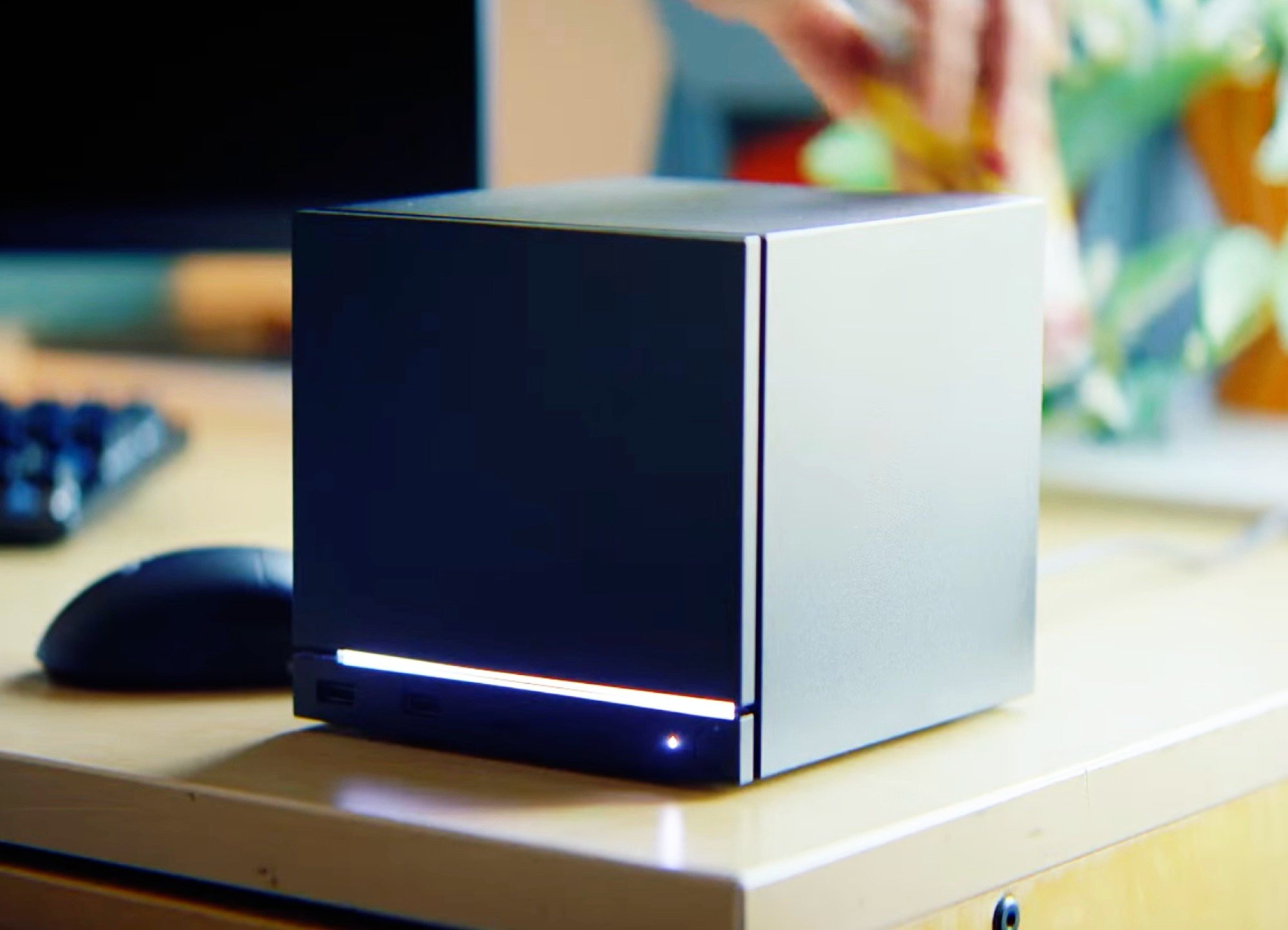
Valve is also not subsidising the Steam Machine in the way console manufacturers sometimes subsidise hardware and recover the cost through software, subscriptions or a closed digital storefront. The company says the device is being sold at approximately the cost of its components, making changes in RAM and storage prices more visible in the final retail price.
Steam Machines may use different RAM configurations
The supply problems have also affected how the Steam Machine is assembled.
Valve says units may ship with either a single 16GB DDR5 module or two 8GB modules, depending on what components the company can obtain. Both configurations provide the advertised total of 16GB, but the two-module setup can operate in dual-channel mode and offer greater memory bandwidth.
Gamers Nexus noted that dual-channel memory is technically the better configuration. However, Valve engineer Yazan Aldehayyat said the company did not find any measurable difference between the two arrangements during its gaming tests.
That may vary depending on the game or workload, but Valve appears confident that the difference will not materially affect the typical Steam Machine experience.
The RAM itself is replaceable, so owners receiving a single-module system should have the option of adding or changing memory later, although working inside the compact Steam Machine will be less straightforward than upgrading a conventional desktop PC.
AI demand is reshaping the consumer memory market
The wider memory shortage has been linked heavily to growing demand from AI companies and data centres, which purchase large volumes of memory and storage hardware.
For manufacturers, supplying major enterprise customers can be considerably more profitable than selling consumer RAM kits or allocating components to smaller hardware projects.
Micron demonstrated that shift in late 2025 when it announced that it would exit the Crucial consumer business. The company explicitly attributed the decision to AI-driven data-centre growth and said it wanted to improve supply for larger strategic customers in faster-growing markets.
Valve is a major company, but its hardware output remains small compared with the quantities ordered by hyperscalers building enormous AI data centres. Its account suggests that even an established business with a successful product such as the Steam Deck does not have enough purchasing power to secure favourable long-term memory deals.
For consumers, the consequences are already visible through higher PC component prices, more expensive gaming hardware and products that may ship with different internal configurations depending on whichever parts manufacturers can secure.
FAQ
Why is the Steam Machine so expensive?
Valve says the Steam Machine’s price reflects increased RAM and storage costs, limited component availability and its decision not to subsidise the hardware. The 512GB model costs $1,049, while the 2TB version costs $1,349.
Will every Steam Machine have the same RAM configuration?
No. Valve says Steam Machines may include either one 16GB DDR5 module or two 8GB modules, depending on available supply. Both configurations provide 16GB of total system memory.
Does single-channel RAM reduce Steam Machine performance?
Dual-channel memory provides more bandwidth and can perform better in some workloads. However, Valve says its gaming tests found no measurable performance difference between the Steam Machine’s single-module and dual-module configurations.