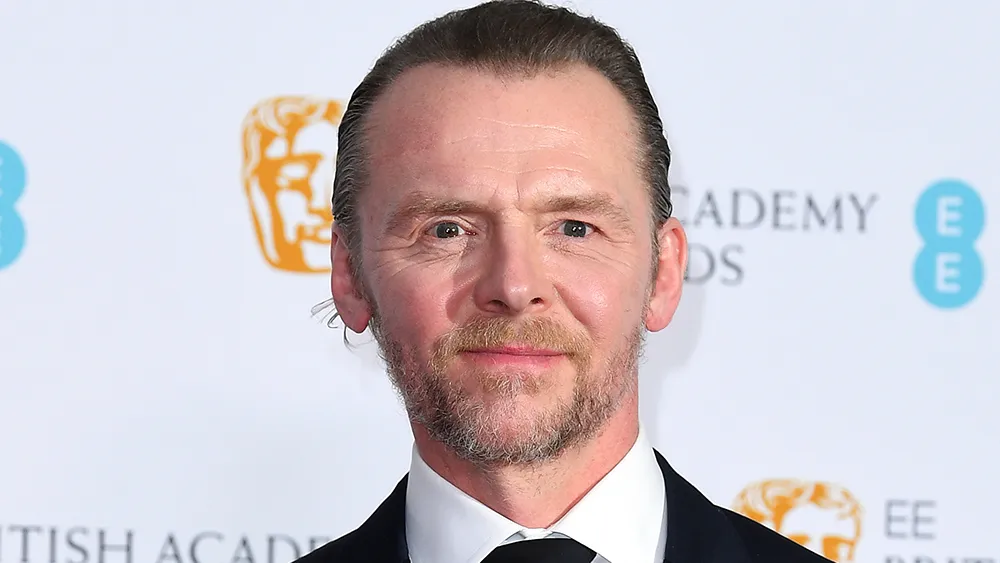
Simon Pegg would rewrite the ending of Lost, and the reason he gives is the exact misreading of the finale that has haunted the show for well over a decade. Speaking on the food-focused podcast Dish, the Shaun of the Dead and Mission: Impossible actor was asked which film or TV ending he would change, and he had an answer ready. “I would rewrite the end of Lost, and I’ll tell you why,” he said. “I loved Lost.”
Spoiler alert if you haven’t seen Lost
His affection for the series runs back to its very beginning. Pegg recalled that when J.J. Abrams called him about Mission: Impossible III, the director had just finished the first season of Lost and sent him the whole run on individual DVDs before it aired, so Pegg could see his work as a director. The problem arrives at the destination rather than the journey: “But at the end of it, it just… but, you know, they were dead all along. I was like, ‘But that’s what everyone thought in the first series?’”
What did Simon Pegg say he would change about Lost?
Pegg’s fix rests on making death the price of escape. He praised the early seasons’ flashback structure, which peeled back the characters’ lives off the island, but took issue with the later flash-sideways device that jumped into an alternative universe. His pitch: to leave the island, the survivors would have to die on it, then be transported into that alternate reality.
“There’d be this amazing dramatic irony, because they’d be desperately trying to survive, but we’d know that you’ve got to die to make it,” he explained, imagining Jack (Matthew Fox) fighting to live, dying, and then reappearing in a different role in the alternative universe. He is his own harshest critic here, calling it “the bad version of that idea,” before adding the line that will resonate with anyone who stuck it out: “This was seven years of my life, and it’s that?!”
Were the Lost characters actually dead the whole time?
No – and this is where Pegg’s memory has failed him. The “they were dead the whole time” theory is a long-running misconception, not the canonical ending. As The Independent notes in its write-up of Pegg’s comments, the survivors of Oceanic 815 really did crash on the island in 2004, and the events across all six seasons happened within the story.
The flash-sideways sequences are an afterlife – a kind of waypoint where the characters, having each died at different points in their lives, are drawn back together, remember their time on the island, and move on together to whatever comes next. Showrunners Damon Lindelof and Carlton Cuse have denied the “dead all along” interpretation ever since the finale aired in 2010, and dialogue within the show itself backs up that the crash survivors genuinely lived. A closing credits shot of abandoned plane wreckage on the beach fuelled the confusion, but it was an aesthetic choice rather than a plot reveal.
So Pegg’s proposed rewrite – dying to reach the alternate world – is oddly close to the show’s actual endgame, just with the timeline scrambled. It is a familiar pattern for Lost. The finale still splits opinion 16 years on, and it is not the first time a big name has weighed in on how a beloved series stuck or missed its landing. Cast members from the show continue to revisit its most contentious moments too, a reminder of how much of the online conversation Lost helped invent.
Was Lost’s final season actually badly received?
Not universally – the debate is louder than the consensus suggests. For all the finale grumbling, IGN handed Lost’s sixth and final season a 9/10 when it arrived in 2010, and the series is still regularly held up as a landmark of mystery-box storytelling. The knots it tied itself in – time travel, resurrected characters, an ever-expanding mythology – are exactly why fans are still making explainers and picking apart the flash-sideways all these years later.
Pegg’s take lands as an affectionate misfire rather than a takedown. He clearly cared enough to spend a podcast segment redesigning the ending, which is more than most shows earn. He just did it while remembering a version of Lost that never actually aired – which, fittingly, is the most Lost thing about the whole exchange.