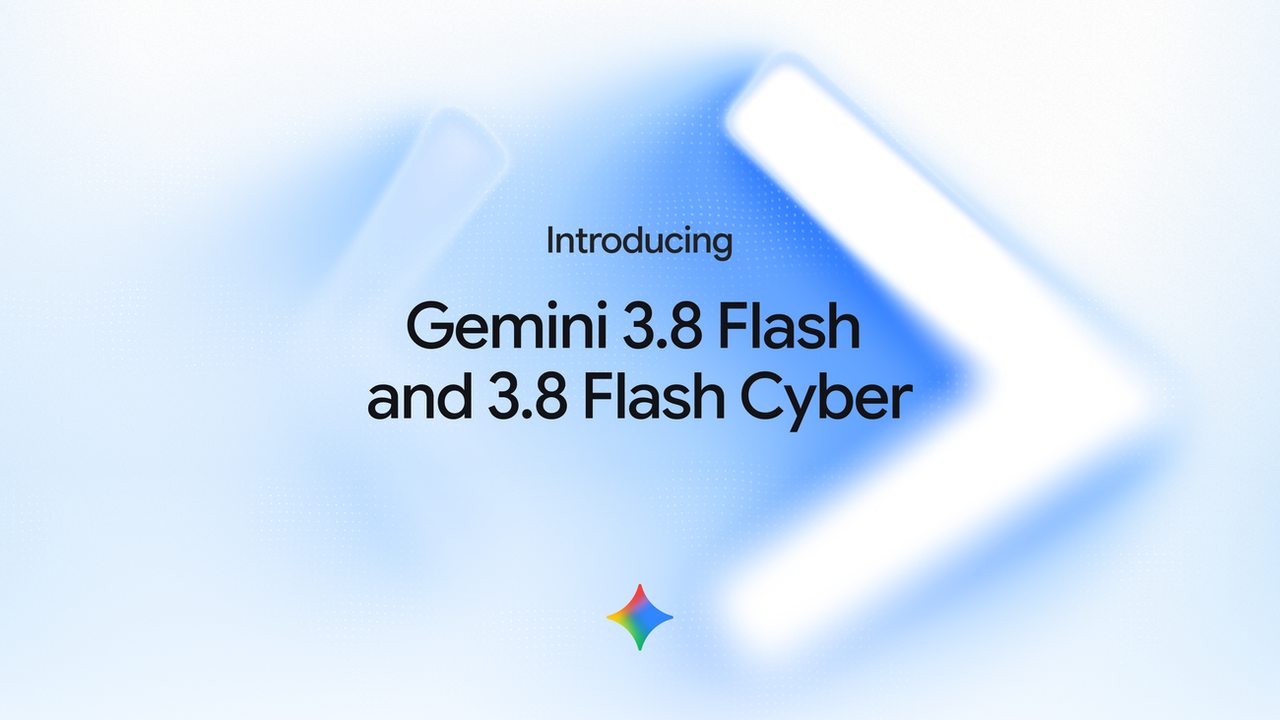
Google has released Gemini 3.8 Flash, a new workhorse model it says improves on Gemini 3.7 Flash across software engineering, agentic tasks and specialised multi-step reasoning.
Google dated the announcement 2 September 2026 and called this its third Flash release in six weeks, three weeks after 3.7 Flash.
What Gemini 3.8 Flash claims versus 3.7 Flash
Google describes Gemini 3.8 Flash as its most intelligent workhorse model, built for long-horizon coding and autonomous agents, at the same speed and low cost as 3.7 Flash. It says the new model delivers substantial gains and is often approaching the performance of higher-cost frontier models.
On DeepSWE v1.1, a long-horizon software engineering test, Google says 3.8 Flash outperforms most larger frontier models at a fraction of the cost. It also says the model beats 3.7 Flash and other frontier models on Vals Finance Agent V2 and Harvey’s Legal Agent Benchmark, and scores 54.9% on HLE-Verified.

Google’s explanation is that 3.8 Flash works harder: on complex tasks it runs extra reasoning steps and calls tools iteratively, and it may use more tokens, especially at higher effort levels. Developers who want to keep token use down can drop the effort level, or stay on 3.7 Flash, which Google says remains fully supported.
9to5Google reported the same 2 September rollout, the 54.9% HLE-Verified figure, and the same introductory API rates.
The same Gemini Flash family also picked up agentic video understanding in AI Studio this week. That is a separate capability, not this model drop.
Where Gemini 3.8 Flash is live
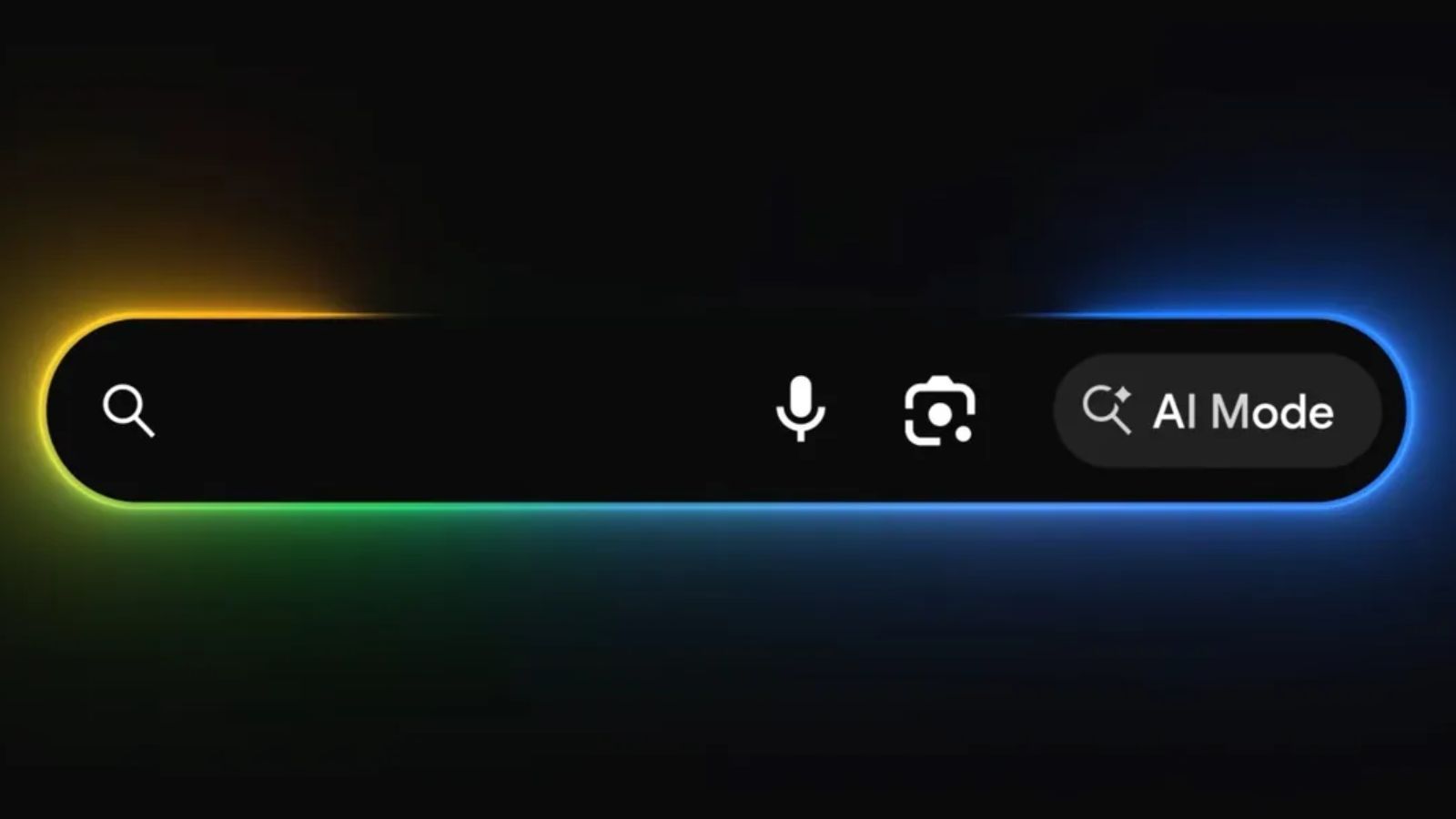
Google says Gemini 3.8 Flash is available now to Google AI Pro and Ultra subscribers in the Gemini app, in AI Mode in Google Search, and in Gemini in Google Sheets. Developers can use it in Google Antigravity, in the Gemini API via Google AI Studio and Android Studio, or to generate UIs in Stitch. Enterprises get it in Gemini Enterprise.
Google Antigravity is Google’s own name for its agent-first developer surfaces. Antigravity docs list Gemini 3.8 Flash as the model powering local agents.
Google DeepMind’s model card, published 2 September 2026, lists the same distribution channels and a knowledge cutoff of March 2026 for some domains, with others limited to January 2025. Inputs are text, images, audio and video, with a context window of up to 1 million tokens and a 64K-token text output.
Google also announced Gemini 3.8 Flash Cyber the same day. That variant is not a public Gemini app model. Google is offering it to trusted testers through a new Fairwind Program aimed at government authorities, critical infrastructure operators and software maintainers.
Introductory API pricing through 31 December 2026
Google is holding the same introductory Gemini API price as 3.7 Flash: $0.75 per million input tokens and $3.75 per million output tokens. A footnote on the launch post says that introductory price expires on 31 December 2026. From 1 January 2027, $1.50 per million input tokens and $7.50 per million output tokens apply.
The Gemini Developer API pricing page lists the model as gemini-3.8-flash, with a free tier in Google AI Studio and the same paid introductory rates and 1 January 2027 step-up.
Gemini 3.8 Flash is live now in the Gemini app for Google AI Pro and Ultra subscribers, and for developers in Google AI Studio, the Gemini API and Google Antigravity. Introductory API pricing holds through 31 December 2026.
What is Gemini 3.8 Flash?
Google’s 2 September 2026 workhorse model. Google calls it its most intelligent Flash model, built for long-horizon software engineering, autonomous agents and specialised multi-step reasoning, and the successor to Gemini 3.7 Flash.
How much does Gemini 3.8 Flash cost on the API?
Introductory paid rates are $0.75 per million input tokens and $3.75 per million output tokens through 31 December 2026. From 1 January 2027 those rise to $1.50 and $7.50. Google AI Studio also lists a free tier for gemini-3.8-flash.
Where is Gemini 3.8 Flash available?
Google AI Pro and Ultra subscribers can use it in the Gemini app, AI Mode in Google Search, and Gemini in Google Sheets. Developers can use it in Google Antigravity, Google AI Studio, the Gemini API, Android Studio and Stitch. Enterprises get it in Gemini Enterprise.
Is Google Antigravity a real Google product?
Yes. Google uses the name Google Antigravity in the 3.8 Flash launch post, on the DeepMind model card, and on antigravity.google docs, which list Gemini 3.8 Flash as the model powering local agents.
Is this the same story as Gemini video understanding?
No. Gemini 3.8 Flash is a new model drop. Agentic video understanding, covered separately on tbreak, is a capability on existing Flash models. They are the same product family, not the same announcement.
What is Gemini 3.8 Flash Cyber?
A same-day cybersecurity variant. Google is not putting it in the public Gemini app. Access is through the Fairwind Program for trusted testers, including government authorities, critical infrastructure operators and software maintainers.