Google is rolling out Android 17 Motion Assist, its version of the anti-nausea dots Apple has offered since 2024. The feature is arriving in phases, with Pixel phones getting it first, per Android Authority.
The underlying idea has a track record. Apple’s Motion Cues has been tested and found to reduce — and sometimes eliminate — the nausea of staring at a screen in a moving car. Google’s implementation uses the phone’s accelerometer and gyroscope to place dots around the edges of the display that move with the vehicle: turn right and the dots sweep left; brake and they slide forward. The mismatch between what your eyes see and what your inner ear feels is what causes the sickness, and the dots give the eyes motion to match.
How Android 17 Motion Assist works
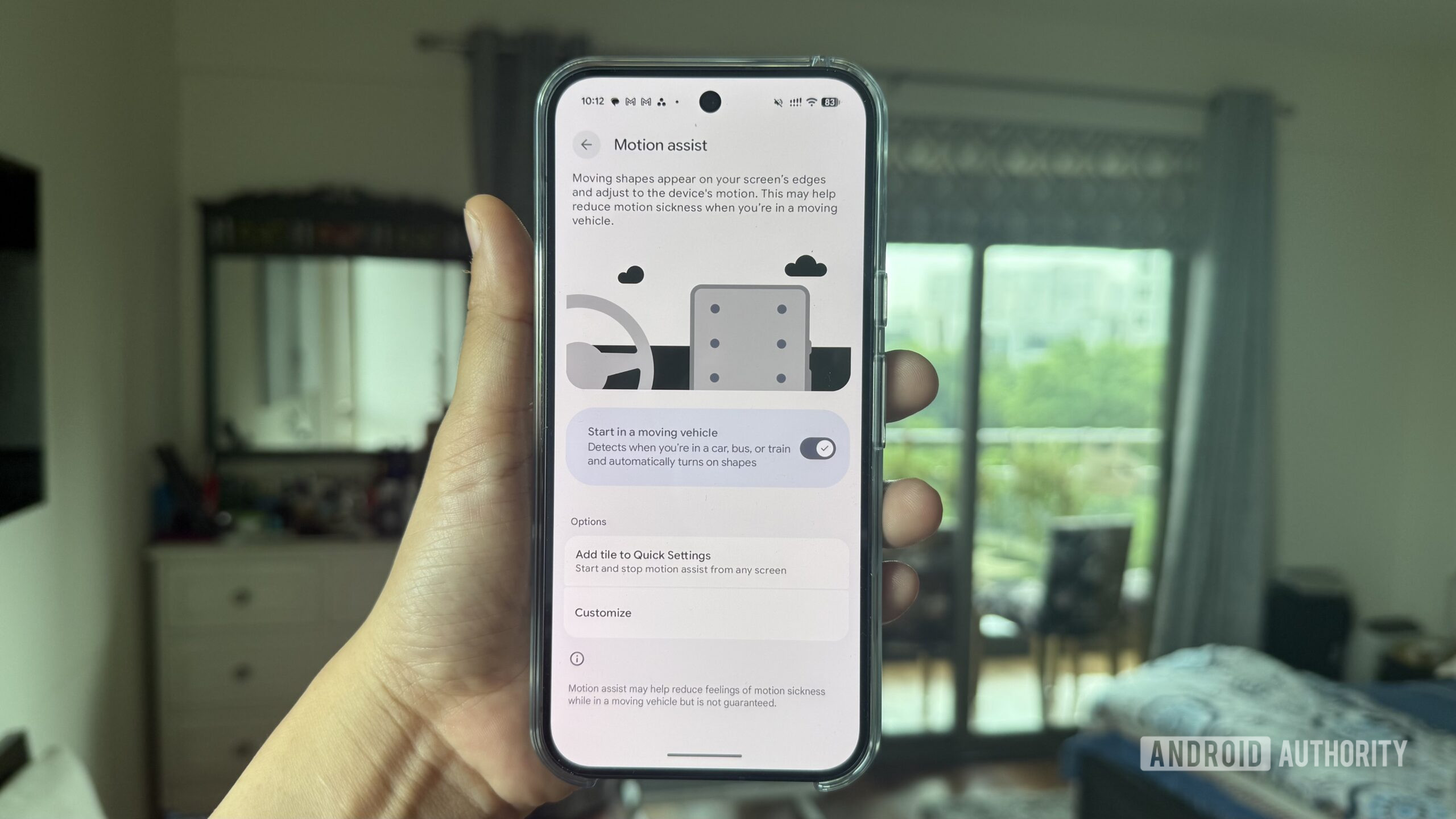
Motion Assist lives in Google Play Settings, under Your profile > All services > Personal & device safety. It can start automatically when the phone detects it is in a moving vehicle, or be toggled from a Quick Settings tile. While it is running it shows a notification, and the indicators are customisable — colour, shape and opacity — with a Randomization option that varies them.

The implementation is cleaner than Google’s 2024 prototype. That version needed the “Display over other apps” permission and could not draw over system UI — the status bar, notifications, even the settings app itself. Android 17 adds OS-level APIs, so the dots now appear over everything, including the lock screen.
Pixel-first, for now
The rollout is narrow. Android Authority has Motion Assist on its Pixel 11 Pro XL but not on a Pixel 10 Pro XL also running Android 17, which suggests a staged push. OPPO and vivo already ship a similar Motion Cues feature of their own, and Google has form with these small interventions — Android Pause Point, which makes you wait 10 seconds before opening a distracting app, is another.
For UAE users, the wait is mostly about hardware. Most phones sold locally run Samsung, Xiaomi, Nothing or OnePlus, and Pixel units arrive as grey-market imports because Google does not sell Pixels here officially. Motion Assist reaches those devices through Google Play services as the wider Android 17 rollout lands, so there is nothing to install — just the phased rollout to wait out.
What is Motion Assist on Android 17?
Motion Assist is Google’s anti-motion-sickness feature for Android 17. It shows dots around the edges of the screen that move with the vehicle — turn right and they sweep left, brake and they slide forward — reducing the sensory mismatch that causes nausea when reading in a moving car.
How do I turn on Motion Assist on a Pixel?
Head to Google Play Settings > Your profile > All services > Personal & device safety > Motion Assist. Toggle ‘Start in a moving vehicle’ to have it switch on automatically, or add a Motion Assist tile to Quick Settings to control it manually.
Which phones get Motion Assist first?
Pixel phones running Android 17, in a phased rollout. Android Authority found the feature on its Pixel 11 Pro XL but not on a Pixel 10 Pro XL also on Android 17, so availability varies by device for now. OPPO and vivo phones already offer a similar Motion Cues feature.