Somewhere inside Sonos, a running argument rages over whether the soundbar deserves a permanent place at the centre of home theatre. We know this because a senior product leader at the company told us so.
Following the launch of Sonos 27, the Beam Ultra and the Ace Ultra — all now listed for the UAE — we sat down with Brandon Holley, Senior Director of Product Development, and Andy Sutherland, Senior Director of Software Product Management at Sonos, to talk about where the company’s founding idea goes next.


Sonos invented multi-room wireless audio 25 years ago. The question we wanted answered: does that philosophy now extend to home theatre built from mix-and-match speakers, with no soundbar dictating the layout? Sonos is taking that far more seriously than its product lineup suggests.
Fabric is not SonosNet 2.0
Given Sonos’s history of running its own dedicated mesh network, the obvious read on Sonos Fabric is that it’s a networking successor. Sutherland quickly shut that down. “Internally, we had many conversations about our customers thinking this is SonosNet 2.0, and the answer is no,” he told us. “SonosNet was really a solve for creating a stable network from which we could operate.”
Fabric, instead, is the name for everything that makes Sonos products aware of each other — auto-detecting where a speaker is, understanding grouping and bonding, and acting on it without the customer having to think in those terms. Translated out of platform language: Fabric is less a technology than a promise that the system will start doing things on its own, and headphone linking and portable surrounds are simply the first two proofs.

Portable surrounds hinge on an accelerometer and an “acoustic room”
The cleverest demo from the keynote — carry a Sonos Play into the living room, set it down, and it becomes a rear surround — turns out to have a pleasingly physical trigger. “The product knows when you pick it up through the accelerometer,” Sutherland explained. “When you place it back down, it will rediscover and understand where it is in space using positioning.”
The system thinks in terms of acoustic rooms rather than rooms on a floor plan. “Think about where sound travels,” Holley said. “If you leave your room or go through a door, the sound is quite muffled. That’s really what we’re talking about when we talk about moving in and out of the room.”
We put an awkward setup to them: a pair of Plays on a desk handling computer audio over Bluetooth, with a Beam Ultra behind you on the TV. That, Holley conceded, is where the automation stops — you’d flip a toggle in the app rather than have the speakers guess. A reasonable trade: the feature is built for the person carrying a speaker in for movie night, not the edge case, and the manual override exists for the rest of us.

Era 300s as front channels are on the table — with real caveats
Then the question enthusiasts actually care about. Forget rears: when can a pair of Era 300s serve as left and right, centre, or height channels in a proper 5.1, 7.2, or 7.2.4 layout?
Sonos knows. “We’re deeply engaged with the community, much more so than we have been in previous times,” Holley said. “We know what the Reddit community is doing. We know what they’re asking for, and this is definitely a common request for us.” Then, as close to confirmation of direction as you’ll get without a roadmap slide: “It’s absolutely something we’re thinking a lot about,” with Fabric — “particularly the Sonos positioning technology piece of the puzzle” — as the foundation. “We believe we’re just getting started with some of that work.”
The caveats are not hand-waving. Holley pointed to network reality — “every IoT device in your house is fighting for bandwidth and airtime” — plus the problem of tuning a room as speakers multiply. Sutherland added a subtler one: an Era 300 fires drivers in multiple directions, so the system needs to know not just where the speaker is but which way it’s facing, with enough precision to honour what the mixing engineer intended.

And when we asked whether Sonos might land on object-based rendering, the way Dolby’s FlexConnect computes a mix for whatever speakers exist wherever they sit, Holley said Sonos is “not precluded from that type of system”, and it isn’t ruled out. Sony’s HT-A9 has shown speakers can position themselves acoustically; Sonos already uses sound-based tuning in Trueplay. The pieces are visibly on the table.
The 2024 app crisis rewrote how Sonos ships software
We asked the uncomfortable question directly: the last major software overhaul went badly enough to define the company’s recent history, and Sonos 27 is a bigger swing. What’s changed?
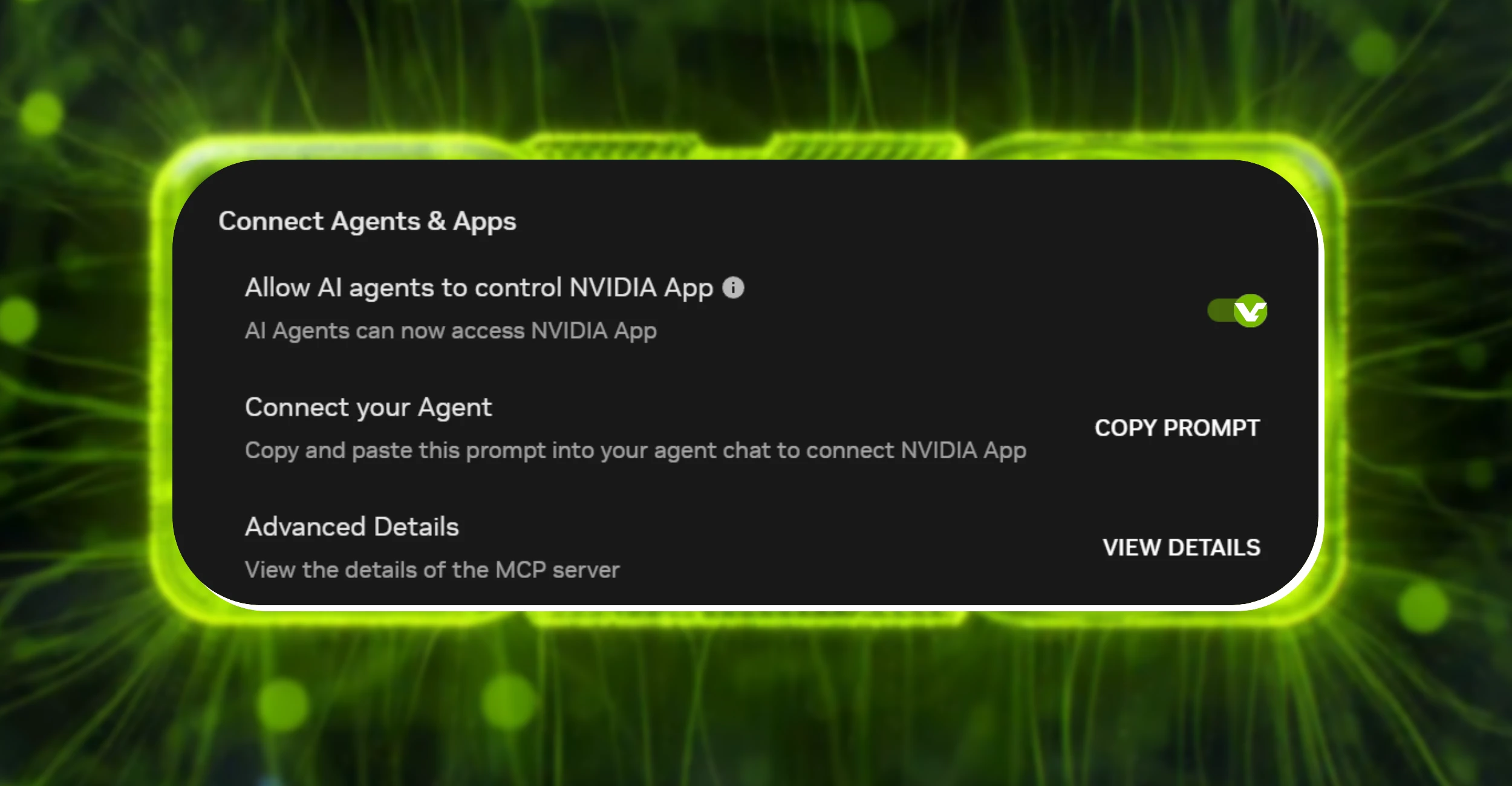
“I would say just about everything has changed about how we think about software,” Sutherland said, calling it “a point of obsession”. The concrete evidence is more persuasive than the sentiment: the redesigned app went out in June behind an opt-in flag, meaning customers chose the new navigation and used it for months before anyone was forced onto it — the precise inverse of 2024’s flip-the-switch approach. Hardware and software now sit on a single roadmap, and the company is shipping small quality-of-life fixes — lock-screen controls, an Android widget, the MCP integration — alongside the headline features. “Boulders, rocks, and pebbles all at the same time,” as he put it.
On the rumoured streaming box that died along the way, Holley pointed us to Tom Conrad’s recent Decoder appearance: the idea made sense for the system, but it was drifting the company’s focus at exactly the moment focus was the scarcest resource.
Sonos 28 is coming — but don’t wait for it
The version number is not a one-off. “You can expect us to continue the naming convention through the years,” Sutherland confirmed, with annual releases marking major features and time with hardware — while the app itself keeps updating monthly. Sonos wants the iOS-style clarity of a version number without the iOS-style habit of saving everything for one September.
So where should you start?
We pushed Holley for a straight answer: first product, building piece by piece. His response was that the honest recommendation depends on what’s wrong with your current setup — and that the most common complaint isn’t weak bass but inaudible dialogue drowned by action scenes. “Today, if you asked me about my small apartment in Boston, I would start with a Beam Ultra,” he said, and add a sub later — “you add a sub to any of our system, it changes the game.”
For UAE buyers, that’s the Beam Ultra at AED 3,299, with the reassurance that both kept circling back to: the system is designed to be expanded over time, and Sonos is listening most closely to the people asking for more speakers and more flexible placement. “It could start with a soundbar,” Holley said of the journey, “but maybe it doesn’t. There’s certainly debate around whether you need to start with a soundbar. We talk about that a bunch.”
For a company that has sold soundbars as the front door to home theatre for over a decade, that’s a quietly remarkable thing to say out loud.