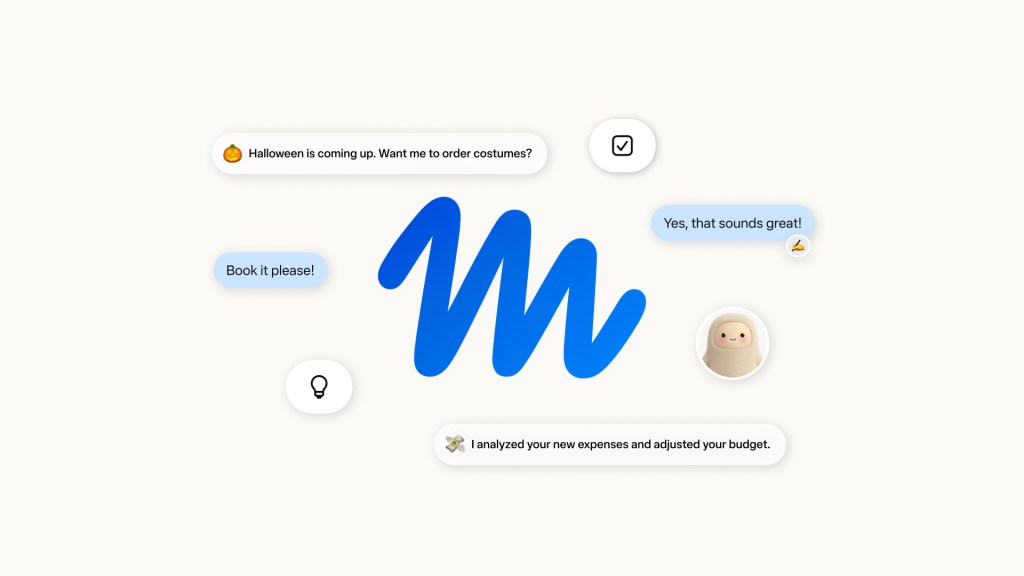
Meta has launched Muse, a personal AI agent that can connect to email, calendars, payments and other everyday services, then carry out tasks such as sending messages, booking travel, filling forms and making purchases. TechCrunch reports that the service is initially aimed at users in the US, giving Meta a bigger privacy problem than a chatbot normally carries.
What can the Meta Muse AI agent do?
Meta says Muse can work across connected apps one at a time, including email, calendars, health and fitness services, smart-home tools, shopping, music and events. It can also use a browser when a service has no public API, with the user supplying the necessary credentials.
Muse can continue working after the user closes the app. Meta’s Muse introduction says it can create documents, PDFs, web pages and interactive dashboards, while its goals system can track longer-running tasks and suggest next steps.

The initial version is available on the web, through iOS and Android apps, and in WhatsApp chats. Meta says support for its AI glasses is coming later. The service is free to start, but it requires a payment card because usage can move onto paid plans.
Meta’s Connect announcement says Muse is coming to AI glasses, where it can turn conversations into actions such as adding items to a shopping list or finding a time to meet a friend. The new Muse Realtime Avatar model adds live video conversation, customisable voices and tasks that continue in the background. Meta says Muse is currently available in the US, Canada and Mexico, with more markets coming soon; it has not confirmed UAE availability for Muse itself.
Meta has already covered the Muse Spark model behind its wider AI rollout, while Muse Code shows how the company is extending the name into specialised agents.
How much does Meta Muse cost?
Meta’s launch plans are Power at $20 a month and Maximum at $100 a month. Both offer more usage for handing off everyday tasks. The company says most people will remain on the free tier and that an in-app meter will warn users before usage requires payment.
Purchases use Link by Stripe, with Shopify’s Shop Pay and 1Password integrations planned for later. That gives Muse a path from answering a question to spending money, which is a more consequential hand-off than generating a recipe.
Why Meta Muse faces a trust test
Meta says Muse runs inside a dedicated secure computer with its own browser. A separate Sentinel agent monitors the same virtual machine, while Meta says Muse cannot see users’ passwords or payment methods and that conversations are not shared with its advertising systems. The company’s security explanation describes the technical controls and approval steps for actions such as sending emails or buying something.
Those claims now have to compete with Meta’s record on privacy and data protection. TechCrunch points to the company’s 2011 FTC settlement, its $5 billion 2019 settlement and later disputes over compliance with its privacy order. The Meta Muse AI agent asks users to connect the services that reveal how they spend time, money and attention.
What is Meta Muse?
Muse is Meta’s personal AI agent for connecting to everyday services and carrying out tasks such as emails, bookings, forms and purchases.
How much does Meta Muse cost?
Muse has a free tier, followed by Power at $20 per month and Maximum at $100 per month.
Can Meta Muse access passwords and payment details?
Meta says Muse cannot see users’ passwords or payment methods, while critical actions can require user approval.