Qualcomm’s Adreno Neural Fusion lifted a test game from 17.7 frames per second to 49.2fps while cutting Snapdragon system-on-chip power draw from 6.2W to 1.1W in a Snapdragon Summit 2026 demonstration. The result comes from a benchmark on a reference phone powered by the Snapdragon 8 Elite Extreme Gen 6, as reported by The Elec.

Adreno Neural Fusion turns a low frame rate into a playable one
The game ran natively at 17.7fps in the Evolve Professional app. With Adreno Neural Fusion upscaling enabled, it reached 49.2fps — a 178% increase that kept the test above 30fps, the usual console target for smooth play.
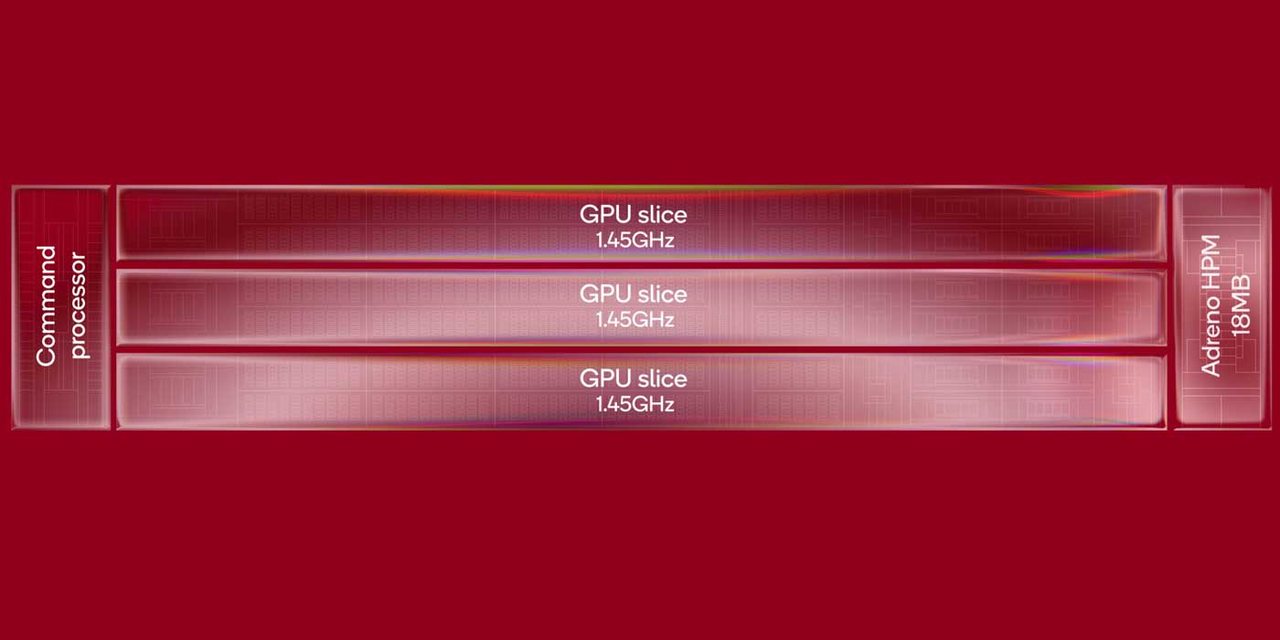
The new result adds a measured benchmark to Qualcomm’s earlier explanation of the technology. The company’s Snapdragon Summit announcement places Adreno Neural Fusion inside its reworked Adreno graphics architecture, alongside the Snapdragon 8 Elite Extreme Gen 6 and Snapdragon 8 Elite Gen 6.
| Test condition | Frame rate | SoC power |
|---|---|---|
| Native rendering | 17.7fps | 6.2W at 10fps |
| Adreno Neural Fusion | 49.2fps | 1.1W at 10fps |
Snapdragon’s AI graphics trade-off is now measurable
The power test held the target at an average 10fps. Native rendering used 6.2W, while the same workload with Adreno Neural Fusion used 1.1W — nearly one-sixth as much. Qualcomm combines super resolution, frame generation and neural processing, with added matrix acceleration in the Adreno 850 GPU.
That does not mean every game on every future Snapdragon phone will run at 49.2fps. The test used one application, a reference device and 24GB of LPDDR5X memory. Qualcomm’s own launch material confirms the platforms and architecture, while Notebookcheck’s separate report cites a second test with different figures.
Phones using the new Snapdragon platforms are expected from several manufacturers, but Qualcomm has not confirmed UAE model availability or local pricing. An earlier tbreak report covered the feature, while our Snapdragon 8 Elite Extreme Gen 6 launch report covered the wider chip changes. These figures add a measured gaming baseline.
What Adreno Neural Fusion could mean for mobile games
If the feature works across a wider range of demanding games, developers could target higher visual settings without spending the same battery budget on native rendering. Questions remain around game support, image quality and performance on retail phones.
Will Adreno Neural Fusion work in every mobile game?
No. The benchmark covered one test application, and support will depend on how individual games and their rendering pipelines integrate Qualcomm’s super resolution and frame-generation features.
Does a higher generated frame rate guarantee better image quality?
No. Frame generation can make motion look smoother, but image quality, latency and artefacts still need to be checked across retail phones and supported games.
When will Snapdragon phones with these gaming features reach the UAE?
Qualcomm has named global handset partners, but the company has not confirmed UAE model availability or local pricing for phones using the new platforms.