Lenovo showed two concept laptops at Lenovo Innovation World at IFA 2026, and they are the most revealing things in an otherwise spec-driven launch. One weighs less than a bag of sugar and has no fan inside it; the other grows a bigger screen when you need one. Neither has a price, a name you can buy, or a date. Both are Intel-powered, and both answer the same question — how do you give a mobile worker more machine without more bulk — in completely different ways.

Project AeroBlade: no fan, no compromise on thickness
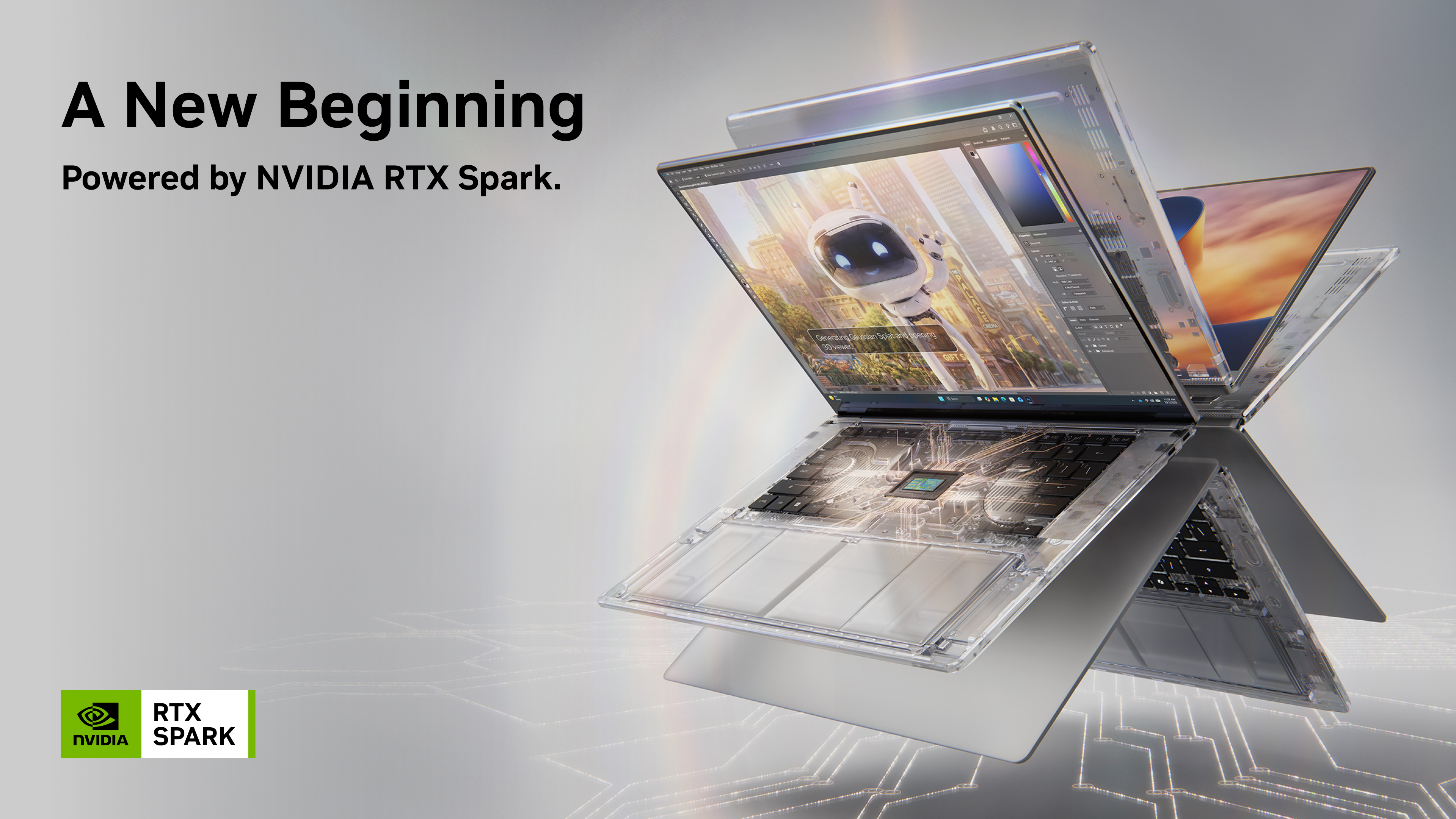
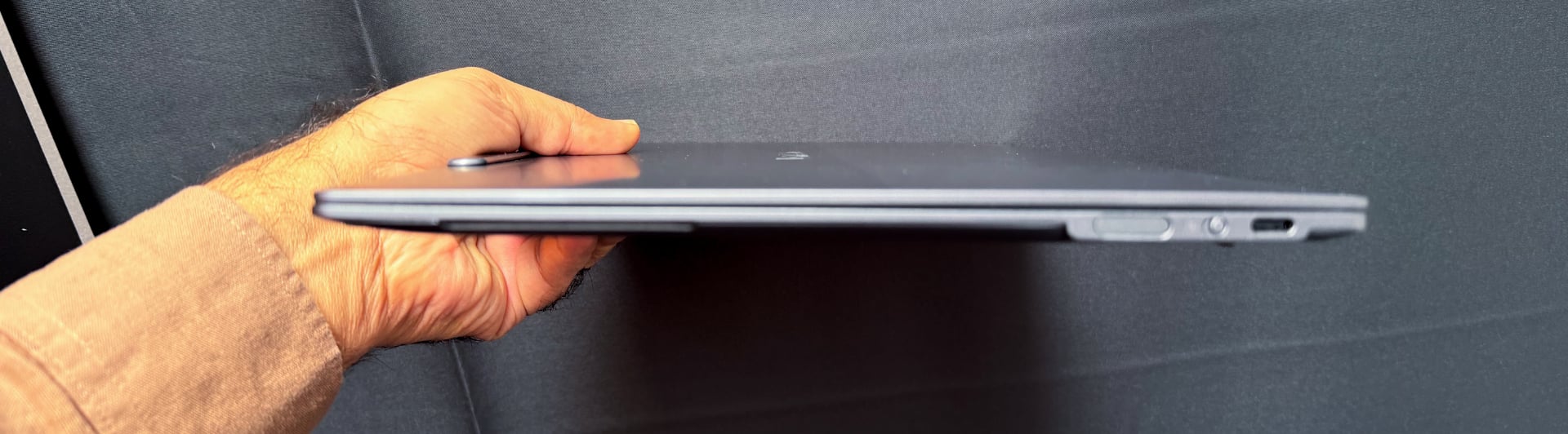
Start with the one you could imagine carrying tomorrow. Project AeroBlade is a 14-inch laptop measuring under 10mm thick and weighing under 830g, with a magnesium-aluminium body, a high screen-to-body OLED display, Thunderbolt 4 and Wi-Fi 7. The interesting engineering is the cooling: Lenovo has dropped fans altogether in favour of what it calls Active Flow, a solid-state cooling architecture built on Frore Systems’ AirJet technology and developed with Frore.

That matters because the usual trade-off in this class is thermal. Thin laptops with conventional fans either throttle or get loud, and fanless designs have historically been paired with low-power chips. A solid-state pump that moves air without a spinning blade is Lenovo’s attempt to achieve thinness without throttling, in a chassis aimed at hybrid workers rather than reviewers’ benchmark charts.

Project Swan: a screen that gets bigger
Project Swan goes the other way, adding rather than removing. In its closed state, it is a portable 14-inch notebook. In roll-out mode, the display extends into a 17-inch 16:9 panel, giving one continuous wider workspace instead of a second screen to carry and connect. Lenovo’s framing is practical rather than showy: you get room for side-by-side work in a meeting room or hotel, and a 14-inch footprint in the bag.
Rollable screens are not new for Lenovo. The company has repeatedly shown rollable and foldable PC concepts over the past few years, and a rollable ThinkBook eventually went on sale, so this is a line of work it continues to fund rather than a one-off stunt. What Lenovo did not discuss in Berlin is the part that determines whether a rollable is usable day-to-day: the durability of the extending panel, how Windows handles the aspect-ratio change, and what the mechanism does to weight and battery life.
Neither is a product yet
Both machines sit under Lenovo’s ThinkBook proof-of-concept programme, alongside the commercial portfolio it actually priced in Berlin — ThinkCentre X Ultra desktops, ThinkBook 14 Gen 9 and 14x Gen 2 laptops, new ThinkVision monitors and ThinkShield security additions. Concepts from this programme have a mixed record: some ideas reach shelves in modified form a year or two later, some quietly disappear. Treat Swan and AeroBlade as a statement of where Lenovo’s design teams are pushing, not as something to wait for before buying a laptop.

For everything Lenovo announced at IFA 2026, with prices and dates, see our full IFA 2026 round-up.
Does Project AeroBlade really have no fan?
Lenovo says it replaces fan-based cooling with a solid-state Active Flow architecture using Frore Systems’ AirJet technology, in a chassis under 10mm thick and under 830g.
How big is Project Swan’s screen?
It functions as a 14-inch notebook in its compact state and expands to a 17-inch 16:9 display.
Can you buy Project Swan or Project AeroBlade?
No. Both are proof-of-concepts with no announced price or availability in any market.