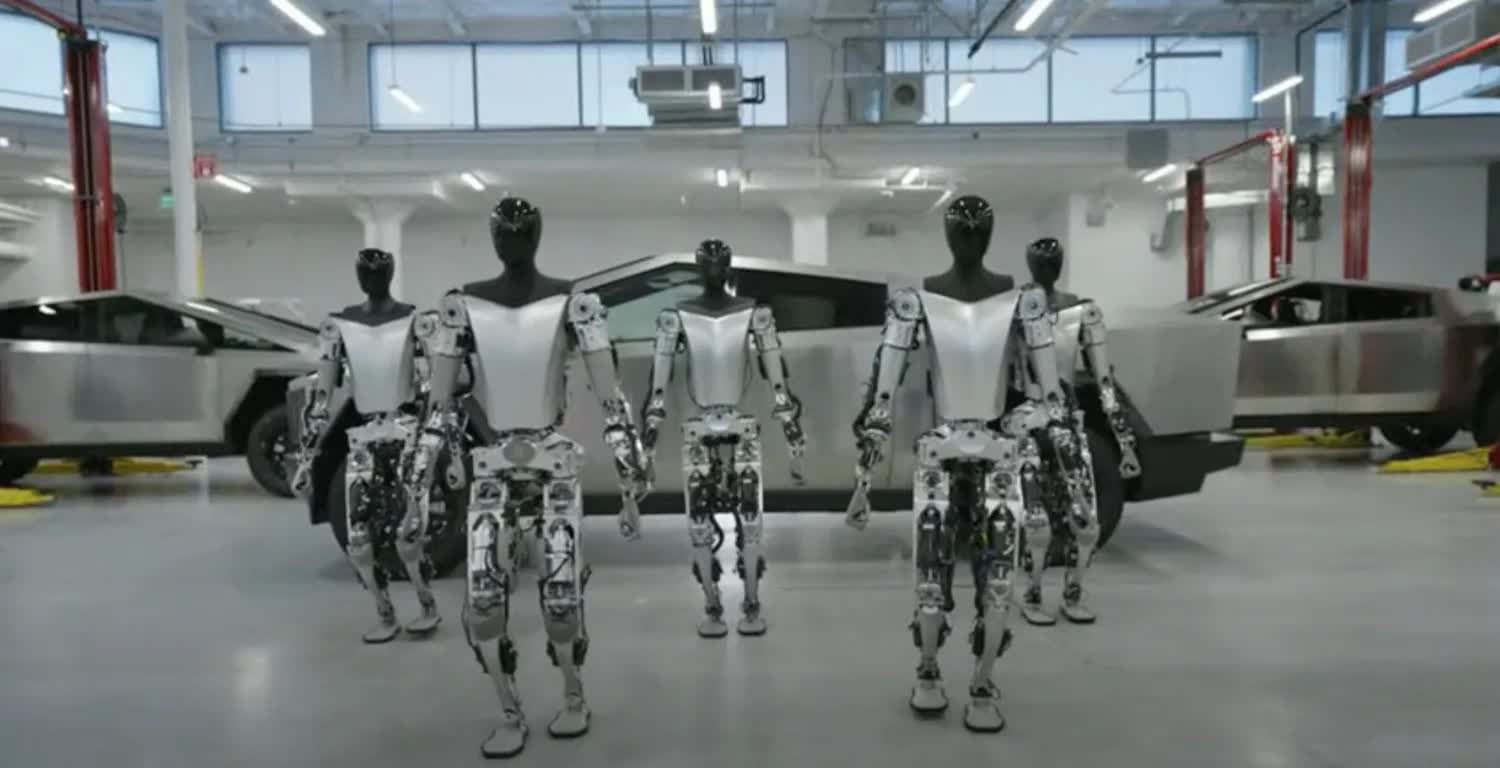
Tesla Optimus production has reached several hundred robots a week, but a report says Tesla is still struggling to turn that output into a reliable high-volume process.
The Verge, citing The Information, reports that Tesla produced several hundred Optimus units a week in August. That is up from a few dozen a week during second-quarter small-batch testing, according to Electrek, but it remains well short of the company’s reported ambitions.

Tesla Optimus production is still far from 20,000 a week
Tesla is reportedly aiming for an automated line capable of producing more than 1,000 robots a week by the end of 2026. Tesla’s filings describe a Fremont line designed for 1 million robots a year, but that is planned capacity, not a stable production rate.
Tesla converted the Model S and Model X lines at Fremont for Optimus. The hardware is more awkward to assemble than a car, and some fixtures reportedly struggle to align the smaller, tighter-tolerance parts, leaving more robots needing rework.
| Area | Reported position |
|---|---|
| Current output | Several hundred robots a week |
| Near-term target | More than 1,000 a week |
| Longer-term target | Around 20,000 a week |
| Main bottleneck | Hands and forearms |
The hands remain the hardest part
Optimus V3 hands and forearms contain more than 100 screws and other small components that workers still assemble manually. Touch sensors have also shown reliability problems. Tesla is developing a replaceable “sensing glove” so a failed sensor would not require the entire hand to be replaced.
The manufacturing issue sits alongside a software problem. People familiar with the programme told The Information that Optimus can behave unpredictably outside tasks it has been trained for, and can take several days to learn a basic job. Tesla plans to lease early robots to selected companies, using those deployments to gather more training data.
Tesla’s pivot from cars to robots is already covered in our report on the Model S and Model X production change. XPENG’s Iron robot production line shows that Tesla is not the only company trying to move humanoids from demonstrations into factories.
The reported output is progress, not proof that Optimus is ready for broad commercial work. Tesla still has to make the hands, suppliers, assembly equipment and software behave consistently at scale.
Is Tesla Optimus ready for general commercial use?
Not according to the reported limitations. Early units are mainly used for internal testing and controlled tasks while Tesla works on reliability and software that can handle unfamiliar jobs.
Why are Optimus hands difficult to manufacture?
The hands and forearms combine more than 100 small parts with tight alignment requirements. Manual assembly, unreliable sensors and rework make them harder to produce consistently than a simpler specialised robot.
Will Tesla sell Optimus to consumers?
Tesla has discussed commercial deployments, but the latest reporting suggests it plans to lease early robots to selected companies rather than offer a broad consumer launch.