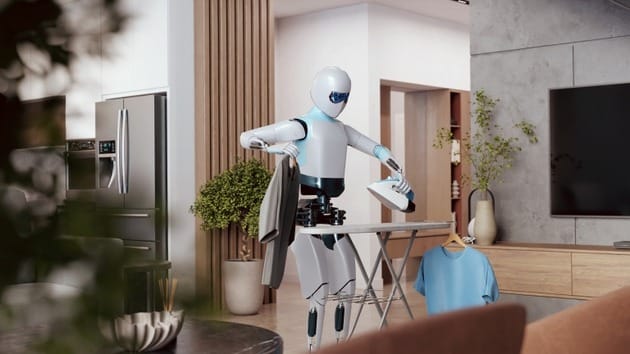
Meta has acquired Assured Robot Intelligence (ARI), a startup developing AI models for humanoid robots, in May 2026. As reported by Bloomberg, the entire ARI team will join Meta Superintelligence Labs to advance frontier robotics models, though financial terms remain undisclosed.
Key Takeaways
- Meta acquired Assured Robot Intelligence (ARI), a startup specializing in AI models for humanoid robots.
- ARI’s team, including co-founders Lerrel Pinto and Xiaolong Wang, will join Meta Superintelligence Labs.
- The acquisition advances Meta’s frontier robotics models as part of its broader AI strategy.
- Financial terms of the acquisition were not disclosed.
- This move connects to Meta’s vision for intelligent devices, including smart glasses technology.
What is Assured Robot Intelligence?
Assured Robot Intelligence specializes in developing AI models specifically designed for humanoid robots. The startup focuses on creating sophisticated artificial intelligence systems that can power human-like robotic interactions and behaviours. Co-founded by Lerrel Pinto and Xiaolong Wang, ARI has built expertise in the complex field of robotics AI, where traditional machine learning approaches often fall short of the nuanced requirements needed for humanoid systems.
The company’s work addresses one of the most challenging aspects of robotics: creating AI that can seamlessly integrate with human-shaped robots to perform complex tasks in real-world environments. This involves understanding spatial relationships, movement dynamics, and environmental interactions in ways that mirror human cognitive processes.
Why is Meta betting on humanoid robotics?
Meta’s acquisition signals a strategic shift towards embodied AI systems that can interact with the physical world. According to the company’s vision, humanoid robotics represents the next frontier in artificial intelligence development, moving beyond text and image generation to physical manipulation and real-world problem-solving.
The timing suggests Meta recognises that robotics capabilities are advancing rapidly, with recent breakthroughs in robot performance demonstrating the field’s maturation. For Meta, humanoid robots could serve as testing grounds for AI systems that need to understand human behaviour, navigate complex environments, and perform intricate tasks.
This investment also positions Meta to compete with other tech giants who are exploring robotics applications. The company appears to view humanoid AI as essential infrastructure for future intelligent systems, rather than just another product category.
How does this fit Meta Superintelligence Labs strategy?
Meta Superintelligence Labs (MSL) serves as the company’s research division focused on developing advanced AI and robotics capabilities. The integration of ARI’s team strengthens MSL’s ability to work on frontier robotics models that push the boundaries of what’s currently possible in AI.
MSL’s strategy appears centred on building AI systems that can eventually power a wide range of Meta’s products and services. The lab’s work on humanoid robotics likely feeds into broader research on AI agents, environmental understanding, and human-machine interaction.
According to Meta’s approach, MSL functions as an incubator for breakthrough technologies that may not have immediate commercial applications but could transform how people interact with digital systems in the future. The ARI acquisition fits this pattern of investing in fundamental research that could yield significant long-term benefits.
Connection to Meta’s smart glasses vision
The humanoid robotics work connects to Meta’s smart glasses development in several ways. Both require sophisticated environmental understanding, real-time processing of visual and spatial data, and natural interaction between humans and AI systems.
Smart glasses need AI that can understand the wearer’s environment, recognise objects and people, and provide contextually relevant information. These same capabilities are fundamental to humanoid robotics, where robots must navigate spaces, manipulate objects, and interact with humans naturally.
The research from ARI could inform how AI-powered devices understand and respond to human needs in real-world contexts. Meta’s investment suggests the company views humanoid robotics research as a pathway to more sophisticated wearable AI that can truly understand and assist users in their daily lives.
What this means for the AI industry
Meta’s acquisition underscores how major tech companies are expanding beyond traditional AI applications into physical robotics. This signals a broader industry shift towards embodied AI systems that can interact with the real world, not just process digital information.
The move puts Meta in direct competition with other companies investing heavily in robotics and AI integration. While AI agents are becoming more sophisticated, Meta’s focus on humanoid applications suggests the company sees physical embodiment as crucial for the next generation of AI systems.
For consumers, this research could eventually lead to more capable smart home devices, personal assistants, and wearable technology that can understand and respond to physical environments more effectively than current AI systems.
Frequently Asked Questions
What is Assured Robot Intelligence?
Assured Robot Intelligence (ARI) is a startup that develops AI models specifically for humanoid robots, focusing on creating sophisticated artificial intelligence systems for human-like robotic interactions.
Why did Meta acquire Assured Robot Intelligence?
Meta acquired ARI to advance its frontier robotics models and strengthen its capabilities in humanoid robotics, integrating ARI’s expert team into Meta Superintelligence Labs as part of its broader AI strategy.
What is Meta Superintelligence Labs (MSL)?
Meta Superintelligence Labs (MSL) is a division within Meta focused on developing advanced AI and robotics, serving as a research incubator for breakthrough technologies that could transform human-machine interaction.
How does this acquisition relate to Meta's smart glasses work?
The humanoid robotics research connects to smart glasses development through shared requirements for environmental understanding, spatial data processing, and natural human-AI interaction in real-world contexts.