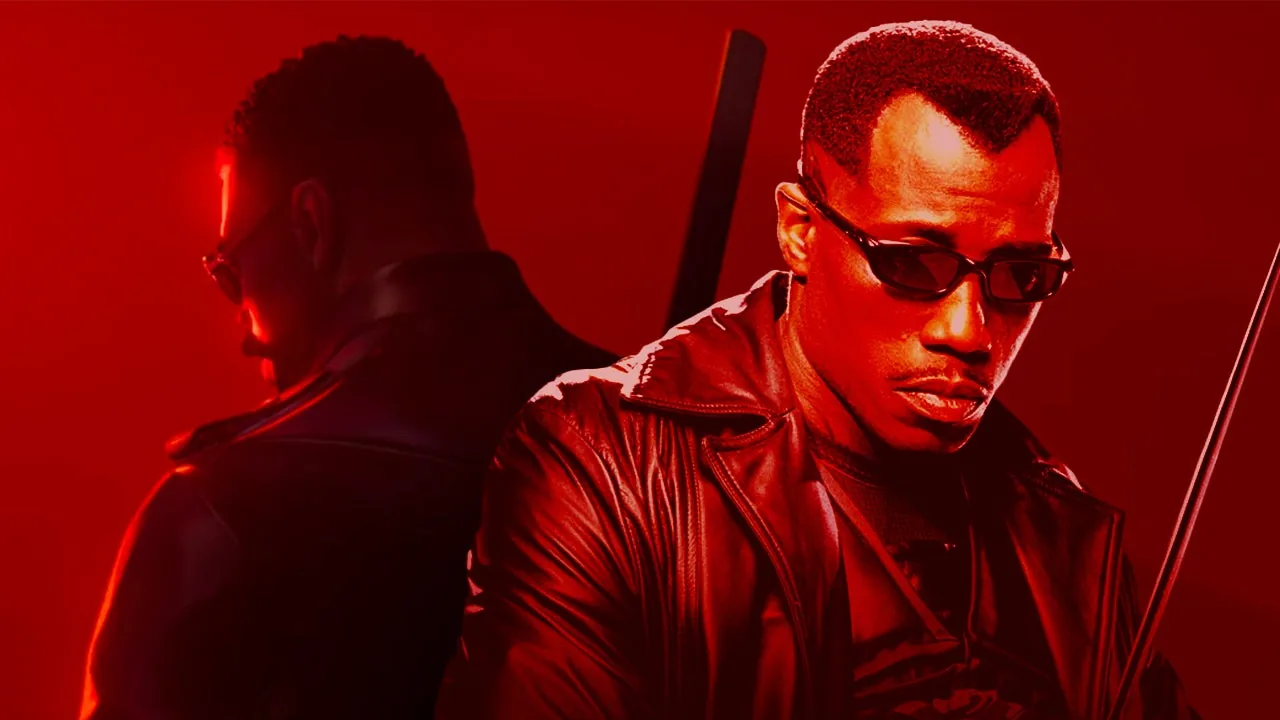
Guillermo del Toro says Wesley Snipes supplied half of Blade’s defining identity, then joked that the actor was responsible for all of it. The director made the comments in a new IGN30 Icons interview published on 29 September about the 1998 film and his sequel, Blade II.
Asked what makes Snipes’ vampire hunter work on screen, del Toro recalled showing the actor a gun designed for the film. Snipes rejected it: “Not for Blade. Cold gun, but not for Blade.” His reason was simpler than the prop department’s brief: “Because Blade is the weapon.”

What Guillermo del Toro says about Wesley Snipes
Del Toro told IGN that Snipes accounted for “50% of the ‘Blade-ness’ of Blade”. He recalled that, even when Snipes was difficult to work with, the actor looked like a movie star as soon as he stood in front of the camera. Del Toro then amended the split as a joke, saying Snipes was “100%” of the character’s identity.
The filmmaker did not present that as a technical formula. He said the other part came from “the filmmaker articulating” the character, and described how a director can establish the same hero without giving him a pile of gadgets. The image del Toro remembered was not a new weapon or vehicle; it was the actor himself.
“I don’t want the toys. I want the man,” Snipes told him, according to del Toro. The line captures why del Toro’s recollection is about performance and filmmaking rather than a comparison of scripts. He was asked about Marvel’s abandoned Mahershala Ali film, but his answer focused on what made the earlier version of Blade recognisable.

Guillermo del Toro credits Blade’s filmmakers, too
Del Toro also described Snipes as only one part of the character’s screen identity. He praised Stephen Norrington’s first Blade film, saying it changed comic-book movies by bringing a harder edge to the genre. “Without Steve Norrington’s Blade, I don’t think there is The Matrix. I don’t think there is X-Men,” he said in the IGN interview. That is del Toro’s assessment of the film’s influence, rather than a settled account of either franchise’s development.
When he made Blade II in 2002, del Toro studied Norrington’s footage before finding a different visual approach. He said he watched several boxes of dailies on VHS and examined the first film’s camera setups. For one sequence in the sequel, he recalled using 13 cameras at once, planning the cuts before filming so each camera move could carry into the next.
Del Toro said a director also has to articulate the character through the filmmaking. He credited Norrington’s original approach, then said he tried to build on it rather than copy it shot for shot.
What the comments do — and do not — say about Marvel’s Blade reboot
Marvel announced a new Blade film with Ali in 2019, but the project spent years in development without reaching production. In September, The Hollywood Reporter reported on Ali’s latest comments that he did not know why the film failed to happen, despite being under contract and training for the role. The outlet’s report and del Toro’s interview describe separate perspectives: Ali spoke about the stalled production, while del Toro reflected on Snipes’ portrayal and the filmmaking behind the earlier films.
Del Toro’s remarks do not establish that Snipes’ absence caused the newer film to collapse, nor do they show that he saw Ali’s script or production plans. They offer a view from the director of Blade II on why the first screen version made such a strong impression. The new interview adds to tbreak’s earlier coverage of Ali agreeing with Kevin Feige’s assessment of the failed reboot and Feige’s admission that Marvel never got the film off the ground.
If Marvel makes another Blade film, del Toro’s remarks offer no reason to expect Snipes back. No replacement project has been announced, and the interview gives no indication that the actor is returning. Del Toro’s point is narrower: a strong Blade film depends on more than the costume, weapons or name. The actor and filmmaker have to agree on what the character is before the cameras start moving.
Did Guillermo del Toro say Wesley Snipes caused the Mahershala Ali Blade reboot to fail?
No. Del Toro discussed what Snipes brought to the earlier films; he did not identify Snipes’ absence as a reason the Ali project stalled.
What did del Toro mean when he said Snipes was 50% of Blade?
He was describing how much Snipes’ screen presence shaped the character, not assigning a literal share of the film’s creative work. He later joked that Snipes was 100% of Blade’s identity.
Who directed the first Blade film and Blade II?
Stephen Norrington directed the 1998 original. Guillermo del Toro directed its 2002 sequel, Blade II.
Does the interview confirm a new Blade film with Wesley Snipes?
No. It is a retrospective interview about the earlier films, and it does not announce a new project or a return for Snipes.