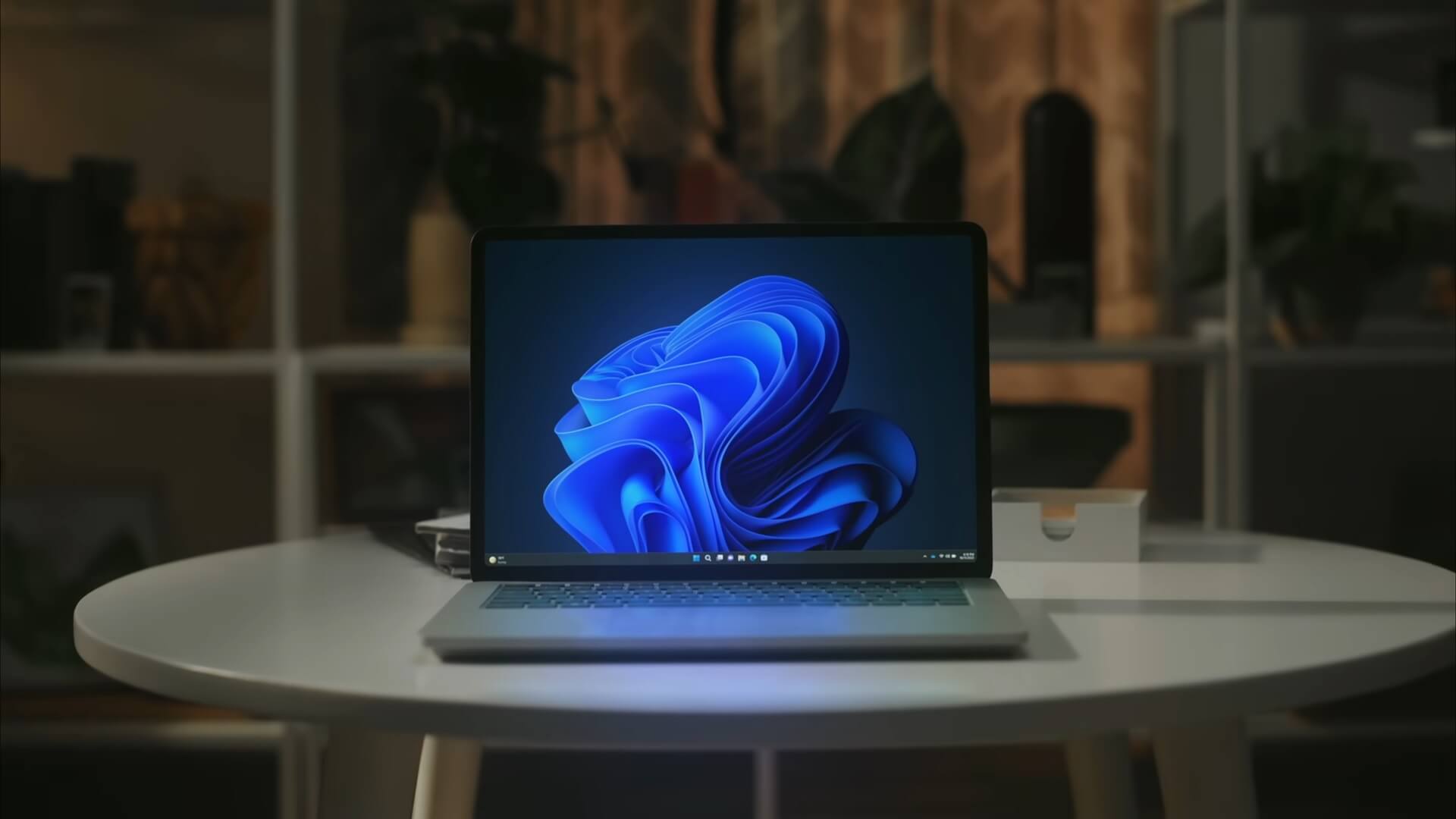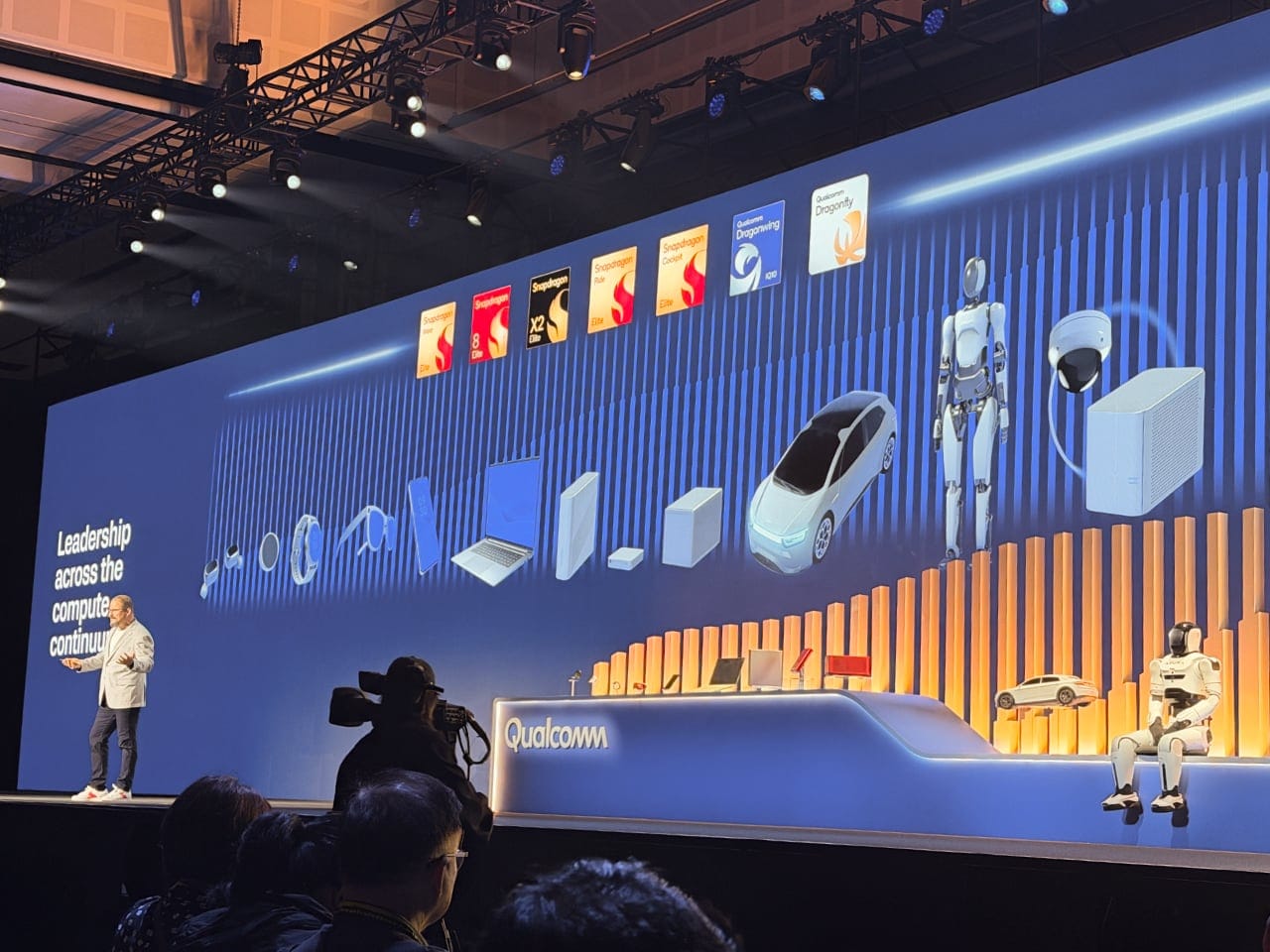
At Computex 2026, Qualcomm CEO Cristiano Amon called 2026 “the year of agents” — the pitch that an AI agent, not your phone, becomes the centre of computing, with phones, PCs and new “personal AI devices” like smart glasses and earbuds reduced to endpoints that connect you to it. For a UAE buyer today, almost none of that is something you can buy: it’s a 2026-onwards roadmap. What you can buy now is a Snapdragon Copilot+ Windows laptop — from around AED 3,636 for a Surface Laptop 7 (Snapdragon X Plus) at Sharaf DG, noon and Amazon.ae — and it already delivers the all-day battery and on-device AI the agent future is built on. The one real reason to wait: the newer Snapdragon X2 Elite has only just started shipping globally, so an early adopter chasing the latest silicon might hold a few weeks.
Qualcomm used its Computex 2026 keynote to argue that the next shift in computing isn’t a faster phone or a thinner laptop — it’s the AI agent itself becoming the thing you deal with, while your devices fade into being “endpoints” that connect you to it. It’s a big idea, and a coherent one. It’s also almost entirely a roadmap: the hardware built for that future isn’t on shelves yet, and the Snapdragon Windows laptop that is already does enough that the keynote changes nothing about whether you should buy one.
Here’s what was actually said, what you can buy in the UAE today, the one battery catch worth knowing, and whether any of it is a reason to wait.
What Qualcomm actually said: the agent, not the phone, is the new centre
Amon’s framing was that the phone sits at the centre of your digital life today, but that agents — AI that plans and acts on your behalf rather than waiting for a prompt — will take that spot. In his telling, phones and PCs become endpoints, and anything that connects you to an agent does too. He put numbers on the scale of it: roughly 6 billion phones, 2 billion PCs and 500 million connected cars already in the world, all candidate doorways to an agent.
The two device classes Qualcomm says get rebuilt for this are AI PCs and “personal AI devices” — its label for smart glasses, earbuds and the growing pile of wearables. Amon has been openly bullish on glasses as the eventual everyday device, and Qualcomm’s own keynote billing lists “AI PCs, personal AI devices, smartphones, industrial AI, robotics and data centres” as the spread. The line that matters most for a buyer was blunter: today’s devices weren’t designed for an agentic experience, so new devices and new designs will be required.
Treat all of that as vision, not a spec sheet — because it was one. This was a keynote about where things are heading, not a product launch. Every year is the year of something, and the job here is to separate the part you can act on from the part that’s a slide.
What’s shipping vs what’s roadmap — the only distinction that matters
Shipping now: the first-generation Snapdragon X, X Plus and X Elite Copilot+ laptops. These have been on shelves for over a year, carry a 45-TOPS NPU (comfortably past the 40-TOPS bar that Microsoft sets for Copilot+ features), and are the laptops that Qualcomm keeps demoing with on-device AI.
Just landed globally, barely here yet: the second-generation Snapdragon X2 Elite, which reached retail abroad around April 2026 in machines like the Asus Zenbook A14/A16 and Lenovo Yoga Slim 7x. It claims a far bigger 80-TOPS NPU and meaningfully better efficiency, but UAE stock is thin at the time of writing.
Announced, not shipping: the cheaper Snapdragon X2 Plus (shown at CES in January; no laptops out yet) and the ultra-budget Snapdragon C, teased days before Computex for laptops starting around US$300 — roughly AED 1,100 — with no real technical details and no devices to point to.
Pure roadmap: the agent-at-the-centre model, glasses and earbuds as your primary computer, the 6G “every person is a walking camera feeding an agent” pitch, and “agent-driven computing” where software runs itself. None of this is a thing you can buy in 2026. It’s the destination, not the ticket.
The battery catch Amon raised — and why it’s a buyer’s problem, not a footnote
The most practical thing Amon said wasn’t about agents arriving — it was about what they cost. If agents start running on their own, in the background, power efficiency stops being a nice-to-have: he framed it as needing agents that don’t drain the battery inside a single day. An assistant that’s always listening, always working, is an assistant that’s always drawing power.
For a buyer, that reframes the spec that matters. The reason these Snapdragon laptops are interesting isn’t raw speed — Intel and AMD will trade benchmark wins all day — it’s that an efficient NPU is what makes always-on AI survivable without a charger bolted to your hip. If you’re buying with even half an eye on the agent future, battery life and NPU efficiency are the line items to weigh, not core counts.
It also quietly explains why Qualcomm is so keen on glasses and earbuds: a phone or laptop can absorb an always-on agent’s power draw, a pair of glasses cannot. The hard problem is energy, and physics remains deeply uninterested in marketing timelines.
So, should you wait? For almost everyone, no
If you need a laptop now, buy now. The agent-at-the-centre future Qualcomm pitched requires hardware that doesn’t exist, so there is nothing concrete to wait for — and the Snapdragon Copilot+ laptops already selling here deliver the parts of that future that are real today. The X Plus models are the smart buy; the X Elite is for people who know exactly why they need the extra headroom.
There’s one exception, and it’s narrow. If you specifically want the newest silicon and the bigger 80-TOPS NPU, the second-gen Snapdragon X2 Elite has just started shipping and is only now trickling into the region — that’s a reasonable few-weeks wait for an early adopter, not a months-long one.
What you should not do is wait for the glasses, the pendants or the agent that runs your life. That’s a roadmap measured in years, and buying a laptop today costs you nothing against it.
The takeaway
Qualcomm is probably right about the direction — agents are going to matter, and the device you talk to them through will change. But “probably right about 2028” is not a purchasing reason for 2026. The keynote’s real consumer message, stripped of the vision reel, is that an efficient, all-day Windows laptop is the sensible buy now — and you can already get one.
Frequently Asked Questions
What did Qualcomm announce at its Computex 2026 keynote?
It was a vision keynote, not a product launch. CEO Cristiano Amon called 2026 “the year of agents” and argued that AI agents — not phones — will become the centre of computing, with phones, PCs, smart glasses and earbuds acting as “endpoints” that connect you to an agent. Specific new chips were light; the message was about direction.
Can I buy an "AI agent" device right now?
No. The agent-at-the-centre devices Qualcomm described — including the smart glasses and earbuds it’s most excited about — are roadmap, not products on sale. What you can buy today is a Snapdragon Copilot+ Windows laptop, which runs on-device AI features but isn’t the dedicated “agent device” from the keynote.
How much does a Snapdragon Copilot+ laptop cost in the UAE?
At the time of writing, a Surface Laptop 7 with the Snapdragon X Plus starts at around AED 3,636 at Sharaf DG, with X Elite configurations ranging from AED 5,699 to AED 7,999. The same models are stocked at noon and on Amazon.ae, and prices shift with promotions, so check before buying.
Should I wait for the Snapdragon X2 Elite or buy now?
For most people, buy now — the first-generation Snapdragon X Plus and X Elite laptops are good value and widely available in the UAE. Only wait if you specifically want the newest silicon and its larger 80-TOPS NPU: the second-gen X2 Elite has just reached global retail and is only starting to appear in regional stock, so that’s a short wait for an early adopter, not a long one.
Will an always-on AI agent hurt my laptop's battery life?
That’s the real catch Amon flagged: an agent running on its own in the background draws power continuously, so efficiency matters more than raw speed. It’s the main reason these ARM-based Snapdragon laptops are interesting — an efficient NPU lets always-on AI run without killing your battery before evening. If you’re buying with the agent’s future in mind, prioritise battery life and NPU efficiency over core counts.