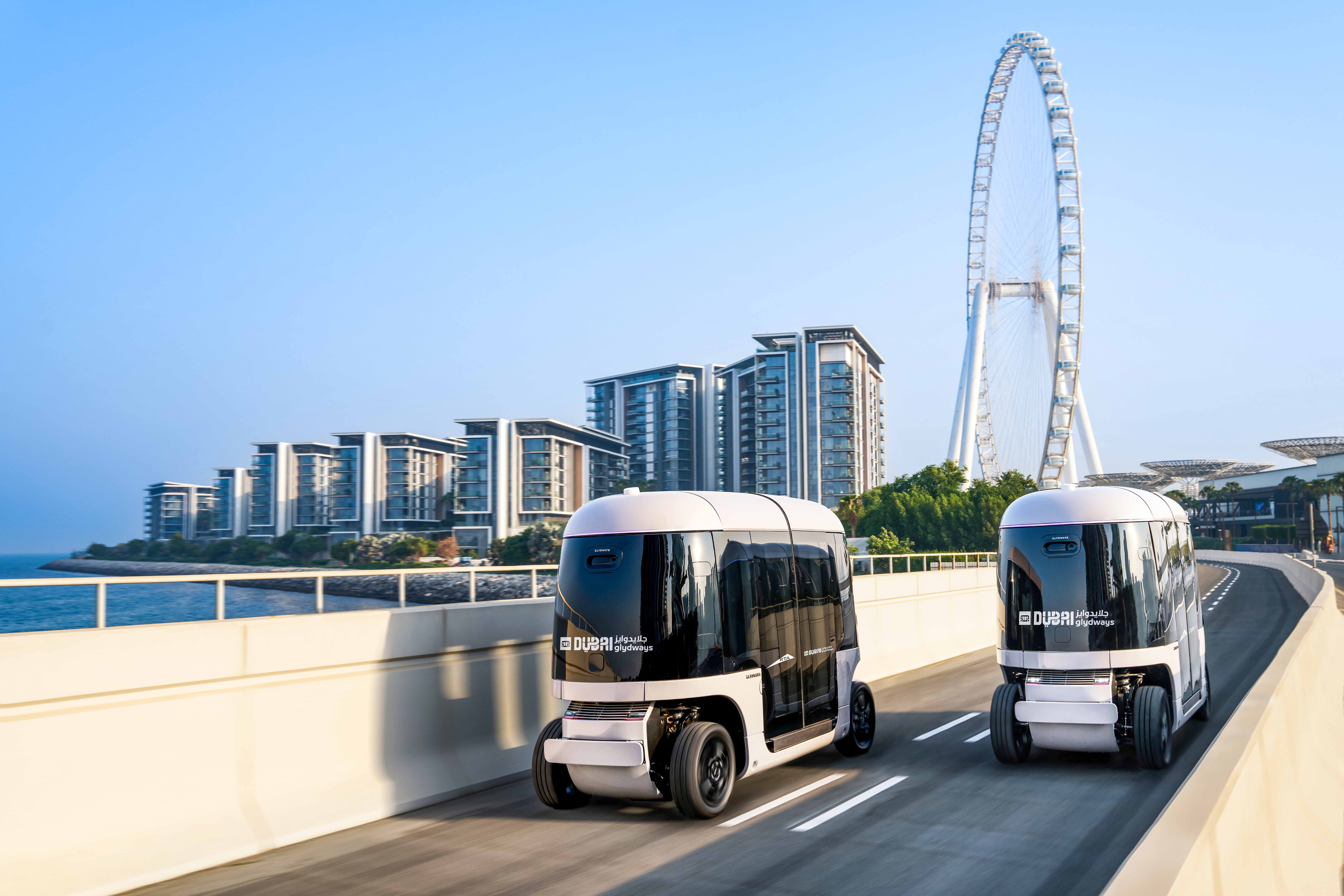
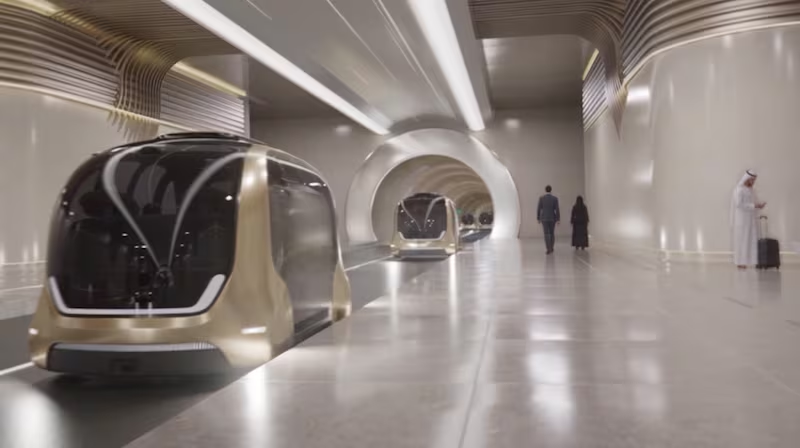
Uber has switched on Baidu’s fully driverless Apollo Go robotaxis in Dubai — the first market where the Uber–Baidu partnership goes live, and the first time Uber’s multi-partner autonomous network runs on public roads. The Uber robotaxi Dubai service starts in select locations in Umm Suqeim and Jumeirah, with the operating territory due to expand. New Horizon Luxury Transport operates the fleet.
Riders booking UberX or Uber Comfort may be matched with an Apollo Go RT6; a dedicated “Autonomous” option in the app raises the chances of being matched.

Uber robotaxi Dubai: how to book one
Bookings work like any other Uber ride: request an UberX or Uber Comfort, and the app may match you with an RT6. Selecting “Autonomous” under ride options increases the chance of getting one, and fares are set by the app as usual. Each RT6 seats up to three passengers.
The RT6: built to run without a driver
The RT6 is Apollo Go’s sixth-generation robotaxi, purpose-built for fully driverless operation: fully electric, no safety operator on board, and more than 30 sensors — lidar, radar and cameras — feeding real-time onboard processing. Dubai’s own launch note from February put the sensor count higher, at 40-plus, with high-precision lidar and multi-band radar among them.
Apollo Go has now expanded to 28 cities and logged more than 350 million autonomous kilometres, over 240 million of them fully driverless. Its weekly rides passed 250,000 recently, and it had completed more than 17 million rides by the end of October last year. Uber says every autonomous vehicle on its network must clear its Safety Guidelines before operating.
How Apollo Go reached the Uber app
The Dubai launch is the payoff of a partnership announced last July, when Uber and Baidu agreed to deploy Apollo Go vehicles across Uber’s global markets. The roadmap has moved fast since. London was named as the next target in December — a first right-hand-drive market for the service — and in January Apollo Go opened its first operations hub outside China: a 2,000-square-metre centre at Dubai Science Park with command-and-control, simulation, training and maintenance facilities.
In February, Sheikh Hamdan bin Mohammed rode an RT6 to the World Governments Summit as official operations of the driverless taxi service were launched. That service is Baidu’s own, running with the Dubai Taxi Company and without Uber in the loop. Days later, Uber and the RTA confirmed that the Apollo Go integration would follow.
“Bringing our partnership with Baidu to life is a major step forward as we expand autonomous mobility globally. Launching in Dubai marks the first time our multi-partner vision comes to life on public roads.”
Sarfraz Maredia, Global Head of Autonomous at Uber
Baidu’s Nan Yang drew a line under what the city now runs: Dubai is the first place internationally where Apollo Go operates both models at once — self-operated and partner-based ride-hailing.
“This launch marks a meaningful milestone in our partnership with Uber, with Dubai serving as the launchpad as the partnership grows its footprint.”
Nan Yang, Vice President of Baidu and General Manager of Overseas Business Unit, Intelligent Driving Group
Why Dubai went first
Dubai’s autonomy target — 25% of all trips driverless by 2030 — predates both companies’ involvement, and the RTA has been clearing a path for robotaxis since the World Governments Summit 2025, where it first met Baidu. The emirate went from that meeting to official operations in roughly ten months. The fleet here is planned to grow beyond 1,000 vehicles, and the Science Park hub is built to manage them.
The Uber app already carries the UAE’s other driverless line: fully driverless WeRide robotaxis on Abu Dhabi’s Yas Island, live since late 2025. BYD has confirmed talks with UAE authorities over its own autonomous push. Uber says it has more than 30 autonomous vehicle partners worldwide, and its stated model is a hybrid network where robotaxis and human drivers share one marketplace.
Where it goes next
The operating territory in Dubai expands from here, and London is already named as the next market on the partnership’s global roadmap. Uber says the deal is built to scale to thousands of Apollo Go vehicles across its network. For now, the empty front seat is a Umm Suqeim and Jumeirah option. The plan is for it to be a global one.
How do I book an Apollo Go robotaxi in Dubai?
Book an UberX or Uber Comfort in Umm Suqeim or Jumeirah and you may be matched with an Apollo Go RT6. Selecting the “Autonomous” option in the Uber app increases the chances of getting one.
Is anyone in the driver’s seat of the Apollo Go RT6?
No. The RT6 is fully driverless — there is no safety operator on board. It seats up to three passengers and carries more than 30 sensors for perception and real-time onboard processing.
How safe is Apollo Go?
Apollo Go has logged more than 350 million autonomous kilometres across 28 cities, over 240 million of them fully driverless. Uber says all autonomous vehicles on its network must pass its Safety Guidelines, and New Horizon Luxury Transport operates the Dubai fleet.
When will the service expand beyond Umm Suqeim and Jumeirah?
The operating territory is due to expand from the initial launch area. Dubai’s fleet is planned to grow beyond 1,000 vehicles, and London is next on the partnership’s global roadmap.
Where else in the UAE can I get a driverless Uber?
Abu Dhabi’s Yas Island, where Uber and WeRide have run fully driverless robotaxis since late 2025.