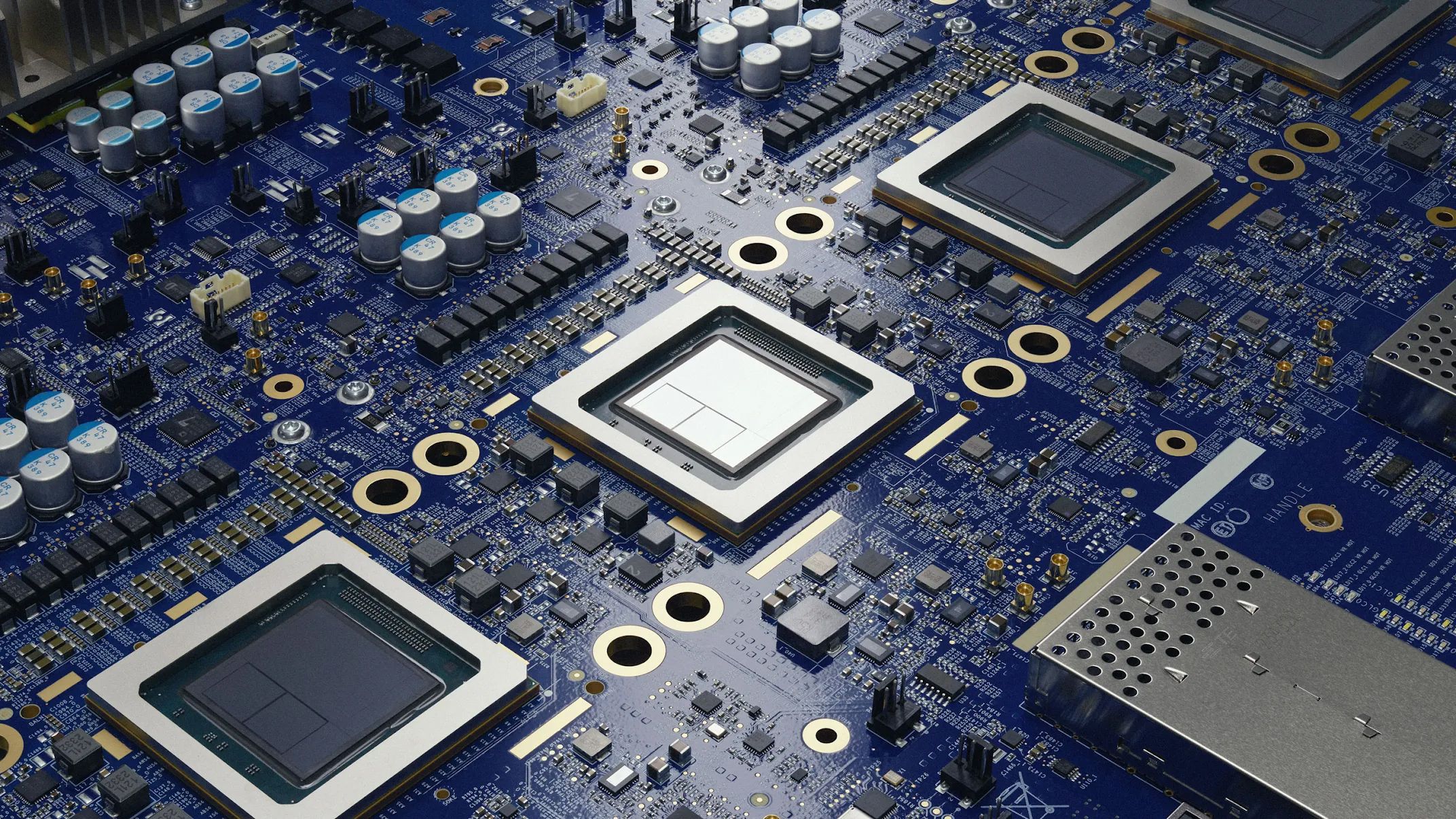
Google is reportedly working with AMD on the v10 generation of its TPU line, in what would be AMD’s first involvement in a custom AI ASIC project. The Google AMD TPU project, per a SemiAnalysis note cited by Tom’s Hardware, centres on a hybrid design: TPU chiplets with CPU cores on the same package, aimed at reinforcement learning and agentic workloads.
“Market chatter suggests [Google] is working with AMD on a TPU project in the v10 generation. AMD’s involvement would be the first real involvement in a custom AI ASIC project, despite having a custom silicon team. AMD has strong IP, especially in advanced packaging and SoIC. Additionally, CPU IP could also be a draw given Google and its customers are pushing for TPUs with on-package CPU cores for RL workloads.”
SemiAnalysis note, cited by Tom’s Hardware
Google has designed nine generations of TPUs with Broadcom acting as silicon designer, so it hardly needs AMD for a conventional accelerator. SemiAnalysis argues the chances of AMD implementing the v10i inference or v10t training chips are low; what AMD could bring is CPU IP, programmable logic, interconnects and advanced packaging know-how.
Google AMD TPU: the CPU-heavy shift
Reinforcement learning for reasoning and agentic models needs more general-purpose compute around the accelerator than plain LLM training does, and Google has been moving that way already: its TPU 8i systems run one Axion CPU per two TPUs, up from one Intel Xeon per four on seventh-generation systems. SemiAnalysis adds that a 1:1 CPU-to-accelerator ratio is optimal in some cases.

AMD has built this kind of hybrid before. The Instinct MI300A packs x86 and accelerator chiplets in a single package, and a hypothetical Google design could pair TPU compute chiplets with AMD CPU and HBM in a tightly integrated package. Intel, another strategic Google partner, has no equivalent hybrid data-centre design.
What it means for the Gulf’s AI buildout
If the report is accurate, the notable development is not that AMD is helping build another TPU. It is that Google is considering a CPU-heavy member of its v10 family specifically for RL and agentic workloads, with AMD supplying some of the building blocks. For Gulf operators buying AI infrastructure, the supplier picture is part of the calculation: AMD already has a regional channel through its “Made in the Emirates” deal with Kerno, and its Venice server chips are pitched at Gulf data centres. Google’s appetite for compute is not in doubt — it is paying SpaceX about $920 million a month for access to Nvidia GPUs — but nothing here is confirmed. Neither company has commented on the report.
Is Google actually working with AMD on a TPU?
The claim comes from a SemiAnalysis note to clients, cited by Tom’s Hardware. Neither Google nor AMD has commented, so it remains an unconfirmed report.
Why would Google need AMD’s help with TPUs?
Google designs the accelerators itself and uses Broadcom as silicon designer. AMD’s draw would be CPU IP, advanced packaging such as SoIC, and interconnect know-how — the building blocks for a hybrid package.
What are on-package CPU cores for?
Reinforcement learning and agentic AI workloads need more general-purpose compute around the accelerator than plain LLM training. Putting CPU cores on the same package cuts the distance between the two, improving performance and power efficiency.