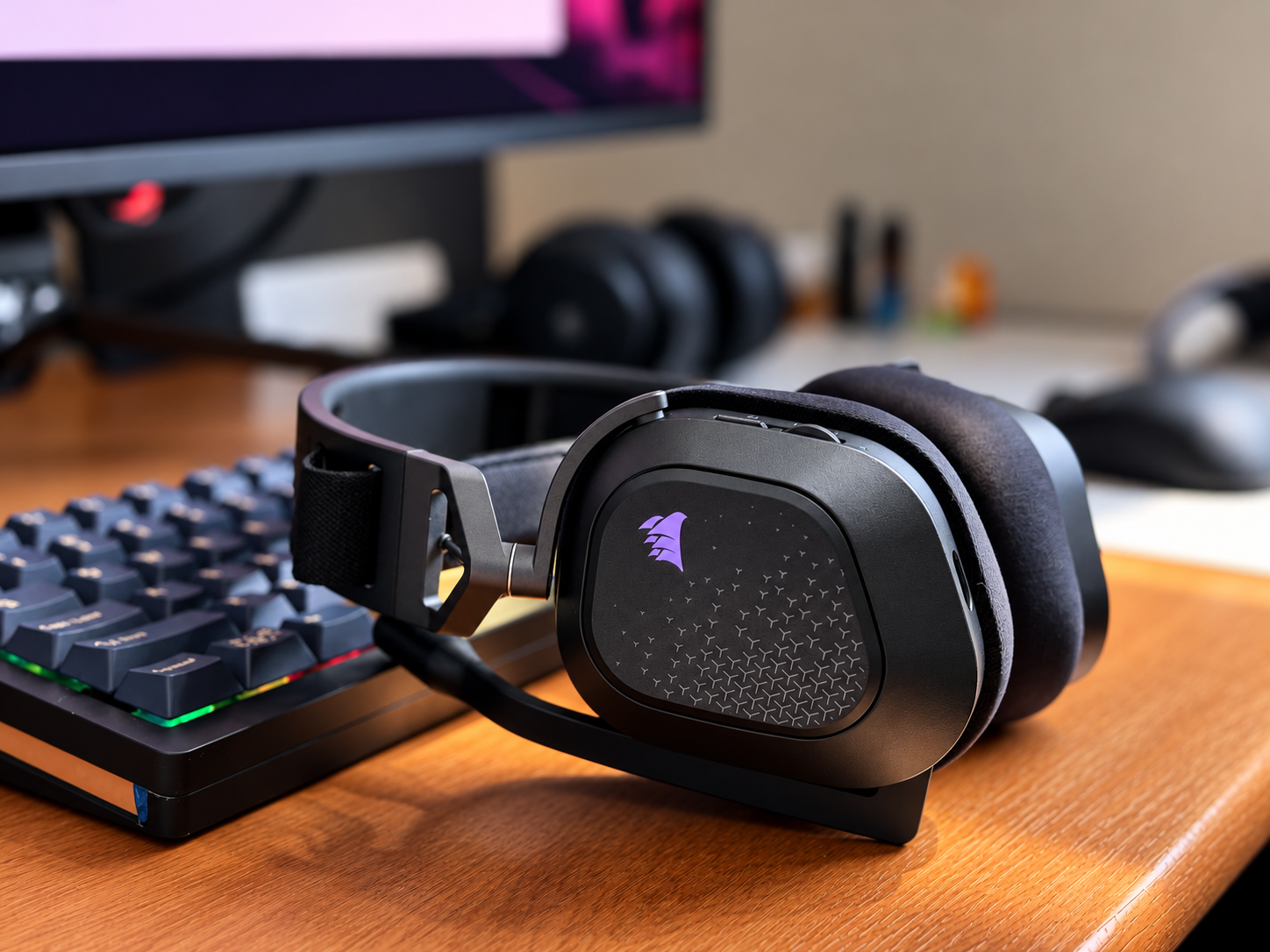
The Sonos Ace has been my preferred pair of travelling headphones for the past year. In my Sony 1000X THE COLLEXION review, I said I liked its sound more than the Ace, but still favoured the Sonos for its fit, finish, and simplicity. Those everyday details matter to me, and the new Sonos Ultra keeps everything I liked.
After using the new Sonos Ace Ultra for about two weeks, it’s clear Sonos’ latest headphones beat the original in Sound Quality. From listening to music to switching between my iPhone and Mac and using them with the Beam Ultra soundbar, I easily prefer these newer headphones. But spending my own money on that upgrade is a tougher ask.
Sonos Ace Ultra
The Sonos Ace Ultra combine excellent construction with enjoyable, balanced sound. TV Audio Swap works smoothly with the Beam Ultra, and everyday Bluetooth controls behaved as expected. However, outgoing call quality disappointed, ear warmth remained noticeable, and I couldn’t hear an ANC improvement over the original Ace in my office.
- Excellent materials and finish, with a beautiful Agave colour option.
- Clearer, more balanced sound with Loudness disabled.
- Smooth TV Audio Swap with no noticeable lip-sync problems.
- Straightforward setup and useful physical controls.
- Default Loudness setting made some tracks sound too bass-heavy.
- Outgoing voice quality disappointed across two calls.
- Ear warmth prompted breaks during some sessions.
- Sonos Radio handoffs and app controls were less polished than TV swapping.
- No audible ANC advantage over the original Ace in my office comparison.
How much do the Sonos Ace Ultra cost in the UAE?
Sonos lists the Ace Ultra at AED 1,899 in the UAE, with Black, Soft White, Agave and Sand colour options. My review pair is Agave, which is the finish I requested. That puts it in direct competition not just with the Sony I mentioned earlier, but also with Apple’s AirPods Max 2.
At this price, I want more than good music playback: comfort, calls, controls and the experience of switching between devices all contribute to whether the headphones earn their place.

Has Sonos improved the design and comfort?
I think Agave is a beautiful colour and different from any other headphones I’ve tried. I like having an alternative to the usual black and grey without feeling as though I’ve chosen something unnecessarily loud.
The build quality feels much like the original Ace, which is a compliment. The materials feel high-end, the finish is smooth, and Sonos hasn’t changed the basic character of headphones I already enjoyed handling. The logo is a little more prominent, the controls are slightly rearranged, and the rocker is larger. The headband adjustment still isn’t particularly smooth, just like it wasn’t on my original pair.
The cushions feel more padded than those on my Ace, though I’m comparing new headphones with a pair that’s had about a year of use. The familiar carrying case also returns, with a USB-C-to-USB-C cable and a USB-C-to-3.5mm cable you can store in a magnetic pouch that snaps inside.

On my head, the Ultra feel very comfortable. I can put my glasses on and take them off with little effort, even with the headphones on. The headphones block a noticeable amount of surrounding noise, even when they’re switched off.
As with every other ANC-based headphone I’ve tried, warmth is the more persistent issue. During my first extended listening session, I wanted to remove them after about 40 minutes to let my ears breathe. Another session prompted a break after approximately 20 minutes. However, I also watched half an hour of YouTube with little discomfort, only noticing how warm my ears had become when I removed the headphones and felt them cooling down.
That makes it hard to set a fixed comfort limit. The initial fit is comfortable, but in my case, heat builds up, and how much it bothers me varies from session to session. I’ve never found headphones I can forget I’m wearing for hours—and sadly, the Ace Ultra doesn’t change that.
I started by switching Loudness off.
Out of the box, my first listening session with the Sonos Ace Ultra was underwhelming: familiar songs sounded bass-heavy, vocals weren’t particularly engaging, and I wondered which EQ sliders to adjust.
Letting Go by Angie McMohan sounded too bass-heavy, with insufficient treble and vocals that didn’t stand out. Numb by Linkin Park also felt rather flat. Neither made me want to keep working through my music library.
Other tracks fared much better. We Will Rock You by Queen had crisp vocals and a well-judged balance between bass and treble, although the guitar section towards the end was less impressive. Kissing a Fool by George Michael sounded particularly good, thanks to its vocals and piano. The Ultra clearly weren’t getting everything wrong, but the inconsistency left me puzzled by their default sound.
Checking the app confirmed that Bass, Mid and Treble were all at zero, with Loudness and Adaptive EQ enabled. I turned off Loudness and replayed Letting Go and Numb, leaving the other settings unchanged. The difference was substantial: the mids became clearer, the vocals sounded much better, and the bass stopped dominating the mix.
I expected to adjust the equaliser, but that one setting did more than tweaking the EQ. It addressed the main problem without needing a custom curve. It’s worth trying before deciding that the Ultra’s tuning isn’t for you.
Comparing them with my original Ace uncovered another important detail: I had been using the older headphones with bass at +5 and treble at +6. Their initial appeal wasn’t based on an apples-to-apples comparison. Once I reset the original pair’s EQ to zero, Letting Go and We Will Rock You sounded flatter on them than on the Ultra. Kissing a Fool sounded about the same.
That isn’t a dramatic improvement across every song, but it was enough to establish a preference. With the settings I liked, I would choose the Ultra for music. I just wish the default Loudness setting hadn’t obscured that during the first session.

Is noise cancellation better than on the original Ace?
In my office, with the air conditioning running, turning on ANC made a clear difference. However, swapping between the original Ace and the Ultra didn’t reveal an obvious winner. Neither sounded meaningfully quieter than the other with ANC enabled, and I couldn’t distinguish their isolation with noise control switched off either.
Sonos’s fact sheet claims roughly twice the cancellation, with supporting measurements showing 2.2 times at 65Hz and 1.8 times at 120Hz. At least in my office, where it is generally on the quieter side, I didn’t hear an improvement.
I have flown with the original Ace and found their noise cancellation decent, not excellent, on aircraft. I haven’t had the chance to take the Ultra on a flight, which I think will likely be a better way to test ANC, so I can’t say whether they improve on that experience.
Aware mode showed a smaller but more noticeable difference. Both headphones let me hear my surroundings clearly, but added a background wash that reminded me of sitting in an aircraft cabin. That sensation was stronger on the original Ace than on the Ultra. The newer pair were preferable in that respect, although neither sounded quite like leaving my ears uncovered. This was with the office AC running, so I’m describing the experience rather than identifying whether the background sound came from the room, the headphones, or both.
Are the Sonos Ace Ultra good for calls?
Call quality was one of the more disappointing parts of testing. During the first call, the other person sounded slightly muffled to me, while they thought my voice sounded unnatural enough to ask whether I was feeling unwell. On a second call with someone else, I could hear them clearly, so the incoming muffling wasn’t a consistent problem.
The outgoing voice quality was less convincing across both calls. The second person also wasn’t impressed with how I sounded, and when I switched to my iPhone 18 Pro on the same call, they said the phone’s microphone sounded much better.
Two different callers noticed a problem, including one direct comparison with the phone during the same call, so I wouldn’t ignore this weakness when choosing headphones for frequent conversations.

How well do they work with a Sonos soundbar?
Sonos was kind enough to also send across the new Beam Ultra soundbar, and setting that up was straightforward. I turned on the Ultra, opened the Sonos app, and a card appeared inviting me to pair them. The app then offered a firmware update, installed it and restarted the headphones. Afterwards, it asked whether I wanted to add them to my Sonos system and found the soundbar I had already set up. Nothing in that process gave me trouble.
Using TV Audio Swap with the Beam Ultra was a positive experience. Moving the sound took around five seconds- not instantaneous, but the transition is smooth. I didn’t notice an obvious gap between the source stopping and the destination taking over, and lip-sync looked right throughout my viewing.
Moving Sonos Radio playback between the soundbar and headphones was noticeably less polished than TV Audio Swap. Transfers took more than ten seconds, and playback paused for roughly three seconds before reaching the other device. The difference was obvious after the smoother TV experience.
Playback controls were also a bit frustrating. Pausing in the app worked when music played through the headphones, but it wouldn’t stop when playback was on the Beam Ultra. I also had to use the Sonos app’s volume slider rather than the iPhone’s physical volume buttons for Sonos Radio. Those buttons worked during ordinary Bluetooth listening, so this wasn’t a general problem with controlling the headphones from my phone.
Spatial audio was more dependent on what I watched. It made music videos sound fuller, which I preferred, but speech in ordinary YouTube videos was clearer with it switched off. I wouldn’t leave it enabled just because it makes everything sound bigger; for spoken content, I preferred the less-processed presentation.
Head tracking was less appealing. In my session, it seemed to behave in reverse: when my left ear faced the TV, the sound appeared to come from the right earcup, and vice versa. I switched it off. I haven’t figured out why it behaved that way, but I don’t enjoy that feature on other headphones either.
Sonos labels headphone linking an Early Access feature that requires compatible speakers, Wi-Fi, and setup through its app. That explains the rough edges, but I would still judge the experience as it was during testing rather than assume future updates will fix them. TV Audio Swap was useful and smooth; broader music handoffs didn’t yet feel equally polished.
Is switching between an iPhone and Mac straightforward?
I paired the Ultra with my iPhone and Mac and used both for Bluetooth playback. Switching required pausing one device before starting the other. With music playing on the iPhone, launching a YouTube video on the Mac kept pausing the video until I stopped playback on the phone.
That matches Sonos’s documented multipoint behaviour: the headphones can maintain two Bluetooth connections, but switching playback requires pausing first. It’s useful to stay connected to both devices, but you shouldn’t expect starting a video on the second one to automatically interrupt the first.

The controls worked as expected while listening over Bluetooth. I could adjust the volume with the iPhone’s physical buttons or the Ultra’s rocker, which handled volume and playback functions, including pausing and skipping tracks.
USB-C playback worked too. Connecting the headphones to my Mac made them available as “Sonos Ace Ultra (USB)” and let me hear the computer’s audio, but it disabled Bluetooth. Pausing the Mac didn’t let the iPhone take over while the cable remained attached. Sonos documents this limitation: wired audio disables Bluetooth, so to return to wireless use, you must disconnect the cable.
How long does the battery last?
Sonos claims up to 35 hours of listening with ANC or Aware mode enabled, plus up to three hours of playback from a three-minute charge starting at zero. I did not use these headphones for a full 35 hours.
Instead, my total usage is close to 6 hours and from a full charge, the battery level is over 80%, which matches Sonos’ claimed battery life. I do want to point out that this was over three days, and I let the headphones switch off by themselves rather than switching them off manually.
Should you buy the Sonos Ace Ultra?
The Sonos Ace Ultra retains the materials, finish, and handling I liked about the original Ace, sounds better to me on some familiar tracks, and works well for private TV listening through the Beam Ultra. Agave is also a particularly appealing finish. For someone buying their first pair of Sonos headphones, those qualities make the Ultra a clear choice.
However, I wouldn’t spend my own money upgrading from an existing Ace. The music improvement wasn’t dramatic across everything I played; I didn’t hear an ANC advantage in my office, and ear warmth remains a factor.
Outgoing call quality also stops this from feeling like an improvement in every area. So if you already own the original, I’d say stick with them. If you are in the market for a new pair of premium headphones, the Sonos Ace Ultra definitely belong on the short list.
- You value build quality and enjoyable music playback.
- You want private TV listening with a compatible Sonos soundbar.
- You already own an Ace and expect a substantial upgrade.
- Clear outgoing calls are a priority.
What else should you know before buying?
What sound settings did you prefer?
I preferred Loudness switched off, with Bass, Mid and Treble at zero and Adaptive EQ enabled. That made “Letting Go” and “Numb” sound more balanced, with clearer mids and vocals. I didn’t need to create a custom EQ curve.
Do you need Sonos speakers to use the Ace Ultra?
No. I used them directly with my iPhone and Mac over Bluetooth, and connected them to my Mac via USB-C. The soundbar and speaker integration is an additional reason to consider them, not a requirement for ordinary headphone listening.
Can you listen through USB-C while staying connected to your phone over Bluetooth?
Not with the behaviour I tested. Connecting the Ultra to my Mac through USB-C disabled Bluetooth, and pausing wired playback didn’t restore the iPhone connection. Sonos documents that wired-audio limitation.