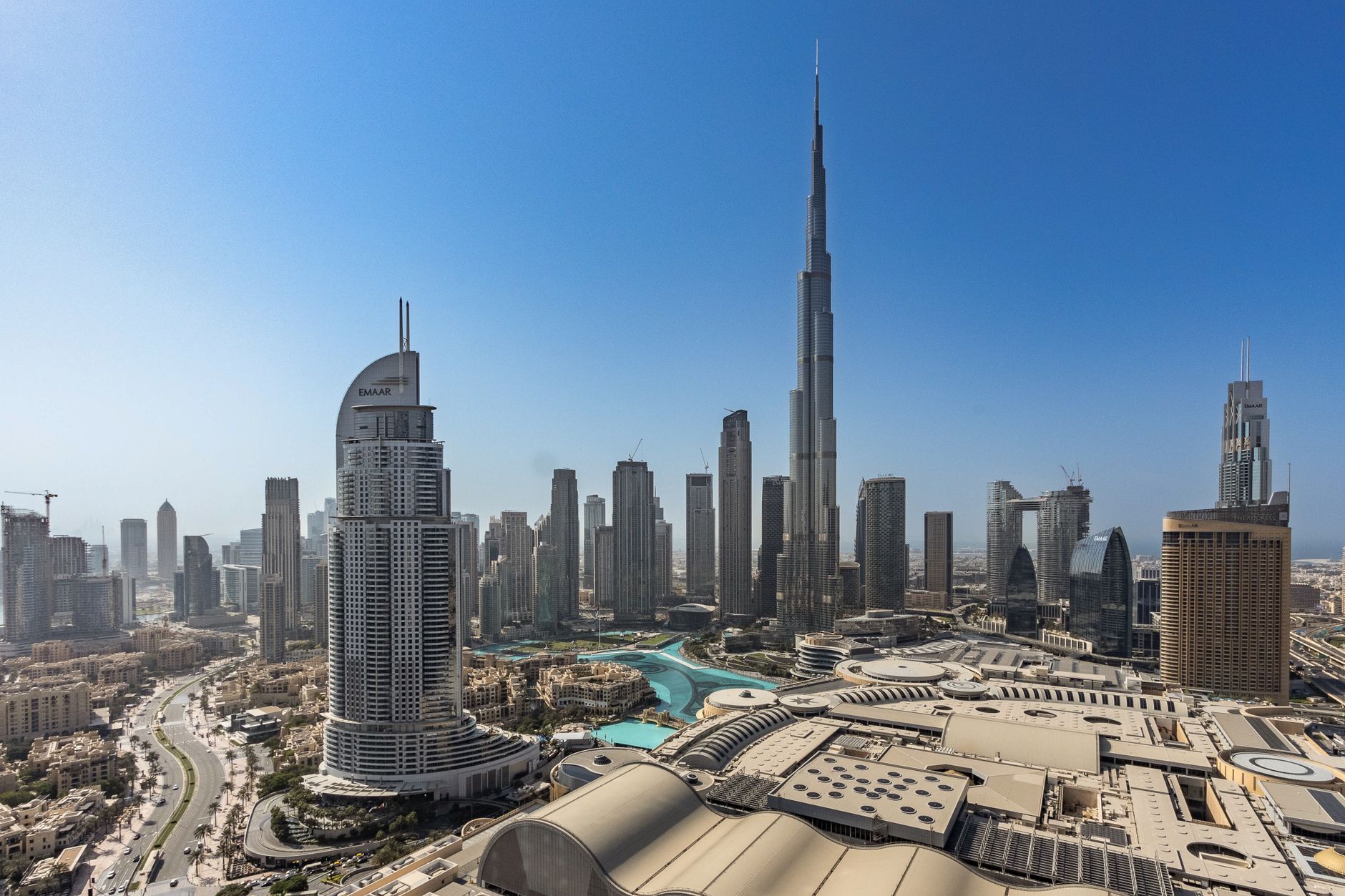
Dubai has some of the strongest indoor mobile signal of any large city, level with Bangkok and Seoul.
Ookla’s analysis, led by Lead Industry Analyst Luke Kehoe, covers a year of in-building signal measurements across more than 100 large cities. It looks at the scale and causes of poor indoor coverage, which maps and rankings rarely show.

Ookla says indoor signal is strongest in East Asian, Southeast Asian, and Gulf cities and weakest in Europe, North America, and Oceania. The median measured building in Dubai, Bangkok, and Seoul gets about -88 dBm on 4G. Values closer to zero mean a stronger signal.
| City | Median indoor 4G signal |
|---|---|
| Dubai | -88 dBm |
| Bangkok | -88 dBm |
| Seoul | -88 dBm |
| Geneva | -104 dBm |
| Birmingham | -104 dBm |
| Naples | -105 dBm |
Ookla says the 17 dB gap between Dubai and Naples is about 50 times the signal power. Half the measured buildings in Naples sit below -105 dBm, vs 2% in Seoul. In a LinkedIn post, Ookla’s Luke Kehoe adds that Dubai, Seoul, and Hong Kong lead the cities studied, while Naples, Geneva, Birmingham, Zurich, and Manchester make up the bottom five.
The post also gives regional medians: around -90 dBm in East Asian and Gulf cities, vs -100 dBm in Europe and -101 dBm in North America.

Why signal drops indoors
Ookla says outdoor signal accounts for about 85% of the variation in indoor signal between cities, and the loss on moving indoors accounts for under a tenth of it. Moving indoors weakens signal by 4 dB in the median city, and by about 5 to 7 dB in concrete and stone buildings. In Tokyo, timber-framed buildings cut signal by 2 dB and concrete ones by 7 dB.
Phones in North American and Oceanian cities lose the least on the way in, about 2 dB, but those cities start weakest outside. Stations and stadiums have about 4 dB stronger signal than surrounding buildings, consistent with dedicated in-building systems, while hospitals and hotels are about 1 dB weaker.
Speed also suffers: across Speedtests worldwide, median 4G download speed falls 65% and upload 87% between -90 and -110 dBm. Indoors, phones lean more on spectrum below 1 GHz in 97% of cities.
What Ookla links to building rules
Large buildings served by their own cells on at least two operators’ networks have stronger indoor signal than the city’s other large buildings in 75 of 76 cities tested. That’s the signature of a shared in-building system or dedicated small cells. The median gain is 3.7 dB, about 6.5 dB in North America and 2 dB in East Asia.
Ookla’s release says the UAE is among the few governments that require building owners to fund indoor systems or provide space for operators’ equipment; Tbreak couldn’t independently confirm this. Kehoe’s post names Saudi Arabia, not the UAE, for mandated shared indoor systems, and says Hong Kong reserves space for mobile equipment in new large buildings. He says Seoul, Hong Kong, Singapore, Riyadh, and Jeddah all sit under regimes that write indoor connectivity into the rules.
Ookla points to Switzerland’s strict caps on radio exposure (4 to 6 V/m at places of sensitive use), and says Zurich and Geneva rank among the seven weakest cities indoors. Kehoe’s post gives their average as -104 dBm, and Italian cities as -102 dBm vs -99 dBm for the rest of Europe.
Earlier Gulf findings
Ookla has looked at Gulf indoor coverage before, though on a different sample. Ookla’s 2023 mall study, as reported by Telecom Review, covered 28 malls in Qatar, Saudi Arabia, and the UAE, using data from December 2022 to November 2023. It found indoor 5G at or below -90 dBm at Dubai Mall for du, and at Ibn Battuta and Mall of Emirates for both operators. For more on Gulf networks, see Tbreak’s coverage of Ookla’s Q1 2026 Gulf analysis and the 5G benchmarks that put the UAE in the global top tier.