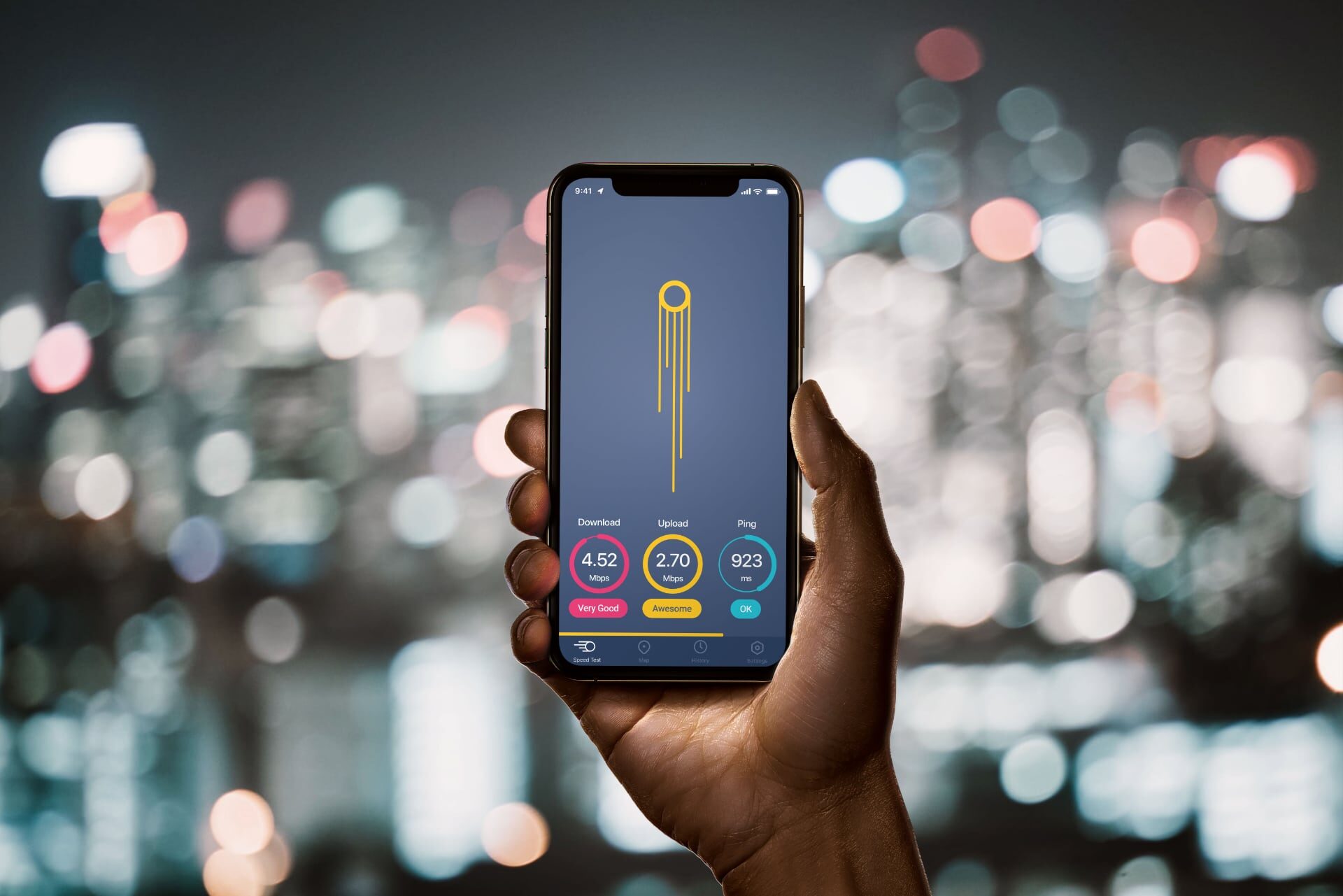
Gulf mobile network resilience improved across most markets in Ookla’s Q1 2026 analysis, with the UAE and Qatar showing the strongest stability under peak demand.

Gulf mobile network resilience improved in Q1 2026
Ookla analysed Bahrain, Kuwait, Oman, Qatar, Saudi Arabia and the UAE using Speedtest Intelligence data. Five of the six Gulf countries recorded congestion ratings lower than 80% of the European markets in the comparison, while most Gulf markets improved on their Q1 2025 results. The report calls this Gulf mobile network resilience an improvement in handling peak demand.
The measure combines throughput loss, loaded latency, queue growth, jitter and the download-speed drop affecting the worst-served 10% of users. A lower rating indicates less deterioration between off-peak and on-peak periods.
UAE mobile network congestion varies by time and season
The UAE had one of the region’s lowest congestion ratings. Ookla found that on-peak UAE performance exceeded the overnight baseline for download speed, loaded latency and the gap between idle and loaded latency, although the bottom 10% of users saw a year-on-year increase in download-speed loss.
The UAE’s median mobile download speed reached 647.28Mbps in April 2026, the highest figure among the six Gulf markets in the report. The same network can still behave differently during Ramadan: the UAE’s speed ratio fell to about 0.5x during the morning commute, while Bahrain and Saudi Arabia reached roughly 0.6x at iftar.
| Market or measure | Finding |
|---|---|
| UAE median mobile download speed, April 2026 | 647.28Mbps |
| UAE Ramadan morning-commute ratio | 0.5x |
| Kuwait network ratio | 0.9x |
| Qatar below off-peak baseline during Ramadan | 83% of the time |
Ookla says cooler months bring more outdoor activity and visitors to the Gulf, increasing evening and early-morning demand. Hotter months can ease mobile pressure as more people move indoors and use Wi-Fi.
The report adds a useful qualification to fast-network rankings: throughput is only one part of the experience. Rising latency and packet loss can still affect video calls, gaming and browsing when headline download speeds remain high.
The findings follow Ookla’s earlier UAE 5G benchmarking, which placed the country among the leading markets for newer mobile-network performance. The full Ookla Gulf network resilience report sets out the methodology. Tbreak previously covered Ookla’s UAE 5G benchmarks, including the role of local operator performance. This Gulf mobile network resilience report uses the same Speedtest Intelligence data family.
What does Ookla measure as network congestion?
Ookla combines throughput loss, loaded latency, queue growth, jitter and the download-speed drop affecting the worst-served 10% of users.
Which Gulf country had the most stable network?
Ookla found the UAE and Qatar had the strongest regional stability overall, while Kuwait recorded a 0.9x speed ratio in the Ramadan comparison.
Why does Ramadan affect Gulf mobile networks differently?
Usage shifts by country and time of day: the UAE sees constraints during the morning commute, while Bahrain and Saudi Arabia see larger drops around iftar.