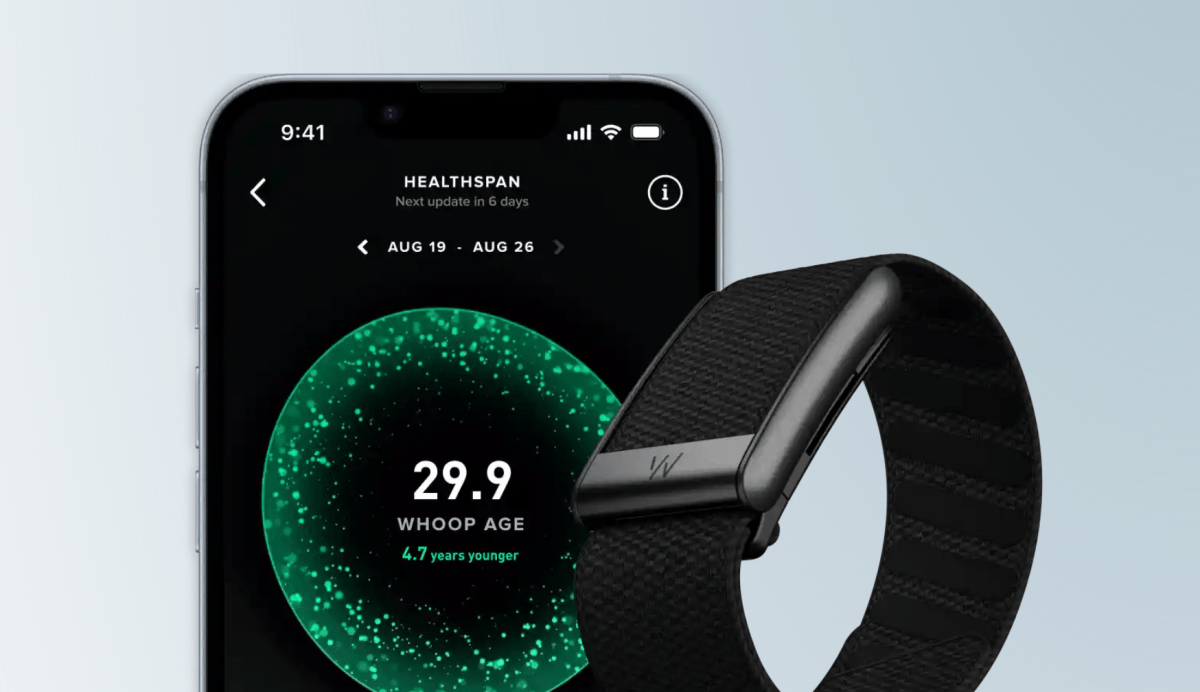
The Whoop social network, launching today as WHOOP Humans, lets members follow friends and family and share their sleep, recovery, and workout data.
WHOOP Humans is opt-in, free at every membership tier, and available in the Whoop app from 12 November 2026.
Whoop’s CEO, Will Ahmed, laid out the plan in a report by TechCrunch’s Connie Loizos, and the company’s own Business Wire release fills in the detail.
What members can share
Members can follow anyone on Whoop and choose what to share: Sleep, Recovery, Strain, activities, and achievements. Followers can react and comment, and members can attach photos and commentary to their data.
A new Moments feature lets members post photos from workouts, personal milestones, and experiences. Moments can also stay private.
Whoop frames the launch as a break from legacy social media, which it says is increasingly saturated with AI, bots, and manufactured content.
In a world that’s becoming increasingly artificial, we’re building something deeply human. This is the most verifiably human network ever launched. Every account represents a real person with a verified heartbeat.
Will Ahmed, Founder and CEO of WHOOP
How it differs from Teams
Whoop already has Teams, and 57% of members belong to at least one. Teams are built around groups and leaderboards, so everyone in a group sees everyone else’s information. Existing Teams will remain available.
Humans is more personal. Members decide who follows them and who sees what, so a trainer can track a set of clients without the clients seeing one another’s data. Ahmed also expects families to be big users of Humans, and TechCrunch’s example is adult children checking in on ageing parents.
Privacy controls
Members pick which metrics to share, including Recovery, Strain, Sleep, HRV, and resting heart rate, and can remove followers. Stealth Mode temporarily hides shared information without changing sharing preferences.
Whoop says activities marked sensitive aren’t shared by default. Ahmed says health alerts and medical information aren’t shared at all. Members can report any comment or photo they find disturbing, and Whoop says it reviews reported content.
Whoop says it doesn’t sell or monetise a member’s personal health data. Ahmed told TechCrunch the company doesn’t license data to third parties either: “Our product is not you; it’s the membership.”
The minimum age is 13, higher in some countries. Asked whether a parent could follow a teenager’s data, Ahmed didn’t answer directly and pointed to the privacy controls.
The health brand bet
According to TechCrunch, the bigger play is Whoop becoming a personal health brand. It already added FDA-cleared ECG and atrial fibrillation detection, blood pressure insights, blood testing, and medical-record uploads. Tbreak covered the blood test service in the UAE in February, and the Arabic app for GCC members in October.
Ahmed says Whoop has seen “huge growth” among people over 60 in the past 18 months. The company now has Medicare members through a programme that reimburses wearables that can show they improve health outcomes. He also says Whoop learnt that people engaged more when someone posted a low recovery score than a nearly perfect one.
Ahmed expects “more consolidation” among AI-focused, clinician-focused, and wearable companies, and says Whoop is “in a position to be an acquirer”. This week, Oura said it will pay $625 million for Counsel Health.
Whoop has more than 3 million members, and expects nearly 4 million by the end of the year. It has about 1,200 employees. Whoop was founded in 2012, ships to 61 countries, and has raised more than $900 million in venture capital. Ahmed declined to share revenue or say whether the company is profitable, but said Whoop “will certainly IPO in the future”.
Whoop will sell its devices through Ulta stores starting next March, at about 500 locations, with a target of more than 1,000. Ahmed says the company’s female audience has more than doubled since last year.
Google sells the $100 Fitbit Air, a band with no screen, and Bloomberg reports Apple is developing a Whoop-style band. Ahmed shrugged off the competition, saying Whoop’s job is to stay true to the “aspiring” people it serves.