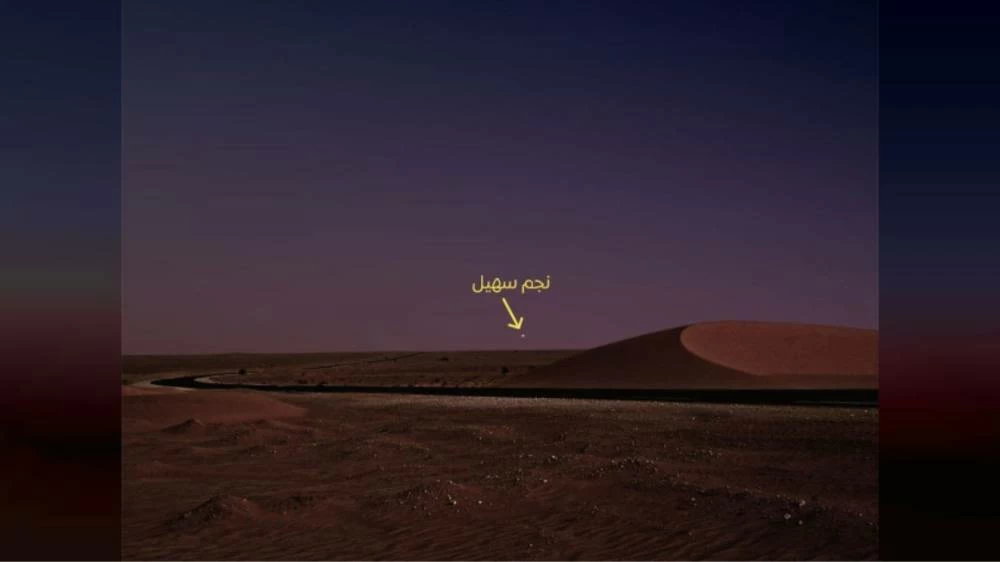
Suhail star UAE: Canopus, the second-brightest star in the night sky, rises before dawn on Monday August 24 — the traditional sign that the country’s peak summer heat has started to ease, per Emirates 24|7.
For generations the star’s appearance has told farmers, sailors and residents that the worst of the Gulf summer is turning. The National Centre of Meteorology, asked to explain the event, is clear about what it does and does not mean.
“The appearance of the Suhail star is a useful traditional seasonal indicator; however, it is not itself the cause of changes in weather. It is a well-known astronomical indicator and part of the region’s traditional climate heritage, and it generally coincides with the beginning of a gradual transition from the peak of summer towards more moderate conditions.”
Dr Mohamed Al Ebri, director of the department of meteorology, National Centre of Meteorology
Suhail star UAE: a seasonal marker, not a cause
The cooling is real, but the sun drives it, not the star. Al Ebri points to the decreasing solar elevation angle, the shorter hours of solar radiation and shifting regional weather patterns as the actual drivers. No one should expect to wake up on August 25 to a different country.
What changes in the weeks after
Ibrahim Al Jarwan, chairman of the Emirates Astronomy Society, calls the stretch after Suhail’s rise Sufriya — roughly 40 days in which the country moves away from the most intense heat, per Khaleej Times. He has compared it to a cooking pot that stays hot after the flame goes off. Temperatures can stay in the 40s through September.
The changes show up first at night. Expect cooler nights, rising humidity, early-morning fog and stronger south-easterly winds as the weeks go on. The old Arab saying attached to the star is precise: if Suhail rises, the night cools down.

The forecast: still the 40s
The NCM still has the country in the upper 30s to mid-40s, with humidity climbing overnight and a chance of fog. Dubai reached 39°C and Abu Dhabi 41°C this weekend.
The standard summer advice applies while it lasts: avoid the midday sun, drink plenty of water, and never leave children or pets in a parked car. The air-conditioned fallback remains the Dubai Summer Surprises mallathon — free running tracks inside seven malls until September 15.
The Suhail star, UAE tradition holds, is the start of the end of summer, not the end itself. Monday marks the start of the cool-down, not the end of the heat — the UAE will not feel autumn overnight, just a little closer to it.
What is the Suhail star?
The Suhail star, known as Canopus, is the second-brightest star in the night sky. Its rise before dawn has been used across the Arabian Peninsula for generations as a seasonal marker for the end of peak summer heat.
Does the Suhail star cause cooler weather in the UAE?
No. The National Centre of Meteorology calls it a traditional indicator, not a cause of the change. The cooling is driven by the sun — a decreasing solar elevation angle and shorter hours of solar radiation — plus shifting regional weather patterns.
When will UAE temperatures actually drop?
Gradually. After Suhail rises, the UAE enters a roughly 40-day transition known as Sufriya. Nights cool first and humidity rises, but daytime highs can stay in the 40s through September.