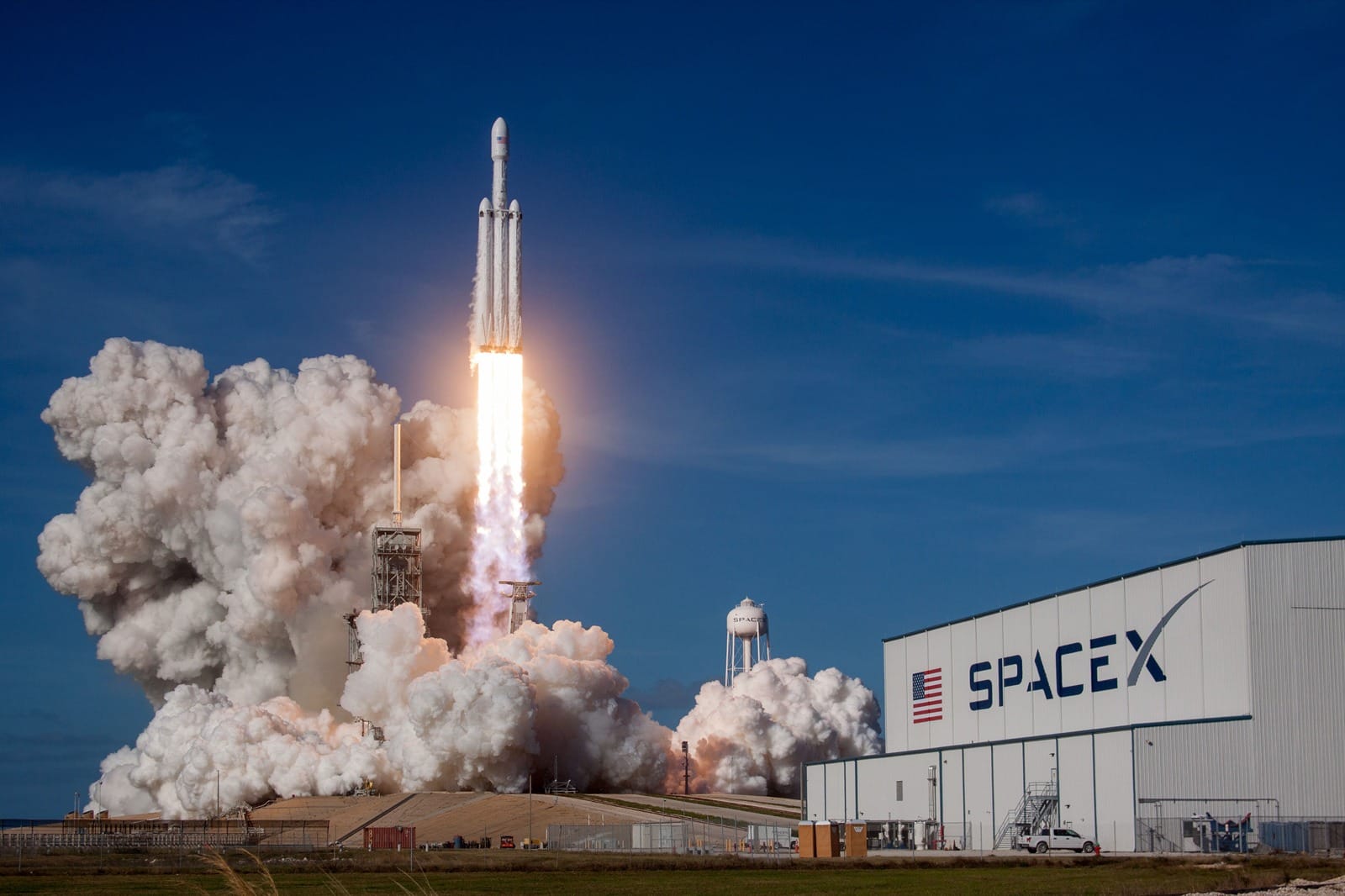
SpaceX has filed for an initial public offering on Nasdaq under the ticker SPCX, reporting strong revenue growth alongside substantial losses. The S-1 filing shows Elon Musk’s space venture generated $18.7 billion in 2025 revenue whilst posting a $4.9 billion loss, according to Bloomberg.
Key Takeaways
- SpaceX filed for public offering on Nasdaq under ticker SPCX on 20 May 2026.
- The company reported $18.7 billion revenue in 2025, up 33% year-over-year.
- SpaceX posted a $4.9 billion loss in 2025, compared to $791 million profit in 2024.
- Elon Musk retains 85.1% of voting power despite going public.
- Capital expenditures nearly doubled to $20.7 billion from $11.2 billion in 2024.
What the S-1 filing reveals
The S-1 filing details SpaceX’s financial performance. Revenue surged 33% year-over-year to $18.7 billion, but the company swung from a $791 million profit in 2024 to a $4.9 billion loss in 2025.
The filing reports capital expenditures of $20.7 billion, nearly double the previous year’s $11.2 billion. This spending reflects SpaceX’s aggressive expansion across Starlink satellite internet, Starship development, and Mars mission preparations.
These numbers illustrate the fundamental challenge facing space companies: massive upfront investments with uncertain timelines for profitability. SpaceX is essentially betting billions that its integrated approach to space infrastructure will eventually generate returns that justify current losses.
Why Musk maintains control despite going public
Elon Musk retains 85.1% of voting power through a dual-class share structure, ensuring operational control despite public ownership. in maintaining founder control through complex equity arrangements.
Dual-class share structures are commonly used to keep decision-making authority with company founders. SpaceX has said its long-term goals include Mars missions.
In companies with dual-class structures, public shareholders typically hold limited voting rights.
What this means for space investment
SpaceX’s public filing fundamentally changes how investors can access space market growth. Previously, space investment required backing speculative startups or established aerospace contractors with limited pure-space exposure.
The timing reflects broader space market maturation. The UAE’s expanding space programme and reusable rocket development across multiple companies suggest space commerce is transitioning from experimental to operational.
For MENA investors, SpaceX’s public listing provides direct exposure to Starlink’s global expansion and potential Mars infrastructure development. However, the company’s current losses indicate patient capital requirements similar to other transformative infrastructure investments.
The competitive landscape shift
SpaceX’s public status intensifies pressure on competitors like Blue Origin and traditional aerospace companies. Transparent financial reporting will reveal SpaceX’s true competitive advantages whilst providing benchmarks for space industry profitability.
The filing’s revenue figures dwarf most space competitors, highlighting SpaceX’s integrated model combining launch services, satellite internet, and government contracts. This vertical integration creates multiple revenue streams that pure-play launch companies cannot match.
Public status would give SpaceX access to public capital markets to help fund major projects such as Mars missions and Starlink deployment.
IPO timeline and investor access
SpaceX has not disclosed the IPO pricing, share allocation, or exact trading commencement date. The S-1 filing initiates the regulatory review process, which typically takes several months before shares begin trading.
Investors in the UAE and GCC can typically access Nasdaq-listed shares through international brokers. Specific regional platform availability has not been announced.
Frequently Asked Questions
When did SpaceX file for its IPO?
SpaceX publicly filed for its IPO on 20 May 2026, as reported by Bloomberg. The company chose the Nasdaq exchange for its public debut.
What is SpaceX's ticker symbol?
SpaceX will trade on Nasdaq under the ticker symbol SPCX. The company has not announced the exact date when trading will commence.
What were SpaceX's financials in 2025?
SpaceX reported $18.7 billion in revenue for 2025, a 33% increase year-over-year. However, the company posted a $4.9 billion loss and spent $20.7 billion on capital expenditures.
How much voting power does Elon Musk have in SpaceX?
Elon Musk holds 85.1% of the voting power in SpaceX through a dual-class share structure. This allows him to maintain control despite public ownership.
Can UAE investors buy SpaceX shares?
UAE and GCC investors will be able to access SPCX shares through international brokers that offer Nasdaq trading. Specific regional platform availability has not been announced.