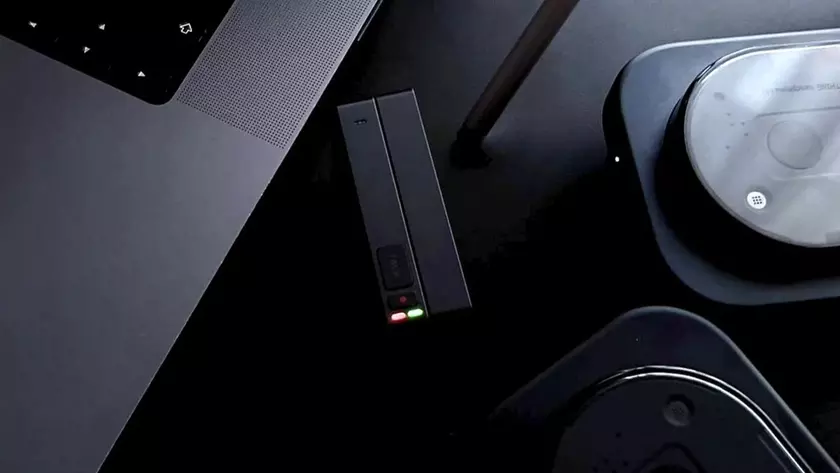
OpenAI has a published US patent application for an earbud-style device that would read silently mouthed words by sensing changes inside the ear.
According to PPC Land, the application was published on 19 November 2026. The idea is to let you give a voice assistant a command without making a sound. The patent hasn’t been granted, OpenAI hasn’t announced a device, and the filing gives no product name, price, launch date, or accuracy figures.
OpenAI filed the provisional application in May 2025, the same month it acquired hardware company io for about $6.5 billion. In July 2026, Apple sued OpenAI, io Products, and two former Apple employees over alleged trade secret theft. The application doesn’t mention io, Jony Ive, or ChatGPT.
How an earbud could pick up silent speech
The device would sit partly inside the ear canal and sense what happens there as you move your mouth to form words. A processor would turn those signals into a representation of the words, such as text or phonemes, the sounds that make up speech.
The application has 20 claims. Claim 1 describes detecting motion in the ear canal, while claim 10 describes detecting changes in the shape of its surface. In one example, a motion sensor with an accelerometer and gyroscope has a configurable sample rate of about 100 Hz to 1,000 Hz.
The filing is titled In-Ear Silent-Speech Detection System, and its publication number is US 2026/0369273 A1. OpenAI OpCo, LLC is the applicant, and Douglas Stuart Brodie and Daniel Boothe are the named inventors. The provisional filing (63/805,864) was made on 14 May 2025, and the full application (19/677,432) followed on 14 May 2026.
What a voice assistant could do without hearing you
Language models and agents appear in the description, not in the claims. A model could work out what you meant from the text or phonemes, and the device could interpret a command like “call XYZ” as an instruction to place a call.
The filing also describes agents composing messages, updating schedules, querying databases, generating documents, retrieving media, or navigating interfaces. In another example, two wearers could communicate by sending silently mouthed words from one person’s device to the other’s earbud.
This may be useful to ensure communication privacy and allow communications in environments where speaking aloud would be impractical.
OpenAI, US patent application
The application doesn’t say where processing would happen, how consent would work, or what data would be stored and for how long. It doesn’t say whether OpenAI has built the device, and it gives no test results, latency, or battery figures.
Microsoft’s live-speech patent application describes AI that rewrites live speech and redraws the speaker’s lips. OpenAI has brought its GPT-Live-1 voice model to developers. In 2025, Bragi announced a collaboration with OpenAI to put voice interfaces in headphones that respond to a press or a hotword. The earbud filing explores a different kind of input: you’d still form the words, but you wouldn’t have to say them aloud.