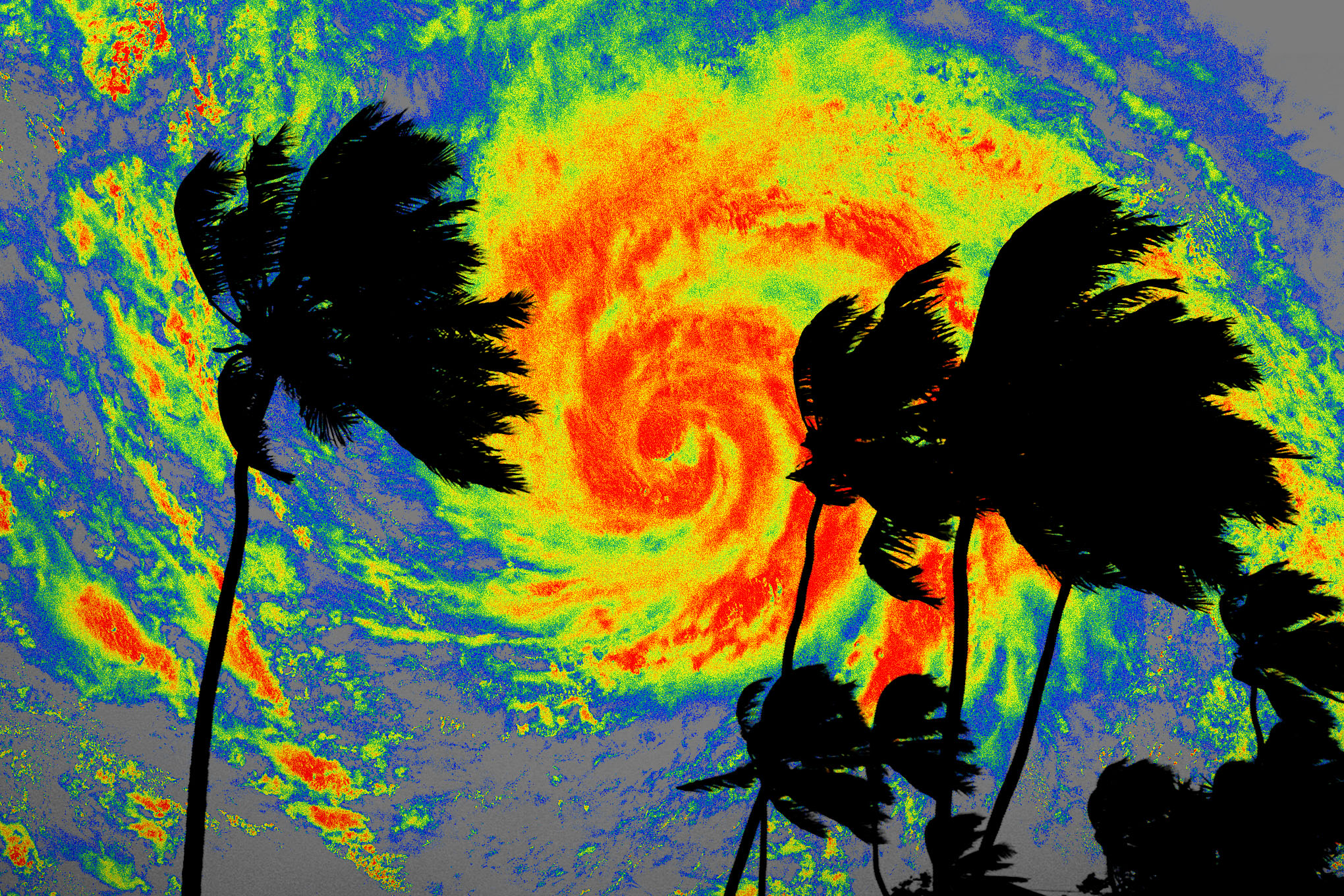
Microsoft has released an open-source machine learning tool that corrects errors in existing weather models, with the aim of making forecasts two to six weeks ahead more dependable. The Verge reports that the work, called Probabilistic Bias Correction (PBC), was published in the journal Nature and that the code is now publicly available.
Rather than competing with Google and Nvidia on a new standalone forecasting model, PBC sits on top of models that already exist. According to the project’s GitHub page, it takes a raw ensemble of forecasts and outputs corrected probabilities that aim to remove systematic errors while keeping the original model’s signal. The accompanying preprint on arXiv describes two lightweight models running in parallel: one adjusts forecasts by location, date and quantile, and the other blends in recent observations and climatology. Lester Mackey, a senior principal researcher at Microsoft Research New England, told The Verge the tool runs on CPUs alone, unlike physics-based modelling on supercomputers or generative AI that depends on GPUs.
The problem it targets is that both physics-based and AI models lose reliability beyond about two weeks. They fill data gaps with approximations, and the resulting biases compound the further ahead they forecast. Mackey’s example is a model trained on historical records that skews towards colder temperatures than today’s warming climate produces.
According to The Verge, PBC improved the European Centre for Medium-Range Weather Forecasts (ECMWF) physics-based model for 98 percent of precipitation and 92 percent of temperature targets in the study, and doubled the accuracy of ECMWF’s new AI forecasting system. The Science Media Centre reports that the method also won ECMWF’s AI Weather Quest competition in 2025. Matthew Chantry, ECMWF’s strategic lead for machine learning, called the paper a good example of new ideas for the community, but cautioned that turning ideas into an operational process is “a most challenging step.”
Where it could matter in the Gulf
Cheap, CPU-only post-processing is the kind of tool smaller agencies can try without new hardware. The UAE’s National Centre of Meteorology has been building out AI tooling, and Cairoscene reports it launched agentic assistants for forecasting and early warning. One of them compares outputs from multiple global forecasting systems and assesses their uncertainty. PBC works on the output of such systems, which is where a bias-correction layer would sit.
Meteorology chief Dr Abdulla Al Mandous told The National in May that AI-driven forecasting is an immediate priority, with climate intelligence feeding aviation, water resources, food security and disaster risk management. Microsoft’s pitch for weeks-ahead outlooks, farmers and emergency responders planning with more certainty, overlaps with those areas. Reporting we’ve seen doesn’t cover how PBC performs for Gulf rainfall and temperature.
The nearest real-world test is in East Africa. Genevieve Flaspohler, a paper author and now executive director of the nonprofit Rhiza Research, is working with the Kenya Meteorological Service Authority, funded by the Gates Foundation, to see whether AI can improve early warnings. PBC is one of the methods under trial ahead of an expected more extreme rainy season during a record-breaking El Niño. Flaspohler says the appeal is that scientists without huge resources can tune such models for specific localities.
Is PBC free to use?
Yes. The code is open source on GitHub, and unite.ai reports it carries an MIT licence and is archived on Zenodo with replication code.
Does it replace a weather model?
No. PBC needs an existing forecast to correct, such as ECMWF’s physics-based ensemble or its AI system. Microsoft’s researchers describe it as a correction layer, so an agency still needs its own forecast source.
Will it make UAE forecasts better?
Nobody has announced that yet. The preprint says the framework works with any weather variable and spatial grid, but a local agency would have to configure and test it against its own data before relying on it.