Updated September 2026: This guide compares Apple’s current Mac mini with M6 and M5 Pro against the Mac Studio with M5 Max and M5 Ultra. I’ve tested the M6 Mac mini and M5 Max Mac Studio side by side using the same real creative projects, gaming settings and local AI workloads, rather than relying only on specifications.
Mac mini vs Mac Studio: the quick answer
For most people, the Mac mini is the Mac to buy. The current M6 model is extremely fast in everyday work, surprisingly capable for photo and video editing, quiet under load and small enough to disappear on a desk. More importantly, its single-core performance is so strong that spending considerably more on a Mac Studio does not automatically make normal apps feel faster.
Mac mini (M6, 2026)
Where to buy · Prices checked September 25, 2026
Apple UAE AED 3,799 View iSTYLE AED 3,799 View Amazon AED 3,799 View Sharaf DG AED 3,799.01 View Virgin Megastore AED 3,799 ViewThe Mac Studio starts making sense when your workload can use significantly more GPU performance, CPU cores, memory bandwidth or unified memory. That includes sustained professional video work, 3D rendering, game development, large local AI models and workflows involving several very fast external devices or displays. The key is not whether Mac Studio is faster. It obviously can be. The useful question is whether the work you actually do can use what you are paying for.
Mac Studio (M5 Max, 2026)
Where to buy · Prices checked September 25, 2026
Apple UAE AED 10,499 View iSTYLE AED 10,499 View Sharaf DG AED 10,499 View Virgin Megastore AED 10,499 View| If this matters most | Mac mini | Mac Studio |
|---|---|---|
| Everyday productivity | Best fit | More than most people need |
| Price | Starts much lower | Higher entry point |
| Smallest desk footprint | Winner | Still compact |
| Single-core responsiveness | Excellent | Excellent |
| Heavy multicore workloads | Strong | Much more headroom |
| GPU-heavy work | Good to very good | Major advantage |
| Professional video editing | Very capable | Faster sustained exports |
| Large local AI models | Up to 64GB unified memory | Up to 512GB unified memory |
| Ports and expansion | Good | Better |
| Multiple displays | Up to three | Up to eight |
Current Mac mini and Mac Studio models and UAE prices

Apple currently sells two versions of the Mac mini and two versions of the Mac Studio in the UAE. The Mac mini starts with M6 at AED 3,799 and moves to M5 Pro at AED 7,299. The Mac Studio starts at AED 10,499 with M5 Max, while the M5 Ultra model starts at AED 23,999. The gap between an entry M5 Pro mini and an entry M5 Max Studio is only AED 3,200.
| Model | Starting CPU / GPU | Starting memory / storage | Maximum memory | UAE starting price |
|---|---|---|---|---|
| Mac mini M6 | 12-core / 12-core | 16GB / 256GB | 32GB | AED 3,799 |
| Mac mini M5 Pro | 15-core / 16-core | 24GB / 512GB | 64GB | AED 7,299 |
| Mac Studio M5 Max | 18-core / 32-core | 36GB / 512GB | 128GB | AED 10,499 |
| Mac Studio M5 Ultra | 30-core / 64-core | 96GB / 1TB | 512GB | AED 23,999 |
The specifications above come from Apple’s current Mac mini and Mac Studio technical pages. What the table does not tell you is where the performance differences are actually noticeable, which is where my testing becomes more useful.
The biggest difference is not size. It is headroom.
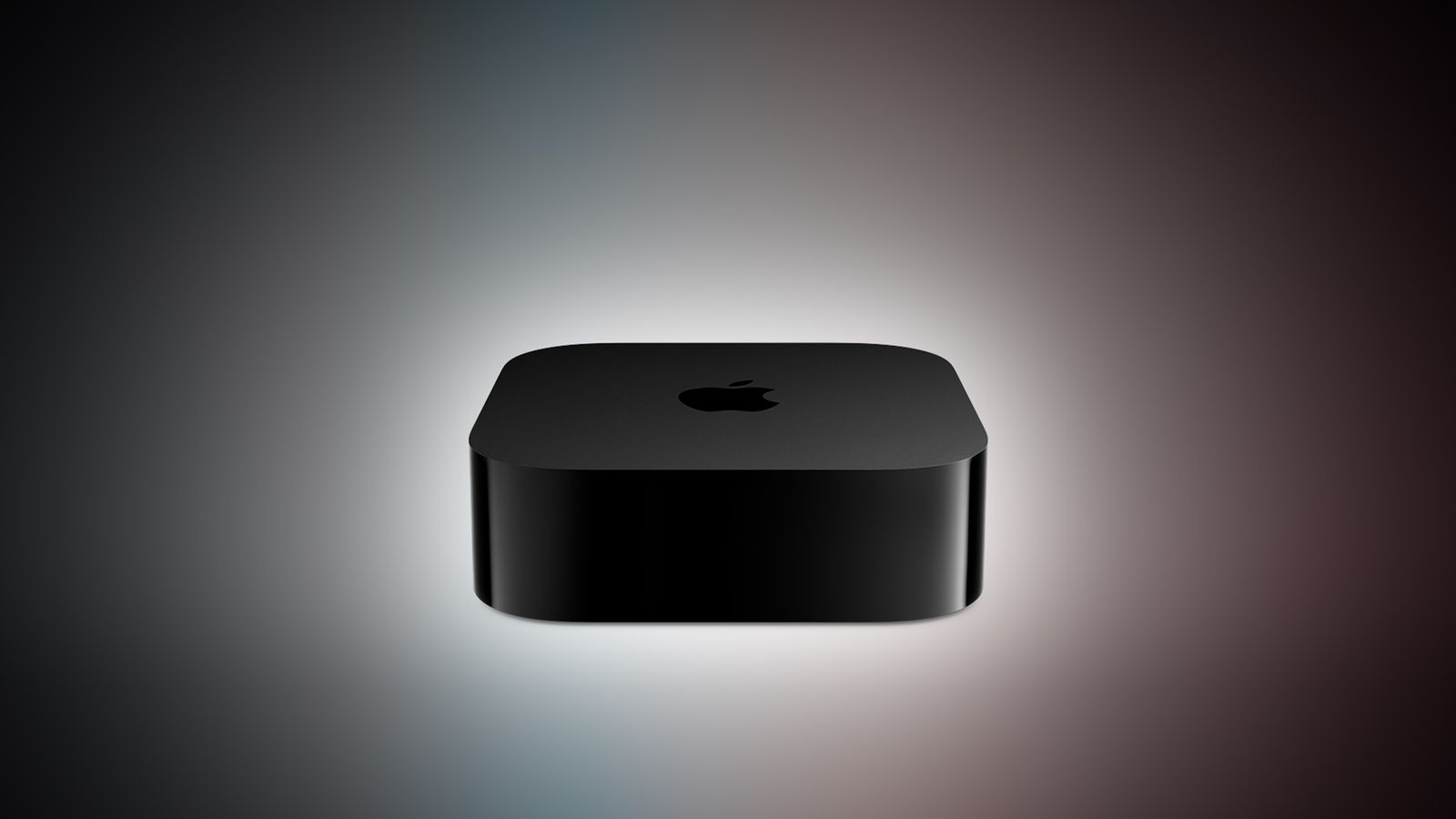
The Mac mini is absurdly small for the amount of performance it contains. The current enclosure is 12.7cm square and 5cm tall, while the Studio is 19.7cm square and 9.5cm tall. The Studio is obviously larger, but it is hardly a traditional workstation tower. Both can sit beneath a display without claiming much desk space, although the mini is the easier machine to mount, hide or move between rooms.

The more meaningful distinction is how much hardware Apple can fit inside each chassis. The M6 mini tops out at 32GB of unified memory, while the M5 Pro version can reach 64GB. Mac Studio begins at 36GB on M5 Max, can be configured to 128GB, and the M5 Ultra stretches all the way to 512GB. Studio also has substantially more GPU capacity, more memory bandwidth and more media-engine resources. In other words, the mini is designed to be fast at a very broad range of tasks, while Studio is designed to keep scaling when those tasks stop being small.
Everyday performance: the Mac mini can actually be faster
One of the most useful findings from testing the two machines side by side is that Mac Studio does not win every benchmark. My M6 Mac mini review unit has a 12-core CPU, 12-core GPU, 32GB of unified memory and a 2TB SSD. The M5 Max Mac Studio I tested has an 18-core CPU, 40-core GPU, 128GB of unified memory and an 8TB SSD.
Benchmarks compared
Computers compared
| Benchmark | Mac mini (M6, 2026) | Mac Studio (M5 Max, 2026) |
|---|---|---|
| Geekbench 7 CPU – Single Core | 4001 | 3651 |
| Geekbench 7 CPU – Multi Core | 22278 | 34227 |
| Geekbench 7 GPU | 90287 | 245926 |
The M6 mini was about 10% faster in Geekbench 7 single-core, while the Studio was roughly 54% faster in multicore and delivered around 2.7 times the Metal score. That neatly explains the buying decision. For WordPress, Safari, office work, email, general coding and the hundreds of small interactions that make up a normal day, Mac Studio does not automatically feel faster. A modern Mac mini is already operating well beyond what those tasks need.
Once an application can keep many CPU cores or a much larger GPU busy, Studio moves into a different performance class. That is why I would not buy a Studio merely because I wanted the “faster Mac”. I would buy one because I already know the applications I use can exploit those extra resources.

Video editing: Mac mini is capable, Mac Studio buys back time
I tested both systems in DaVinci Resolve 21.1 using an actual 11-minute project from our YouTube workflow. It contains A-roll, B-roll, graphics, titles and Fusion elements, and I exported the same 3840 × 2160/60 project through QuickTime H.264 with hardware acceleration enabled and Render Cache disabled. This is much more useful to me than a synthetic media benchmark because it represents the sort of project I sometimes edit.
Benchmarks compared
Computers compared
| Benchmark | Mac mini (M6, 2026) | Mac Studio (M5 Max, 2026) |
|---|---|---|
| DaVinci Resolve 4K60 H.264 export | 524 Seconds | 335 Seconds |
The Studio finished the job roughly 36% sooner. An occasional eight-minute export becoming a five-minute export is pleasant but probably not worth thousands of dirhams on its own. If you export several projects a day, work with more demanding codecs, use heavier effects or make money from the time spent waiting for renders, those minutes accumulate quickly. This is where Studio’s additional media engines, GPU resources and memory bandwidth begin to have practical value rather than simply making a benchmark chart taller.
The M6 mini remains a capable video-editing machine, and that is worth stressing. Its result was already considerably faster than my previous M4 Pro mini on this project. The decision is less “Can the mini edit 4K video?” and more “How much time do I spend waiting for it?”
Photo editing: Mac Studio wins, but the gap is small
Not every creative workload scales like Resolve. I also ran Pixelmator Pro 4.3 Super Resolution on the same 20.1MB, 6451 × 4672 JPEG. After removing first-run warm-up effects, the M6 mini averaged 7.92 seconds while the M5 Max Studio averaged 6.38 seconds.
Benchmarks compared
Computers compared
| Benchmark | Mac mini (M6, 2026) | Mac Studio (M5 Max, 2026) |
|---|---|---|
| Pixelmator Pro Super Resolution | 7.92 Seconds | 6.38 Seconds |
The Studio was faster, but nowhere near its 2.7x Metal advantage. That is the danger of buying hardware from a specifications table. Applications do not all scale perfectly with additional GPU cores, and some tasks finish quickly enough that even a measurable advantage barely changes your day. For photographers working primarily in apps such as Photos, Lightroom or Pixelmator, I would put memory capacity and storage needs ahead of chasing the largest available GPU.
Gaming and GPU work: Studio pulls away dramatically
Conventional GPU performance is one of the clearest reasons to move from mini to Studio. In Cyberpunk 2077 version 2.31, I ran both machines at the same locked 1920 × 1080 settings with a Medium-derived custom preset, High textures, MetalFX Quality, frame generation disabled, ray tracing disabled and VSync off.
Benchmarks compared
Computers compared
| Benchmark | Mac mini (M6, 2026) | Mac Studio (M5 Max, 2026) |
|---|---|---|
| Cyberpunk 2077 Medium Average FPS | 82.2 fps | 193.67 fps |
| Cyberpunk 2077 Medium Minimum FPS | 69.41 fps | 152 fps |
| Cyberpunk 2077 Medium Maximum FPS | 98.39 fps | 245.02 fps |
The Studio delivered more than twice the average frame rate. Gaming alone still would not be my reason for buying a Mac Studio, because a similarly priced gaming PC opens a much larger game library. But the result is valuable for people doing 3D rendering, motion graphics, game development, GPU compute or other workloads that can keep a 40-core GPU busy. When software is able to use the hardware, the extra GPU resources stop being subtle.
Local AI is where the two Macs become fundamentally different
Local AI is the area where I think the Mac mini versus Mac Studio decision has changed most in this generation. Apple has added Neural Accelerators to the GPU cores across the range, and the M6 mini can be surprisingly fast. In fact, in Geekbench AI 1.7 running through the Neural Engine, my M6 mini beat the M5 Max Studio in single-precision, half-precision and quantized tests.
Benchmarks compared
Computers compared
| Benchmark | Mac mini (M6, 2026) | Mac Studio (M5 Max, 2026) |
|---|---|---|
| Geekbench AI Single Precision | 6801 | 6206 |
| Geekbench AI Half Precision | 63006 | 49577 |
| Geekbench AI Quantized | 85175 | 67954 |
That result is also a good demonstration of why “AI performance” cannot be reduced to one score. I recreated the same MLX environment on both machines using Python 3.12.14, MLX 0.32.2 and MLX-LM 0.31.3. Once the workloads moved to local language models using the GPU and unified-memory subsystem, Studio was substantially faster.
Benchmarks compared
Computers compared
| Benchmark | Mac mini (M6, 2026) | Mac Studio (M5 Max, 2026) |
|---|---|---|
| MLX Qwen3 4B Prompt Processing | 2077.95 tok/s | 6385.243 tok/s |
| MLX Qwen3 4B Generation | 53.346 tok/s | 171.166 tok/s |
| MLX Qwen3 30B-A3B Prompt Processing | 1752.288 tok/s | 5402.434 tok/s |
| MLX Qwen3 30B-A3B Generation | 62.013 tok/s | 130.628 tok/s |
| Llama 3.3 70B Prompt Processing | 370.292 tok/s | |
| Llama 3.3 70B Generation | 13.093 tok/s | |
| Llama 3.3 70B Peak Memory | 41.203 GB |
The bigger difference is capacity. The M6 mini can be configured with up to 32GB of unified memory and the M5 Pro mini with up to 64GB. The M5 Max Studio reaches 128GB, while M5 Ultra reaches 512GB. On the 128GB Studio I loaded a 4-bit Llama 3.3 70B model that peaked at 41.2GB and generated at 13.1 tokens per second. That would exceed the physical memory in my 32GB M6 review unit, although it would fit within a 64GB M5 Pro mini.
I also ran GPT-OSS 120B locally on the Studio and used it through an offline OpenClaw workflow to analyse a document after physically disconnecting Wi-Fi and Ethernet. That is the point where Mac Studio stops being merely a faster mini. If your local AI workload requires 100GB, 200GB or more of unified memory, there simply is no Mac mini configuration that gives you that capacity.
Storage: configuration matters more than the logo on the box
My two review configurations also produced a huge storage difference. The 2TB SSD in the M6 mini reached 6,482MB/s writes and 5,946MB/s reads in Blackmagic Disk Speed Test 3.4.3. The 8TB SSD in the Studio reached 16,043MB/s writes and 13,376MB/s reads using the same 5GB/five-cycle methodology.
Benchmarks compared
Computers compared
| Benchmark | Mac mini (M6, 2026) | Mac Studio (M5 Max, 2026) |
|---|---|---|
| Blackmagic SSD Read | 5946.4 MB/s | 13375.9 MB/s |
| Blackmagic SSD Write | 6481.7 MB/s | 16042.8 MB/s |
I would not treat that as a universal mini-versus-Studio multiplier. SSD capacity and NAND configuration affect throughput, and my Studio has an unusually expensive 8TB internal drive. The useful takeaway is that storage configuration can materially affect performance. If your work involves very large video projects or loading huge local AI models, do not treat the SSD choice as a line item that only changes how many files fit.
Ports and displays: Mac Studio is easier to live with professionally
The current Mac mini gives you two front USB-C ports and a headphone jack. Around the back are HDMI, Ethernet and three Thunderbolt ports. M6 uses Thunderbolt 4 at up to 40Gb/s, while M5 Pro gets Thunderbolt 5. Both now include 2.5Gb Ethernet as standard with 10GbE available as an option, plus Wi-Fi 7 and Bluetooth 6.

Mac Studio has four rear Thunderbolt 5 ports, 10Gb Ethernet as standard, HDMI 2.1, two USB-A ports and a headphone jack. More importantly for photographers and video creators, it adds an SDXC UHS-II card slot on the front. M5 Max has two front USB-C ports at 10Gb/s, while M5 Ultra upgrades those front ports to Thunderbolt 5. Studio also supports up to five external displays with M5 Max and up to eight with M5 Ultra, compared with up to three on Mac mini.

None of that makes Studio inherently better for a normal desk with one or two monitors. But if you already own fast Thunderbolt storage, capture hardware, card readers, audio interfaces and several displays, the Studio requires fewer docks and compromises. Ports are not exciting until you run out of them, at which point they become the only feature in the universe that matters.
Noise and thermals: both are exceptionally quiet
Neither machine gave me a reason to worry about noise. During repeated 4K Resolve exports, local 30B LLM inference, Cyberpunk benchmarks and CPU testing, I never heard the M6 mini’s fan from my normal seating position. The M5 Max Studio was similarly quiet even under much heavier work.
On the Studio, I measured roughly 7–9W with only a few apps open. GPT-OSS 120B inference hovered around 101–103W, while twenty consecutive runs settled around 106W and peaked at 115W without changing performance.
A heavier OpenClaw document workflow eventually peaked at 174W. Even then I could only hear the fan faintly when I deliberately moved close to the machine. For a desktop workstation, that thermal behaviour is one of Studio’s less glamorous but more impressive strengths.
The price crossover: when should you stop upgrading a Mac mini?
This is the part of the buying decision I would pay closest attention to. My M6 Mac mini review unit has 32GB of memory, a 2TB SSD and 10Gb Ethernet, bringing its UAE price to AED 10,549. The base M5 Max Mac Studio starts at AED 10,499. In other words, the particular mini I tested actually costs AED 50 more than the entry Studio.
That does not automatically make the Studio the better purchase. The configured mini gives you a 2TB SSD rather than 512GB, and it is substantially smaller. It also has excellent M6 single-core and Neural Engine performance. But the Studio gives you 36GB of unified memory at entry level, a much larger GPU, more CPU cores, four rear Thunderbolt 5 ports, 10Gb Ethernet, an SD card reader, USB-A and more display support. Once your Mac mini configuration approaches AED 10,000, I would always price an equivalent Studio before checking out.
The same logic applies to M5 Pro. Its AED 7,299 starting price gives you an excellent middle ground with Thunderbolt 5, up to 64GB of memory and stronger conventional GPU performance than the base M6. But every memory and storage upgrade reduces the gap to a base M5 Max Studio. If you are configuring M5 Pro because you genuinely need 64GB, several terabytes of internal storage and sustained pro performance, you are exactly the buyer who should compare the final price against Studio rather than assuming the smaller chassis must be the cheaper option.
Which Mac should you buy for your workload?
| Workload | Where I would start | Why |
|---|---|---|
| Home, office, web and productivity | Mac mini M6 | Studio adds little to normal responsiveness. |
| General software development | Mac mini M6 or M5 Pro | Move to M5 Pro for heavier builds, more memory or Thunderbolt 5. |
| Photography | Mac mini M6 | Fast image processing; spend first on enough memory and storage. |
| Occasional 4K video editing | Mac mini M6 | Already very capable in Resolve. |
| Daily professional video work | Mac Studio M5 Max | Faster exports, more GPU and media-engine headroom. |
| 3D, VFX or game development | Mac Studio M5 Max | Large GPU advantage and more memory bandwidth. |
| Local AI up to roughly 30B-class models | Mac mini M6 or M5 Pro | Excellent performance if the model fits comfortably in memory. |
| Large local AI models | Mac Studio M5 Max or M5 Ultra | 128GB to 512GB unified memory changes what can run locally. |
| Extreme 8K, simulation or very large AI workloads | Mac Studio M5 Ultra | This is where the additional CPU, GPU, media engines and memory capacity exist for a reason. |
The Mac mini configurations I would consider
For most buyers, I would start with the M6 Mac mini and increase memory or storage only when I can explain exactly why I need it. The base 16GB/256GB configuration is attractive at AED 3,799, but 256GB is restrictive for a desktop I expect to keep for years. A storage upgrade or a good external SSD is sensible, and 24GB of unified memory gives heavier multitasking and creative work more room.
I would move to M5 Pro when the requirement is specific: more conventional GPU performance, Thunderbolt 5, 64GB of unified memory or sustained professional workloads. I would not automatically buy M5 Pro because the word “Pro” appears on the chip. The M6 mini’s excellent single-core performance and strong AI acceleration make the cheaper model unusually capable.
The Mac Studio configurations I would consider
The base M5 Max Studio at AED 10,499 is the first configuration I would compare against any heavily upgraded mini. For creative work, its 36GB starting memory and much larger GPU already move it into a different class. If local AI is the reason for buying Studio, though, I think memory becomes more important than internal storage.
My review machine’s 128GB/8TB configuration costs AED 39,299, and I would not buy that configuration. The much more relevant 128GB/1TB configuration costs AED 23,549 in the UAE. That gives large models considerably more breathing room without spending a huge portion of the budget on internal flash storage. M5 Ultra is for people who can already describe the workload that needs it; 512GB of unified memory is extraordinary, but so is paying for hardware that spends most of its life opening Slack.
Mac mini vs Mac Studio: which one should you buy?
The Mac mini should be the default choice. M6 is fast enough that I would happily use it as my everyday desktop for writing, web work, image editing and occasional video projects. It stays quiet, takes almost no desk space and, at its lower configurations, offers a level of performance that would have looked ridiculous in a machine this small only a few years ago.
Mac Studio earns its higher price when time, GPU performance or memory capacity have measurable value to you. My Resolve project finished roughly 36% sooner, Cyberpunk more than doubled its average frame rate, and local MLX models ran substantially faster. More importantly, 128GB and 512GB memory options let Studio run workloads that simply do not fit comfortably on the smaller machines. If none of those sentences describes your work, save the money and buy the mini. If they describe what you do every day, the Studio is not an indulgence; it is the machine built for that job.
The one rule I would keep regardless of generation is simple: once you have configured a Mac mini close to the price of the entry Mac Studio, stop and compare the two again. Apple’s upgrade pricing can turn a small computer into a very expensive small computer remarkably quickly.
How we tested
The comparison results in this guide come from our own testing of an M6 Mac mini with a 12-core CPU, 12-core GPU, 32GB unified memory, 2TB SSD and 10Gb Ethernet, and an M5 Max Mac Studio with an 18-core CPU, 40-core GPU, 128GB unified memory and 8TB SSD. Where machines were compared directly, I used the same application versions, project files and settings wherever possible.
Our tests included Geekbench 7, Geekbench AI 1.7, Blackmagic Disk Speed Test 3.4.3, DaVinci Resolve 21.1, Pixelmator Pro 4.3, Cyberpunk 2077 2.31 and local MLX language-model workloads. SSD results are configuration-specific, and real performance can vary with memory, storage capacity, software versions and the exact chip configuration. For the full testing notes, see our M6 Mac mini review and M5 Max Mac Studio review. We have also compared previous Mac Studio hardware against a Ryzen 9 9950X3D and RTX 5090 SFF PC.
Mac mini vs Mac Studio FAQ
Is Mac Studio faster than Mac mini?
Mac Studio is much faster in heavily threaded CPU work and GPU-heavy workloads, but it is not faster at everything. In our testing, the M6 Mac mini actually scored higher than the M5 Max Studio in Geekbench 7 single-core and Geekbench AI through the Neural Engine. Studio pulls away when software can use its additional CPU cores, larger GPU and much higher memory bandwidth.
Is Mac Studio worth it over Mac mini?
Mac Studio is worth the extra cost when your work regularly benefits from faster renders and exports, a much larger GPU, more ports or more than 64GB of unified memory. For normal productivity, web work and occasional creative tasks, Mac mini is usually the more sensible purchase.
Is Mac mini good enough for 4K video editing?
Yes. Our M6 Mac mini completed an 11-minute 4K60 DaVinci Resolve project in an average of 8 minutes 44 seconds. The M5 Max Studio completed the same export in 5 minutes 35 seconds. The mini is capable; Studio becomes attractive when you do enough of this work for the saved time to matter.
How much unified memory should I get in a Mac mini?
16GB is enough for mainstream home and office use, while 24GB or 32GB gives creative work, heavier multitasking and local AI more breathing room. If you know you need more than 32GB, the M5 Pro mini supports up to 64GB. Beyond that, you need Mac Studio.
Should I buy an M5 Pro Mac mini or M5 Max Mac Studio?
Start with the final configured price rather than the chip name. M5 Pro mini starts at AED 7,299 and is an excellent middle ground, but the M5 Max Studio starts at AED 10,499. If memory and storage upgrades push your M5 Pro mini close to Studio pricing, compare the final configurations directly because Studio gives you substantially more GPU headroom, more ports and support for up to 128GB of memory.
Which Mac is better for running AI locally?
Mac mini is excellent for smaller and mid-sized local models, especially when configured with enough unified memory. Mac Studio is the better platform for large local models because M5 Max supports up to 128GB and M5 Ultra up to 512GB. In our MLX testing, the M5 Max Studio also substantially outperformed the M6 mini in both prompt processing and token generation.
Can a Mac mini replace a Mac Studio?
For many people, yes. Modern Mac mini performance is high enough for productivity, development, photography and a surprising amount of professional creative work. It cannot replace Studio when the workload depends on Studio-only levels of GPU performance, memory capacity, media throughput, display support or expansion.