
Masdar sees $11 trillion global hydrogen opportunity as WFES opens in Abu Dhabi
The 18th World Future Energy Summit opens with major funding news from the EU and a focus on the UAE-Australia energy corridor.

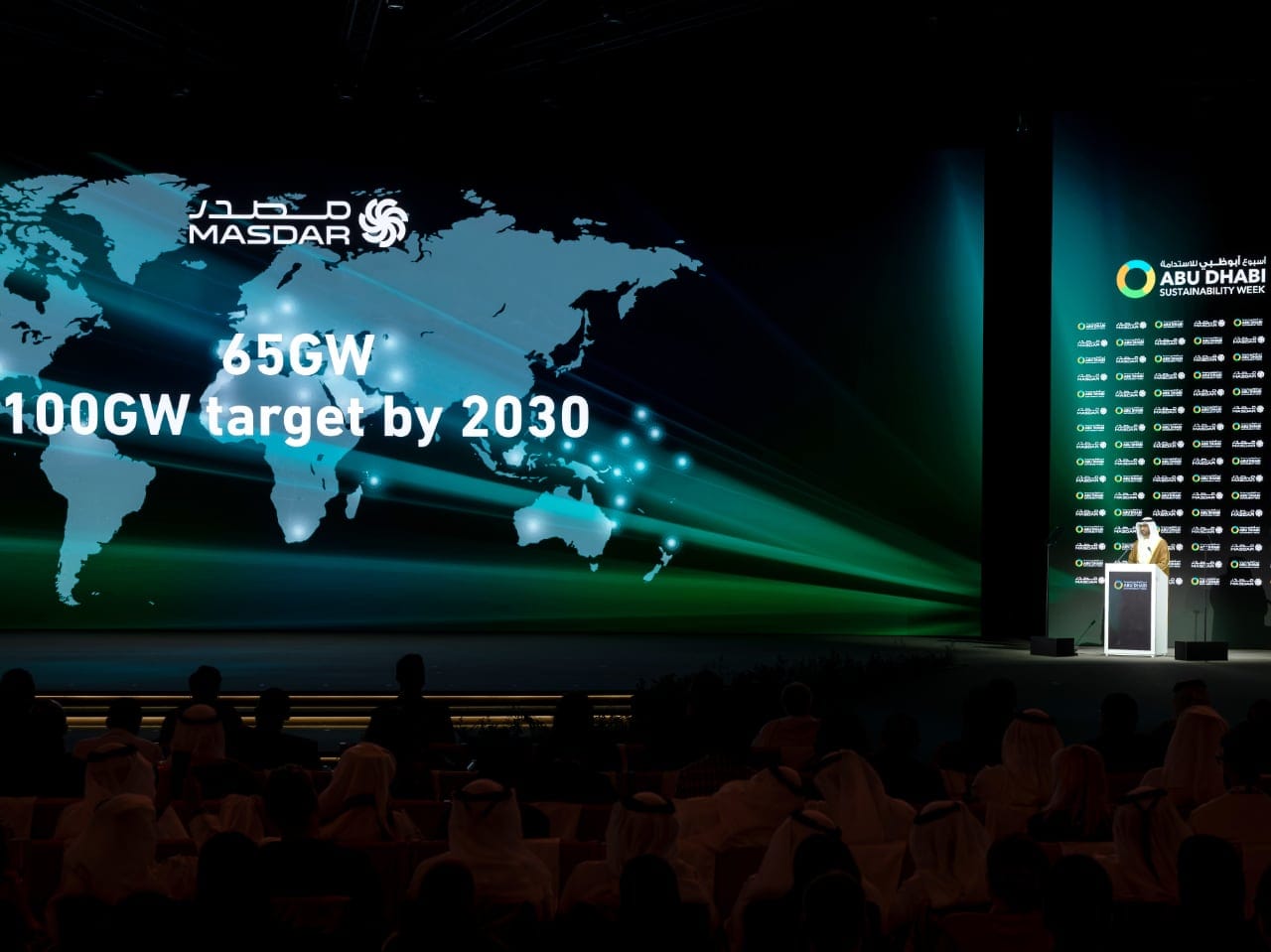
The 18th World Future Energy Summit Abu Dhabi (WFES) opened today with a massive EU energy fund boost signal from the European Union. According to the announcement at the event, the EU plans to increase its Connecting Europe Facility (CEF) for Energy five-fold to €30 billion (approx. Dhs 120 billion), positioning the Gulf as a critical partner in the global energy transition.
The summit, hosted by Masdar as part of Abu Dhabi Sustainability Week, runs until 15 January at the ADNEC Centre. It serves as a major platform for deal-making in the renewable sector, with this year's edition highlighting the growing financial ties between the UAE, Europe, and Australia, particularly in fostering green energy deals UAE.
While the event focuses on global trends, the immediate impact for the region is clear: Abu Dhabi is cementing its status as the broker for the world's biggest green energy deals UAE. This follows the recent Zoho data centre launch in the capital, signaling a broader trend of international investment flowing into local infrastructure.
EU Energy Fund Boost and Investment Push
The headline figure from the opening day came from Ditte Jørgensen, Director General for Energy at the European Commission. She confirmed the expansion of the EU energy fund programme to implement cross-border energy networks.
Here are the key figures revealed during the opening session:
- €30 billion (Dhs 120 billion): The target size for the EU energy fund via the Connecting Europe Facility for Energy.
- €328 billion (Dhs 1.3 trillion): The current value of mutual investments between the UAE and EU.
- $11 trillion (Dhs 40 trillion): Projected global investment in green hydrogen by 2040, according to Masdar.
Lucie Berger, the EU Ambassador to the UAE, noted that the Emirates is now the EU's leading investment partner in the region. She indicated that future agreements would focus heavily on hydrogen investment and cleantech, sectors where the UAE has been aggressively expanding its capabilities.
UAE-Australia Green Energy Deals
Beyond Europe, the summit shed light on the new economic corridor opening up between the UAE and Australia. Following the ratification of the Comprehensive Economic Partnership Agreement (CEPA) in November 2025, industry leaders see this as the start of a major capital influx.
Trevor Ducharme, President at Global CMX, described the agreement as a "catalyst to unlock billions in renewable energy deals." This strong partnership paves the way for significant UAE-Australia green energy deals, driving investment into the UAE's solar and hydrogen infrastructure, creating a direct link between Australian resources and UAE logistical and financial hubs.
Hydrogen Investment and Infrastructure at WFES Abu Dhabi
The recurring theme of the summit is the shift from planning to infrastructure. Masdar's Chief Hydrogen Officer, Mohammad Abdelqader El-Ramahi, highlighted the massive capital requirements—and opportunities—in the green hydrogen space, projecting a global hydrogen investment need of over $11 trillion by 2040.
Closer to home, the Abu Dhabi Department of Energy emphasised that solar power has graduated from an "emerging option" to critical infrastructure. Ahmed Al Falasi, the department's Energy Efficiency Sector Executive Director, noted that the challenge is no longer about generation but reliability.
"Solar provides scale and cost efficiency, storage provides flexibility, and nuclear provides clean, stable baseload power," said Al Falasi. "Together, these technologies form a balanced load system that supports economic growth while maintaining energy security."
Designing for the Gulf
A notable discussion on the sidelines of the main plenary focused on how Gulf cities should adapt to climate challenges. Rather than copying Western models, experts argued for a region-specific approach to urban planning.
Marina Antonopoulou from Emirates Nature WWF pointed out that while cities like New York and London rely on massive central parks, the Gulf's climate demands different solutions. She cited Abu Dhabi's mangrove initiatives as a prime example of how local ecology can serve as green infrastructure, protecting coastlines while improving biodiversity.
For more details on the agenda, you can visit the official summit website.
FAQs
What is the World Future Energy Summit?
The World Future Energy Summit (WFES) is an annual global event held in Abu Dhabi focused on renewable energy, sustainability, and cleantech. It brings together government leaders, investors, and innovators to discuss policy and sign deals. It is a key part of Abu Dhabi Sustainability Week.
When is the World Future Energy Summit 2026?
The 2026 edition takes place from 13 January to 15 January 2026. It is held at the ADNEC Centre in Abu Dhabi.
What key investments were announced at WFES 2026?
On opening day, the EU Commission announced plans to increase its Connecting Europe Facility for Energy to €30 billion. Additionally, officials highlighted the UAE-Australia CEPA trade deal as a driver for billions of dollars in future renewable energy investments.
Who attends the World Future Energy Summit?
The summit attracts over 50,000 participants, including government officials, energy sector executives, investors, and technology providers. It features more than 800 global brands and includes dedicated zones for startups and AI cleantech.
Is the UAE a major partner for the EU in energy?
Yes. During the summit, it was revealed that the UAE is the EU's leading investment partner in the region, with mutual investments exceeding €328 billion (US$383bn). Future collaborations are expected to focus on green hydrogen and renewable technology.
Written by

Subscribe to our newsletter
Subscribe to our newsletter to get the latest updates and news











Member discussion