
WHOOP MG Review: 3 Months with the UAE’s Most Expensive "Invisible" Coach
Trying to build healthier habits in 2026? After 90 days with the WHOOP MG, I’ve realised this isn't really a fitness tracker, it’s a data-driven intervention. If you’re looking for a smartwatch to count your steps and show your WhatsApp pings, close this tab now.

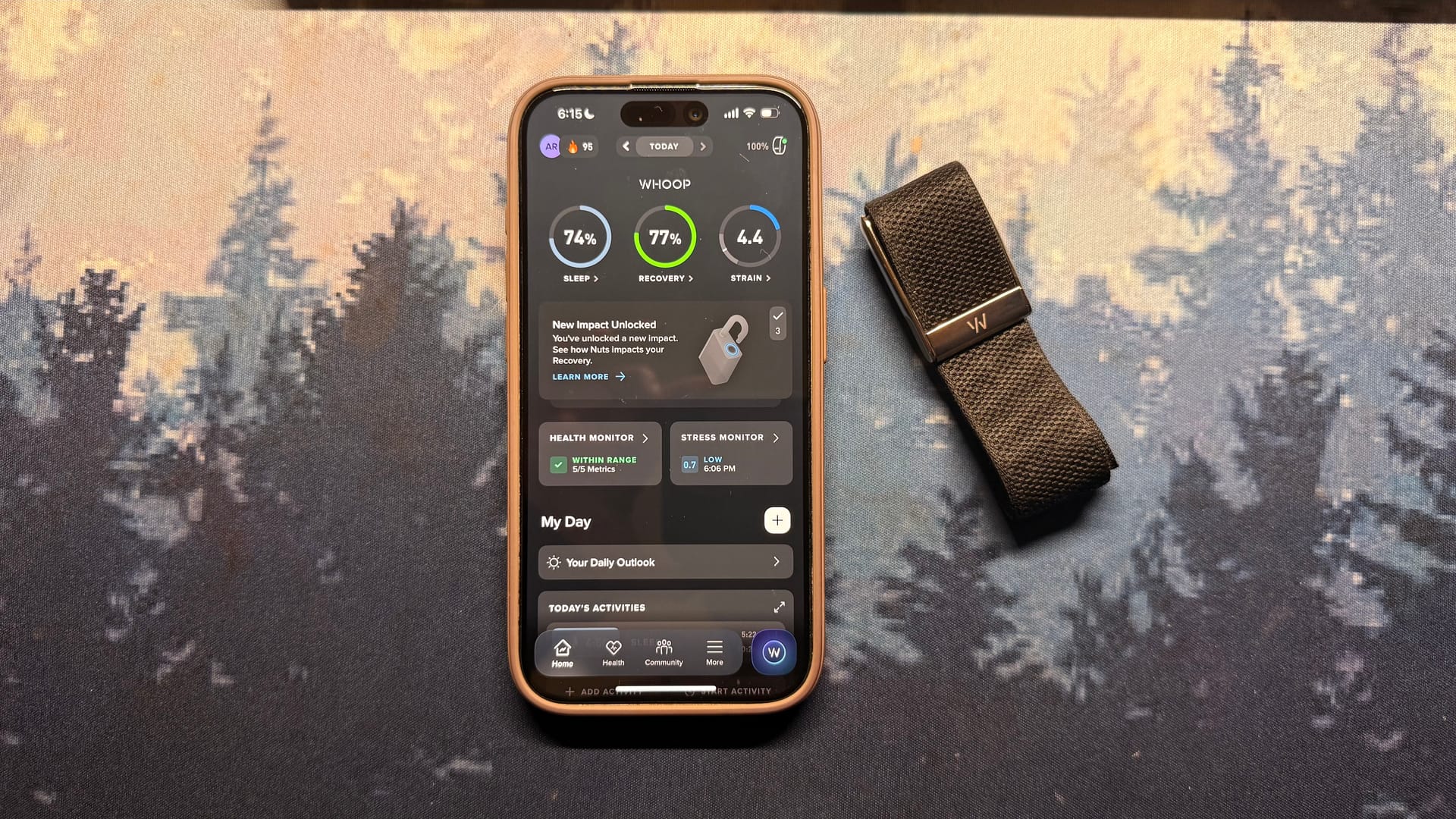
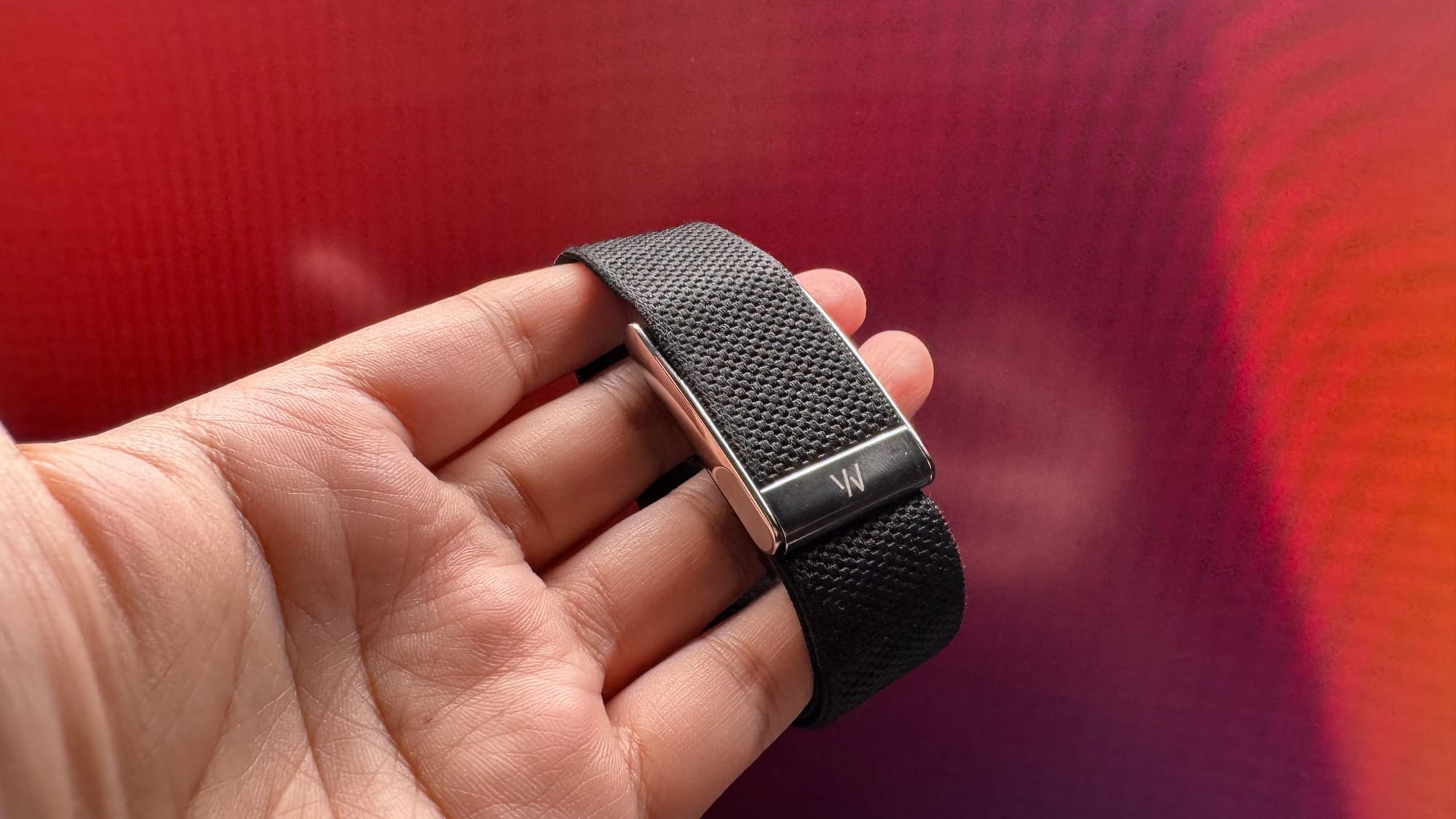
I have been wearing the WHOOP MG for a little over 90 days. At this point, it feels less like a gadget and more like a permanent part of my wrist. It is easily the most comfortable health band I have ever used, which matters more than it sounds when your skin usually rebels against wearables. Most smartwatches leave me with rashes or that trapped, humid feeling under the sensors. WHOOP never did. It stayed cool, dry, and easy to forget.
The bigger question is whether the data WHOOP collects is useful enough to justify the price, the subscription, and the daily habit of checking in with your body. The answer sits somewhere in the middle. WHOOP is impressive in ways I did not expect and frustrating in ways I probably should have. It is not a smartwatch, and despite its popularity with elite athletes, it is not meant to replace precision performance tools like GPS watches or chest straps.
Its focus is on recovery, readiness, and long-term physiological trends rather than granular, workout-by-workout metrics. It behaves more like a quiet companion that nudges you each morning with an honest snapshot of where your body stands, whether you were paying attention or not.
This review is half analysis, and half lived experience because WHOOP is the kind of product that slowly reshapes your routine rather than announcing its value upfront.

KEY TAKEAWAYS
Best at: Sleep tracking, recovery trends, long-term health contextWeak at: Strength training accuracy, auto-detected workouts, instant feedbackBiggest strength: Comfort, battery life, and a genuinely excellent appBiggest drawback: The subscription, especially for casual exercisers
The Screenless Philosophy
The WHOOP MG exists outside the usual smartwatch playbook. There is no screen to glance at, no notifications to interrupt your day, and it does not even tell you the time. It is designed to stay out of your way while quietly collecting data on sleep, recovery, and stress.
In the UAE, the WHOOP MG Life edition with a 12-month membership typically sells for around AED 1,379. This is where WHOOP’s model becomes divisive. You are not really buying a device so much as committing to an ongoing service. Once the subscription ends, the hardware itself loses most of its value.
At this price, you could buy a very capable smartwatch. WHOOP’s value, therefore, lives almost entirely in its insights, not the band on your wrist.
Battery Life and Charging
Battery life is one of WHOOP MG’s quiet strengths. On a full charge, it regularly lasted close to two weeks, which makes wearing it around the clock feel realistic rather than aspirational.
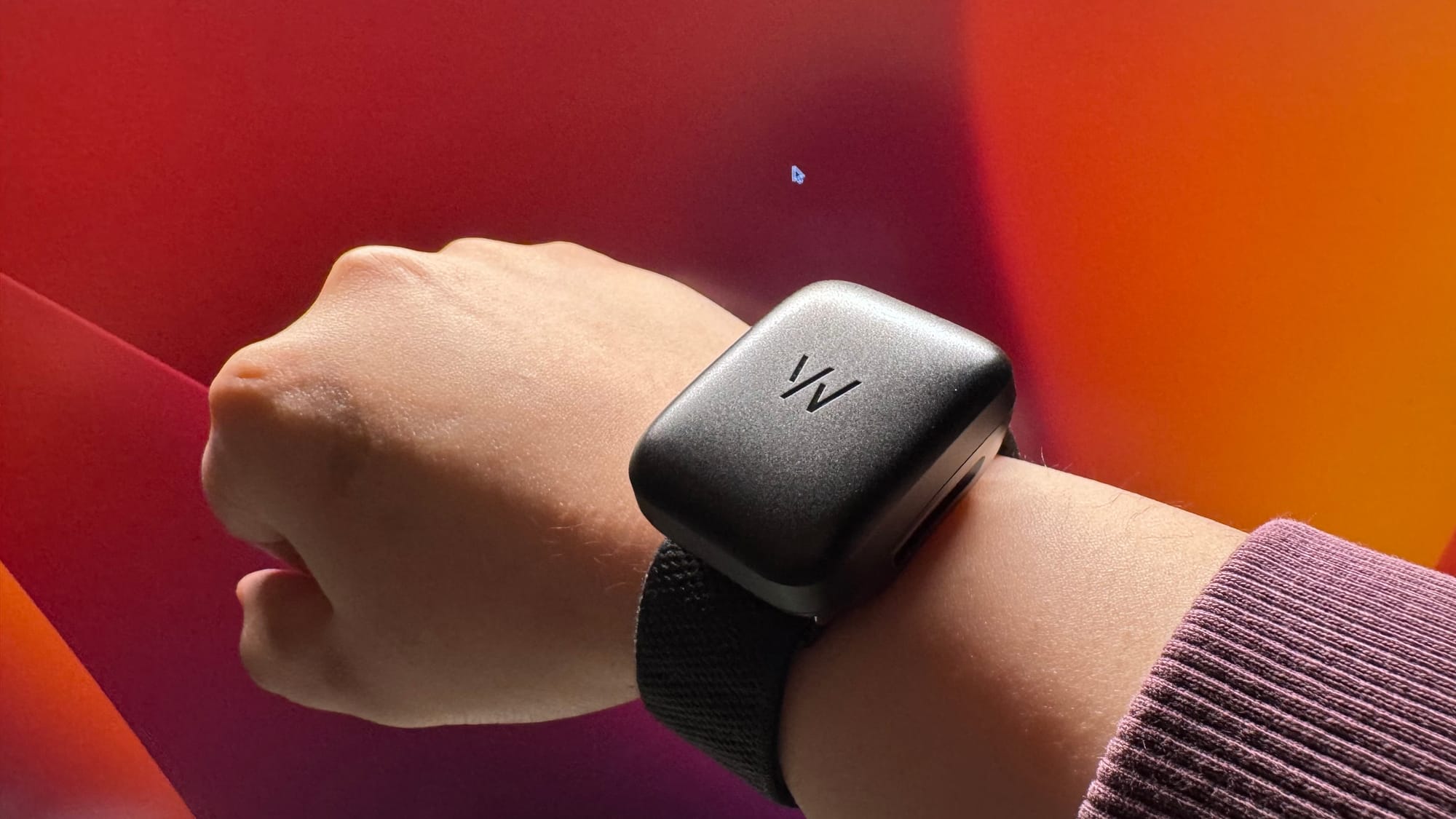
Charging happens through a slide-on battery pack that clips over the band, so you never have to take the device off your wrist. Combined with the screenless design, it removes a lot of the small annoyances that usually make people give up on wearables after a few weeks.
Living with the Data
Since there is no interface on the device, the app becomes your entire world. Thankfully, this is where WHOOP justifies its existence. This is not a case of a device collecting data and leaving you to interpret the mess. Instead, it uses the information it captures to build a narrative about your health.
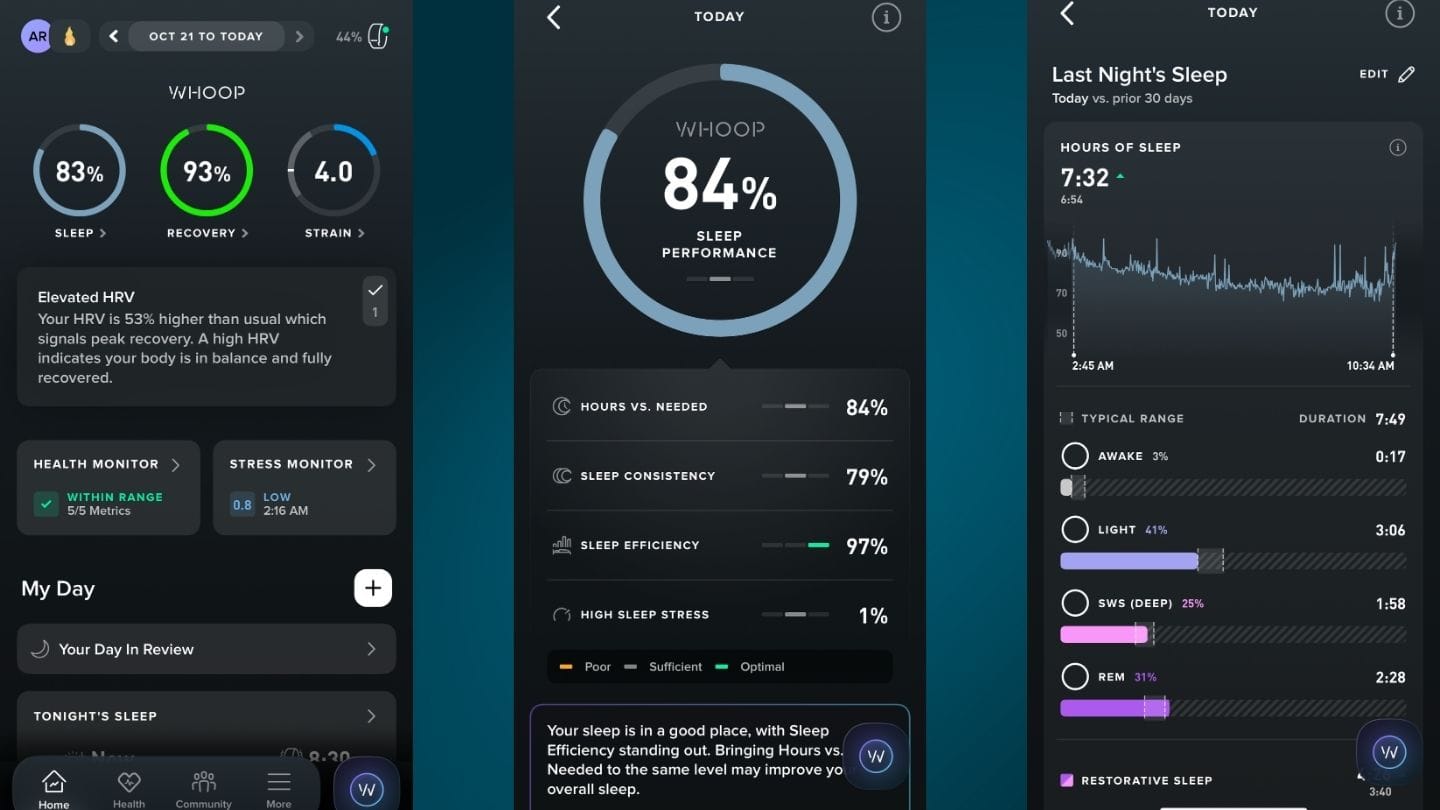
Each morning, the app analyses your sleep, heart rate variability, and skin temperature to produce a daily recovery score. This version adds more health-focused features, including ECG readings and longevity metrics like WHOOP Age. The AI layer helps connect the dots in a way that feels personal- you can ask why a day felt harder than expected, and it responds by connecting your late-night caffeine intake to your lack of REM sleep in plain language. It feels contextual rather than generic.
However, some restraint is needed with these numbers. Metrics like strain and WHOOP Age are interpretations of underlying signals rather than medical truths. The app handles long-term patterns well, making it easy to see if you are trending toward better sleep or more consistent recovery, but it is a tool for behaviour change rather than a medical diagnostic.
Sleep, Recovery, and the Gym Reality
WHOOP’s biggest strength is how it connects sleep and effort into a single readable picture.
Sleep tracking improved the longer I wore it. Over time, sleep stages and recovery scores were closely aligned with how I actually felt when I woke up. I compared it alongside a Fitbit Sense 2 and an Apple Watch. All three were broadly consistent, but WHOOP places far more emphasis on how your sleep affects your capacity for the day ahead.

Recovery is where the system shines. Green and red days generally matched my energy levels, and dips in recovery often appeared before I consciously felt run down. That feedback loop made sleep feel active and consequential rather than passive.
Workout tracking is more uneven. During cardio, heart rate readings were largely consistent with those from other devices, but strength training exposed clearer gaps. During callisthenics and lighter weight sessions, WHOOP often recorded lower peak heart rates. It also did not reliably auto-detect workouts for my routine, and sessions usually had to be started manually through the app. Since you cannot start workouts directly on the device, this can feel clunky.
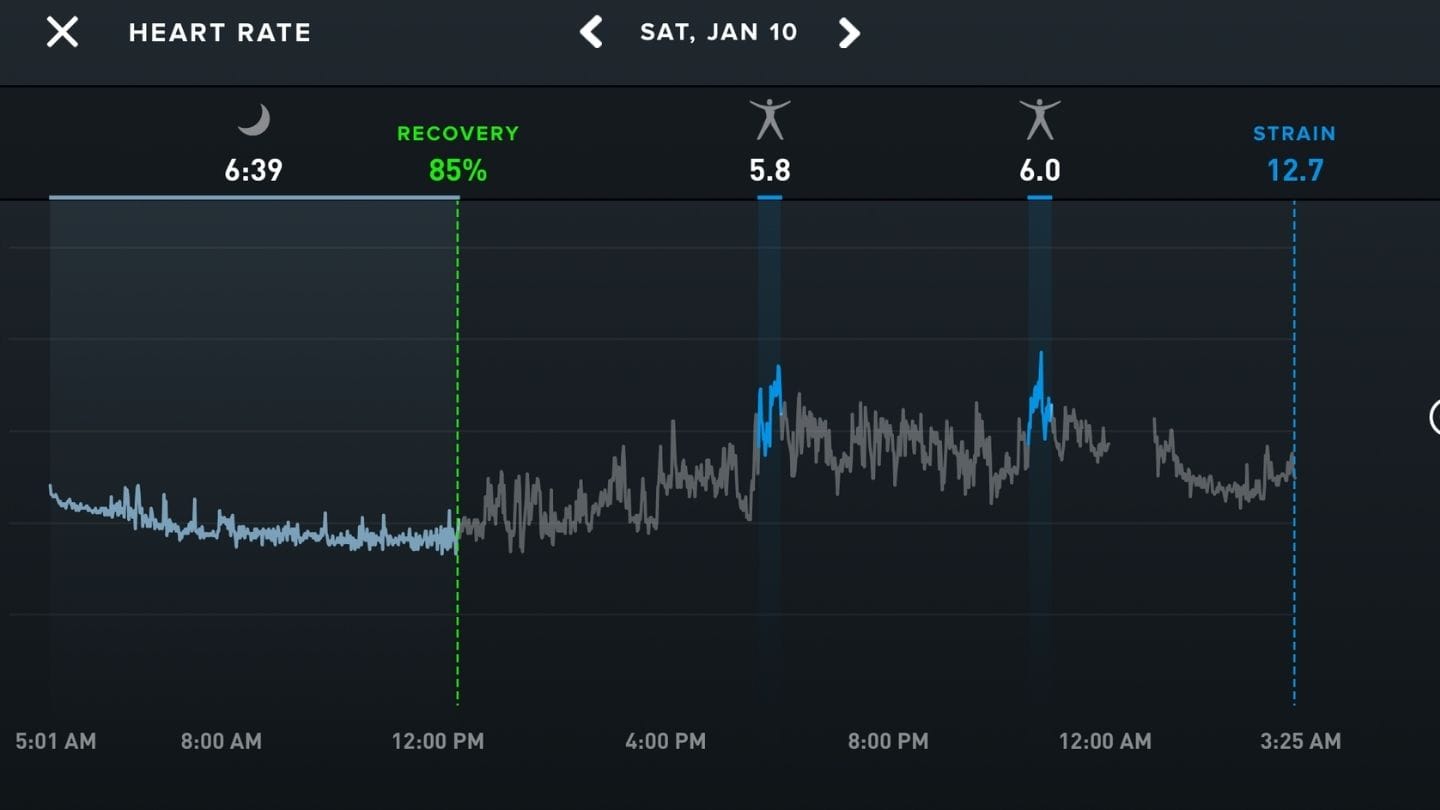
This is where expectations need a reset. WHOOP is designed to guide pacing and help avoid burnout, not to deliver medical-grade precision during strength training.
Coaching, Motivation, and WHOOP Age
If sleep and recovery are the foundation of WHOOP, this is where the system starts to influence behaviour.
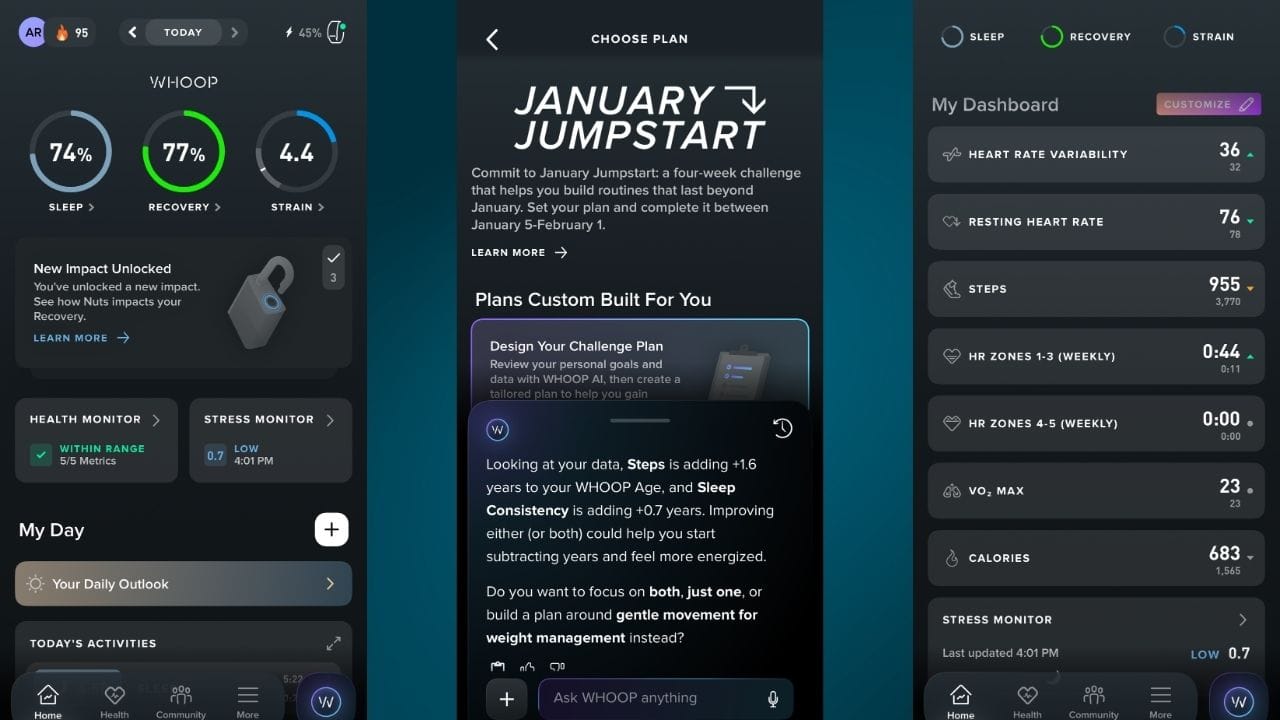
WHOOP quietly gamifies effort without turning it into a grind. The daily recovery score and strain targets create a simple loop, and the AI adds context around it. You can ask what has been dragging your recovery down lately, and it responds by linking sleep, stress, and recent activity in plain language. It feels less like being coached and more like having your own habits reflected back at you.
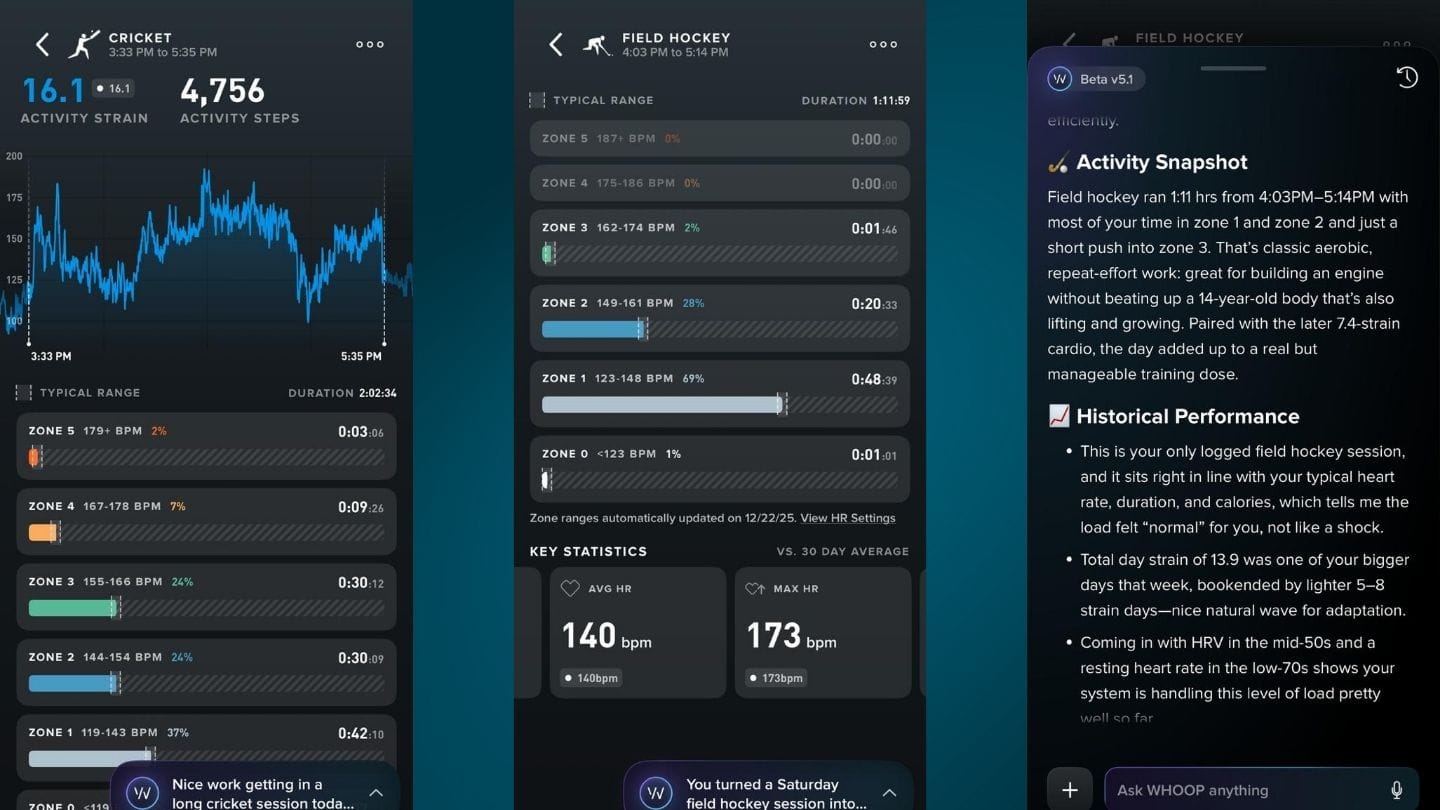
That same layer extends into light coaching as well. WHOOP suggests workout routines and adjustments based on your limitations and recent patterns. In my case, it helped shape sessions that worked around sensitive knees rather than pushing generic plans. These suggestions are not groundbreaking, but they are personalised enough to feel relevant, especially if your routine changes week to week.
This is also where WHOOP leans hardest into motivation. Metrics like WHOOP Age sit at the more controversial end of the experience. Mine was, frankly, abysmally high. I do not treat it as a literal measure of biological age, but as a framing tool. It repeatedly surfaces the same fundamentals: sleep, movement, stress, consistency, and turns them into something you want to improve, even if you question the number itself.
Used well, WHOOP creates just enough pressure to stay honest without tipping into obsession. It works best when you let the system guide your decisions, not when you try to optimise every metric or chase perfect scores.
Should you buy the WHOOP MG?
The WHOOP MG is not trying to be everything to everyone. It excels at comfort and turning complex health data into something you can actually use to change your habits. The app and AI explanations make it easier to spot patterns, especially if your goal is longevity rather than just hitting a new personal best in the gym.
Where it falls short is the pure value proposition. The subscription model is expensive, and you are effectively paying smartwatch prices every year without getting the convenience of a screen. For athletes who care deeply about recovery, it makes sense. For casual exercisers, it can feel like a very expensive luxury.
For me, it sits somewhere in the middle. I do not strictly need it, but I have grown to appreciate what it represents. It is a quiet reminder to sleep better, move more, and take my health seriously as I get older. I am just not entirely sure I want to pay for that reminder every single year.
Written by

Subscribe to our newsletter
Subscribe to our newsletter to get the latest updates and news










Member discussion