
We Built an AED 26,000 SFF PC to Beat the Mac Studio M3 Ultra - It Didn't
A custom RTX 5090 SFF build should demolish anything in its path. But in real-world video exports, especially long 4K timelines, the Mac Studio M3 Ultra kept beating it.

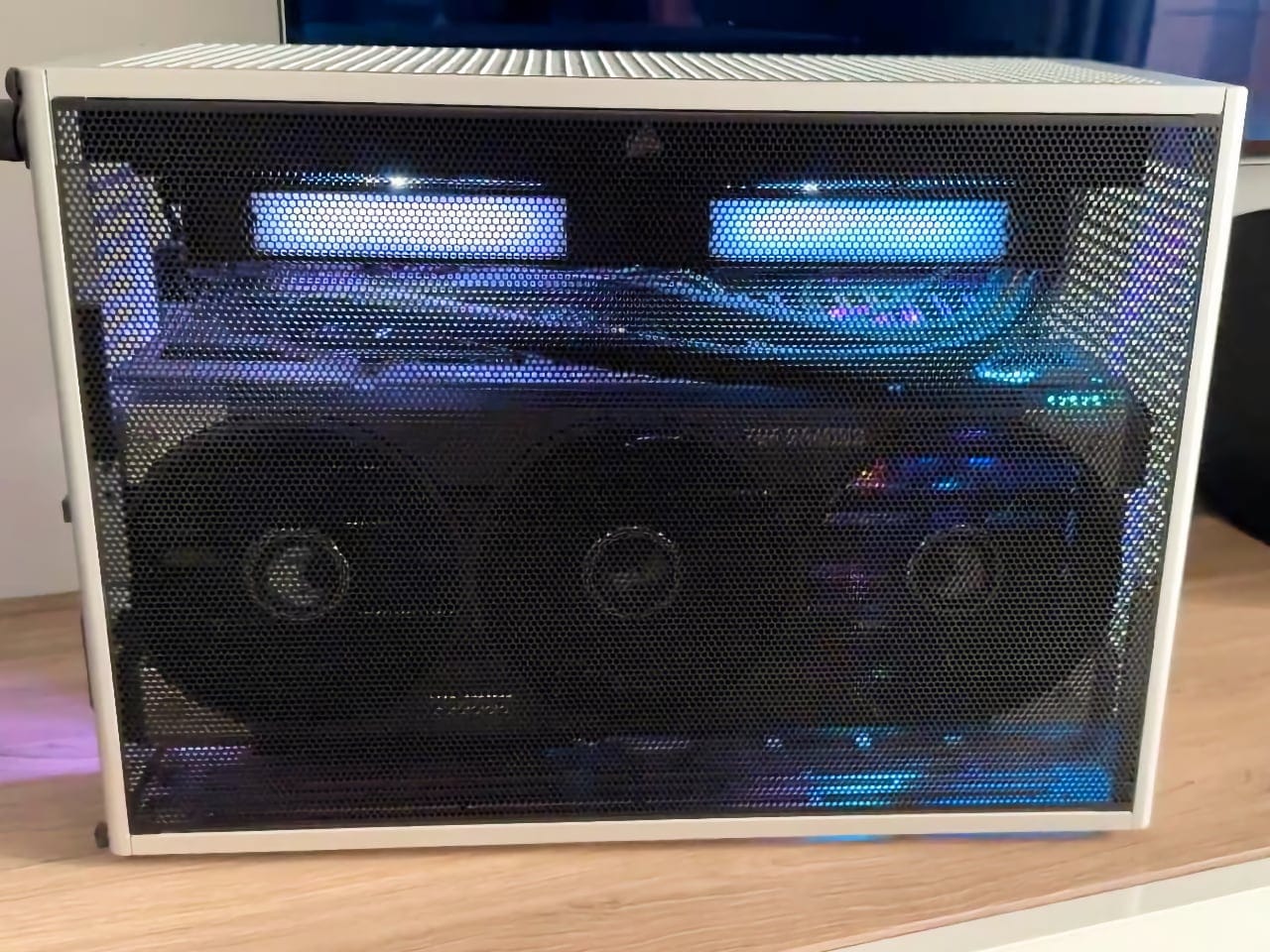
We built a custom Small Form Factor PC with an AMD Ryzen 9 9950X3D and an Nvidia RTX 5090. This machine is a beast, and we expected it to eat every benchmark we'd throw at it. After all, we used the fastest consumer GPU you can buy, and a top-end CPU, crammed into an NCASE M2 that actually fits on a desk. The cost of this PC was close to AED 26,000 (about US$ 7,100) all in.
Then we compared it to a Mac Studio M3 Ultra with 256GB unified memory — Apple's quietest flex of a workstation, that costs around AED 30,000. We ran them both through DaVinci Resolve 20 (Free), exporting H.264 with hardware encoding on.
The SFF build won a sprint. The Mac won everything else.
The machines
The SFF RTX 5090 build
- CPU: AMD Ryzen 9 9950X3D
- GPU: ASUS TUF GeForce RTX 5090 (32GB)
- Case: NCASE M2
- Cooling: Corsair 280mm AIO
- PSU: ASUS ROG Loki 1200W SFX-L
- Windows 25H2, Nvidia Game Ready 591.86
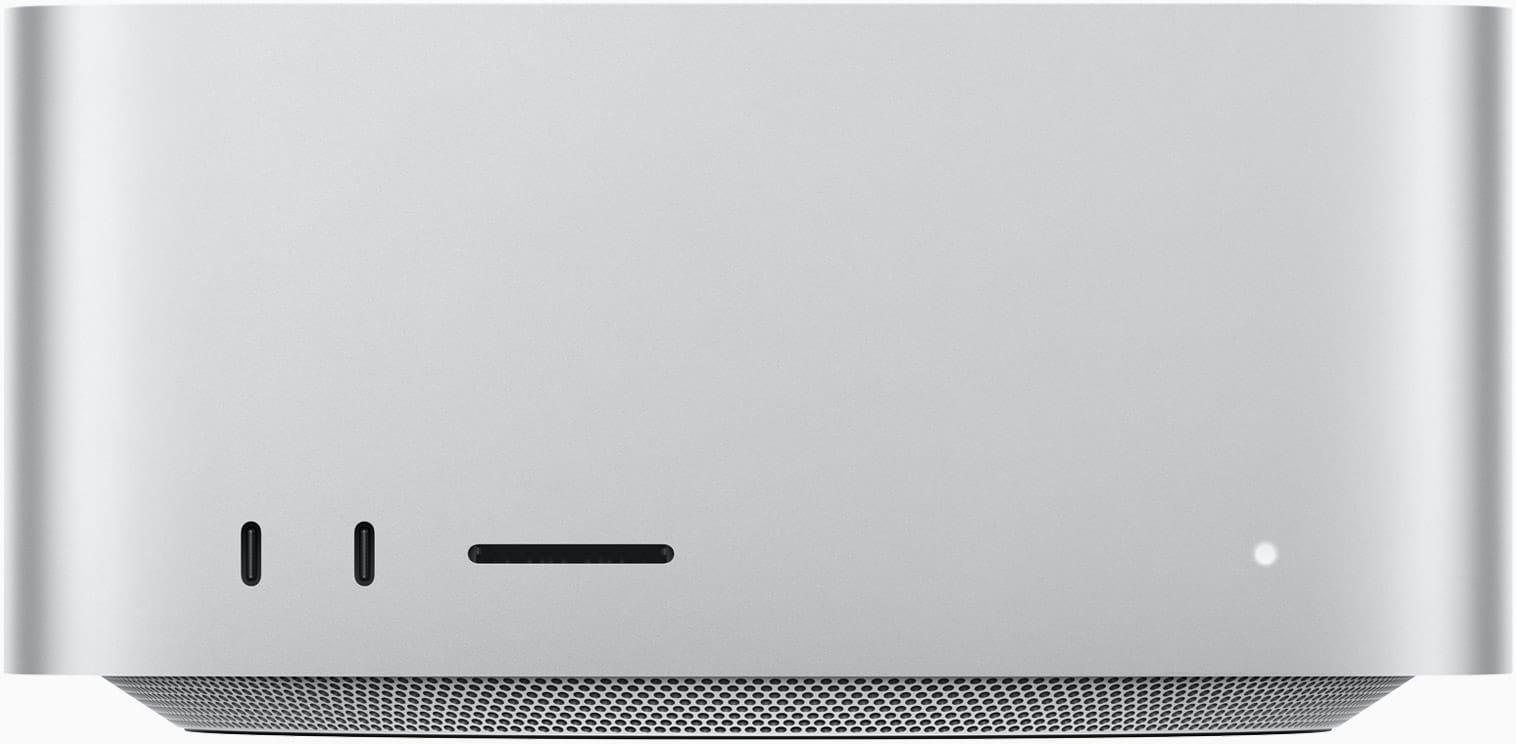
Mac Studio M3 Ultra (256GB)
- Chip: Apple M3 Ultra (32 cores: 24P + 8E)
- Unified memory: 256GB
- macOS 26.1
Worth noting: the SFF build is the cheaper machine here.
What actually happened in Resolve
Fusion-heavy comps
This is the stress test — motion graphics, compositing, heavy timelines. The kind of work that exposes a machine quickly.
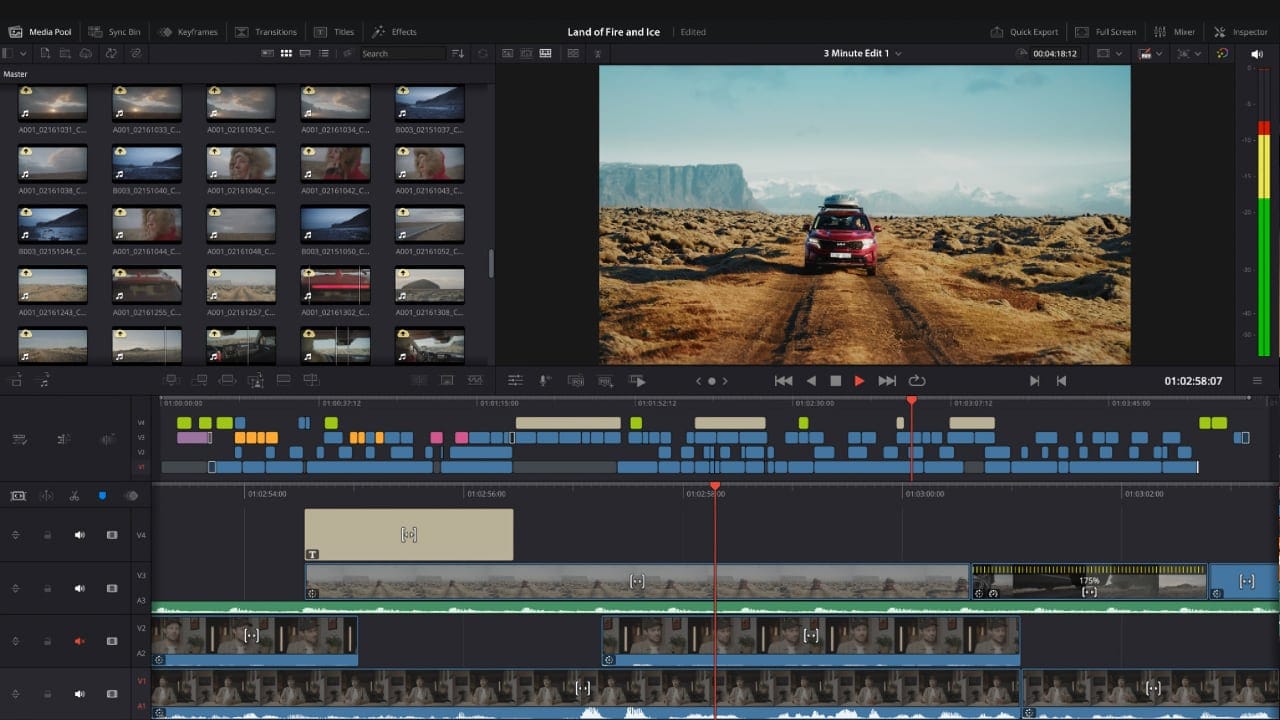
Mac Studio: real-time preview. SFF PC: mostly smooth.
We used three real exports of videos we've produced and published on YouTube and Instagram, with the same settings on both machines (H.264, hardware encoding on).
Export 1: Aion Hyptec SSR — 1-minute HD clip
- Mac Studio: 00:11
- SFF PC: 00:10
SFF wins. One second. Exactly what you'd expect from this hardware on a short clip.
Export 2: Dreame Wet + Dry Vacuum — 11m:29s HD clip
- Mac Studio: 01:40
- SFF PC: 02:05
Here's where it starts getting interesting. Twenty-five seconds is a real gap on an 11-minute export. The Mac just... sustained its pace.
Export 3: GWM Tank 300 Review — 47-minute 4K export
- Mac Studio: 07:45
- SFF PC: 09:49
The last export took me by surprise. While the Mac completed the 47-min 4K timeline in under 8 mins, the PC was lagging behind by more than two minutes.
Quick results table
|
Task |
Mac Studio M3 Ultra (256GB) |
SFF (9950X3D + RTX 5090) |
|---|---|---|
|
Fusion-heavy comps (Resolve) |
Real-time preview |
Mostly smooth |
|
Export: Aion Hyptec (1-min HD, H.264 HW encode) |
0:11 |
0:10 |
|
Export: Dreame (11-min HD, H.264 HW encode) |
1:40 |
2:05 |
|
Export: Tank 300 (47-min 4K, H.264 HW encode) |
7:45 |
9:49 |
|
Thermals note |
Cool & quiet |
~70°C CPU temp |
Why does this happen?
Resolve exports aren't entirely GPU reliant. It's a whole pipeline: decoding, processing effects, caches, encoding, and more. When you use the H.264 hardware encoding, Resolve uses the entire might of the system's media pipeline, and not just the graphics card.
Apple wins because of the advantage it has in its system integration. The chip, memory, and OS are all designed together, so sustained exports stay efficiency over long timelines. The Mac doesn't slow down at the 30 minute mark like the how a Windows machine would, where it's juggling services, driver overhead, and thermal management in a tiny case.
The SFF PC isn't slow, far from it. But the longer the export runs, the more the Mac's efficiency compounds.
Benchmarks: the SFF PC wins GPU muscle, the Mac wins CPU throughput (in our tests)
These don't replace real workflow testing, but they explain the behaviour. Lets start with Geekbench 6.
| Test | Mac Studio M3 Ultra (256GB) | SFF (9950X3D + RTX 5090) |
|---|---|---|
| CPU Single-core | 3260 | 3304 |
| CPU Multi-core | 28000 | 21824 |
Single-core is a wash. On multi-core, the Mac leads by a significant margin, which aligns with it winning the longer exports. Next, we ran Cinebench 2026.
| Test | Mac Studio M3 Ultra (256GB) | SFF (9950X3D + RTX 5090) |
|---|---|---|
| CPU Single | 576 | 562 |
| CPU Multi | 12209 | 9806 |
| GPU | 84200 | 156752 |
Again, we see the same results with the Single Core performance where the Mac just edges out the AMD processor, but gains a significant lead in Multi Core throughput. However, In GPU-bound rendering tasks, this machine would be a different conversation. But for H.264 exports, that GPU advantage doesn't translate in the way one would assume.
Thermals and noise
The SFF build ran at around 70C on the CPU under load, which is pretty much expected for a compact case build. Of course, like on any other build and not just for an SFF, there will always be heat and noise to be dealt with. If you want a quieter machine even while exporting, you will have to tune the fans to run at lower RPM, but that also means higher temperatures.
The Mac Studio, on the other hand, stayed cool and quiet the entire time, regardless of the workload. So if you want a speedy but also an extremely quiet workstation that renders videos without heating up the entire place and creating a ruckus with fan noise, this one is an easy choice.
Which one should you buy?
Get the Mac Studio M3 Ultra if your life is video exports. It's faster on anything longer than a minute, smoother in Fusion, and it does all of this without you ever thinking about thermals or fan curves. For the specific workflow tested here — H.264 exports, hardware encoding, real projects — it's the faster machine.
Get the RTX 5090 SFF PC if you need GPU compute headroom beyond video editing, want the option to upgrade components in 2 years, or your work is more GPU-render-heavy than encode-heavy. And if you like playing new AAA gaming titles, then the Mac is not for you. And as expensive as our SFF build was, it was cheaper than the Mac Studio in this configuration, which counts for something.
What we're saying is that don't buy an RTX 5090-based high-end PC expecting it to automatically win every video rendering benchmark. This test showed it doesn't.
The takeaway
Two different philosophies, two different winners depending on the task. The Mac Studio is the machine that quietly finishes work faster than it has any right to. The SFF PC delivers peak GPU performance and the freedom to change your mind later.
If you regularly export long video projects, the Mac saves you time.
Written by

Subscribe to our newsletter
Subscribe to our newsletter to get the latest updates and news








Member discussion