Was the Surface Laptop Ultra prototype really found beside a road?
The prototype’s roadside origin remains an unverified story from the person who posted the results. Forum user Fouquin claimed the laptop was found “sitting along the side of the road just North of Redmond, Washington,” but later described that account as “story crafting.” There is no independent confirmation of how the machine was obtained.
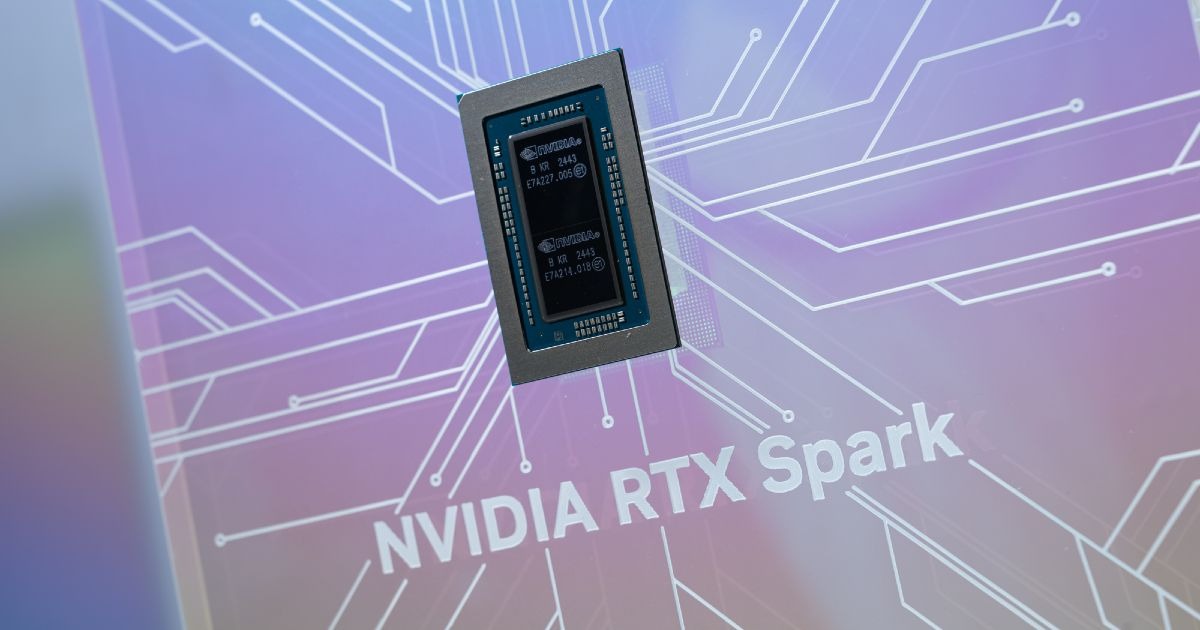
The hardware itself is more plausible because Microsoft has already unveiled the Surface Laptop Ultra and its core specifications. The alleged EV1.5 engineering sample is described as using the top RTX Spark N1X configuration, pairing a 20-core Arm CPU with a Blackwell GPU containing 6,144 CUDA cores. The reported unit also has 24GB of unified memory and a 512GB SSD.
Microsoft says the commercial Surface Laptop Ultra will offer an Nvidia Blackwell RTX GPU, up to 128GB of unified memory, and full CUDA support. That makes the leaked configuration credible on paper, but it does not authenticate the unit’s origin or establish that its current performance represents retail hardware.
How fast was the alleged Surface Laptop Ultra prototype?
The reported CPU benchmark scores were respectable rather than class-leading, with the strongest warning signs appearing in single-threaded performance. Fouquin posted the following Cinebench results after testing the machine with Nvidia’s preview 616.00 driver:
| Benchmark | Multicore | Single-core |
|---|---|---|
| Cinebench 2024 | 1,386 | 123 |
| Cinebench 2026 | 5,771 | 540 |
TechPowerUp cautioned that these informal figures cannot be compared directly with its controlled reviews, but said they suggest the laptop could fall behind anticipated high-end competitors, including the M5 MacBook Pro and similarly priced x86 Windows laptops. That is an awkward first showing for hardware pitched around serious GPU computing, even with the usual prototype caveats attached.
The driver situation is the larger complication. Fouquin says the laptop initially required an older Nvidia driver from late 2025. Nvidia’s preview 616.00 release subsequently enabled CUDA on the Blackwell GPU, allowing more meaningful compute testing, but software support was still changing during the test period. Benchmarking a platform while its driver stack is being assembled gives us a progress report, not a dependable buying comparison.
What problems and strengths did the prototype reveal?
The alleged prototype combined disappointing display behaviour with a sturdy and apparently accessible chassis. Its 15-inch, 3:2 LG panel reportedly suffered from weak local dimming, visible blooming in high-contrast scenes, and colour banding when HDR was enabled.
Build quality fared better. Fouquin reported no chassis flex, described the keyboard as comfortable and accurate, and found the screws easy to remove. The SSD was also reportedly straightforward to replace. For a powerful Surface machine, that degree of access would be welcome if it carries into production.
Microsoft says the Surface Laptop Ultra will arrive later in the year. Until commercial hardware, finished firmware, and release drivers can be tested together, these results should temper expectations rather than settle the laptop’s fate. The early sample shows that Nvidia’s Windows-on-Arm ambitions are functioning, but the performance case still needs considerably stronger evidence.