
This Dinosaur Just Hit 50 Million Views on TikTok (And It's Been Dead for 67 Million Years)
Natural History Museum Abu Dhabi launched STAN the T. rex as an AI-powered influencer using Google's Veo 3.1, reaching 50M views and 83.8K engagements.

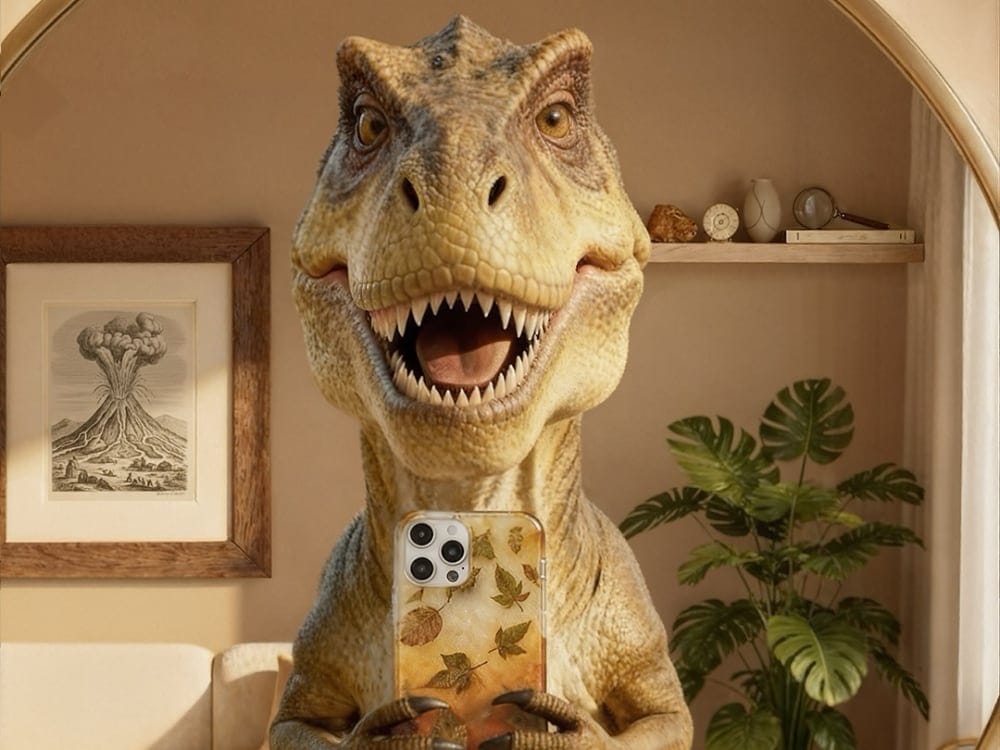
A 67-million-year-old Tyrannosaurus rex skeleton has entered the influencer economy. STAN, one of the most complete T. rex fossils ever discovered, now has a voice, personality, and social media presence designed to promote Natural History Museum Abu Dhabi's opening. The campaign, developed by Experience Abu Dhabi with Ogilvy Paris and Memac Ogilvy UAE, represents a calculated bet that AI-generated characters can drive real-world museum visits.
The numbers suggest the bet is working. Since launch, content collectively reached 50 million video views with 83.8K engagements. Audience sentiment sits at 95.9% positive or neutral. For a marketing campaign promoting a museum opening, those metrics indicate the character resonated beyond novelty value.
KEY TAKEAWAYS
- STAN the T. rex launched as world's first "AI-ncient influencer" for Natural History Museum Abu Dhabi opening on 22 November
- Campaign reached 50 million video views and 83.8K engagements with 95.9% positive or neutral sentiment
- Created using Google's Veo 3.1 technology through Ogilvy Paris' AI.Lab and Memac Ogilvy UAE collaboration
- Social listening revealed existing dinosaur fandom and appetite for short, engaging educational content on TikTok
- Campaign demonstrates how AI-generated influencers can drive museum visitation through character-driven storytelling
Why a Dinosaur Needed to Become an Influencer
Natural History Museum Abu Dhabi opened on 22 November in Saadiyat Cultural District as the largest museum of its kind in the Middle East. The 35,000-square-metre facility covers 13.8 billion years of natural history, from the Big Bang through to modern environmental challenges. STAN the T. rex takes centre stage in the dinosaur wing, displayed in a world-first battle scenario with another T. rex and a Triceratops.
But physical presence in a museum doesn't guarantee visitors. The challenge facing Experience Abu Dhabi was clear: how do you cut through social media noise to drive attendance at a new cultural institution? The answer involved turning their star attraction into a content creator.
Ghadeer El Khub, Creative, Social & Digital Department Director at the Department of Culture and Tourism – Abu Dhabi, said social listening revealed three key insights: people actively drive dinosaur conversations online, STAN already had a digital footprint from his scientific significance, and there's huge appetite for short, engaging content that makes complex topics accessible.
The team wasn't starting from zero. STAN became famous in palaeontology circles as one of the best-preserved T. rex specimens ever recovered. The skeleton sold at auction for $31.8 million in 2020 before being acquired for the Abu Dhabi museum. That existing recognition provided foundation for character development.
Google's Veo 3.1 Built the Character
The technical execution relied on Google's Veo 3.1 technology, accessed through WPP's partnership with the platform. David Raichman, Global AI Creative Lead at Ogilvy, said the challenge was using AI to accurately design every detail - from smallest accessories to exact museum architecture.
The result is a T. rex that doesn't just appear in generic animated environments. The character interacts with digitally recreated spaces inside Natural History Museum Abu Dhabi, wears carefully designed accessories, and maintains consistent visual identity across episodes. That level of detail matters for building audience trust in AI-generated content.
Veo 3.1's early access through WPP's partnership gave the team capabilities not widely available to other agencies. The technology enabled precision in character design and environmental recreation that earlier AI video generation tools couldn't match. This technical advantage translated into content that feels more polished than typical AI-generated marketing.
The character development went beyond visuals. STAN has a defined voice, expressive personality, and sharp humour shaped by analysing how dinosaur fans actually converse online. The team studied trending formats on TikTok, identified what content dinosaur enthusiasts naturally respond to, and built a character designed to fit those existing conversation patterns.
Short-Form Episodes Target TikTok Behaviour
The content strategy centred on short-form episodes distributed through Natural History Museum Abu Dhabi's social channels, with teasers on Visit Abu Dhabi's pages. The first two episodes launched around the museum opening, with additional episodes rolling out as the channel grows.
This approach aligns with how UAE's smart home security market reached $654.45 million in 2024 and influencer marketing budgets increasingly shift toward short-form video platforms. TikTok, Instagram Reels, and YouTube Shorts dominate attention spans. Museums compete for that attention against entertainment content, not just other cultural institutions.
The "AI-ncient Influencer" campaign embraces this reality by making STAN a character first and educational resource second. The T. rex doesn't lecture about palaeontology. He cracks jokes, references memes, and delivers bite-sized facts wrapped in entertainment. The education happens incidentally while audiences engage with a character they find amusing.
This represents a shift in museum marketing. Traditional approaches focused on promoting exhibitions through beautiful photography and curator explanations. AI-generated influencers enable museums to create ongoing character-driven narratives that keep audiences engaged beyond single exhibition announcements.
The Numbers Behind "World-First" Claims
Experience Abu Dhabi positions STAN as the world's first "AI-ncient influencer." That claim requires context. AI-generated influencers exist - Lil Miquela has 2.5 million Instagram followers, and brands like Brands For Less in UAE have collaborated with AI influencers. But STAN is apparently the first AI influencer specifically built from a museum specimen for institutional marketing.
The distinction matters because museum marketing faces different challenges than commercial brand marketing. Museums need to balance educational authority with entertainment value, maintain scientific accuracy while creating engaging narratives, and drive physical visitation rather than just online engagement.
The 50 million views and 83.8K engagements demonstrate audience receptivity. But the more meaningful metric is whether those views translate into museum tickets. Experience Abu Dhabi hasn't released visitation data connected to the campaign, but the 95.9% positive sentiment suggests the character isn't creating backlash that could harm the museum's reputation.
For comparison, according to RedSeer Consulting, AI influencers in UAE are expected to drive 15% of influencer marketing revenue by 2027. The Natural History Museum campaign provides early evidence for how that revenue shift might materialise beyond commercial brands.
What This Means for Museum Marketing
The success of STAN's AI influencer campaign creates a template other museums will likely study. The combination of existing specimen recognition (STAN was already famous), AI-generated character development (Google's Veo 3.1), social listening (understanding dinosaur fan conversations), and platform-specific content (TikTok formats) produced results that justify the investment.
But replication isn't automatic. Not every museum has a T. rex. Not every institution can access Google's latest AI technology through agency partnerships. And not every cultural organization has the budget or risk tolerance to build AI influencer campaigns.
The campaign also raises questions about authenticity in museum communication. STAN's AI-generated personality and humour don't represent actual T. rex behaviour or palaeontological fact. The character exists purely for engagement. That's fine for driving museum visitation, but it creates potential tension with educational mission.
Museums must balance entertainment with authority. If audiences connect with STAN's AI-generated personality but the actual museum experience doesn't match that energy, the gap could disappoint visitors. The character sets expectations that the physical space needs to meet.
For Abu Dhabi's cultural strategy, the campaign aligns with broader goals. Saadiyat Cultural District already houses Louvre Abu Dhabi and will soon include Guggenheim Abu Dhabi and Zayed National Museum. Each institution competes for tourist attention and resident visitation. AI-generated influencer marketing provides differentiation in a crowded cultural landscape.
The "AI-ncient Influencer" campaign demonstrates that museums can use emerging technology to compete for attention in social media environments dominated by entertainment content. Whether that represents the future of museum marketing or a novel experiment that won't scale remains to be seen. But STAN's 50 million views suggest audiences are willing to engage with AI-generated museum characters when the execution meets platform expectations.
FAQs
What is the AI-ncient Influencer campaign?
Experience Abu Dhabi launched STAN the T. rex as an AI-powered social media influencer to promote Natural History Museum Abu Dhabi's opening on 22 November. Created using Google's Veo 3.1 technology by Ogilvy Paris' AI.Lab and Memac Ogilvy UAE, the character has defined personality, voice, and humour designed for TikTok and social platforms.
How successful has the T. rex AI influencer campaign been?
The campaign reached 50 million video views and generated 83.8K engagements across social platforms. Audience sentiment measured 95.9% positive or neutral, indicating strong resonance with viewers. The campaign launched with two episodes around the museum opening, with additional content rolling out as the channel grows.
What technology was used to create STAN the AI influencer?
Google's Veo 3.1 technology enabled the campaign's creation, accessed through WPP's partnership with Google. The AI handled detailed character design including accessories and accurate recreation of Natural History Museum Abu Dhabi's architecture. The technology provided precision levels that earlier AI video generation tools couldn't achieve.
Why did Natural History Museum Abu Dhabi use an AI influencer?
Social listening revealed three insights: people actively drive dinosaur conversations online, STAN already had digital recognition from scientific significance, and audiences want short, engaging educational content. Rather than traditional museum marketing, Experience Abu Dhabi created an ongoing character-driven narrative designed for TikTok's entertainment-first platform behaviour.
Is this the first AI influencer in UAE museums?
STAN is positioned as the world's first "AI-ncient influencer" - the first AI influencer specifically built from a museum specimen for institutional marketing. While AI influencers exist commercially (like Lil Miquela or UAE's collaborations with virtual creators), this represents a novel application for cultural institutions promoting museum visitation through character-driven storytelling.
Written by

Subscribe to our newsletter
Subscribe to our newsletter to get the latest updates and news






Member discussion