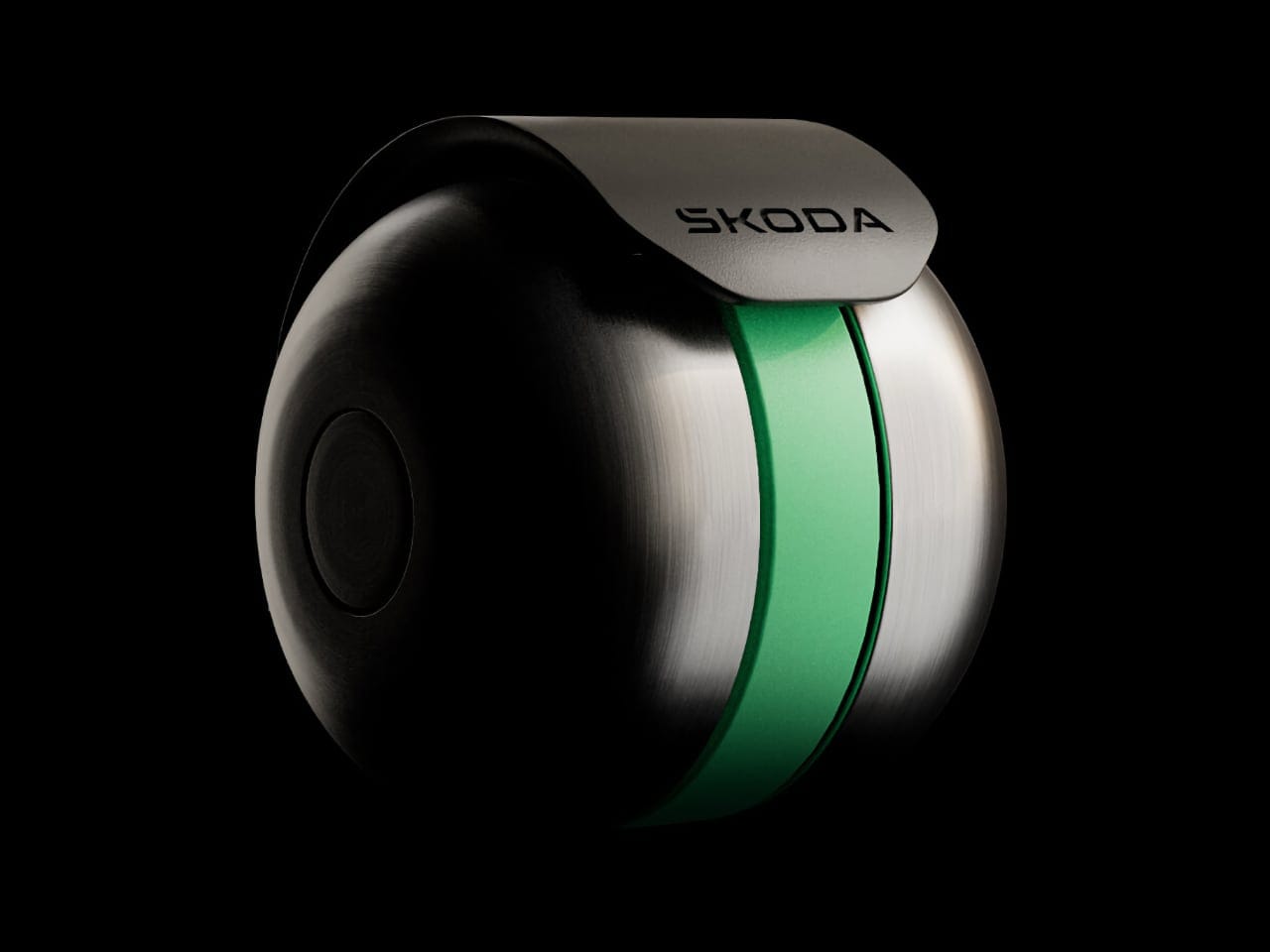
The Škoda DuoBell is a prototype bicycle bell engineered to penetrate active noise-cancellation systems in headphones, addressing a growing urban safety challenge. According to Škoda Auto’s press release, testing showed pedestrians wearing ANC headphones gained up to 22 metres additional reaction distance when the DuoBell was activated.
Key Takeaways
- The Škoda DuoBell is a prototype bicycle bell that can penetrate active noise-cancelling headphone systems.
- University of Salford research identified a ‘safety gap’ frequency range that ANC systems struggle to filter.
- Testing showed pedestrians wearing ANC headphones gained up to 22 metres additional reaction distance.
- The DuoBell is not a commercial product but a research project to share safety insights.
- Škoda’s cycling heritage dates back to 1895 when the company began manufacturing bicycles.
What makes the Škoda DuoBell different from regular bike bells?
According to research conducted by the University of Salford with Škoda, the DuoBell operates within a specific ‘safety gap’ frequency range that’s less affected by ANC filtering. This is one of the first studies to examine how noise-cancellation technology affects the audibility of traditional bicycle bells.
The bell incorporates an additional resonator and specially engineered hammer mechanism that produces rapid, irregular strikes. These irregular patterns make it significantly harder for ANC algorithms to suppress the sound, allowing cyclists to warn pedestrians even when they’re wearing active noise-cancelling headphones.
“Bicycle bells have remained almost unchanged for over a century, but the world around them has not,” said Ben Edwards from AMV BBDO. “Škoda DuoBell is the first bell ever designed to penetrate noise-cancelling headphones.”
How does the DuoBell work with noise-cancelling technology?
The key lies in understanding how ANC algorithms operate and identifying their weaknesses. Researchers discovered that noise-cancelling systems struggle with certain frequency ranges and irregular sound patterns that don’t follow predictable waveforms.

While traditional bicycle bells produce consistent, regular tones that ANC systems can easily identify and filter out, the DuoBell’s engineered mechanism creates rapid, irregular strikes. This smart analogue approach effectively ‘outsmarts’ the artificial intelligence algorithms in modern headphones.
The design maintains the familiar characteristics of a traditional bell whilst operating within the identified safety gap frequency range. This ensures the sound remains recognisable as a bicycle bell to pedestrians whilst bypassing ANC filtering.
Why is this innovation particularly relevant to the Middle East?
According to Škoda’s announcement, cycling infrastructure investment across the Middle East is creating more frequent interactions between cyclists and pedestrians. Countries in the region are developing dedicated cycling tracks and pedestrian-friendly urban spaces where safety awareness becomes crucial.
“This trend is also reflected across the Middle East, where countries are investing in dedicated cycling infrastructure,” the company noted. In environments where awareness is reduced by noise-cancelling technology, traditional warning sounds often go unnoticed during critical moments.
As urban mobility solutions expand across UAE cities, the interaction between cyclists and pedestrians wearing headphones will only increase, making innovations like the DuoBell increasingly relevant for regional safety considerations.
What testing was conducted to prove the DuoBell’s effectiveness?
Real-world trials were conducted on London streets in February 2026, with Deliveroo couriers testing the prototype on their daily routes. According to Škoda, the bell proved so effective that couriers wanted to continue using it after testing concluded.
Acoustic laboratory testing measured reaction distances, revealing that pedestrians wearing active noise-cancelling headphones gained up to 22 metres of additional reaction distance when the DuoBell was activated. This represents a crucial safety margin in urban environments.
The University of Salford’s scientific approach involved examining how different frequency ranges interact with various ANC systems, ultimately identifying the specific ‘safety gap’ that the DuoBell exploits. This research forms the foundation for the bell’s effectiveness across different headphone brands and models.
Will the Škoda DuoBell be available for purchase?
The DuoBell remains a fully functional prototype rather than a commercial product. Škoda’s approach focuses on sharing research insights and contributing to broader expert discussions about urban safety, rather than direct sales.
“This project is not centred on a commercial product at this stage, but rather on sharing insights and research that can contribute to safer mobility for everyone,” the company stated. The underlying research findings will be made publicly available to support industry-wide safety improvements.
While no commercial launch timeline or pricing has been announced, the prototype demonstrates Škoda’s ‘Simply Clever’ design philosophy in addressing modern urban challenges through innovative engineering solutions.
How does this connect to Škoda’s cycling heritage?
Škoda’s connection to cycling dates back to 1895 when the company began manufacturing bicycles, more than 130 years before developing cars. This heritage continues today through the brand’s role as official automotive partner of the Tour de France for over 20 years.
“For Škoda, exploration has always been fundamental,” said Meredith Kelly, Global Head of Marketing. “This project is an excellent example of how a simple, yet clever idea can help make exploration safer for everyone.”
The company also supports prestigious cycling events including La Vuelta, Paris–Roubaix, and Liège–Bastogne–Liège, whilst serving as partner to the Union Cycliste Internationale (UCI) for World Championships. The DuoBell project represents a natural evolution of this long-standing commitment to cycling safety and innovation.
DuoBell availability and next steps
Currently, the Škoda DuoBell exists as a functional prototype with no commercial availability timeline announced. The project aims to share research insights publicly rather than develop a retail product immediately.
The prototype features Škoda’s Modern Solid design language, incorporating colours and materials inspired by current Škoda vehicles, along with the brand’s new logo. While real-world testing proved highly effective, commercial viability and production planning remain undisclosed.
For cycling safety improvements in the UAE market, cyclists should continue using traditional bells whilst monitoring industry developments in ANC-resistant warning systems.
Frequently Asked Questions
What is the Škoda DuoBell?
The Škoda DuoBell is a prototype bicycle bell developed with the University of Salford, designed to penetrate active noise-cancelling headphone systems. It uses a special frequency range and irregular sound patterns to overcome ANC filtering.
How does the DuoBell work with noise-cancelling headphones?
It operates within a ‘safety gap’ frequency range less affected by ANC filtering and uses rapid, irregular strikes that ANC algorithms struggle to suppress. This allows the bell to be heard even through active noise-cancellation.
Is the Škoda DuoBell available for purchase?
No, the DuoBell is currently a prototype focused on research and safety insights rather than commercial sales. Škoda plans to share the research publicly to benefit broader cycling safety discussions.
Why did Škoda develop the DuoBell?
Škoda developed it to address urban safety challenges posed by pedestrians wearing noise-cancelling headphones. Traditional bicycle bells often go unheard, creating collision risks in busy urban environments with growing cycling infrastructure.