
Pluribus Ending Explained: What Carol’s Final Choice Really Means
The Pluribus finale leaves viewers with more questions than answers. Here’s a clear, spoiler-filled breakdown of the ending, the hive mind, Carol’s final choice, and what it all really means.

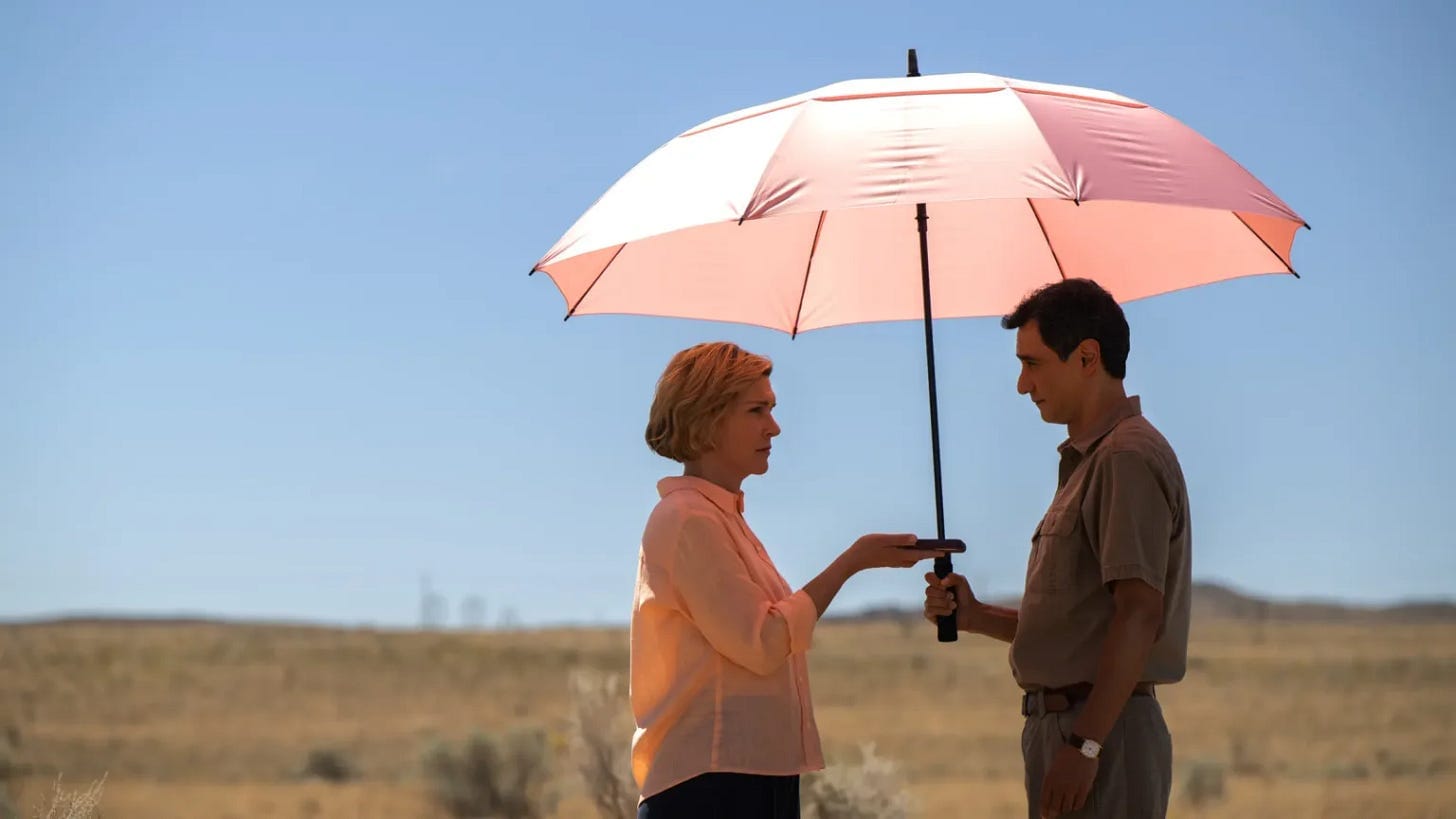
Pluribus never wanted to be the kind of show that ties things up neatly. From the start, it’s been more interested in asking uncomfortable questions than giving clean answers, and the finale doubles down on that instinct.
By the time the final episode ends, we’re left watching Carol Sturka stand at the edge of something that looks suspiciously like peace, and wondering whether it’s salvation or surrender. The world is calmer. Kinder. Quieter. But it’s also missing something fundamental.
So what actually happens in the ending of Pluribus, and more importantly, what does it mean?
Let’s break it down.
WARNING: Full spoilers ahead!
KEY TAKEAWAYS
- Pluribus ends on a deliberate note of ambiguity, choosing emotional truth over clear answers.
- Carol’s emotional evolution complicates her mission, especially with Zosia and Manousos in the mix.
- The Others represent a seductive peace that erases dissent and identity.
- Fans online are buzzing with theories about eggs, hive communication, and whether Carol’s final step is surrender or strategy.
- Creator intentions and finale reactions emphasize ambiguity as thematic, not sloppy.
Episode Recap: What Actually Happens (Full Spoilers Ahead)
By the end of Pluribus Season 1, the hive mind known as the Others has quieted the world. Nobody is fighting, nobody is starving, everyone is strangely content. Happy isn’t the right word, but gentle, predictable, frictionless.
The hive doesn’t promise domination or transcendence, just peace, connection, and a life without friction. There’s no clear finish line. The plan, if there is one, seems to be simple continuity.
The episode opens with Kusimayu, one of the youngest immune survivors, choosing to join. The moment is warm and communal, grounded in ritual and trust. And then it’s over. The village empties out. Fires are put out. Animals are released. An entire culture disappears without anyone needing to raise their voice. It’s peaceful. It’s devastating.
Carol spends the episode suspended between two opposing forces. On one side is Manousos, finally arrived and completely unwilling to bend. He refuses help, comfort, or compromise. On the other is Zosia, whose presence turns the hive into something that feels personal, even intimate. Carol no longer experiences the Others as an abstract threat. She experiences them as companionship.
Then Zosia lets something slip. Carol’s consent has limits. The Others don’t plan to wait forever. Her frozen eggs give them another way in. Love, as the hive understands it, is collective. It doesn’t stop for individual preference. That’s the moment the choice becomes unavoidable.
The finale pivots on Carol’s choice. Does she surrender to brooks, poolside afternoons, Zosia’s company, and a hive that insists it loves her? Or does she step back into solitude, carrying pain, agency, and maybe a nuclear option? The episode ends with her acceptance of Manousos’s course: “We save the world.” But there’s no dramatic victory. It’s unresolved by design.

What Carol’s Final Choice Really Means (Ending Explained)
A lot of the conversation around the Pluribus finale hinges on whether Carol’s choice is resistance or delay. Some viewers read her decision as a clean rejection of the hive, a final stand for autonomy. Others see it as something murkier, a tactical pause that buys time rather than drawing a moral line. The finale deliberately supports both readings.
Carol doesn’t destroy the system, expose a hidden lie, or bring the hive crashing down. She steps away at the precise moment it becomes clear that consent within this world is conditional. Participation is encouraged, even rewarded, but only up to the point where opting out stops being viable. What Carol rejects isn’t harmony itself, but the idea that peace still has meaning once refusal is no longer allowed.
That ambiguity is why the ending has lingered. The Others aren’t revealed as villains or frauds. Their world functions. It delivers stability, cooperation, and an end to many forms of suffering. The cost is simply that individuality becomes inefficient, and eventually incompatible, with the system’s goals. Carol’s choice, then, isn’t about saving humanity in some abstract, heroic sense. It’s about insisting that humanity includes friction, dissent, and the right to say no even when the alternative looks easier, safer, or objectively better.
Crucially, the show refuses to confirm whether her decision actually changes anything. The hive remains. The system endures. Carol’s refusal may slow it, complicate it, or ultimately change nothing at all. That uncertainty feels intentional. The finale isn’t asking whether Carol made the correct choice. It’s asking whether a world that removes the possibility of choosing differently is still one we should recognise as human.
Why Fans Are Split on Carol’s Ending
Online theories have gravitated toward the literal mechanics of the finale, especially the eggs, hive communication, and whether Carol’s final step signals surrender or strategy. Some readings treat these elements as clues to a hidden plan or a delayed rebellion, assuming the show is quietly setting up a more conventional power shift in Season 2.
But the finale itself resists that framing. The ambiguity isn’t about whether Carol has outsmarted the hive or planted a long-term trap. It’s about intention, not outcome. By leaving the mechanics unresolved, Pluribus keeps the focus on the cost of participation rather than the cleverness of resistance. Whether Carol’s choice becomes strategy or simply refusal is less important than the fact that she chooses at all.

Why the Pluribus Finale Doesn’t Give Closure
The Pluribus finale doesn’t withhold answers because it ran out of story. It withholds them because answering the question would flatten the whole thing. The Others aren’t revealed as monsters in disguise, and Carol doesn’t pull off a last-minute save. The system works. That’s what makes it uncomfortable. Ending the season with a neat solution would let everyone off the hook too easily.
A lot of viewers have clocked this as intentional, not evasive. The show stops right where the argument gets hardest. Is a peaceful world still worth it if opting out eventually stops being an option? Pluribus refuses to pick a side for you. And honestly, that’s probably why the ending has sparked so many “wait, but…” threads online. It’s not a cliffhanger in the usual sense. It’s the show dropping the mic and walking away while the room is still arguing.
Also, yes, cliffhangers usually suck. This one at least feels like it earned the side-eye.
Final Thought: What Pluribus Leaves Us With
In very classic Vince fashion, Pluribus ends by refusing to settle the argument it just spent nine episodes carefully setting up. Carol makes a choice, but the show stops short of telling us whether it’s the right one, or whether it even matters in the long run. Can the hive actually be stopped? Is disruption enough, or does the system simply absorb resistance and keep moving? And if the Others really have solved most of humanity’s problems, how much suffering is autonomy allowed to justify?
Those unanswered questions feel deliberate, not evasive. Gilligan has always been more interested in consequences than conclusions, and Pluribus follows that tradition closely. The finale doesn’t slam the door or yank the rug. It leaves the door open just wide enough for doubt to creep in. Carol walks away from comfort, but the world she’s fighting for remains abstract, fragile, and possibly already gone.
It’s frustrating, sure. Cliffhangers usually are. But this one lands closer to a provocation than a tease. Pluribus ends by trusting that viewers will keep arguing about it, in comment sections, group chats, and late-night Reddit threads, long after the episode cuts to black. And honestly, that might be the most honest ending the show could’ve chosen.
Written by

Subscribe to our newsletter
Subscribe to our newsletter to get the latest updates and news












Member discussion