The Oura Ring 4 is the best smart ring you can buy in the UAE, starting at AED 1,399 with an AED 30 monthly subscription. It is more polished than the Ring 3, has around five days of battery life, and is excellent for sleep, recovery and passive health tracking — but not for serious workout tracking. Ring 3 owners do not need to upgrade.
The Oura Ring 4 is what happens when a product matures properly. It does not suddenly reinvent the smart ring or try to turn your finger into a smartwatch. Instead, it takes what Oura has been doing well for years and makes the whole thing feel a lot more refined.
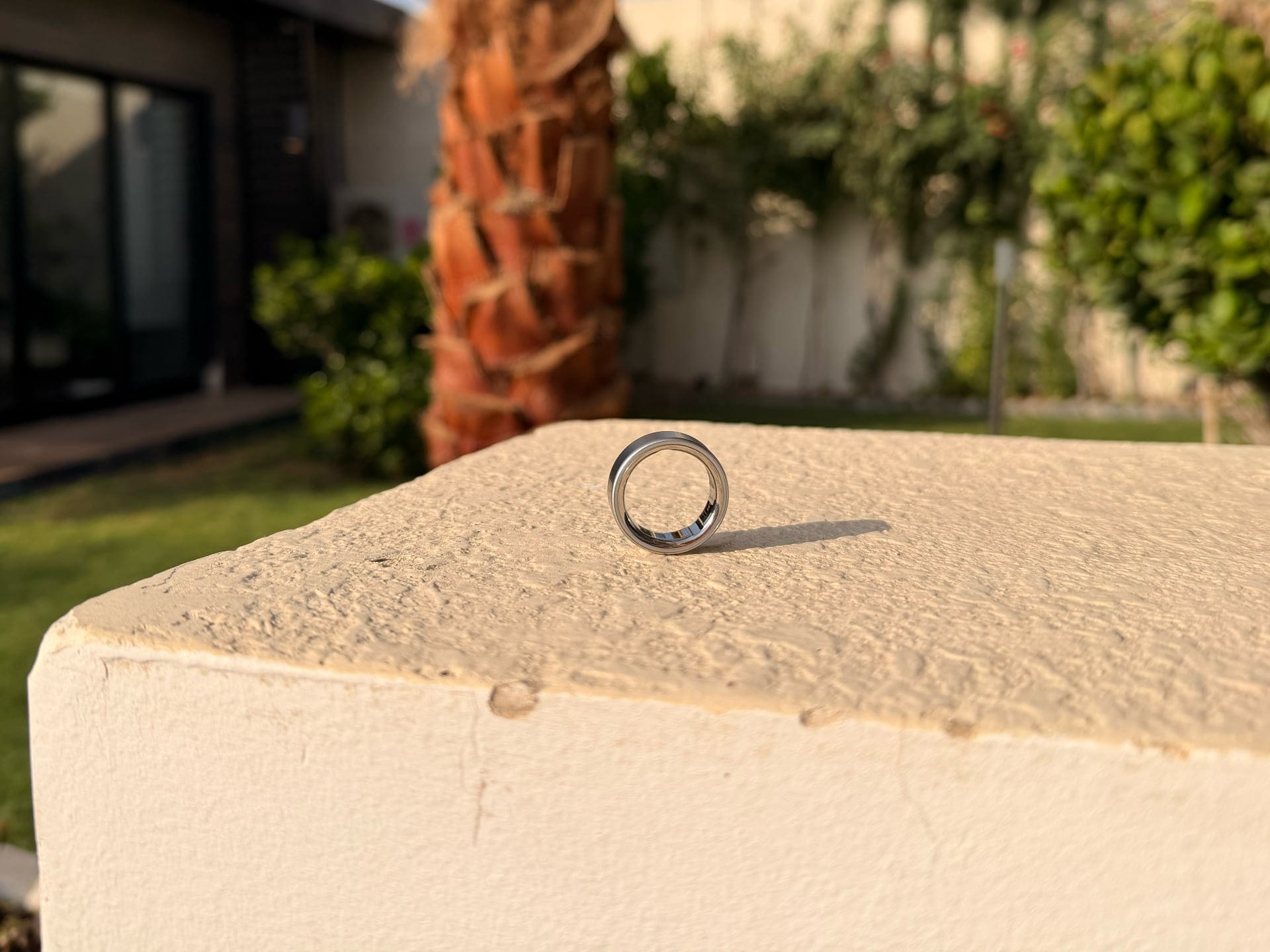
I have been using the Oura Ring 4 in Brushed Silver, size 9, for the past few weeks. Oura sent this unit for review, though I have also used previous Oura rings, including the Ring 2 and Ring 3, so this is not my first time willingly letting a tiny piece of jewellery judge my sleep and daily choices.
In the UAE, the Oura Ring 4 starts at AED 1,399 and goes up to AED 1,999 depending on finish. The Brushed Silver model I tested costs AED 1,599. That is already a premium price, and then there is the subscription: AED 30 per month after the first free month. For a device that mostly sits quietly on your finger and tells you your sleep balance needs work, that monthly fee will feel either fair or faintly rude, depending on how much you use the app.
Oura Ring 4 Specs and Price in the UAE
The ring itself is expensive, but not shockingly so for this category. The more awkward part is the subscription. Oura’s app is clearly polished, regularly updated and backed by ongoing development, so the fee is not impossible to justify. But AED 30 per month is still AED 30 per month. If you are actively using the insights, checking trends and adjusting your habits, it feels more acceptable. If the ring eventually becomes a passive stats keeper, the subscription starts to feel like rent for your own body data.
I was grandfathered into a subscription-free plan on my older Oura account, but new buyers should absolutely factor the monthly cost into the total ownership cost.
| Feature | Oura Ring 4 |
|---|---|
| Tested model | Brushed Silver, Size 9 |
| UAE price | AED 1,599 for Brushed Silver |
| Starting UAE price | AED 1,399 |
| Highest UAE price | AED 1,999 |
| Subscription | AED 30 per month |
| Free trial | First month included |
| Battery life | Around 5 days in real use |
| Water resistance | Suitable for everyday water exposure and swimming |
| App support | iOS and Android |
| Main tracking | Sleep, readiness, activity, heart rate, stress, temperature trends |
| Best for | Sleep, recovery, passive health tracking |
| Not ideal for | Detailed workout tracking, weight training |
Design and comfort: This is where Ring 4 really wins
The Oura Ring 4 looks and feels like a more polished product than the Ring 3. The pun is regrettable, but here we are.
The Brushed Silver finish is matte, subtle and classy. It does not scream “fitness tracker” or “I am monitoring my HRV because the app told me to become a better person.” It just looks like a simple ring. That matters. You can wear it to work, dinner, meetings or while driving without it drawing attention.

I wore the Ring 4 on the ring finger of my left hand. Since I wear my wedding ring on my right hand, this felt natural to me. Oura generally recommends using one of the middle three fingers, but fit and comfort will vary from person to person. I have seen people wear Oura rings on their thumbs, so the placement is purely a matter of personal choice.
The Ring 4 is light enough that I often forget it is there. It did not bother me while sleeping, while driving to get a Shawarma, while washing my hands (after eating the Shawarma), or while typing this review. After weeks of use, the Brushed Silver finish has held up well and still looks new, with no obvious scratches or marks.
Compared with Ring 3, Ring 4 feels more refined. The internal sensors are flatter and less pressed against your skin. To be fair, the Ring 3 never really bothered me, but the Ring 4 does feel smoother and more finished.
Sizing: Do not get clever
Oura sent me the sizing kit, and I initially chose size 8 because that was what I had used with my Ring 3. That turned out to be a mistake. It felt snug at first, but quickly became too tight. Thankfully, Oura replaced it with the larger size 9, which was much better.
This is worth paying attention to. Your finger changes slightly through the day depending on heat, activity, water retention and whatever other biological nonsense the body has scheduled. A size that feels fine for ten minutes can feel like medieval punishment after a few hours.
Use the sizing kit. Wear the test ring properly. Sleep with it. Do not heroically guess your size because you owned an older Oura ring.

Battery life: Strong, though not perfect
Battery life has been one of the biggest wins for me. In regular use, I usually get about 5 days between charges, but there was one weird, unexplainable instance where the battery drained in just a couple of days.
My charging routine is relaxed. I usually charge it when I remember, or when the app warns me that the battery is getting low. Sometimes that means placing it on the charger while I shower. I avoid charging it at night because sleep tracking is one of the main reasons to wear an Oura ring in the first place.
The charger itself works fine, but I have two complaints. First, the status light is too bright. If you put the ring on the charger in a dark room at night, the light is far more noticeable than it should be. Second, the charging puck feels like it could have included a small battery inside, so you could carry it while travelling without needing a cable. Samsung’s Galaxy Ring charging case does this, and it’s great.
Still, the Ring 4 lasts long enough that I do not feel like I am constantly managing it. The best thing about a smart ring is that it should disappear into your routine, not become another device demanding daily attention.

The Oura app is still excellent
The app is one of Oura’s biggest strengths. It is polished, calm and easy to understand, even though it contains a lot of data. Over the years, Oura has added many features without making the app feel bloated, which is harder than it seems.
The dedicated sections for Sleep, Readiness, Stress, Activity and Heart Rate are easy to follow. You can glance at the main scores or dig into more detailed charts and contributors if you want. The app does a good job of turning messy health signals into simple cards, charts and daily summaries.
That does not mean I always agree with the interpretation. Sometimes the data feels right. Sometimes it feels like the ring has confidently misunderstood the assignment. But the presentation is always excellent. It gives you information without overwhelming you, and that is harder to do than most wellness apps seem to realise.
Sleep tracking: Useful, but not gospel
Sleep tracking is one of the main reasons to buy an Oura Ring, and the Ring 4 remains good at it. The app tracks your total sleep, efficiency, restfulness, REM sleep, deep sleep, latency and other sleep-related metrics. It then turns all of that into an easy-to-understand sleep score.

In this screenshot above, Oura gave me a sleep score of 77, labelled “Good”, with 6 hours and 52 minutes of total sleep, 85% efficiency, 1 hour and 17 minutes of REM sleep and 31 minutes of deep sleep. The app’s presentation is excellent. You immediately get a sense of what went well and what needs attention.
But the score does not always match how you actually feel. One night, my daughter was not feeling well, and I was up and down. The app still gave me a readiness score in the high 70s the next morning, which felt too generous because I woke up tired. This is the main thing to understand about Oura. It is very good at tracking patterns, but it does not always understand context.
That makes it better as a long-term tracker than a daily judge. If your sleep trends are improving or getting worse over weeks and months, Oura is useful. If you want it to perfectly understand one messy night of real family life, lower your expectations slightly.
Readiness: Good data, but easy to ignore
Readiness is one of Oura’s core scores. It pulls together signals such as sleep, resting heart rate, HRV balance, recovery index, body temperature, previous day’s activity, and sleep regularity to estimate how ready your body is for the day. In theory, this is useful. In practice, it depends on whether you actually listen to it.

I used to check readiness every morning. Over time, the app could not help me turn that into a lasting habit. Now I mostly check it when I already know I have had a poor night’s sleep. It does not always match how I feel, and while it occasionally suggests taking it easy, I do not always listen. Like most men, apparently.
The advice itself is mostly polite wellness wallpaper. It is not useless, but it rarely feels sharp enough to change behaviour. If you are already motivated to improve your sleep and recovery habits, Oura gives you a helpful framework. If you are just using it as a stats keeper, readiness becomes something you glance at, nod vaguely at, and then ignore while making the same life choices again.
Stress tracking: Maybe not for the permanently chilled
Stress tracking was less convincing for me. Anyone who knows me would say I am a fairly chilled person and do not get stressed easily. The Oura app, however, showed me in stress stages almost every day of the week. Sometimes mild stress, sometimes more. I did not always feel stressed when it said I was.
This may be because Oura measures physiological rather than emotional stress. Caffeine, heart rate changes, workload, activity and other body signals can all affect the reading. That is fair, but it can also feel odd when the app tells you that you are stressed while you feel perfectly fine.

The stress charts themselves are nicely done. You can see your day moving between restored, relaxed, engaged and stressed states, with movement overlaid. But for me, stress tracking was more interesting than essential. It may be more useful for people who actively feel stress and want to see how their body responds throughout the day.
Activity tracking: Good for walking, not serious training
I mostly used the Oura Ring 4 for walking and general daily activity. It can detect walks, though not always immediately. Sometimes it asks you later to confirm whether you were walking, which is fine for casual tracking but not ideal if you want precise workout records.
I briefly compared the steps with an Apple Watch, and from what I remember, the numbers were not too far apart. That is good enough for my use. The Ring 4 works well as a general activity tracker, especially if you want to know whether you moved enough during the day.

But I would not buy this as a serious workout tracker. If you do weight training, I have heard Oura does not track it particularly well, and a Whoop band or smartwatch may be a better choice. Rings also are not always ideal for lifting because gripping weights with a ring on your finger can be uncomfortable or risky depending on the exercise.
For walking, sleep, recovery and passive health tracking, Oura makes sense. For detailed fitness data, get something designed for workouts.
AI Advisor: Fine, but not the reason to buy it
Oura has added AI guidance features, including Advisor-style summaries and recommendations. I haven’t had a chance to test this out in depth.

The more useful parts are Oura’s seasonal and long-term reports. These give you a broader view of your habits and make it easier to notice patterns. Seeing your usual bedtime, time in bed, sleep rhythm, activity differences and readiness trends across a longer period is far more useful than a daily AI summary telling you to rest more or manage stress.

The seasonal reports helped me realise patterns in my behaviour more clearly. That is where Oura is at its best. Not as a tiny AI coach. More as a quiet long-term mirror for your habits.
Oura Ring 4 vs Ring 3: Why Most Ring 3 Owners Should Wait
The Oura Ring 4 is better than the Ring 3, but not dramatically better.
It feels more polished. The design is smoother. The sensors are flatter. The finish looks more understated. The sizing range is better. Battery life is strong. The overall experience feels more mature.
But if you already own an Oura Ring 3 and are happy with it, I do not think you need to rush out and upgrade. The Ring 4 is not a huge leap. It is more of a refinement. A good one, but still a refinement.
For first-time smart ring buyers, I would absolutely recommend the Oura Ring 4. For Ring 3 owners, I would wait unless your current ring is showing its age, the fit bothers you, or you really want the newer design.
Verdict: Should you buy the Oura Ring 4?
The Oura Ring 4 is the best version of Oura’s smart ring so far. It is light, discreet, comfortable and polished, with strong battery life and one of the best health-tracking apps available. It does an excellent job of turning sleep, activity, readiness and recovery data into something readable without making you feel like you need a medical degree or a spreadsheet addiction.
Buy it if you want a health tracker that focuses on sleep, recovery, daily movement, and long-term trends without adding another screen to your wrist. The Ring 4 works because it stays out of the way. You wear it, forget about it, and check in when you want to understand your patterns. That is exactly what a smart ring should do.
Do not buy it expecting a full smartwatch replacement. It will not show notifications, track workouts with the same level of detail, or give you live fitness stats on a screen. It is also not the best choice if weight training is your main activity. If you are ok with a screen on your wrist, our pick of the best Garmin watches in the UAE covers your options.
The bigger issue is the subscription. If you use the app regularly, check your trends and actually adjust your habits, the AED 30 monthly fee is easier to swallow. If you lose interest and only open the app occasionally, that cost starts to hurt.
For first-time smart ring buyers, the Oura Ring 4 is an easy recommendation. For Oura Ring 3 owners, it is worth waiting unless your current ring is showing its age, the fit bothers you, or you really want the newer design. For more options in this category, see our wearables coverage.
FAQ
Is the Oura Ring 4 worth buying in the UAE?
Yes, if you want a discreet health tracker focused on sleep, recovery, activity and long-term health trends. It is expensive, especially with the AED 30 monthly subscription, but the hardware and app experience are among the best in the smart ring category.
How much does the Oura Ring 4 cost in the UAE?
The Oura Ring 4 starts at AED 1,399 in the UAE. The Brushed Silver model tested here costs AED 1,599, while other finishes can go up to AED 1,999. Oura Membership costs AED 30 per month after the first free month.
Is the Oura Ring 4 better than the Oura Ring 3?
Yes, but not by a huge margin. The Oura Ring 4 is more polished, more comfortable and has flatter internal sensors, but it is not a must-upgrade if you already own and like the Ring 3.
How long does the Oura Ring 4 battery last?
In real-world use, I usually get around five days between charges. There was one instance when it drained faster, but it did not recur. Charging during the day makes the most sense, so it can keep tracking sleep at night.
Is the Oura Ring 4 good for workouts?
It is fine for walking and general activity tracking, but it is not the best choice for serious workout tracking. If you do weight training or want detailed exercise metrics, a smartwatch, fitness band, or Whoop may suit you better.
Does the Oura Ring 4 require a subscription?
Yes, most of the app’s useful features require an Oura Membership, which costs AED 30 per month in the UAE after the first free month. Without the subscription, the ring becomes much less useful.
Should Oura Ring 3 owners upgrade to Ring 4?
Most Ring 3 owners can wait. The Ring 4 is better, but the upgrade is not substantial enough to make it essential. If your Ring 3 still works well, upgrading every other generation makes more sense.