
Think AI is coming for your job? NVIDIA's CEO just explained why it's actually creating more.
Huang noted that while these foundational layers are crucial, the biggest economic impact will come from the top layer: applications transforming industries like healthcare, finance, and manufacturing. More purpose, fewer tasks The core of Huang's argument is that AI automates tasks, not purpose.

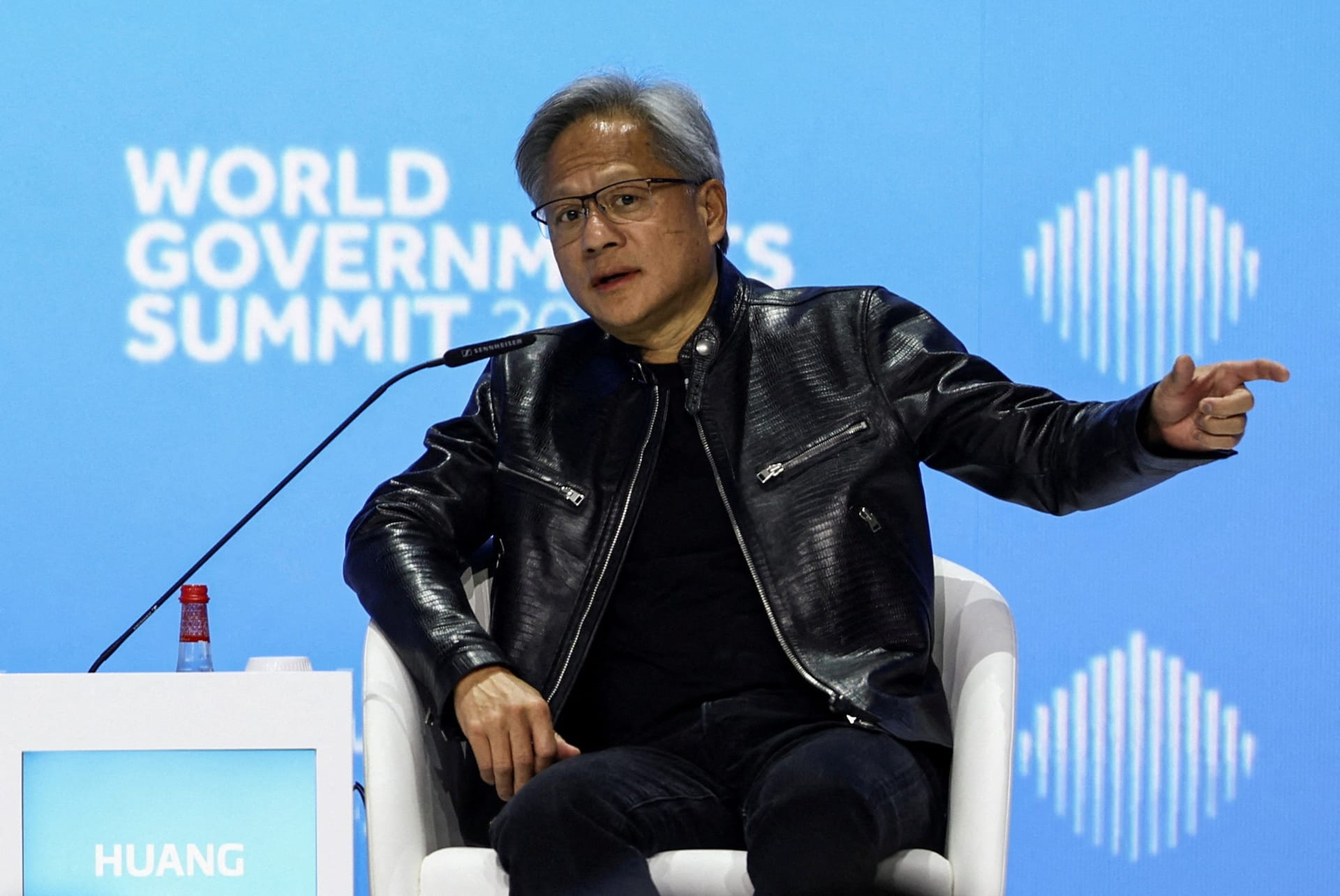
In a direct challenge to the widespread fear of AI-driven unemployment, NVIDIA founder Jensen Huang has framed artificial intelligence as the foundation for “the largest infrastructure buildout in human history.” Speaking at the World Economic Forum in Davos, Switzerland in January, Huang argued that the AI revolution is a massive engine for AI job creation, not its destruction.
The five layers of AI job creation
Huang described the AI stack as a “five-layer cake.” This isn't a single piece of software but a complex system. It starts with energy generation and moves up through chips, data centres, AI models, and finally, the applications that interact with users. Each of these layers requires a workforce to build and maintain it.
This buildout is creating demand for skilled labour right now. The need spans from electricians and plumbers for data centres to network technicians and manufacturing specialists. Huang noted that while these foundational layers are crucial, the biggest economic impact will come from the top layer: applications transforming industries like healthcare, finance, and manufacturing. This echoes findings from a recent Dell survey on UAE firms, which highlighted a major push for AI adoption despite skills gaps.
More purpose, fewer tasks
The core of Huang's argument is that AI automates tasks, not purpose. He pointed to radiology as a prime example. Despite AI tools that can analyse scans incredibly fast, the number of radiologists has actually increased. The technology handles the repetitive task of scanning, freeing up specialists to spend more time with patients and other clinicians.
The same principle applies to nursing, a field facing labour shortages. AI can manage charting and documentation, which consumes nearly half of a nurse's time. This improves productivity and patient outcomes, allowing hospitals to operate more effectively and hire more nurses. The point is that AI makes workers more valuable by allowing them to focus on the human-centric parts of their jobs.
AI as critical national infrastructure
Huang urged countries to treat AI as essential national infrastructure, similar to electricity or roads. He argued that every nation should build its own AI capabilities, tailored to its local language, culture, and data. “Develop your AI, continue to refine it and have your national intelligence be part of your ecosystem,” he said. This is a strategy already taking shape with major AI initiatives in Saudi Arabia and across the region.
He also dismissed the idea that AI is only for the highly educated. “AI is super easy to use — it’s the easiest software to use in history,” Huang stated, pointing to its rapid adoption by nearly a billion people. As a result, AI literacy — learning how to direct, manage, and evaluate AI systems — is becoming an essential skill for everyone.
Are we investing enough?
The conversation, which included BlackRock CEO Larry Fink, shifted to the scale of investment. Huang noted that 2025 saw over $100 billion in global VC funding flow into AI-native startups across healthcare, robotics, and financial services. This is already happening in the UAE, with a move by FAB to use AI for client acquisition.
Fink questioned if the world was investing enough, suggesting we are far from an AI bubble. Huang agreed, stating that huge investments are needed to build out the required infrastructure. Fink concluded that broad participation is critical, suggesting pension funds should invest in the AI world. “We need to make sure that the average pensioner and the average saver is part of that growth,” Fink said. “If they’re just watching it from the sidelines, they’re going to feel left out.”
Frequently Asked Questions
How is AI creating jobs?
AI is creating jobs across its entire 'five-layer' infrastructure, from energy and construction to cloud operations and application development. It also increases demand in fields like radiology and nursing by improving productivity, which allows professionals to handle more work and focus on higher-value tasks.
What is Jensen Huang's view on AI and jobs?
NVIDIA CEO Jensen Huang believes AI will not destroy jobs. Instead, it automates mundane tasks, which shifts the workforce's focus from tasks to purpose. This makes workers more productive and valuable, ultimately leading to increased demand for their skills rather than their replacement.
Written by

Subscribe to our newsletter
Subscribe to our newsletter to get the latest updates and news













Member discussion