
Motorola Signature Review
The Motorola Signature pairs a slim 6.99mm design with flagship power, featuring a stunning 165Hz display and a versatile Sony LYTIA camera system. At AED 3,999, it delivers a premium, stylish alternative to standard flagships without sacrificing performance or battery life.

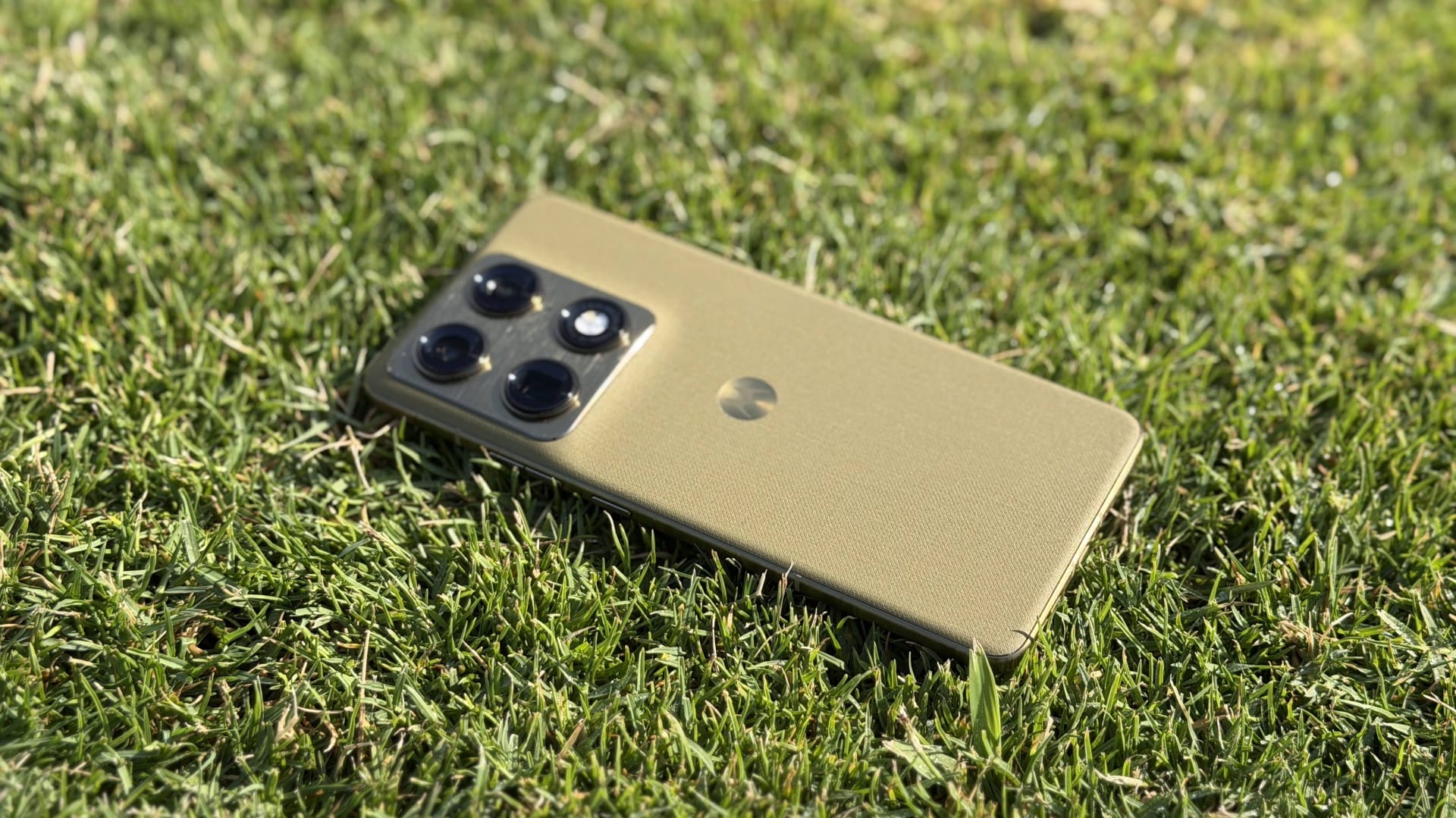
After using the Motorola Signature for a week or so, I gotta say, man - I think we are all sleeping on Motorola.
If you have been keeping an eye on their past releases, from the standard bar phones to foldables, they have all been accounted for providing excellent features, displays and performance, while keeping an eye for sleek and aesthetically pleasing designs and keeping the pricing just right. Yet you don’t see Motorolas in people’s hands, and we wonder why.
The Motorola Signature is yet another statement from them. At AED 3,999, it positions itself aggressively against the likes of the Samsung S25 series, OnePlus 15, and the iPhone 17/17 Pro, while not skimping on features. It’s got a great display, top-tier cameras, a slender body, refreshingly subdued aesthetics, a large silicon-carbon battery, liquid metal cooling, and while the processor is not top-of-the-range, it still remains performant for just about anything.
Design, Display, and Features
Weighing in at 186 grams and measuring a scant 6.9mm in thickness, the Motorola Signature may not be the lightest flagship around, but it surely makes the case for being the slimmest.
For comparison's sake, the iPhone 17 measures at 7.95mm, the iPhone 17 Pro at 8.75mm, the Samsung S25+ at 7.3mm, and the S25 Ultra at 8.2mm. The build quality is pretty top-notch, utilising an aluminium frame and a unique finish on the back that Motorola calls a “twill-like weave” for the Pantone Martini Olive variant.
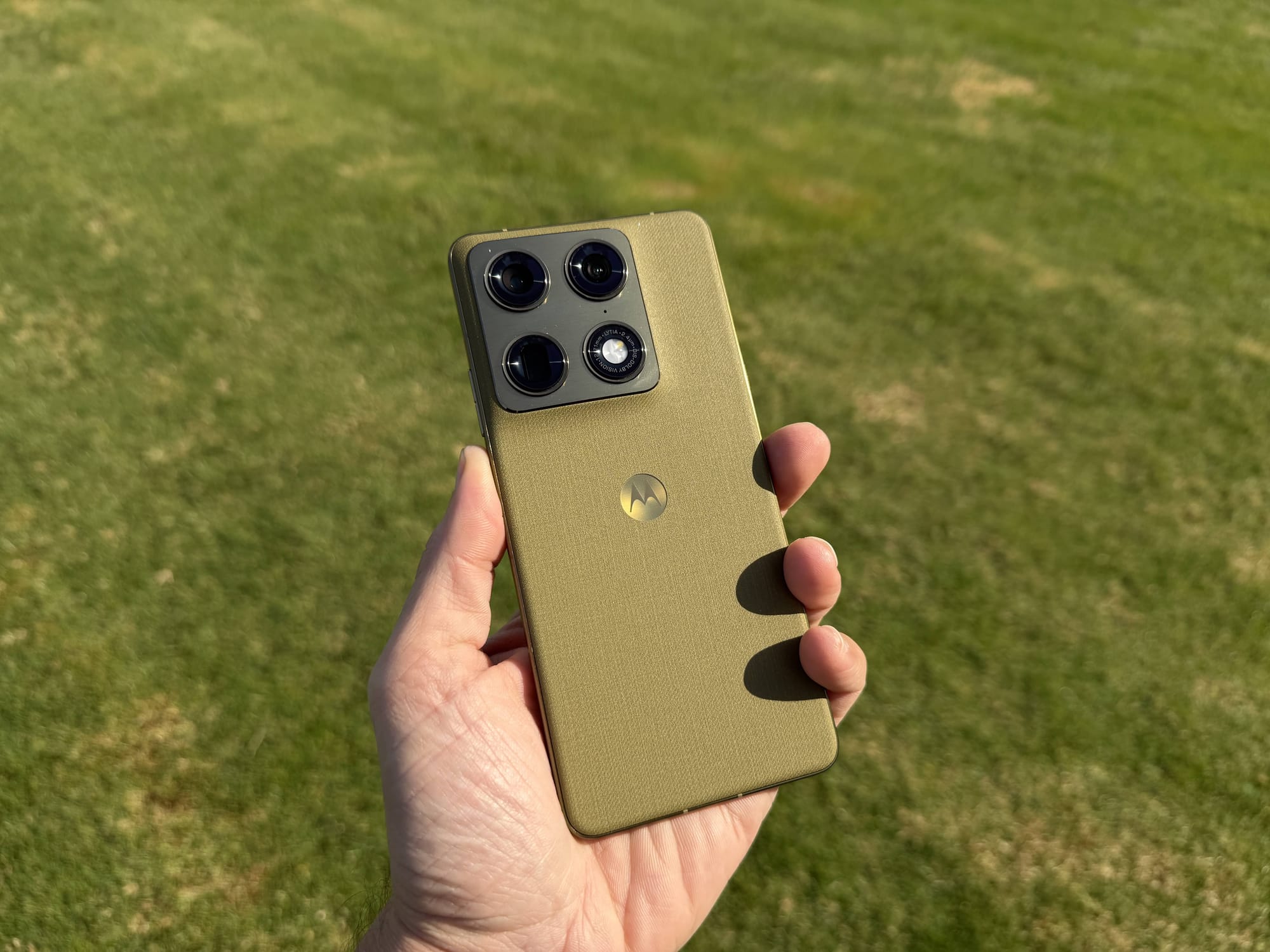
Speaking of that colour, I am usually not a fan of green or olive colourways on tech products. But somehow, Motorola makes it work here. It is unique and different from the standard monochromatic sea of black-and-silver phones, and it isn’t as loud as the bright orange and blue ones. It has a fresh, almost too professional presence, as if designed for the suited and booted among us. The cloth-like texture of the back adds a whole lot to this appeal, and the slight pattern gives it an extra bit of flair that feels very sophisticated to the touch.
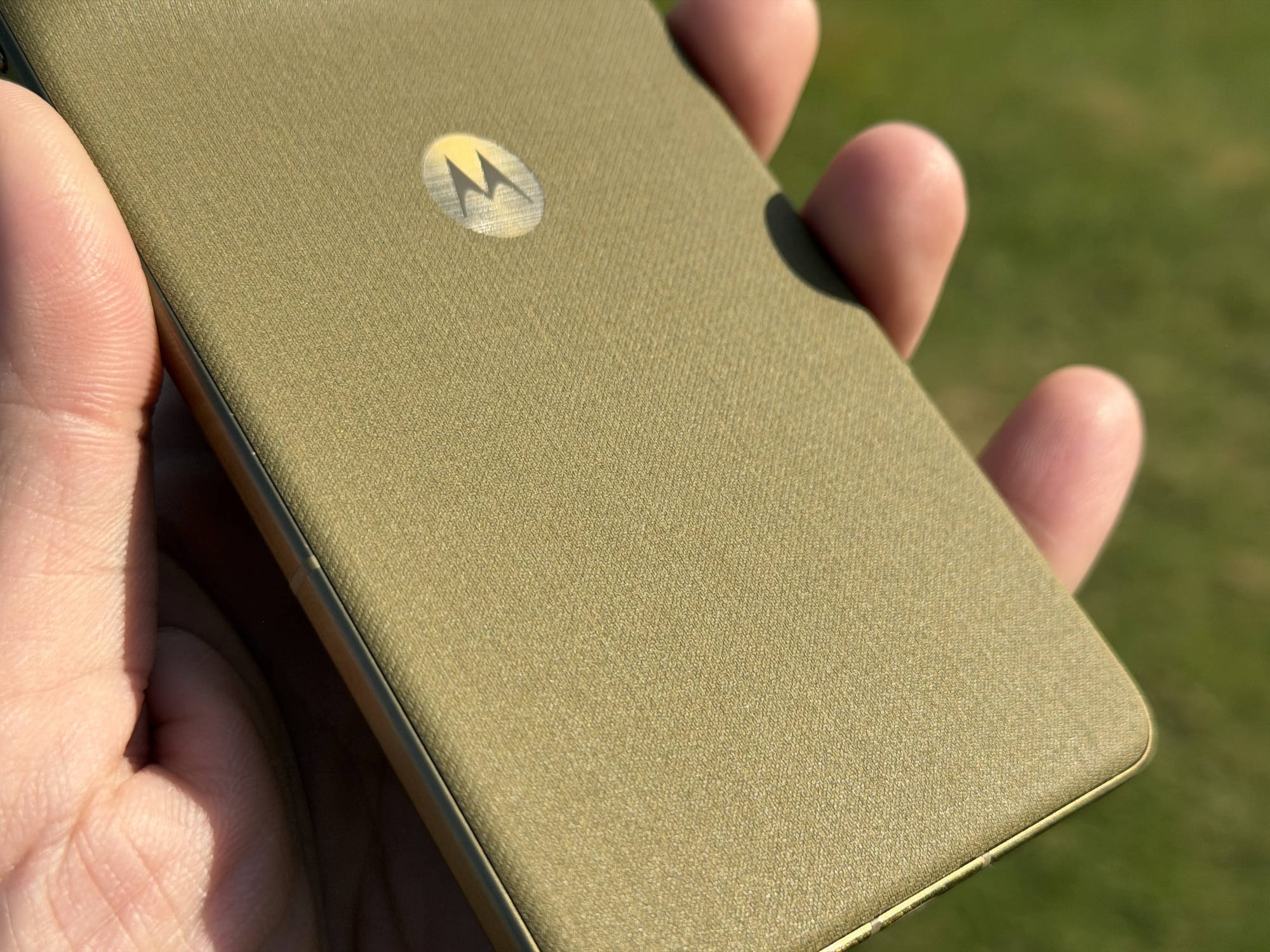
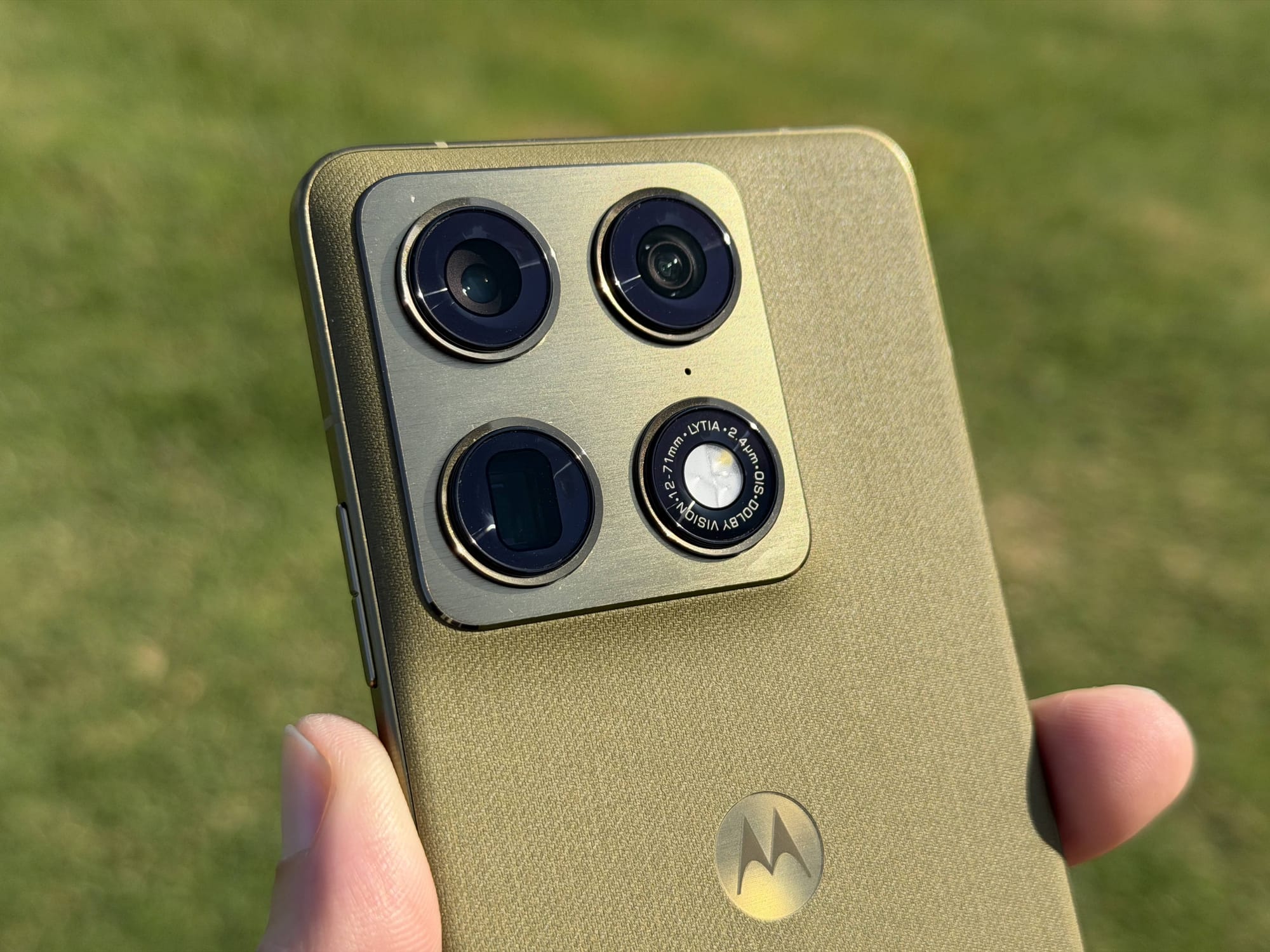
Another design choice that I appreciate from Motorola is the camera module. While every other manufacturer seems to be competing to see who can bolt the thickest, most obtrusive camera puck onto the back of their phone, Motorola seems focused on keeping the device as streamlined as possible.
The camera housing on the Signature is sleek and slim, seamlessly rising from the back panel rather than sitting atop it. The housing's thinness is even more impressive when you consider that the phone itself is already so thin.
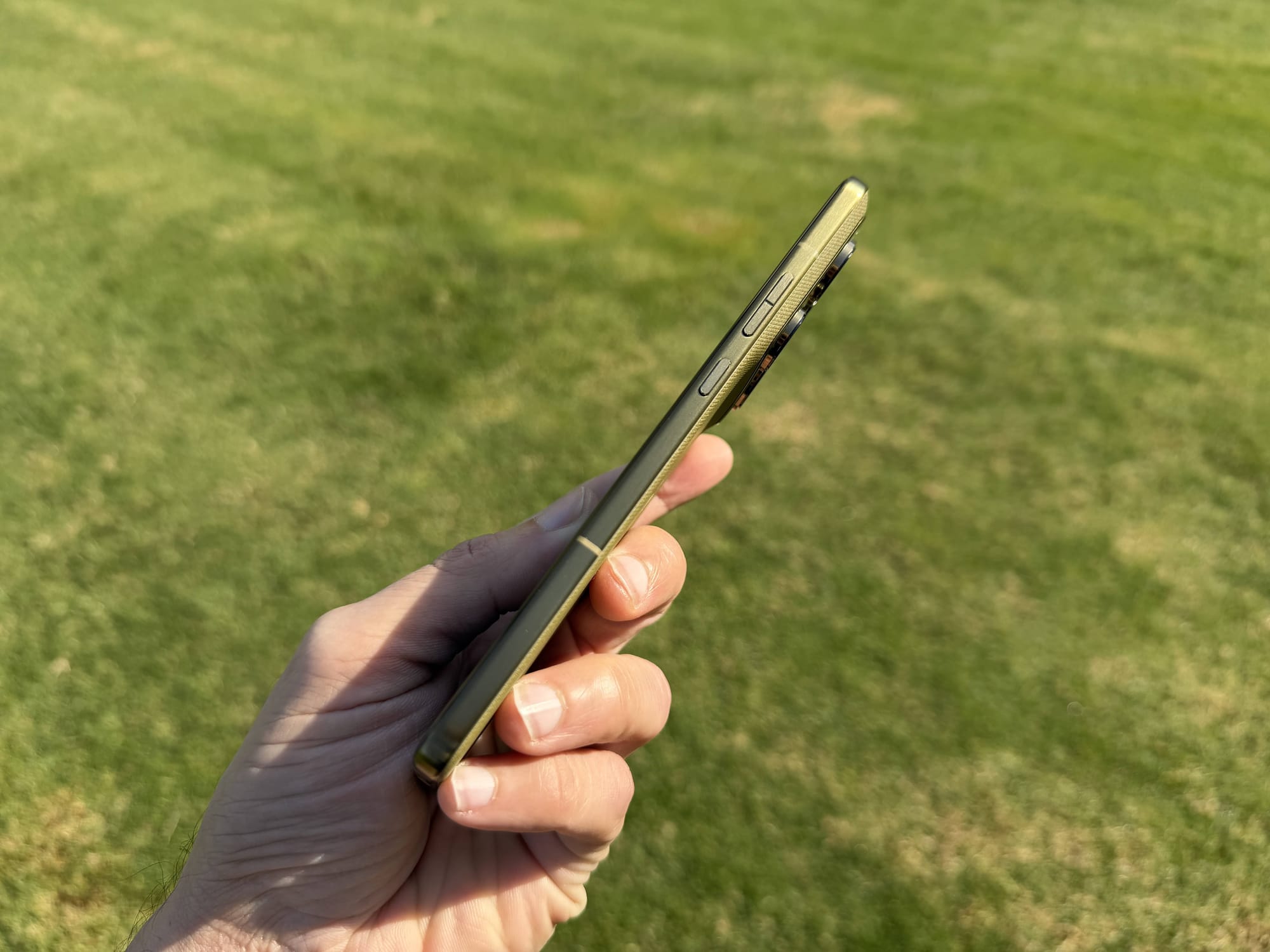
However, the pursuit of slimness does come with a slight ergonomic trade-off. The phone features a curved display protected by Corning Gorilla Glass Victus 2, which melts into the metal frame. While I generally don’t mind a slightly curved screen, the combination of the curve and the ultra-thin chassis means the actual holding area on the rails is quite minimal. Your fingers invariably end up resting on the sides of the screen.
To its credit, the Signature does a good job of rejecting most erroneous touches, but it makes me conscious of how I am holding the device, which can make prolonged use feel slightly uncomfortable. I have noticed occasional accidental touches or swipes despite the software rejection, simply because there isn’t much “non-screen” area to grip. If you are someone with the same ailment as mine, a case is recommended and included- Motorola includes a clear MagSafe-ready case inside the packaging.
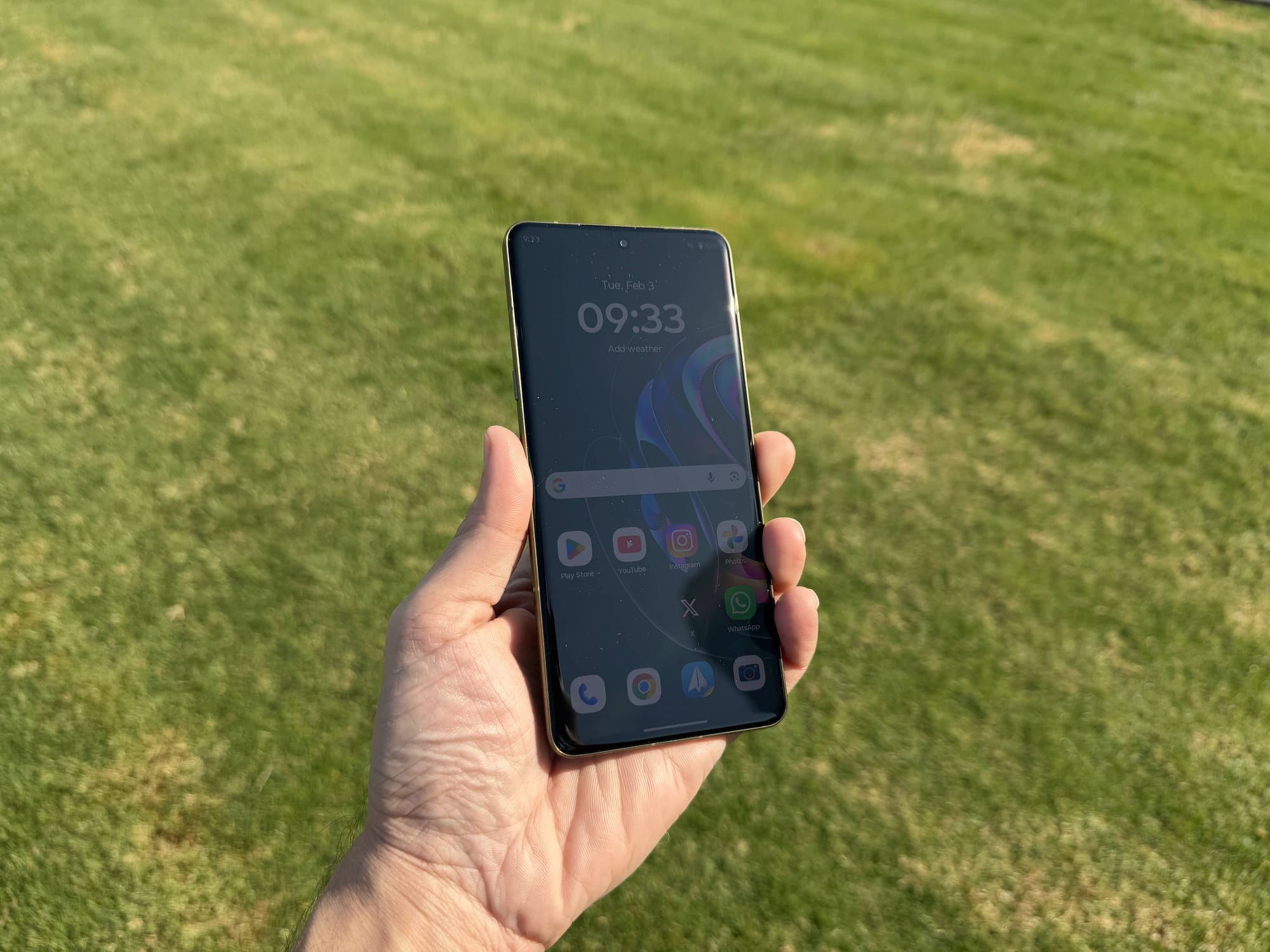
Beyond the ergonomics, the display itself is a stunner. It features a 6.8” LTPO AMOLED panel with a 1.5K resolution that looks razor-sharp. The colours are punchy, the blacks run deep, and with a peak brightness of 6,200 nits, the outdoor visibility is never an issue. It also supports Dolby Vision and HDR10+, so content that supports them will look pretty nice. A standout feature here is the 165Hz refresh rate, which is a step above the standard 120Hz found on most competitors. I am not sure if the difference will be felt - I certainly don’t - but the phone does feel fluid in motion.
In terms of durability and features, the device boasts both IP68 and IP69 ratings, meaning it can withstand high-pressure water jets, alongside MIL-STD-810H certification.
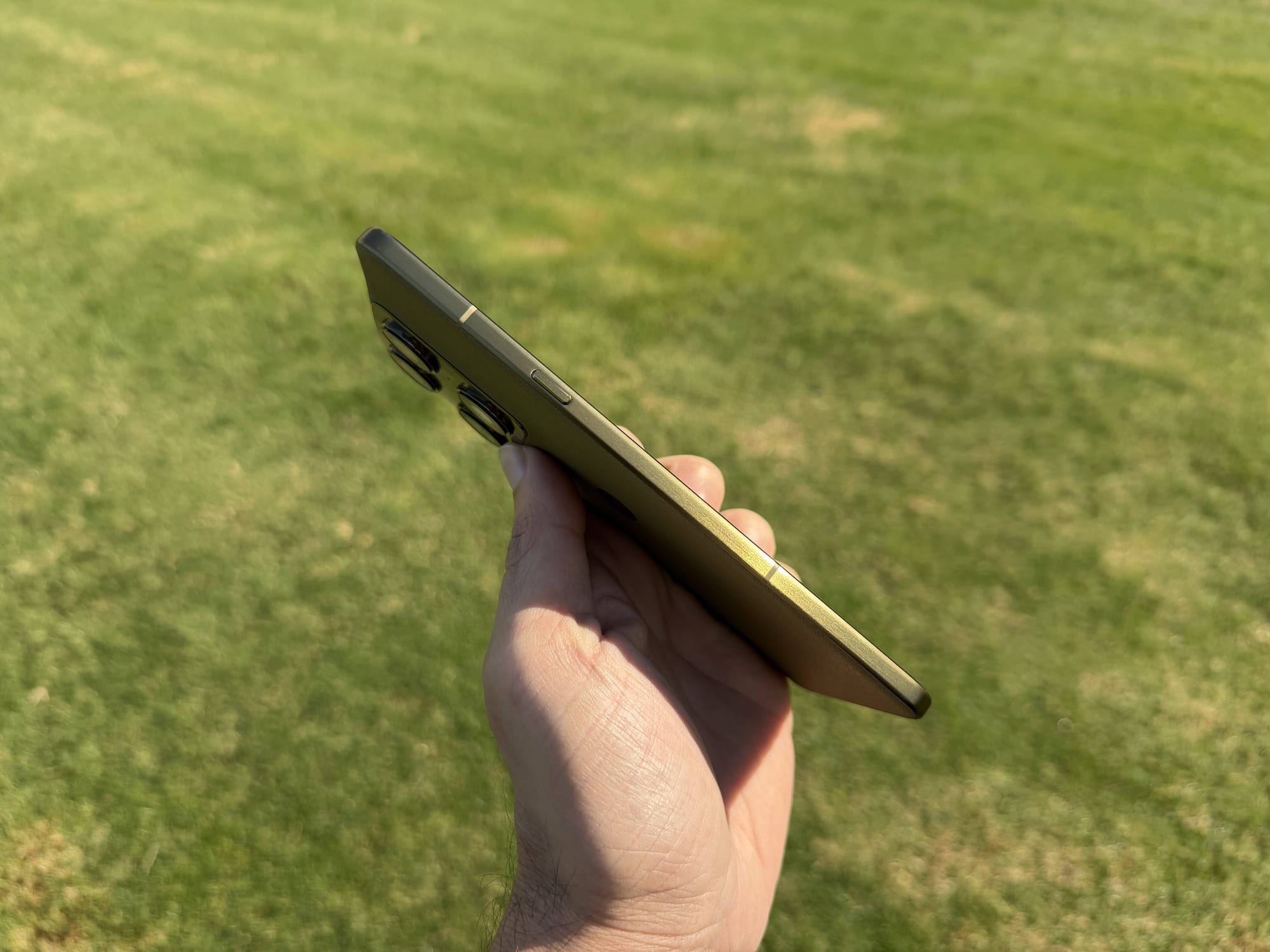
The I/O is standard, with a USB-C 3.1 Gen 2 port that supports DisplayPort 1.4. The tactile buttons are well-placed: on the right are the power and volume buttons, and on the left, the MotoAI button sits alone. At the bottom is one half of the stereo speakers (the other one sits at the top), along with a SIM card tray.
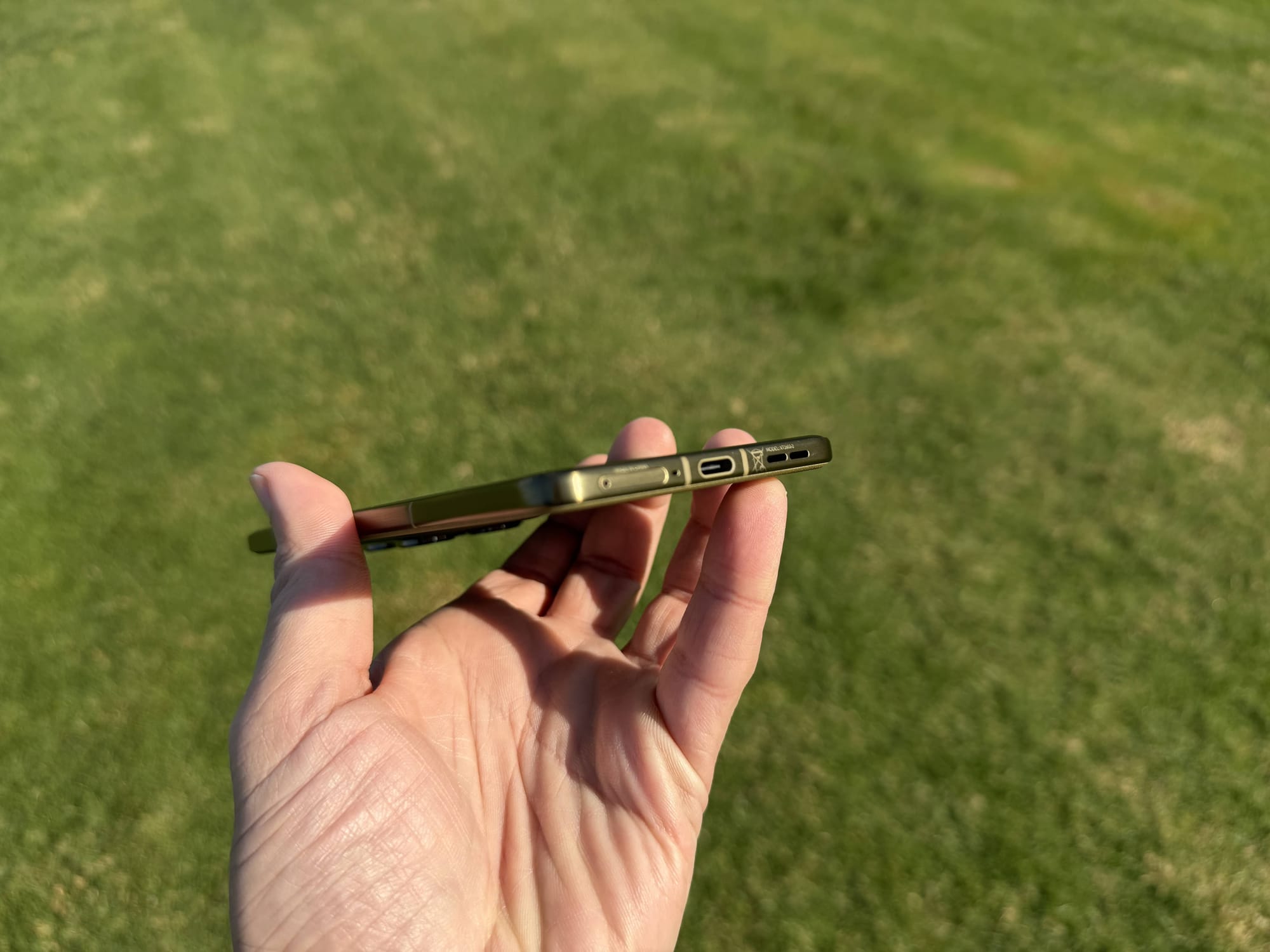
Speaking of, the audio is done by Bose and supports Dolby Atmos. The speakers are loud and clear and get the job done. They are not exceptional by any means, but it's your standard fare, with limited bass that's clear enough to enjoy Instagram reels and YouTube videos.
Camera
With the Signature, Motorola has gone for the top-tier triple Sony LYTIA setup for its cameras. Leading the charge is the main 50MP Sony LYTIA 828 sensor, which features a wide f/1.6 aperture, a large 1/1.28” optical format, and Optical Image Stabilisation (OIS) for steady shots. Complementing this is a 50MP Sony LYTIA 600 telephoto lens with an f/2.4 aperture and OIS, offering 3x optical zoom and support for Motorola’s 100x Super Zoom Pro feature.
For broader perspectives, the device utilises a 50MP ultrawide sensor with an f/2.0 aperture and a 122-degree FOV, which also doubles as a macro shooter. Finally, selfie duties are handled by a 50MP Sony LYTIA 500 sensor with an f/2.0 aperture. To top it off, the Signature has achieved a DXOMark Gold Label with a score of 164, placing it among the very best smartphone camera systems.
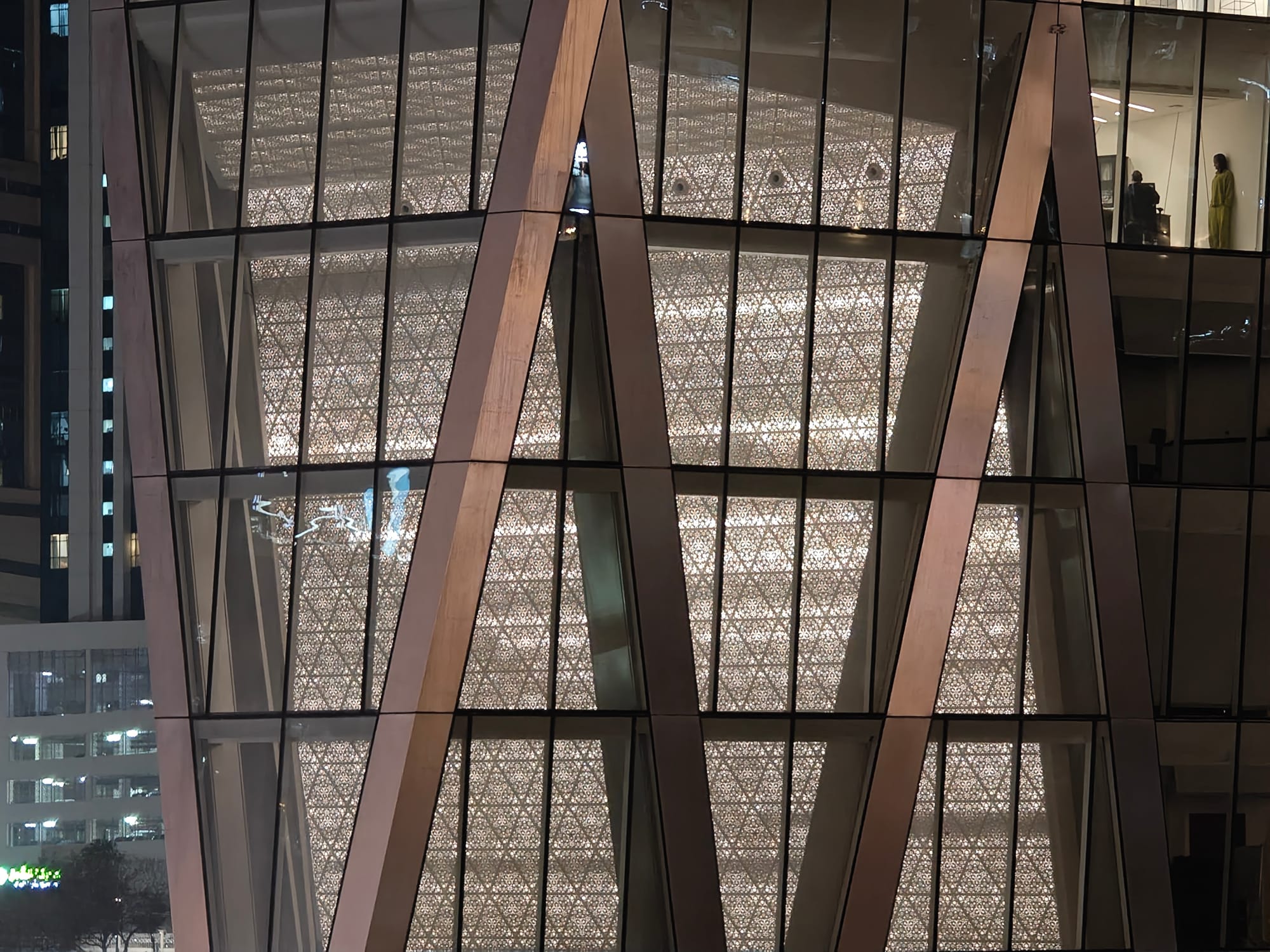
Daylight performance with the main 50MP shooter is fantastic. The range from 1x to 6x provides enough range to frame your shots without losing much quality. The dynamic range is wide, handling sunlight and deep shadows with a good balance. The sensors manage to capture plenty of detail while striking a balance of colours that represent as close to life as possible without much oversaturation or tinting.

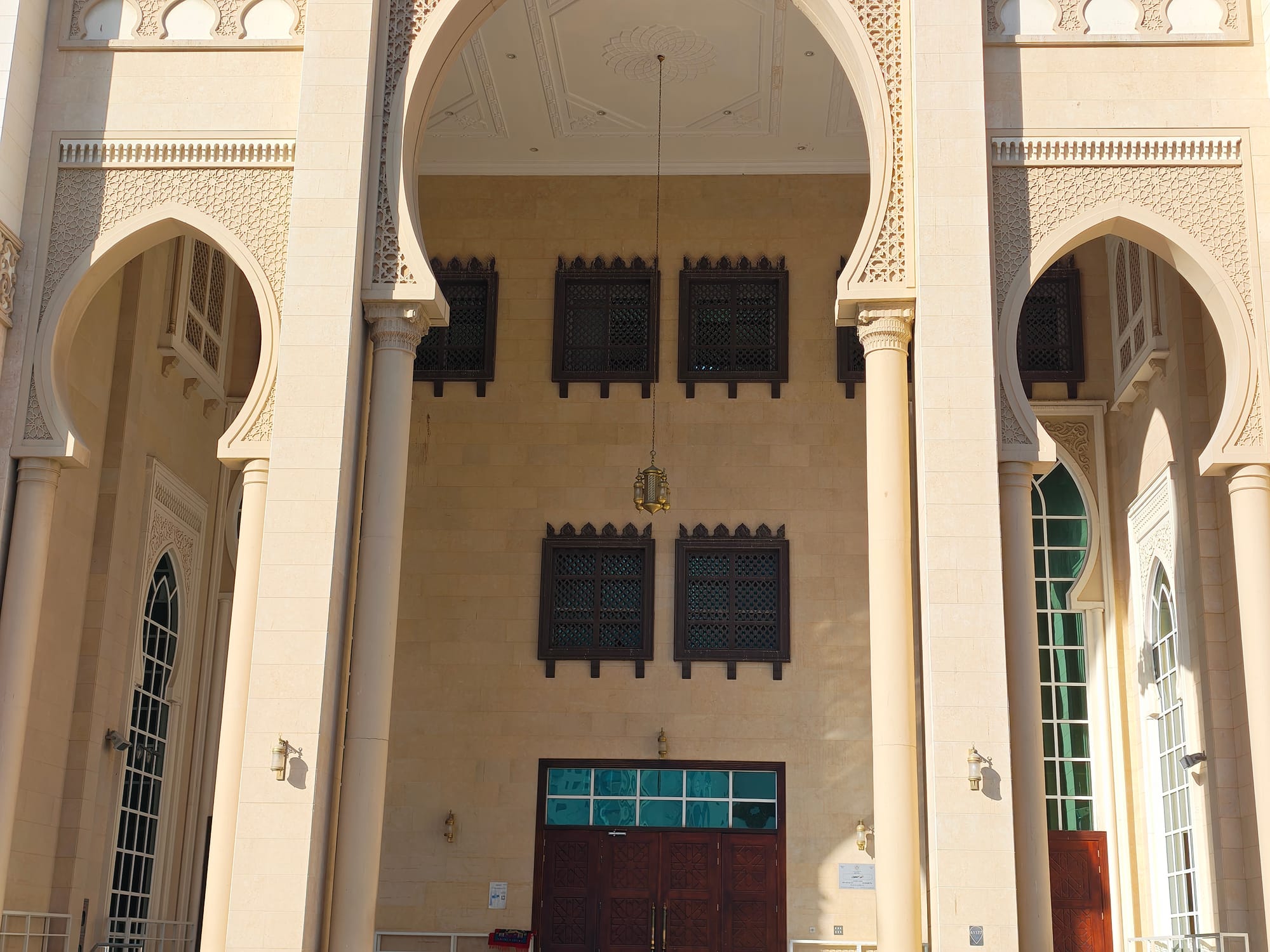

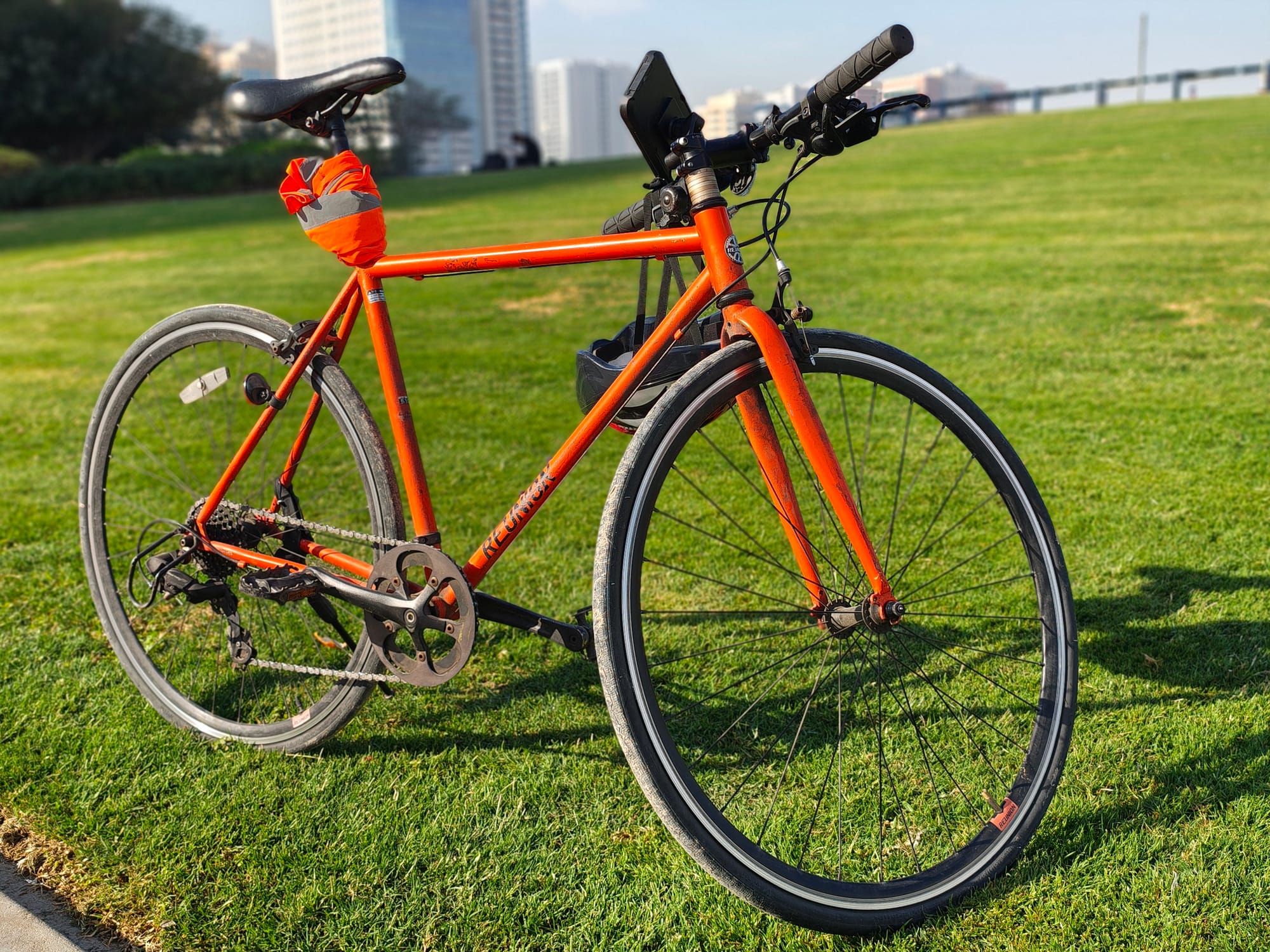


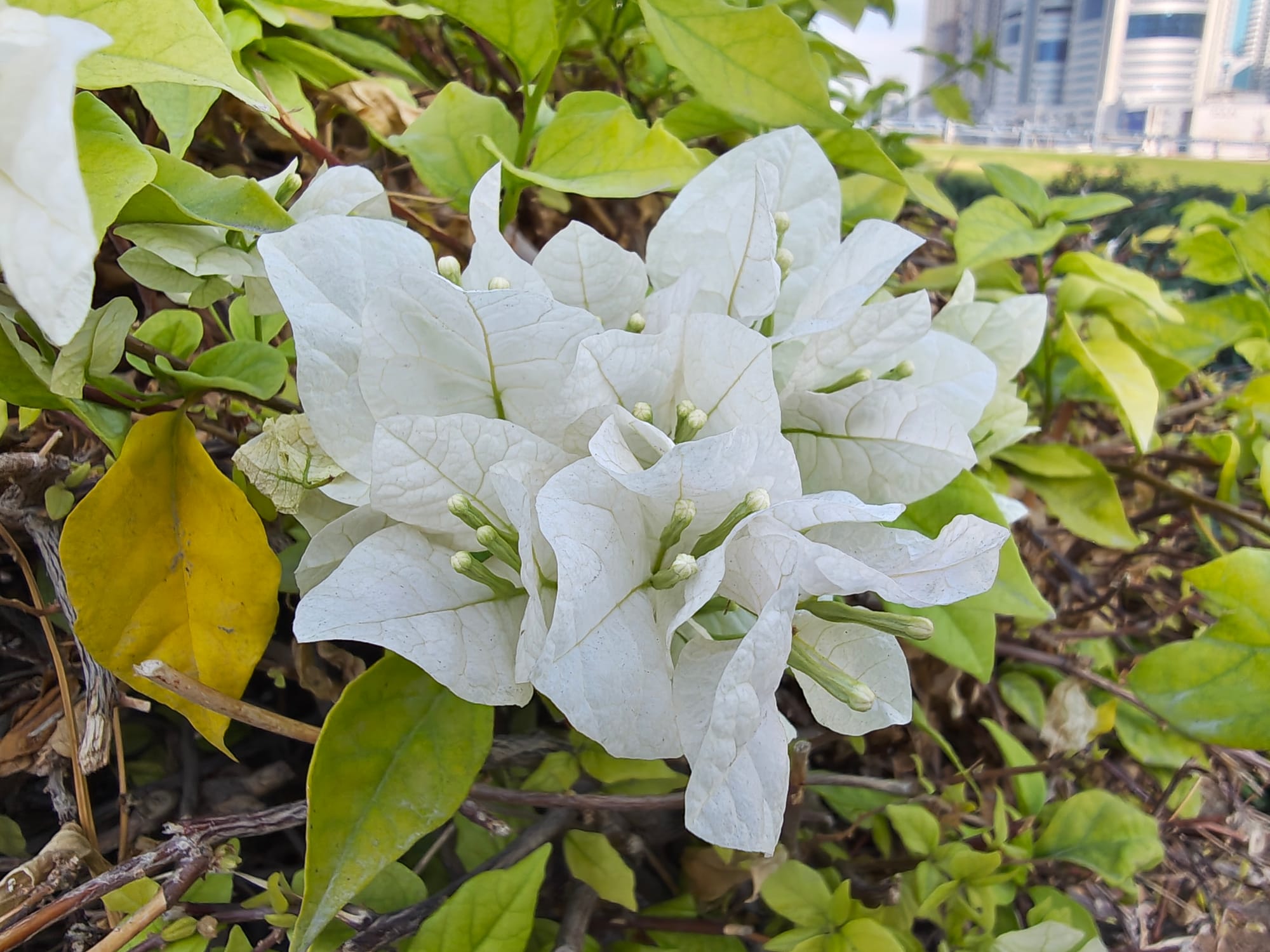

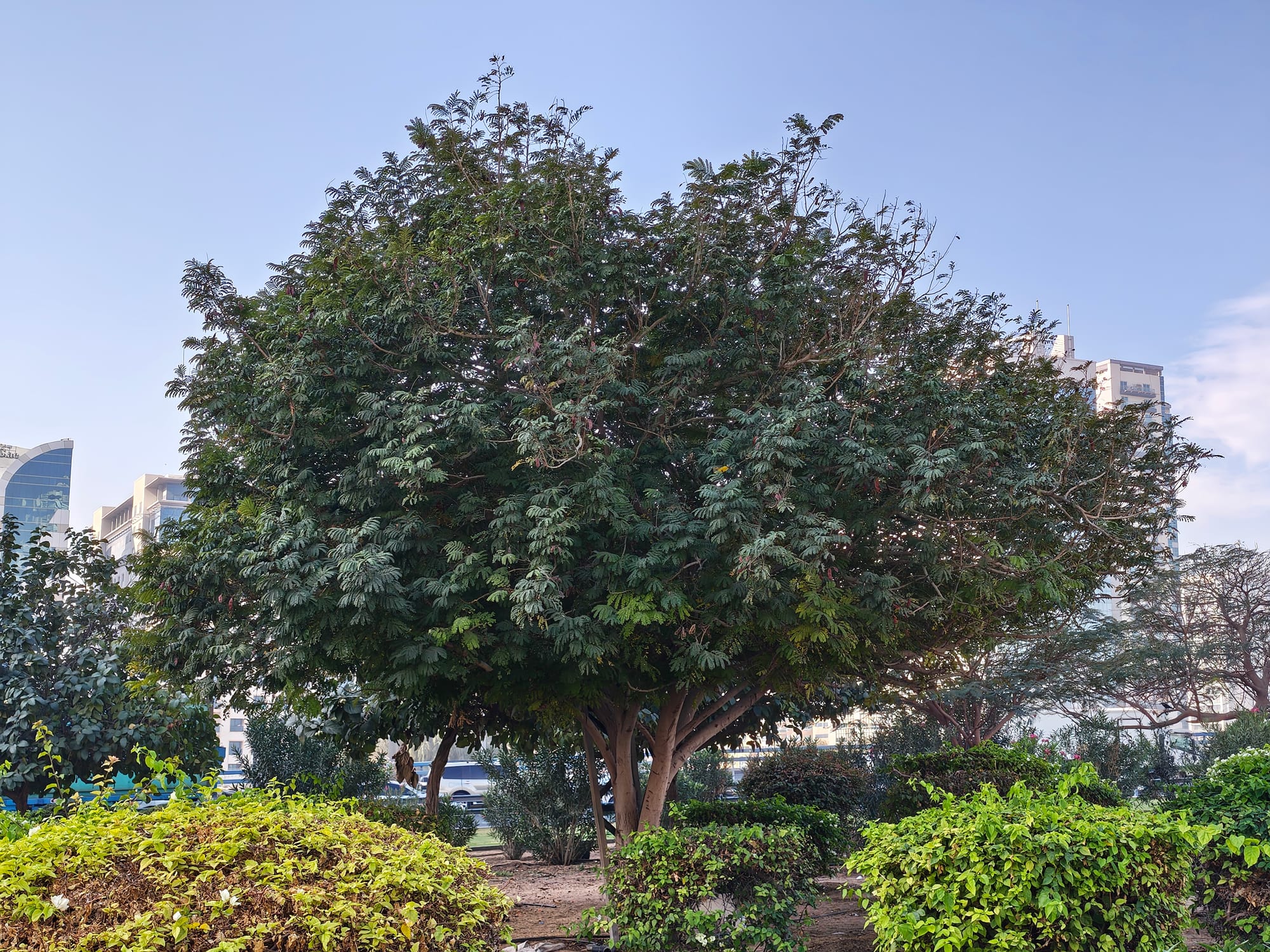
The Super Zoom Pro feature is Motorola’s branding for its AI-assisted digital zoom that goes up to 100x but kicks off around 30x. At 30x and even at 50x, the images remain surprisingly usable, with the AI sharpening doing a good job of cleaning up edges and compression, though the oil painting look remains. Once you hit the 100x mark, however, things get expectedly dicey. While you can have a semblance of the captured subject, the details are washed out and smeared, so it’s not very usable at that point.

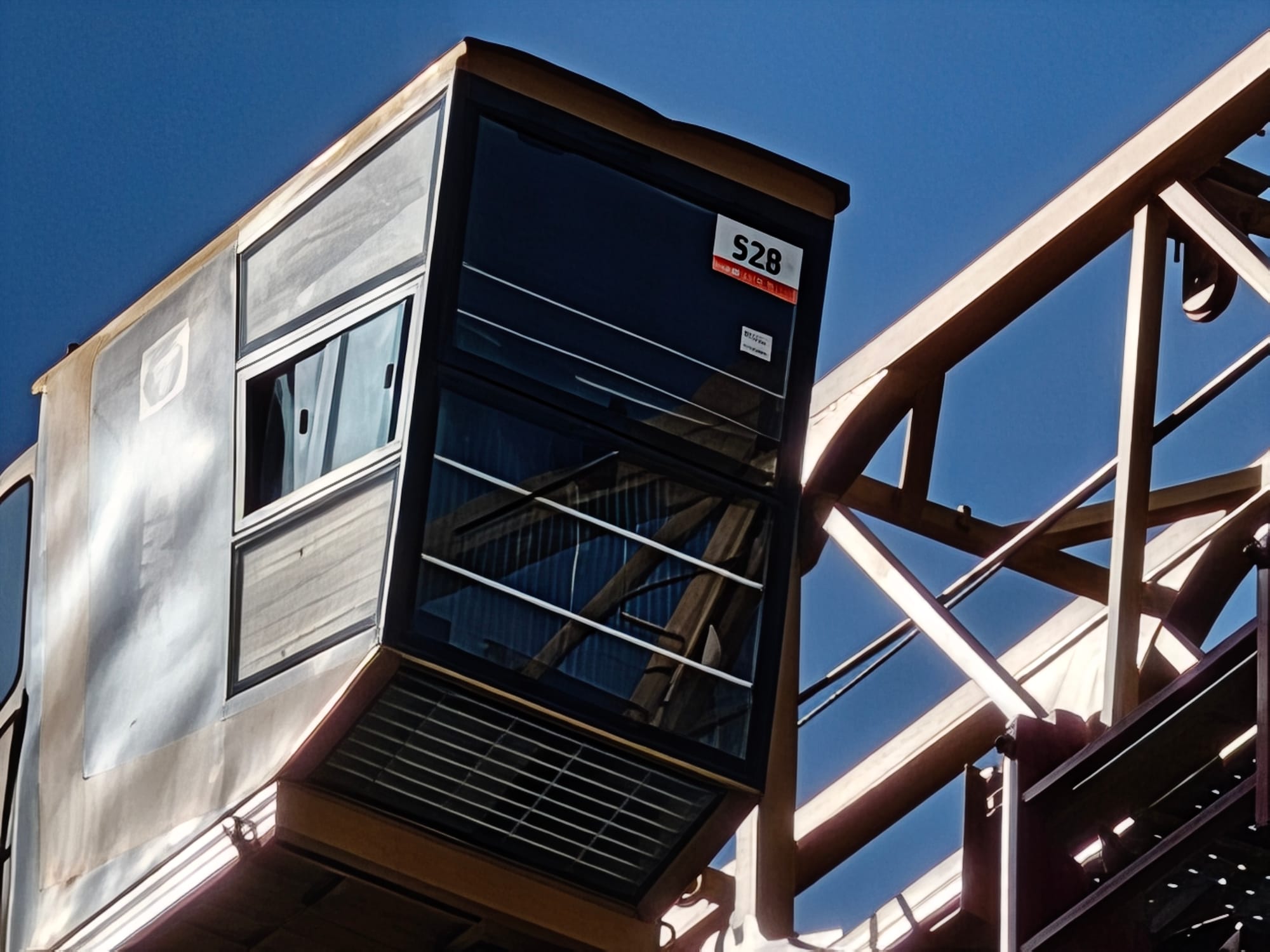
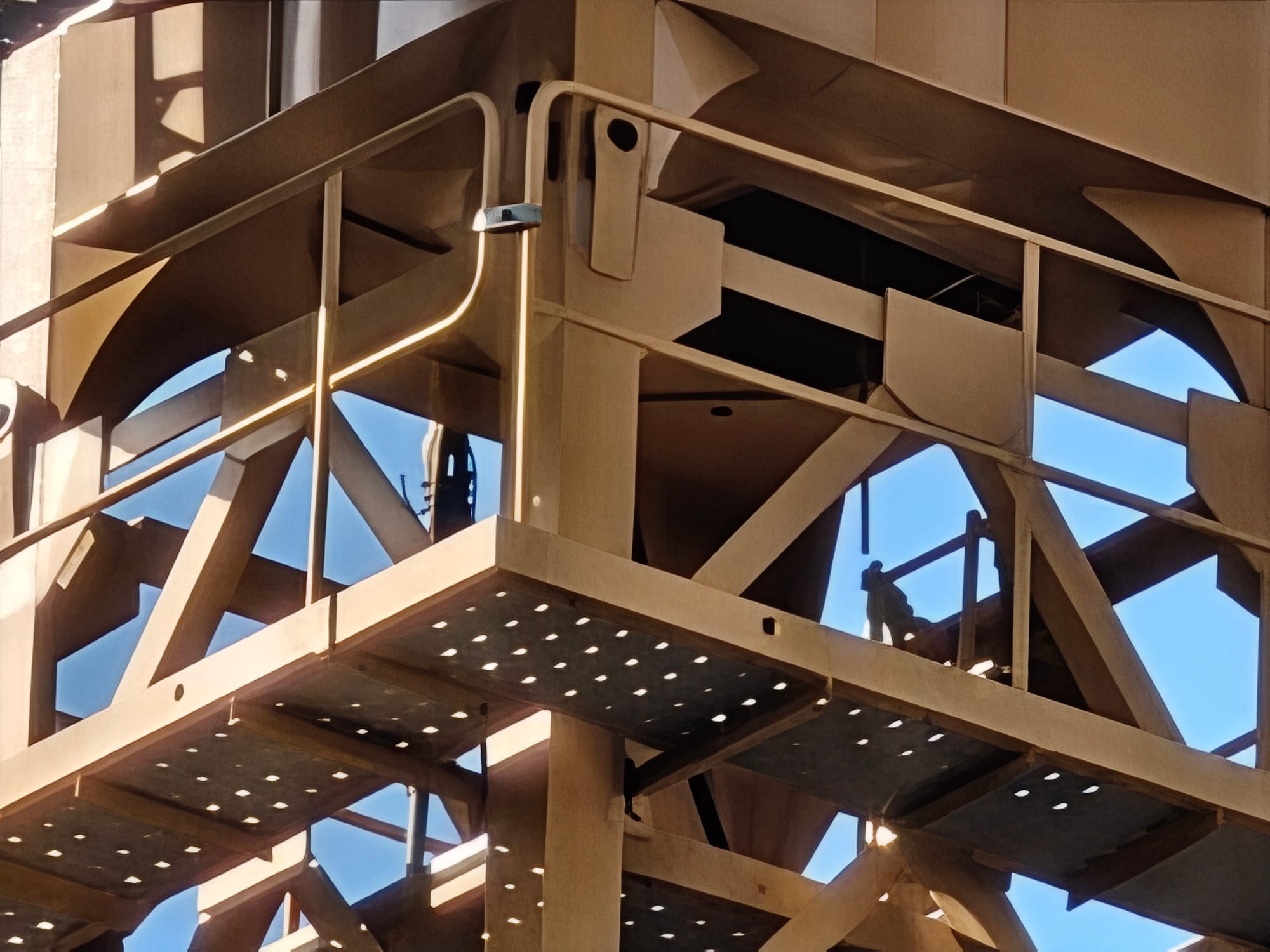
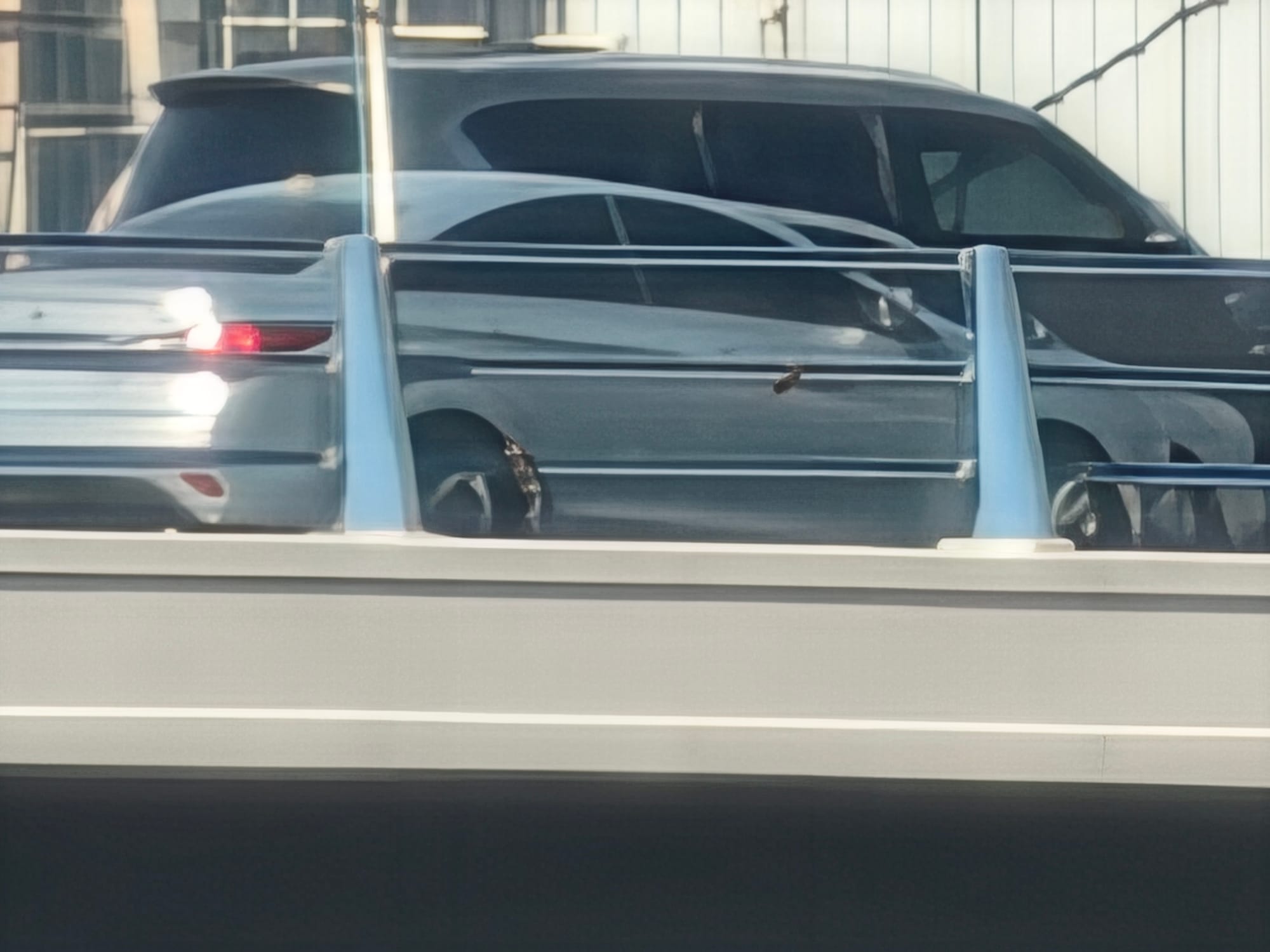
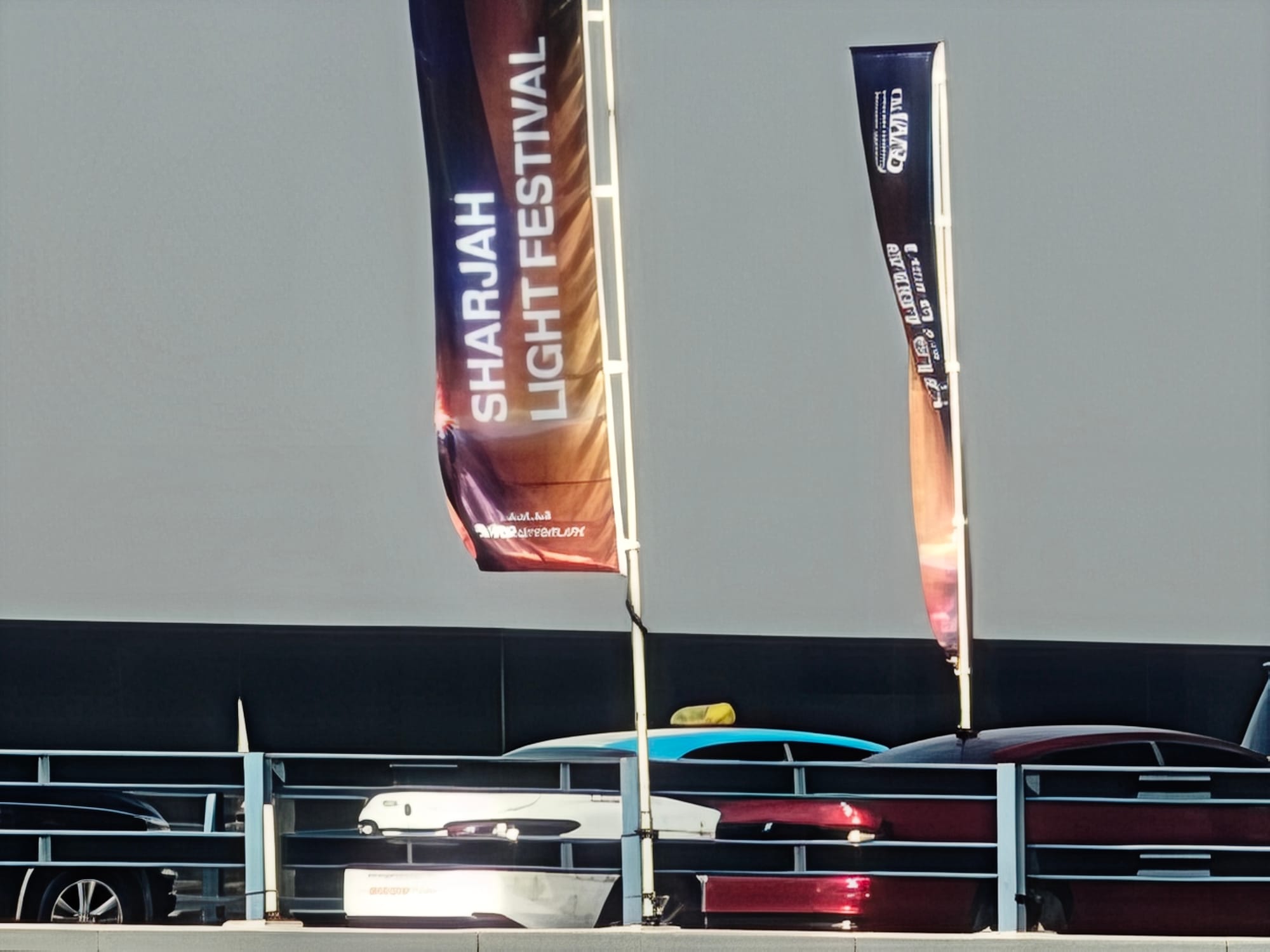

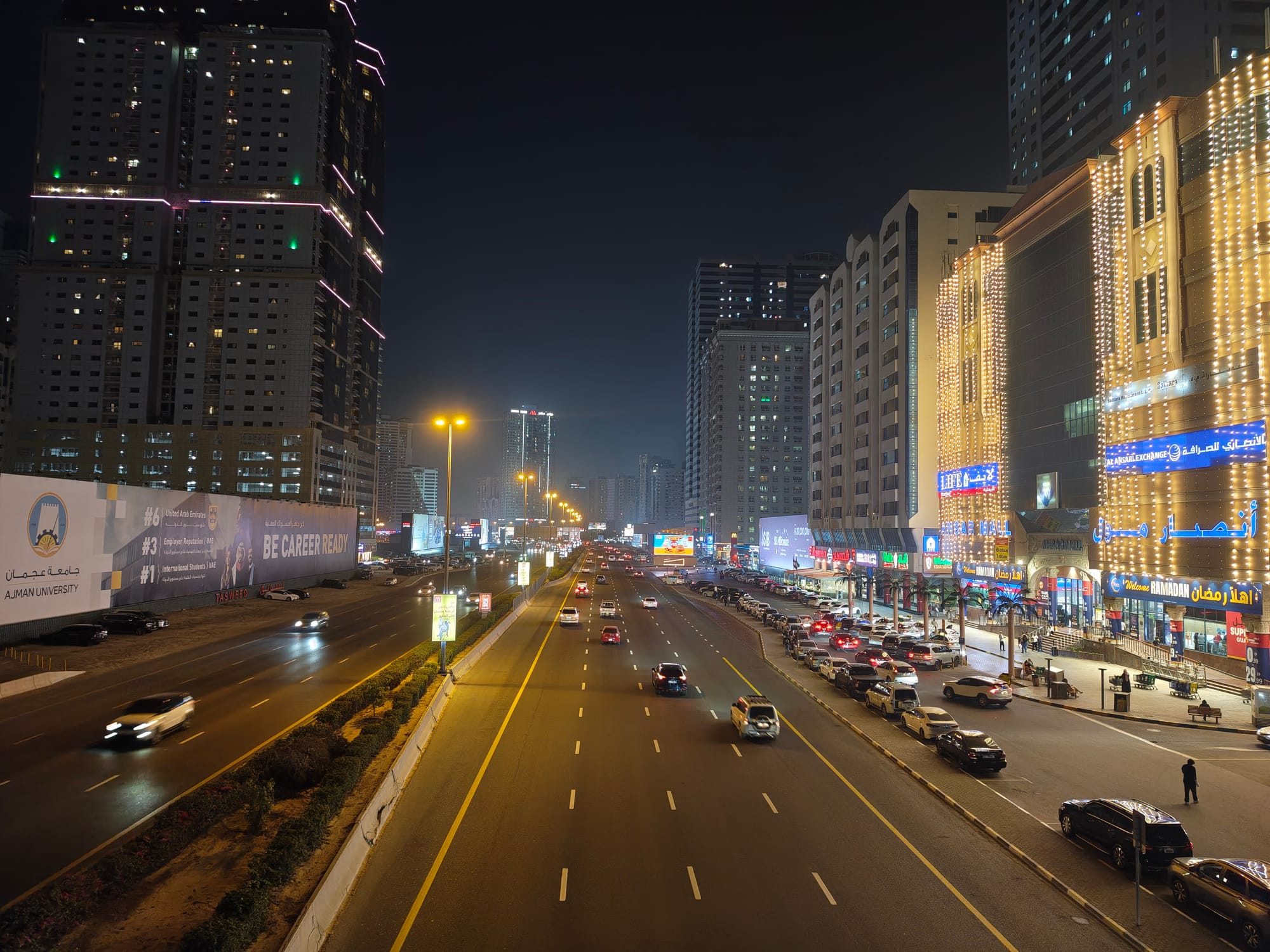
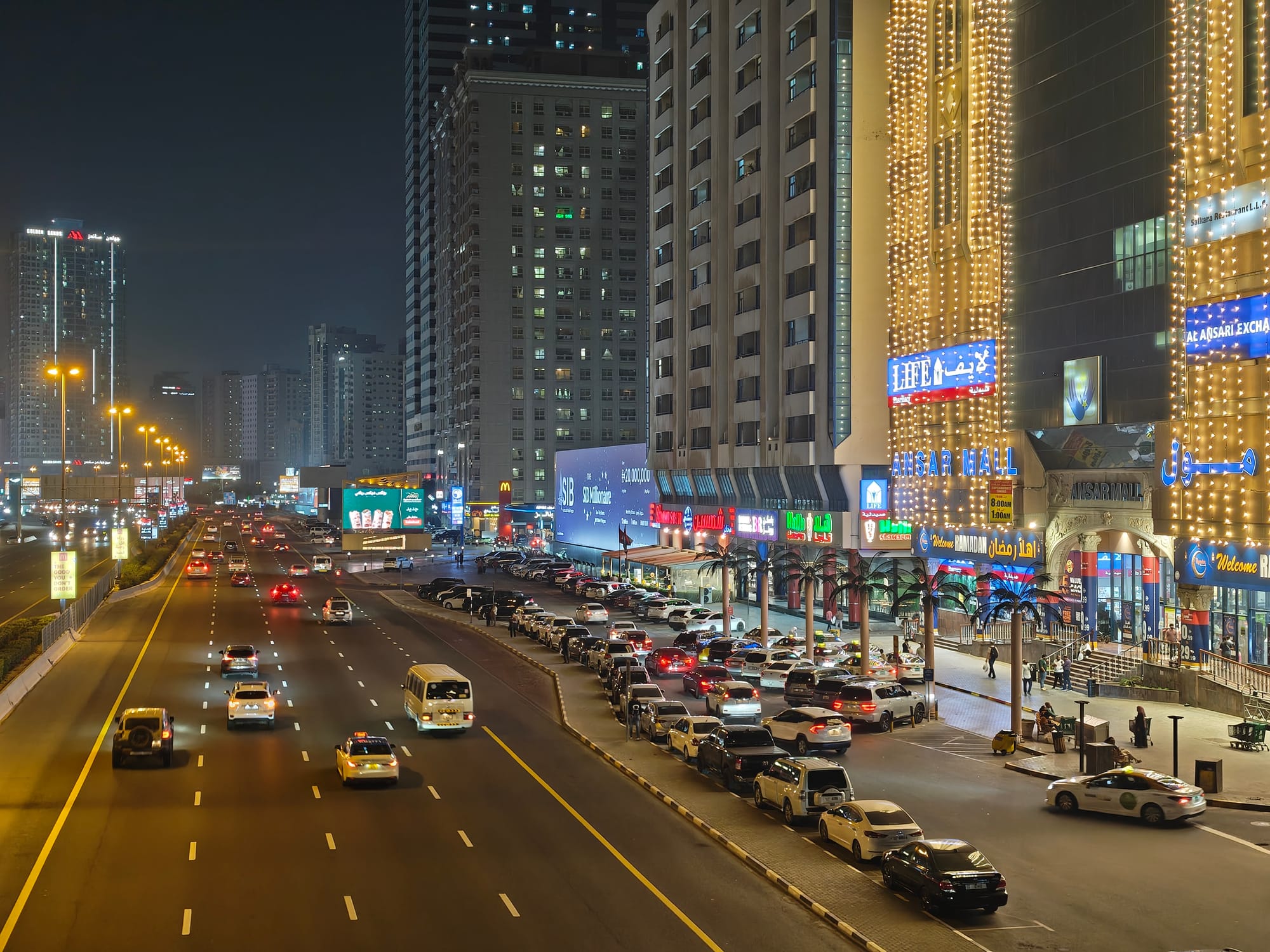
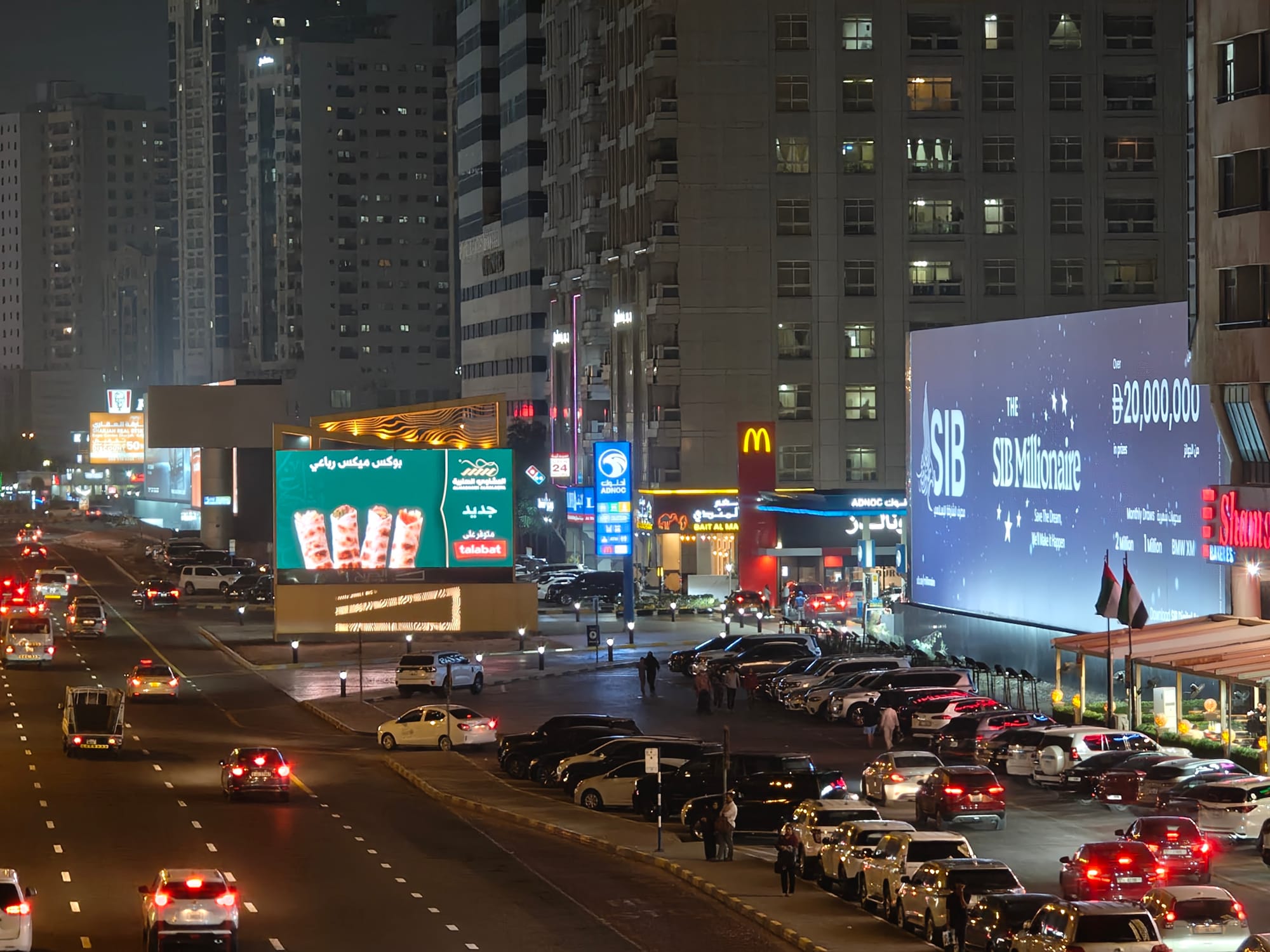
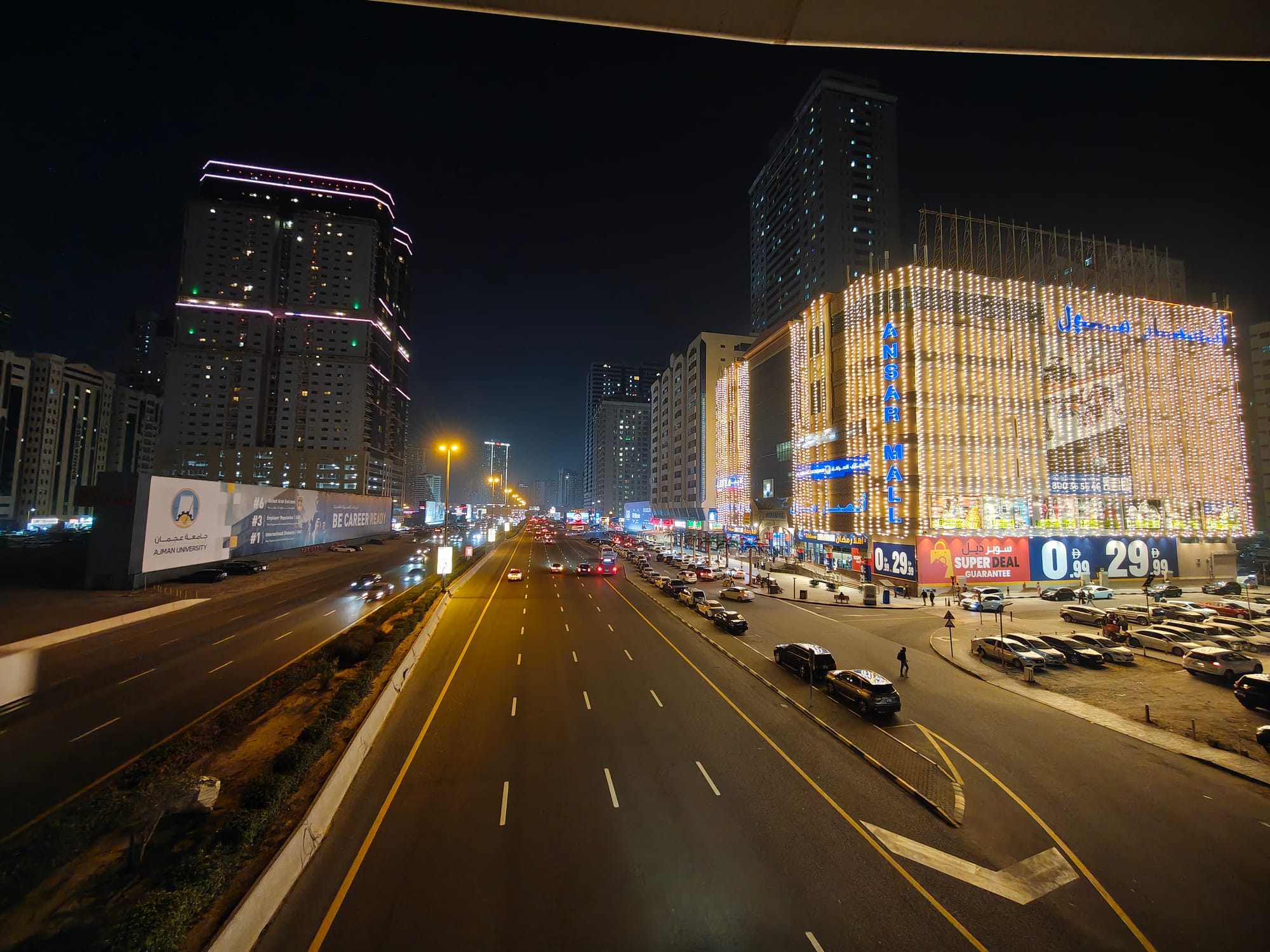
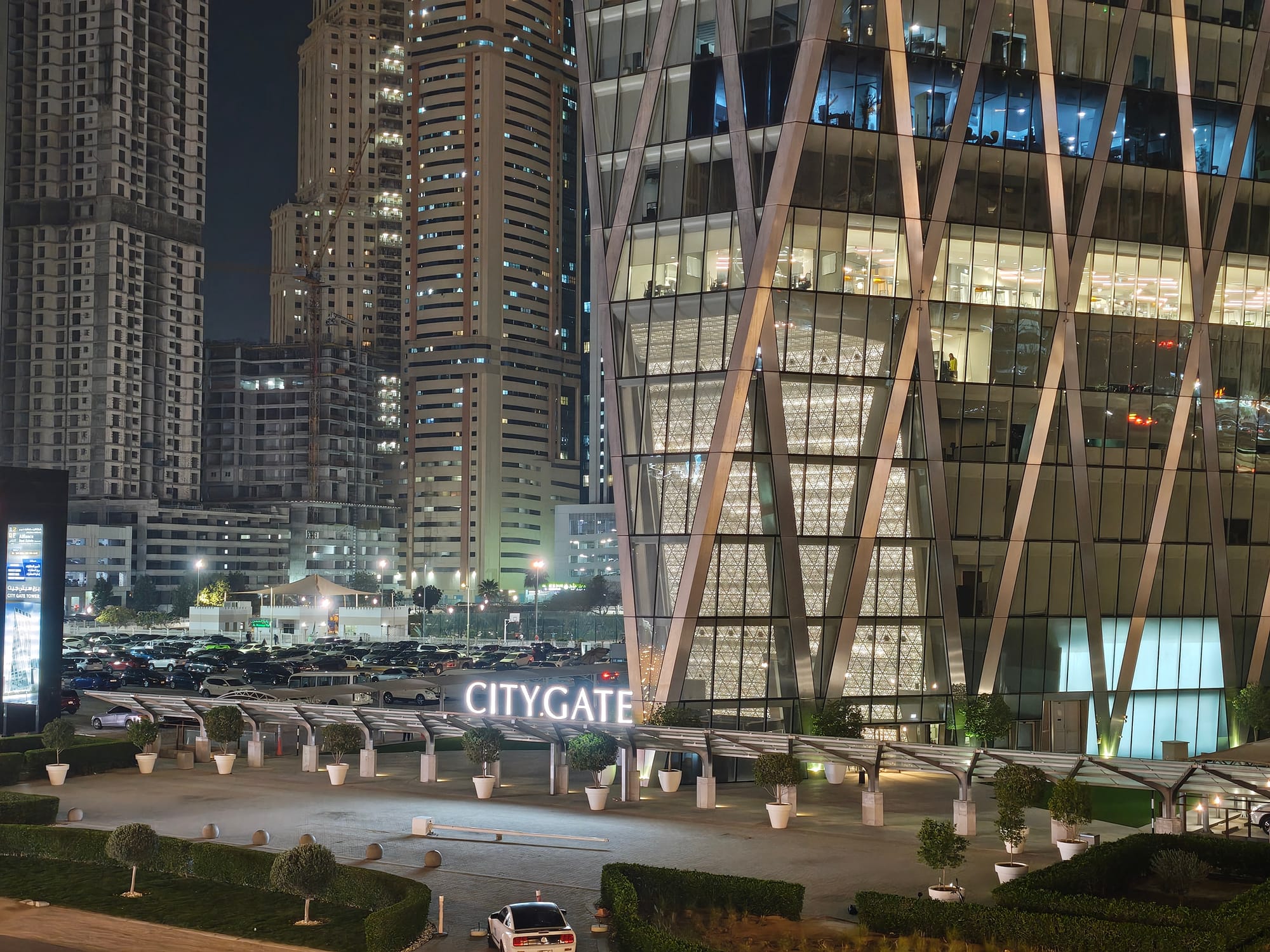
Nighttime shots with the Signature are just as good. The large main sensor and wide f/1.6 aperture pull in a lot of light, so the software doesn't have to artificially brighten the scene as much. As such, images are clean, with plenty of detail, range, and highlights, while still maintaining good colour accuracy.

Performance and Software
Under the hood, the Motorola Signature is powered by the Snapdragon 8 Gen 5, utilising Qualcomm’s 3rd-gen Oyron CPU architecture. This octa-core setup features two Prime cores clocked at 3.8Ghz and six Performance cores at 3.32Ghz. It is paired with the Adreno 829 GPU, up to 16GB of LPDDR5X RAM, and UFS 4.1 storage. It’s not the most top-of-the-range processor - Motorola has to cut costs somewhere for that price, eh? - but it still remained performant and posted some decent results.
| Benchmark | Motorola Signature |
|---|---|
| Geekbench 6 CPU - Single Core | 2,734 |
| Geekbench 6 CPU - Multi Core | 8,869 |
| Geekbench 6 GPU | 17,805 |
| Geekbench AI | Crashed |
| 3DMark Steel Nomad Light | 2,038 |
| 3DMark Solar Bay Extreme | 783 |
| 3DMark Wildlife Extreme | 5,409 |
While the numbers are impressive across the board, there is one oddity: Geekbench 6 AI consistently crashed despite multiple attempts. It is likely a software optimisation issue with the test itself on this specific hardware, but it is worth noting.
To keep this ultra-thin device from melting under intensive workloads, Motorola employs an ArcticMesh Cooling System that utilises a copper mesh and a liquid metal solution to dissipate heat. To test its limits, I ran the 3DMark WildLife Extreme Stress Test, a 20-min loop that pushes the GPU to its absolute maximum.
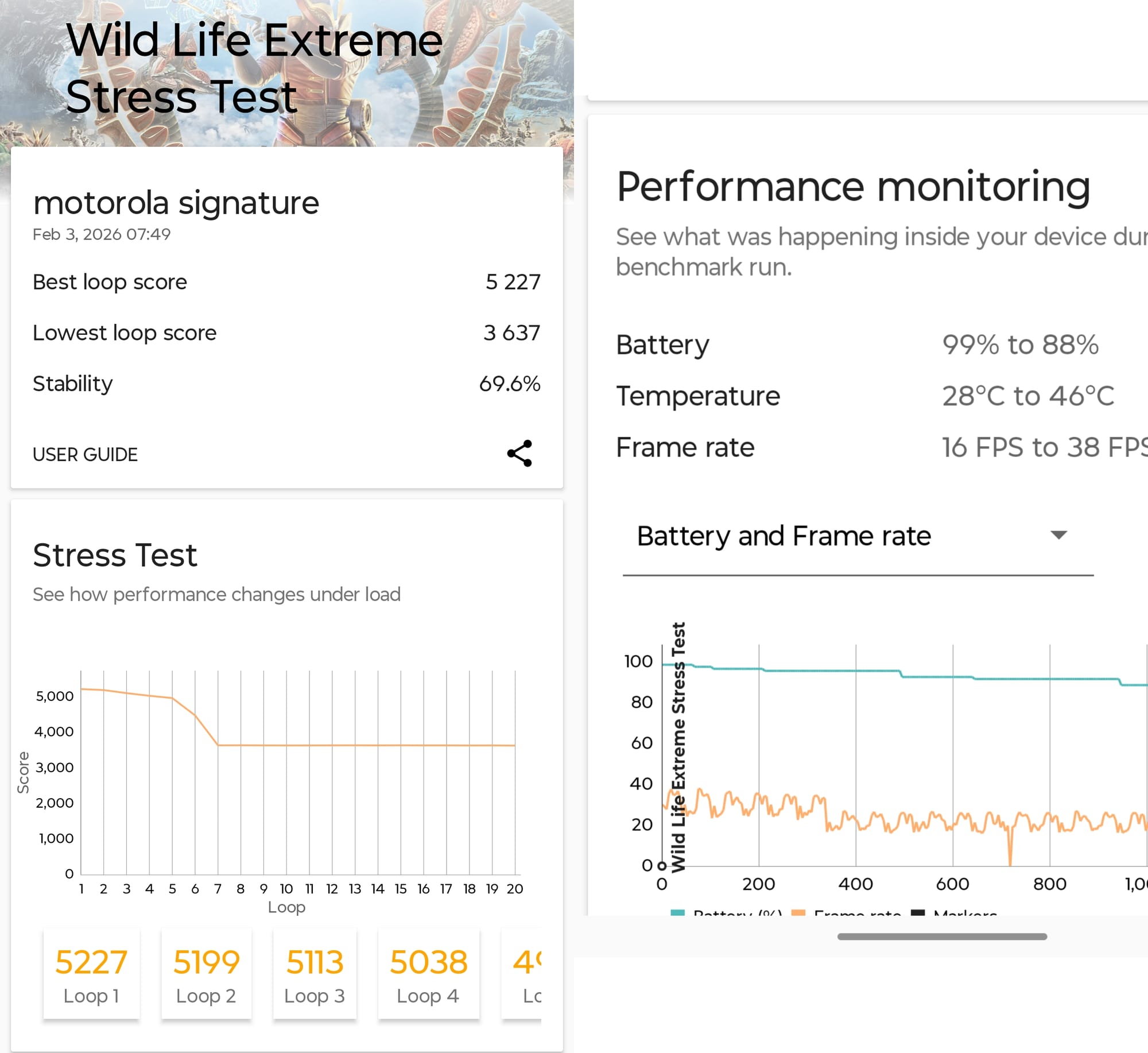
The signature achieved a stability score of 69.6%, with the loop score dropping from a high of 5227 to 3637 around the 7th minute. The temperature also climbed from 28 °C to a toasty 46 °C, and the battery dipped by 11% during the run.
While 69% stability is pretty nice and acceptable for a phone this thin, it shows that physics still wins out in the end. The cooling system works hard - you can feel the heat dissipating through the back (and it does get quite hot) - but under sustained extreme load, the phone will throttle to keep thermals in check.
In day-to-day use, however, you will rarely encounter these limits. The Signature remains smooth throughout almost every task, whether I was loading multiple apps, juggling documents, or doomscrolling social media. The animations are buttery smooth, supporting the high-refresh-rate screen well. I did notice the occasional dropped frame or very slight slowdown during random, non-intensive tasks, but it didn't happen often enough to be a dealbreaker. The only consistent stutter I found was when zooming in the camera app; it feels a bit sluggish compared to the seamless switch on an iPhone, for example. That said, snapping photos is instant, and the post-processing is snappy.
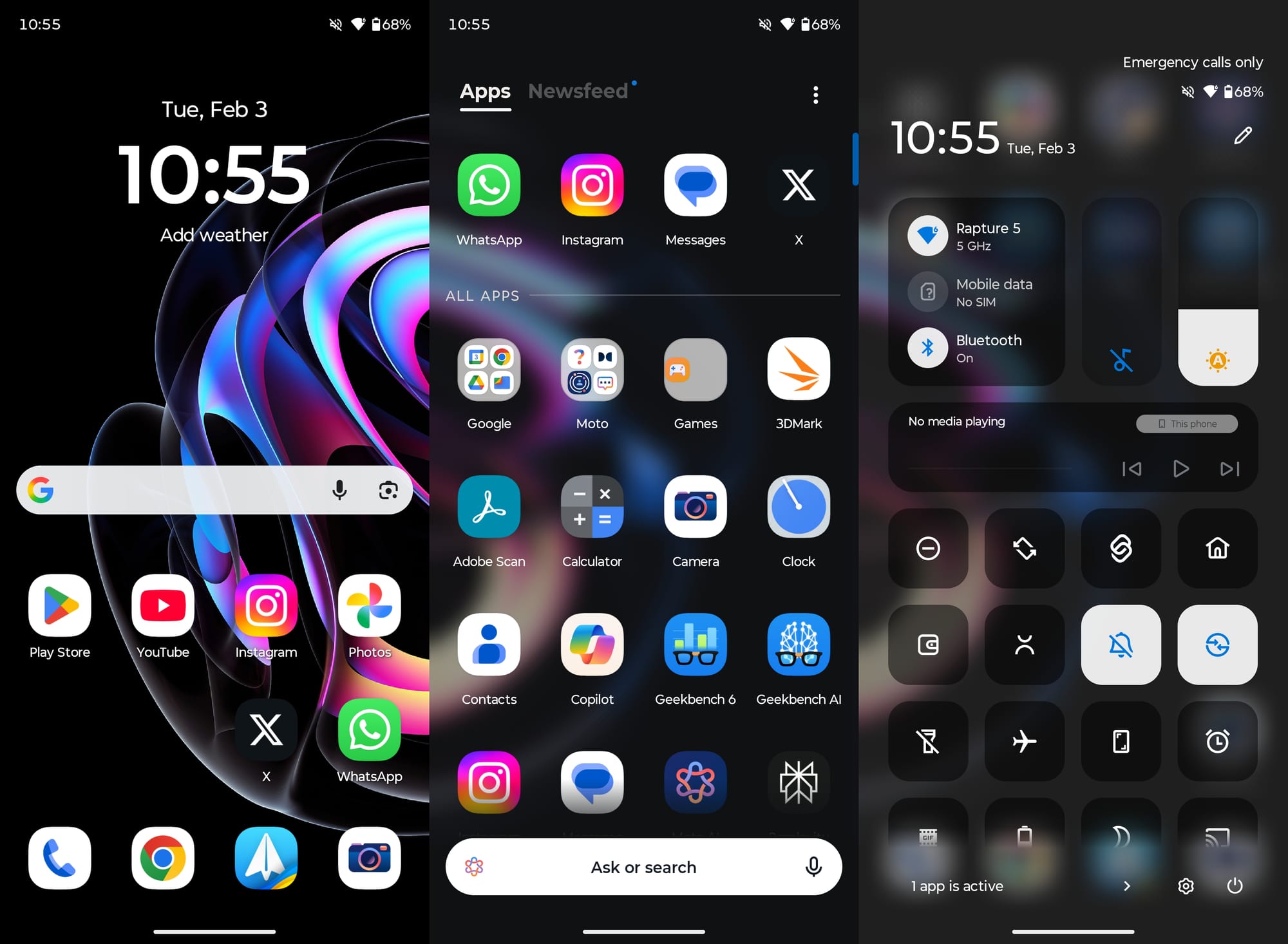
On the software front, the phone runs on Android 16 with Motorola’s Hello UI on top. Just like other Motorola phones, the Android skin is minimalistic at best and has very little bloatware. Motorola has committed to an impressive 7 years of OS upgrades and 7 years of security patches, matching the best in the industry.
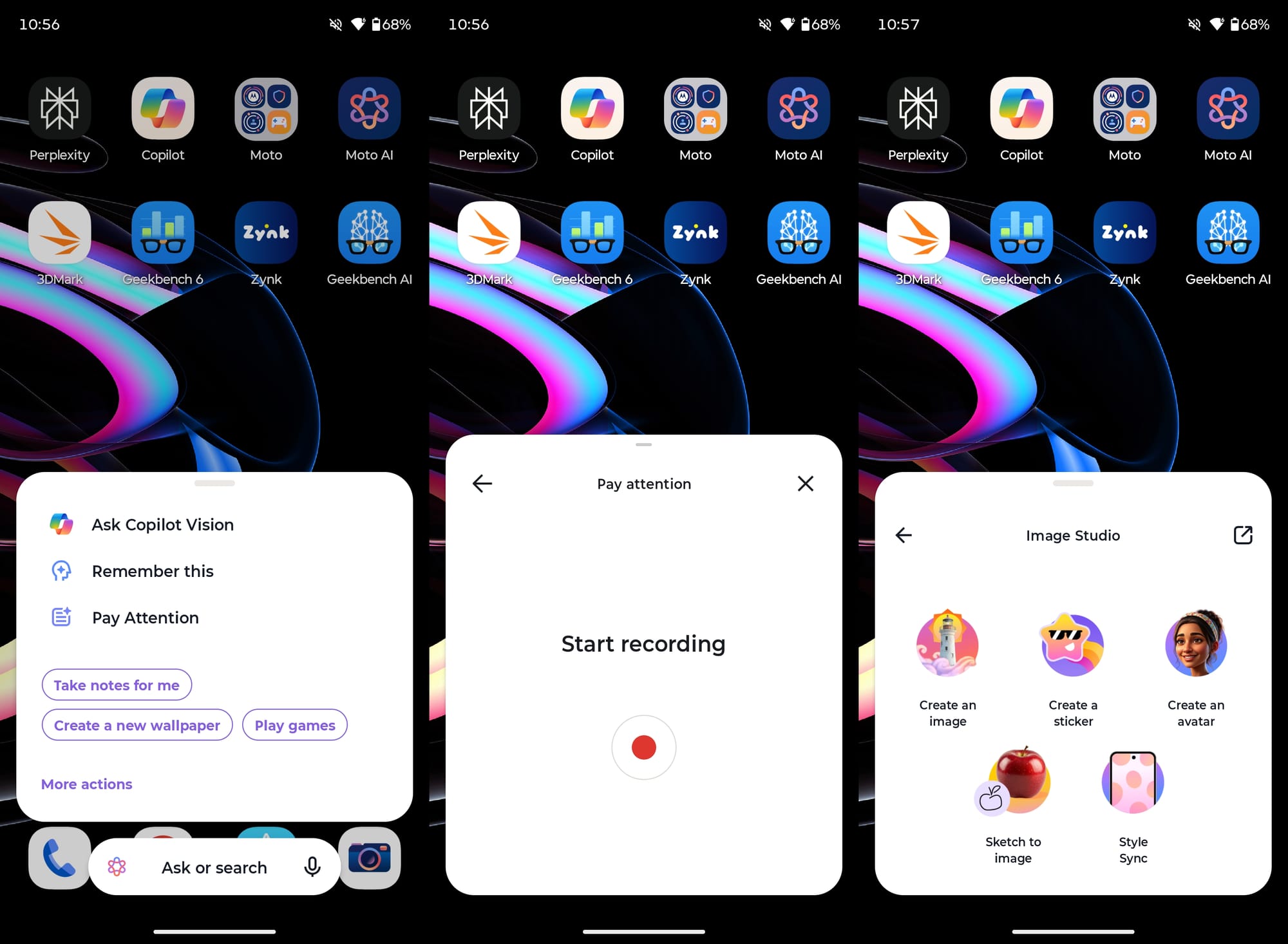
Moto AI is here too and can be summoned with the dedicated button on the side. It acts as a personal assistant with chatbot-like features that connect to Perplexity or Copilot, either automatically or on demand.
Features like Catch Me Up use LLMs to summarise missed notifications; Pay Attention offers real-time transcription and summarisation for recordings, and Remember This allows you to tag screenshots or photos with notes that are easily searchable later. There is also a Creative Suite with ‘Magic Canvas’ for text-to-image generation.
Battery Life
With a chassis this thin, you typically expect the battery capacity to be the first casualty. However, Motorola used a Silicon-Carbon battery here, which allows for higher density, letting them fit a 5,200mAh cell into the device.
In daily use, the endurance is solid. I managed to get through a full day of mixed usage - checking emails, scrolling through social media, chatting on messenger apps, taking photos - without much anxiety, and had around 40% still left in the tank for another round for the next day.
Charging is handled by a 90W wired solution, and thankfully, the adapter is actually included in the box. It takes about an hour to get it back to a full charge, which is speedy enough. There is also support for 50W wireless charging and 10W reverse wireless charging.
Should You Buy the Motorola Signature
The Motorola Signature has a bright and punchy screen, a top-tier camera system, sophisticated looks and a slender body, a large battery capacity and near two-day uptime, and all of that at a price point that punches above its weight. The only thing that would give performance-chasers a pause is the Snapdragon 8 Gen 5, which, while extremely performant, is not the highest-end that Qualcomm has to offer.
But besides a few niggles with the ergonomics (which is just a me problem), Motorola Signature is a fantastic device and one that is easy to recommend.
Written by

Subscribe to our newsletter
Subscribe to our newsletter to get the latest updates and news






Member discussion