
Microsoft's answer to Nvidia is here, but can the Maia 200 actually fix AI's cost problem?
What is the Maia 200 AI accelerator? The Maia 200 is Microsoft's custom-designed chip, specifically an AI inference accelerator.

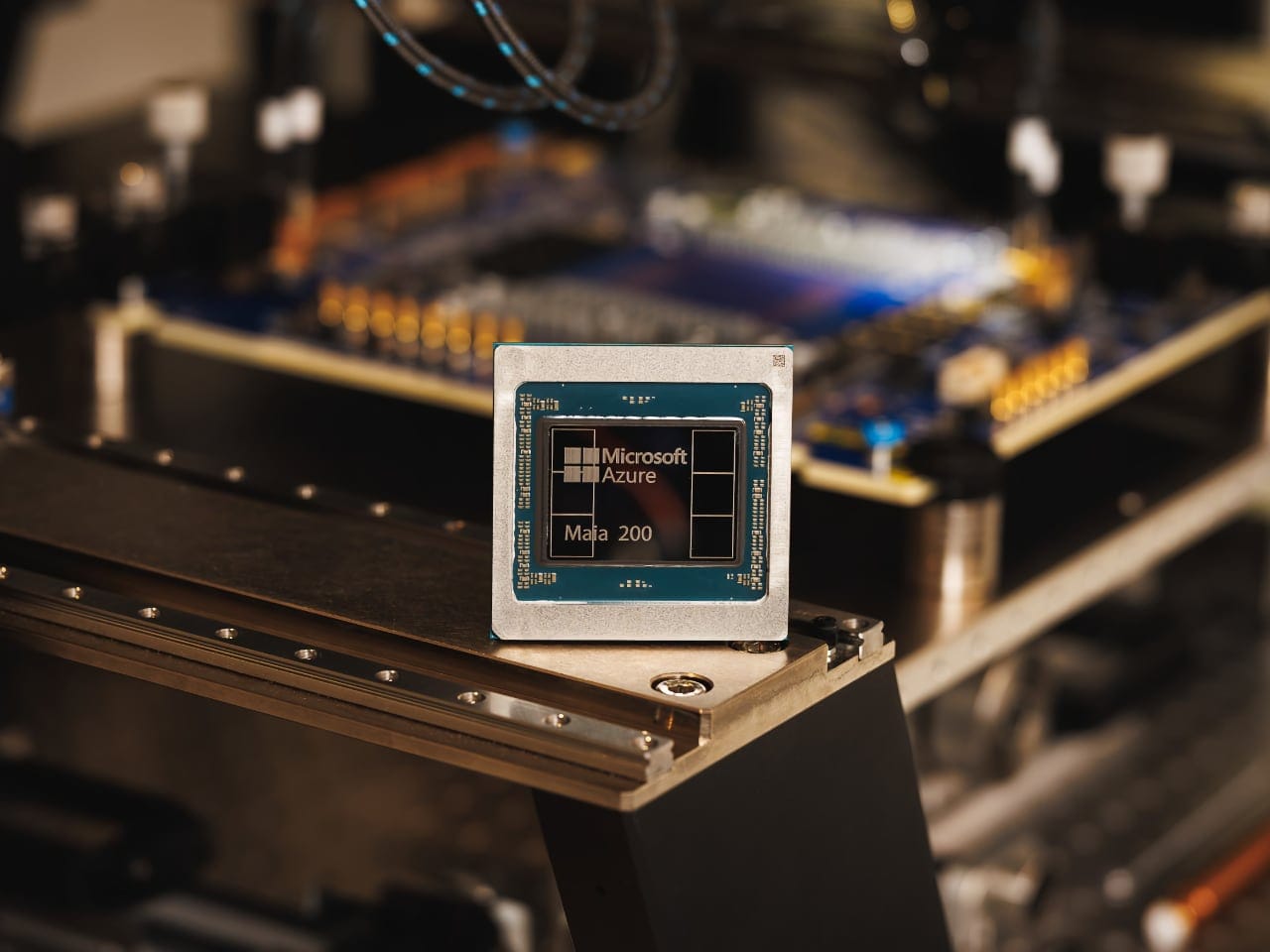
Microsoft has unveiled the Maia 200, its new in-house AI accelerator designed to tackle the massive costs of running large AI models. According to a Microsoft blog post from January 2026, the chip is built on TSMC's 3nm process and aims to significantly improve the efficiency of services like Azure, OpenAI, and Microsoft 365 Copilot. This move is part of a larger trend where companies like Microsoft are building the UAE’s AI spine through massive infrastructure investment.
What is the Maia 200 AI accelerator?
The Maia 200 is Microsoft's custom-designed chip, specifically an AI inference accelerator. Its job is to run already-trained AI models efficiently. The goal, as Microsoft's Scott Guthrie put it, is to "dramatically improve the economics of AI token generation." In practice, this means making services like ChatGPT or Copilot cheaper and faster to operate at a massive scale.
Instead of relying entirely on third-party hardware from companies like Nvidia, Microsoft is building its own silicon tailored to its specific needs. The company claims the Maia 200 is its most efficient inference system ever, offering 30% better performance per dollar compared to the hardware it currently uses in its datacenters.
Under the hood: Maia 200 specs
Microsoft didn't hold back on the technical details. The Maia 200 is built on TSMC's cutting-edge 3nm process, allowing it to pack over 140 billion transistors onto a single chip. For context, that's a significant density for a modern processor.
The key specifications are built for large-scale AI workloads:
- Performance: Over 10 petaFLOPS in FP4 and over 5 petaFLOPS in FP8 precision. These low-precision formats are crucial for running modern AI models efficiently.
- Memory: 216GB of HBM3e memory providing a massive 7 TB/s of bandwidth, supplemented by 272MB of on-chip SRAM. This is designed to keep the processing cores fed with data, a common bottleneck in AI hardware.
- Power: The entire System-on-Chip (SoC) operates within a 750W power envelope.
What this means is the chip is designed not just for raw power, but for moving data quickly and efficiently, which is critical for the huge models developed by partners like OpenAI.
How it compares to the competition
Microsoft made direct comparisons to its main cloud rivals. The company claims the Maia 200 delivers three times the FP4 performance of Amazon's third-generation Trainium accelerator. It also states that its FP8 performance is higher than Google's seventh-generation TPU.
The thing is, these are specific, carefully chosen metrics. While impressive, they highlight Microsoft's focus on low-precision inference, which is where it sees the biggest gains. By building its own hardware, Microsoft can reduce its reliance on external suppliers and create a more cost-effective, vertically integrated system for its global Azure cloud platform.
Built for the cloud, starting in the US
The Maia 200 isn't a chip you can buy. It's designed for Microsoft's own datacenters. The initial deployment is happening in its US Central region in Iowa, with a second site in Arizona to follow. The architecture uses standard Ethernet for networking, which Microsoft claims avoids the cost of proprietary fabrics while still allowing clusters of up to 6,144 accelerators to work together.
For developers, Microsoft is launching a preview of the Maia SDK (software development kit). This will give them tools to optimise AI models for the new hardware, including integration with popular frameworks like PyTorch. This is a crucial step to ensure its partners and customers can actually use the new hardware effectively.
Availability and access
The Maia 200 AI accelerator will not be sold directly to consumers or businesses. It is an internal hardware project for Microsoft's Azure cloud infrastructure. Customers will experience its benefits through improved performance and potentially lower costs on Azure AI services, Microsoft 365 Copilot, and models from OpenAI.
Developers interested in working with the new architecture can sign up for the Maia SDK preview via Microsoft's official channels. No specific date has been given for when Maia 200-powered instances will be generally available to Azure customers.
Frequently Asked Questions
What is Microsoft Maia 200?
Maia 200 is Microsoft's custom-built AI inference accelerator. It's a specialised chip designed to run large AI models efficiently within its Azure datacenters, powering services like OpenAI's models and Microsoft 365 Copilot. It is built on TSMC's advanced 3nm process.
What are the key specifications of Maia 200?
The Maia 200 features over 140 billion transistors, 216GB of HBM3e memory with 7 TB/s bandwidth, and 272MB of on-chip SRAM. It delivers over 10 petaFLOPS in FP4 and 5 petaFLOPS in FP8 performance, all within a 750W power design. It's built for low-precision AI calculations.
Where will Maia 200 be deployed?
Maia 200 is being deployed exclusively within Microsoft's own Azure datacenters. The initial rollout is in the US Central region (Iowa), with the US West 3 region (Arizona) scheduled next. Microsoft plans to expand deployment to other regions in the future.
How does Maia 200 compare to competitors?
Microsoft claims Maia 200 offers three times the FP4 performance of Amazon's third-generation Trainium chip and superior FP8 performance compared to Google's seventh-generation TPU. It is also stated to be 30% more efficient per dollar than Microsoft's previous-generation hardware.
Written by

Subscribe to our newsletter
Subscribe to our newsletter to get the latest updates and news












Member discussion