Microsoft quietly updated its Windows 11 gaming RAM recommendations in May 2026, describing 32GB as the ‘no-worries’ upgrade whilst keeping 16GB as the baseline. As reported by Windows Latest, the shift targets users running Discord, browsers, or streaming tools alongside their games — a reality for most PC gamers today.
Key Takeaways
- Microsoft now describes 32GB RAM as the ‘no-worries’ upgrade for Windows 11 gaming in May 2026.
- 16GB remains the baseline but 32GB is positioned for users running Discord, browsers, or streaming tools alongside games.
- Most current AAA games like Cyberpunk 2077, Starfield, and God of War Ragnarök recommend 16GB RAM.
- The shift reflects increasing memory usage from web-based Windows components and multitasking applications.
- CEO Satya Nadella admitted Microsoft needs to ‘win back’ Windows 11 fans and improve performance for low RAM PCs.
What Microsoft actually recommends for Windows 11 gaming RAM
According to Microsoft’s marketing department, “16GB RAM is a must, 32GB is a no-worries zone” for Windows 11 gaming. This represents a significant messaging shift from positioning 32GB as an enthusiast upgrade to normalising it as the safer, future-proof choice for mainstream gamers.
The company maintains that 16GB remains a “practical starting point” but emphasises that 32GB eliminates memory concerns entirely. Microsoft specifically cites multitasking scenarios: “Moving to 32GB RAM helps if you run Discord, browsers, or streaming tools alongside your games.”
Notably, Windows 11’s official system requirements still list 8GB as the recommended RAM amount. However, gaming recommendations have diverged considerably from basic system requirements as background applications and the OS itself consume increasing amounts of memory.
Why is 32GB becoming the safe choice for PC gaming?
According to Microsoft’s analysis, modern gaming setups involve significantly more than just the game itself. A typical Windows 11 gaming session includes Discord running in the background, multiple browser tabs, launchers like Steam or Epic Games Store, GPU overlays, and telemetry services that never fully close.
The situation worsens when streaming or recording enters the equation. Tools like OBS Studio, combined with streaming overlays and chat applications, create substantial memory pressure that directly competes with game performance.
Microsoft’s own design decisions contribute to this issue. Many Windows 11 components now rely on Edge WebView2 for rendering, essentially running Chromium-based processes even during system idle periods. Apps like Teams, Widgets, and parts of the Settings app use these web-based frameworks, consuming more memory than traditional native applications.
Recent Windows 11 updates have addressed some performance issues, but the fundamental trend towards web-based components continues driving memory requirements upward.
Current AAA game RAM requirements on Windows 11
Most current AAA titles officially recommend 16GB RAM, suggesting that games themselves aren’t the primary driver of increased memory requirements. Popular titles like Cyberpunk 2077, Starfield, Hogwarts Legacy, and God of War Ragnarök all specify 16GB as their recommended configuration.
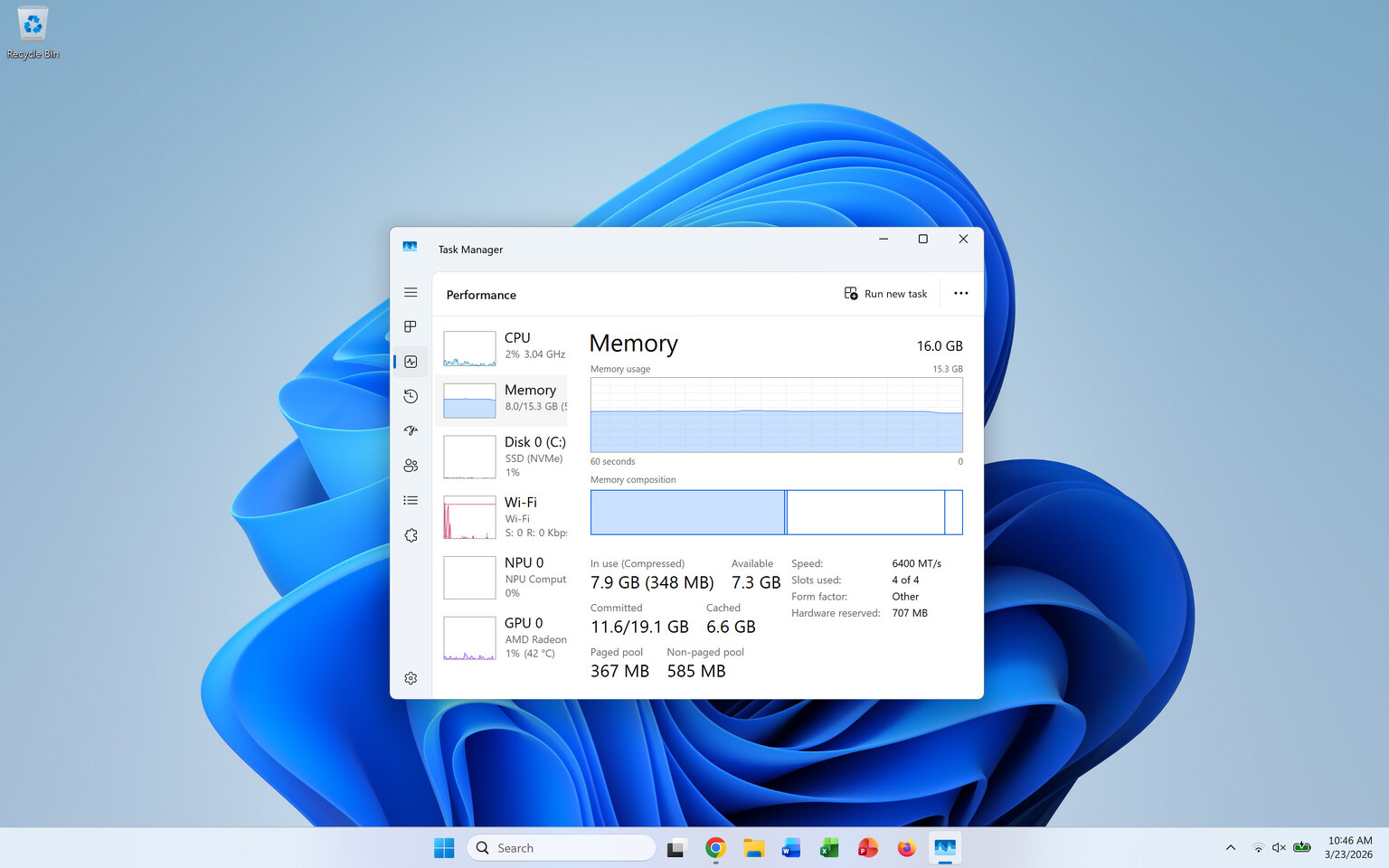
However, these recommendations assume the game has relatively free access to system memory. In practice, Windows 11’s background processes, combined with typical gaming applications, can consume 6-8GB before a game even launches. This leaves games competing for the remaining memory with Discord (often 2-4GB), browsers, and streaming applications.
The practical impact becomes apparent during extended gaming sessions, where memory pressure can cause stuttering, longer loading times, and occasional crashes — issues that 32GB configurations largely eliminate.
The cost of Microsoft’s RAM recommendations
Microsoft’s shift to recommending 32GB RAM comes at a time when memory prices have increased significantly due to AI-driven demand from data centres and enterprise customers. This timing places additional financial pressure on consumers who simply want reliable gaming performance.
The recommendation effectively doubles the memory investment required for new gaming PCs, with 32GB DDR5 kits typically costing 80-100% more than equivalent 16GB configurations. For budget-conscious gamers, this represents a substantial barrier to achieving Microsoft’s “no-worries” gaming experience.
CEO Satya Nadella recently admitted that Microsoft needs to “win back” Windows 11 fans and improve performance for low RAM PCs, acknowledging that the current trajectory of increasing system requirements isn’t sustainable for all users.