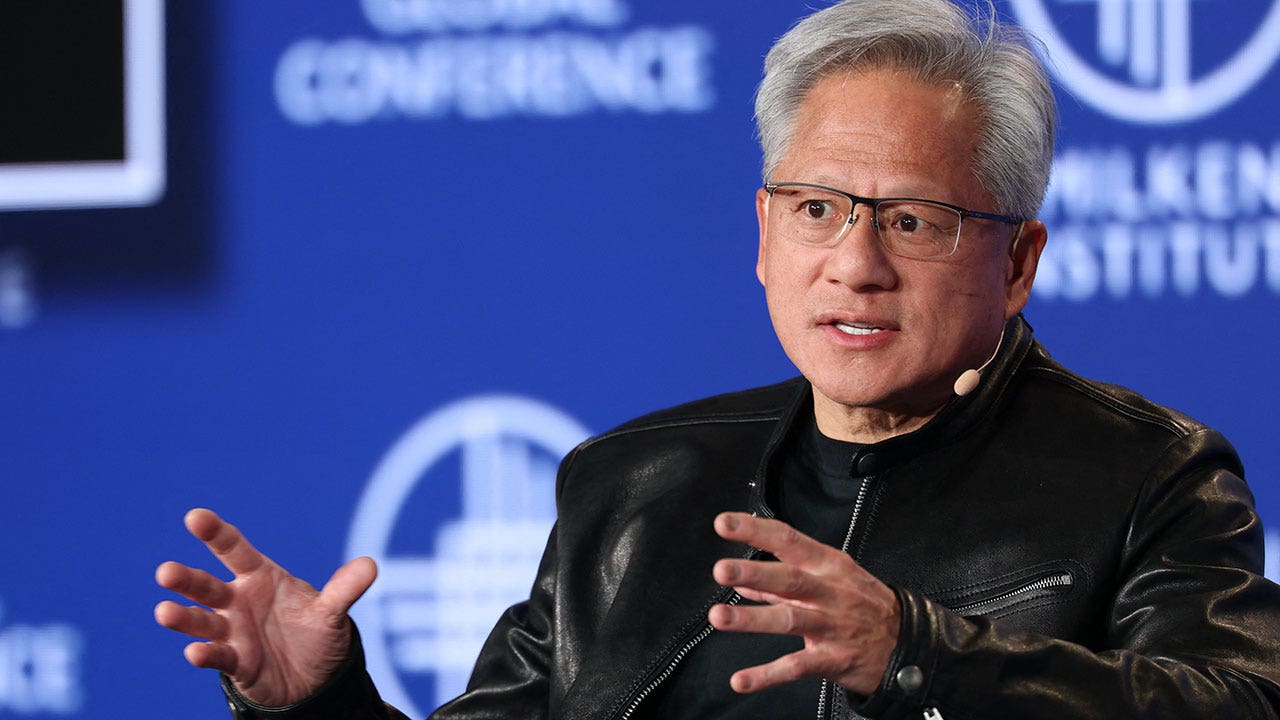
Jensen Huang has resigned from Nvidia, the chipmaker he co-founded and led for 33 years, leaving CFO Colette Kress in charge as interim CEO.
According to Nvidia’s announcement on 12 November, Huang left as president, CEO and board member, effective immediately. The release doesn’t say why he left, and Huang wasn’t quoted, as CNBC pointed out. For a company at the centre of the AI boom, the board’s message was continuity: the product roadmap and customer commitments will continue, with a new person at the top.
Who runs Nvidia now
Kress has been Nvidia’s executive vice president and CFO since she joined in September 2013, after nearly 25 years in finance roles at Cisco, Microsoft, and other technology companies. She’ll keep the CFO job while she serves as interim CEO, until the board names a permanent successor.
The board also has its first-ever chair, Harvey C. Jones. He’s been an entrepreneur, technology executive, and venture investor for more than 30 years, and was CEO and executive chairman of Synopsys. The board says it will consider internal and external candidates for the permanent role, but the release gives no timeline.
The Board has full confidence in Colette and the leadership team, and we expect the company’s operations, customer commitments and product roadmap to continue without interruption.
Harvey C. Jones, Chair of Nvidia’s board
Kress said she’s “committed to building on the extraordinary foundation Jensen created over the last 33 years”. The board thanked Huang for his “immeasurable contributions to the company and the industry.”
Finding a successor won’t be simple. According to TechCrunch, Huang ran a very flat organisation with around 60 direct reports, and there was no heir apparent or succession plan. CNN says Kress is widely seen as a top contender for the permanent job. Before the announcement, Dan Ives of Yorkville Ives & Co. told CNBC that her interim role “will likely only last a year”. He called her the one “to steady the ship.”
What the press reports say
Nvidia’s release gives no reason, but press reports from the week before do. According to CNN, the board said on 8 November that it was investigating reports that Huang was the “target of a foreign intelligence effort”. That inquiry followed reports of a close relationship between Huang and Alice Huang, a Chinese citizen who has worked for Megaspeed, a Singapore-based Nvidia customer. US officials suspected Megaspeed of working with Chinese intelligence.
The same day, Huang admitted to an extramarital affair without naming the other party and apologised to his family and colleagues. Tbreak covered the board investigation at the time, when the board said it had “confidence” in him.
That support didn’t last. The New York Times then reported a second affair, with Kimberly Powell, an Nvidia executive who reports to Huang and heads the company’s healthcare efforts. Nvidia’s release doesn’t mention the report. CNN says the board met on the night of 11 November to weigh whether to oust Huang; he resigned the next day.
What it means for chips and the Gulf
Investors reacted fast. According to Benzinga and Yahoo Finance, Nvidia’s shares fell between about 8% and more than 13% in premarket and early trading. Yahoo Finance says the market value dropped below $4 trillion, and the stock later pared some of its losses. CNBC reports AMD rose 3% and Broadcom more than 5%, while neocloud firms that rely on Nvidia’s GPUs fell, with CoreWeave down nearly 12% and Nebius down 17%.
Nvidia hasn’t announced any product change, and nothing in its announcement mentions GeForce or gaming. That’s a long way from the company’s start. Huang co-founded Nvidia in 1993 with Chris Malachowsky and Curtis Priem to bring 3D graphics to games. The company moved into general-purpose computing with CUDA in 2006, before AI and data centres took over.
The Gulf has a big stake in what happens next. According to The National, G42, OpenAI, and Oracle are developing Stargate UAE, a 1GW computing cluster with Nvidia as a technology partner. It’s the first phase of a planned 5GW UAE-US AI campus.
In Saudi Arabia, Humain, a company under the Public Investment Fund, expanded its Nvidia partnership to 84MW of AI computing capacity (about 27,000 GPUs) across two phases. The first phase covers 14MW of Blackwell HGX B300 systems (about 6,000 GPUs), with deployment beginning in the fourth quarter of 2026. A further 70MW of Vera Rubin infrastructure will follow from mid-2027, with 50MW for an unidentified US client. In November 2025, the US Commerce Department authorised Humain and G42 to buy the equivalent of up to 35,000 Nvidia GB300 chips each, subject to security and reporting requirements.
Chair Harvey C. Jones expects customer commitments to continue without interruption, but none of the sources says whether the leadership change affects those Gulf deals. The first real test of that expectation comes soon: Nvidia will report its third-quarter fiscal 2027 results on Tuesday, 17 November, with the earnings call at 2pm PT.