
Corsair Sabre V2 Pro CF Review: Carbon Fiber Gaming Mouse Tested
Our hands-on review of the Corsair Sabre V2 Pro CF — a carbon fiber gaming mouse priced at AED 768. We test sensor performance, build quality, battery life, and whether it's worth double the standard model.

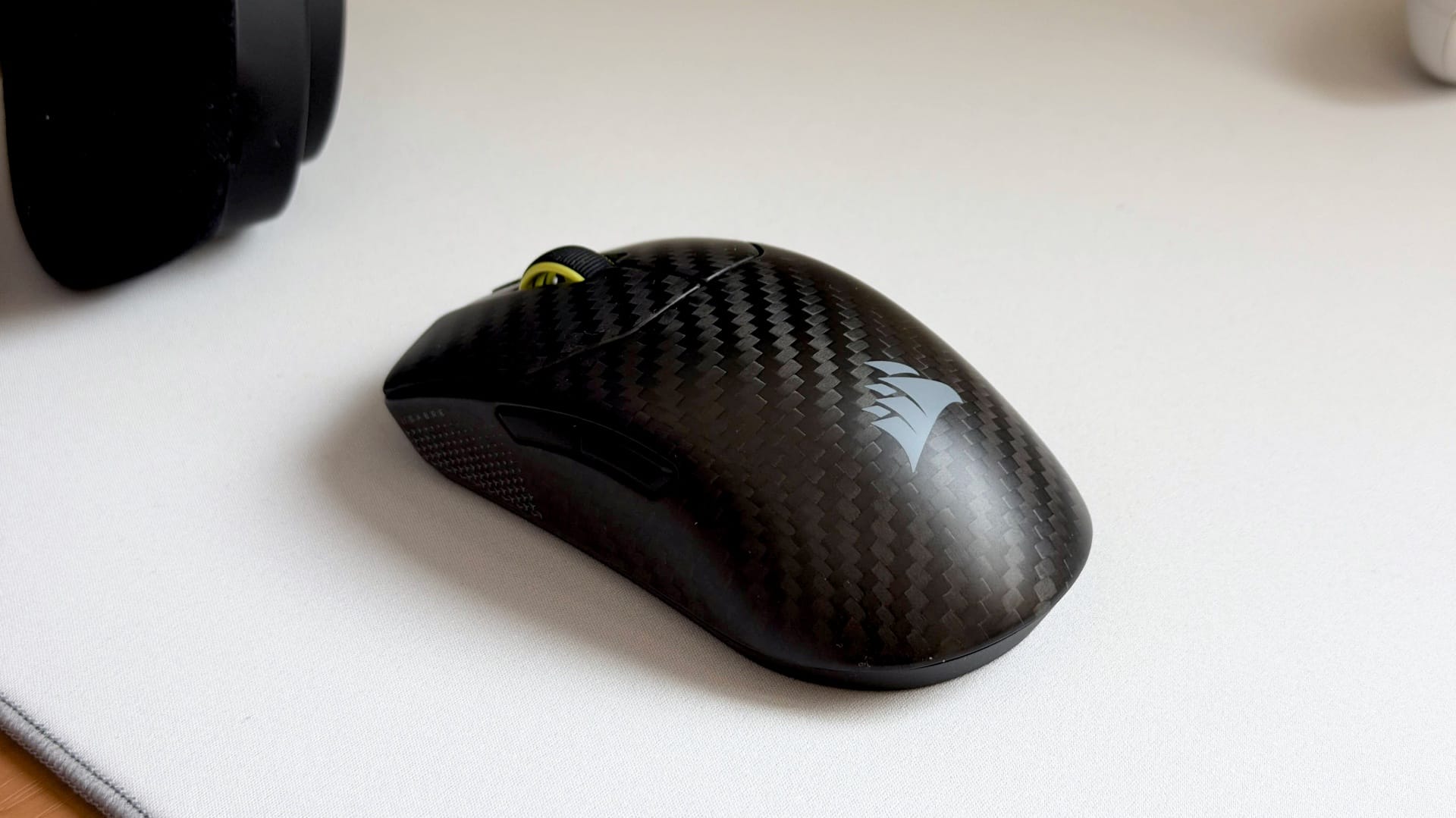
The Corsair Sabre V2 Pro has always been one of the more compelling options in the ultralight gaming mouse space, but Corsair clearly felt there was room to push it further. Enter the Sabre V2 Pro CF - the Carbon Fiber edition, priced at AED 768 ($199), exactly double the standard model's AED 384 ($99).
The CF version swaps out the plastic shell for an aerospace-grade carbon fiber unibody, bumps the weight slightly from the standard version's remarkably feathery 36g up to 55g, and adds Bluetooth connectivity alongside its 2.4Ghz wireless and wired mode.
On paper, it sounds like a meaningful upgrade. In practice, it very much is - but whether that upgrade is worth the premium is a conversation worth having, especially when other mice in this price bracket pack in similar sensor performance and comparable build quality without the carbon fiber markup.
Specifications and Connectivity
| Spec | Detail |
|---|---|
| Sensor | Corsair MARKSMAN S Optical |
| Max DPI | 33,000 (99.7% resolution accuracy) |
| Tracking Speed | 750 IPS |
| Max Acceleration | 50G |
| Polling Rate | Up to 8,000Hz (1K / 2K / 4K / 8K) |
| Weight | 55g |
| Dimensions | 122.17 x 63.5 x 38.86mm |
| Switches | Corsair Custom Mechanical (100M clicks) |
| Connectivity | 2.4GHz SLIPSTREAM / Bluetooth / Wired USB-C |
| Battery Life | ~120 hrs (1,000Hz) / ~21 hrs (8,000Hz) |
| Mouse Feet | UPE skates (larger replacements included) |
| Price | AED 768 / US$199 |
| Availability | Available in the UAE via [your preferred retailer link] |
Design and Build Quality
At 55g, the Sabre V2 Pro CF sits comfortably in the ultralight category, though it's noticeably heavier than the standard Sabre V2 Pro's 36g. That extra weight is entirely down to the carbon fiber construction and the additional battery and components needed to support Bluetooth and higher-polling wireless.
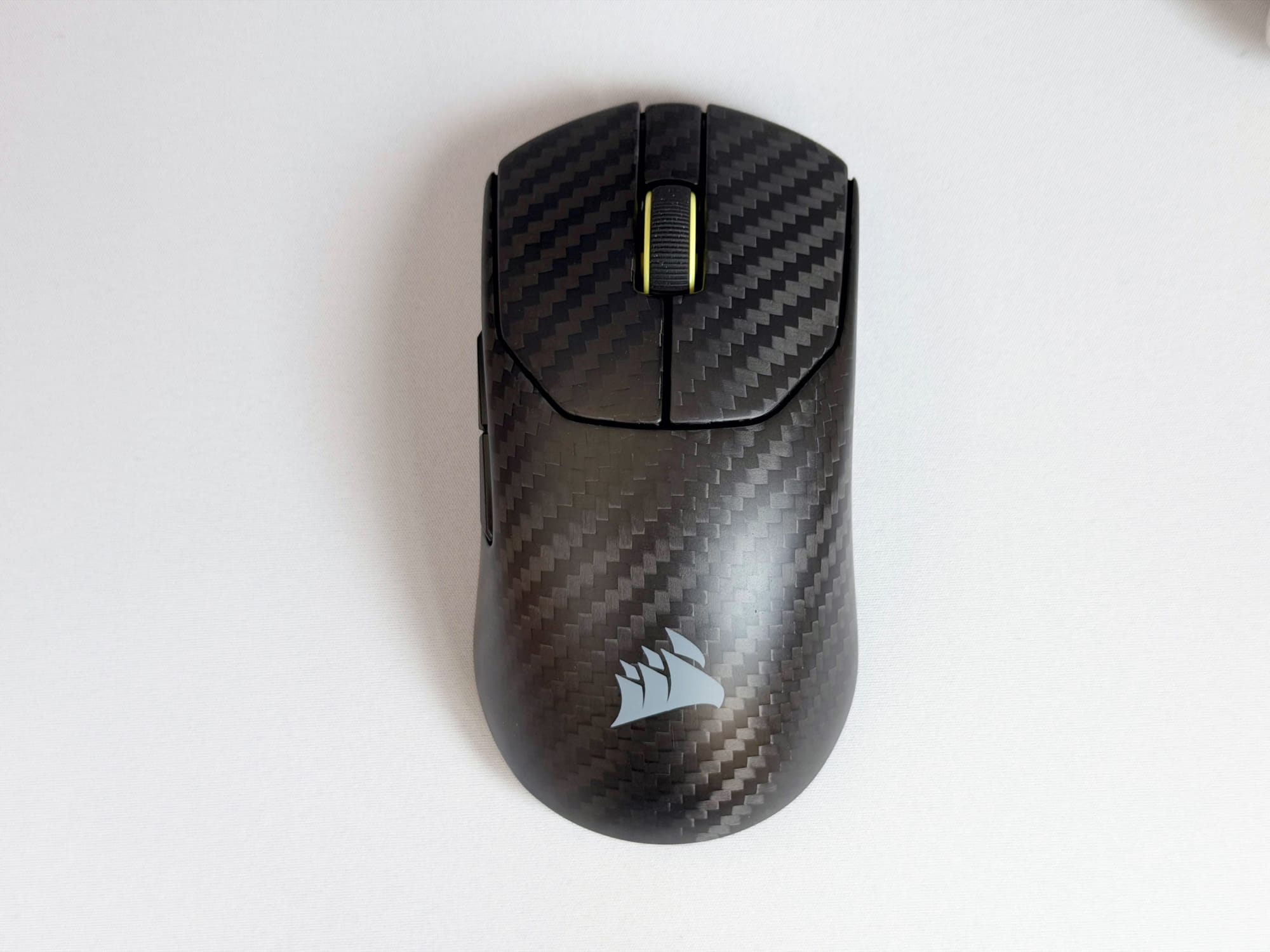
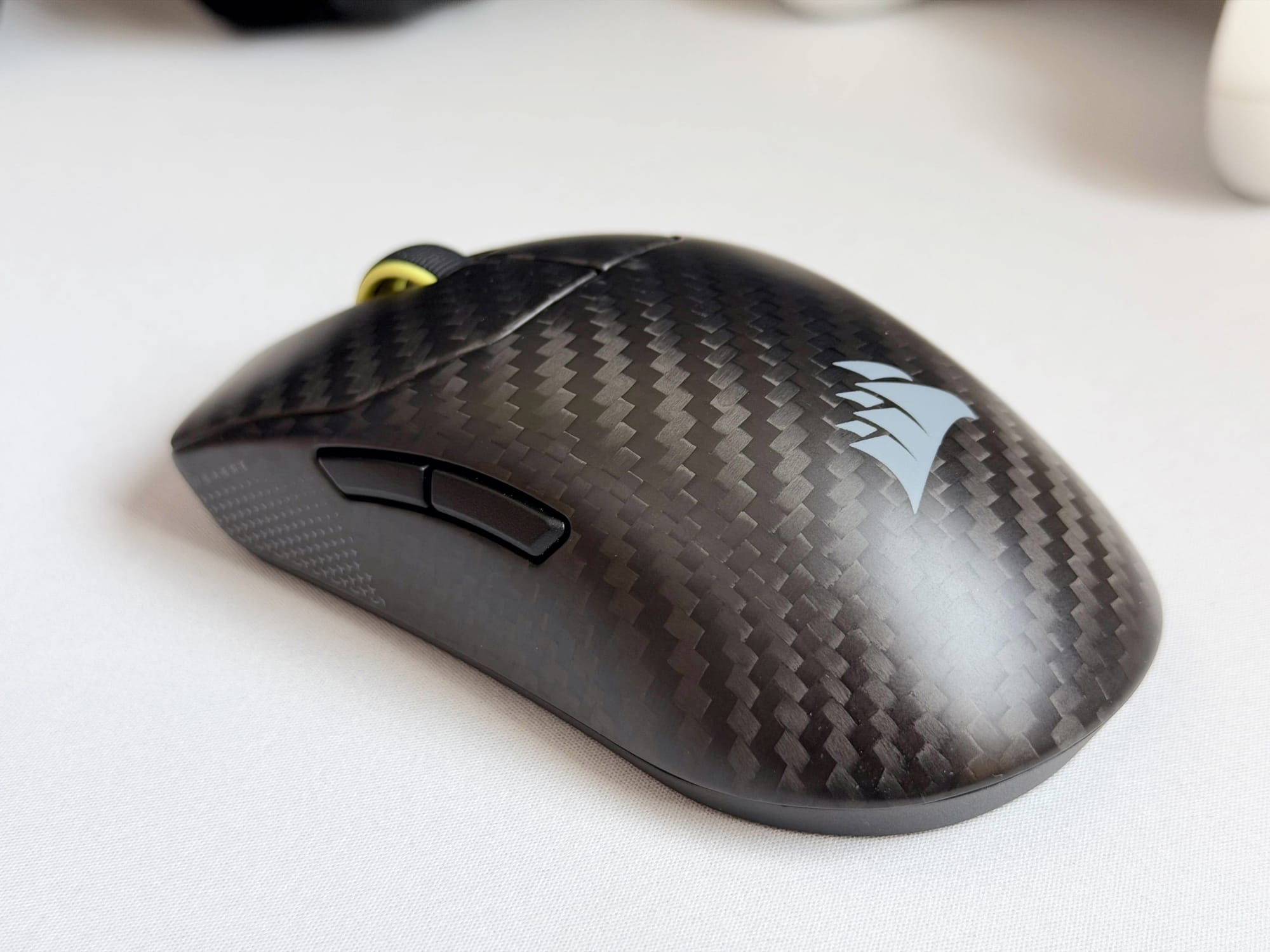
The mouse measures 122.17mm long by 63.5mm wide and 38.86mm tall - a modest symmetrical shape that should work for most hand sizes, whether you are a claw, fingertip, or palm grip user. It's not a tiny mouse, but it's on the smaller end compared to many mainstream gaming mice.
Carbon Fiber Construction and Shell Rigidit
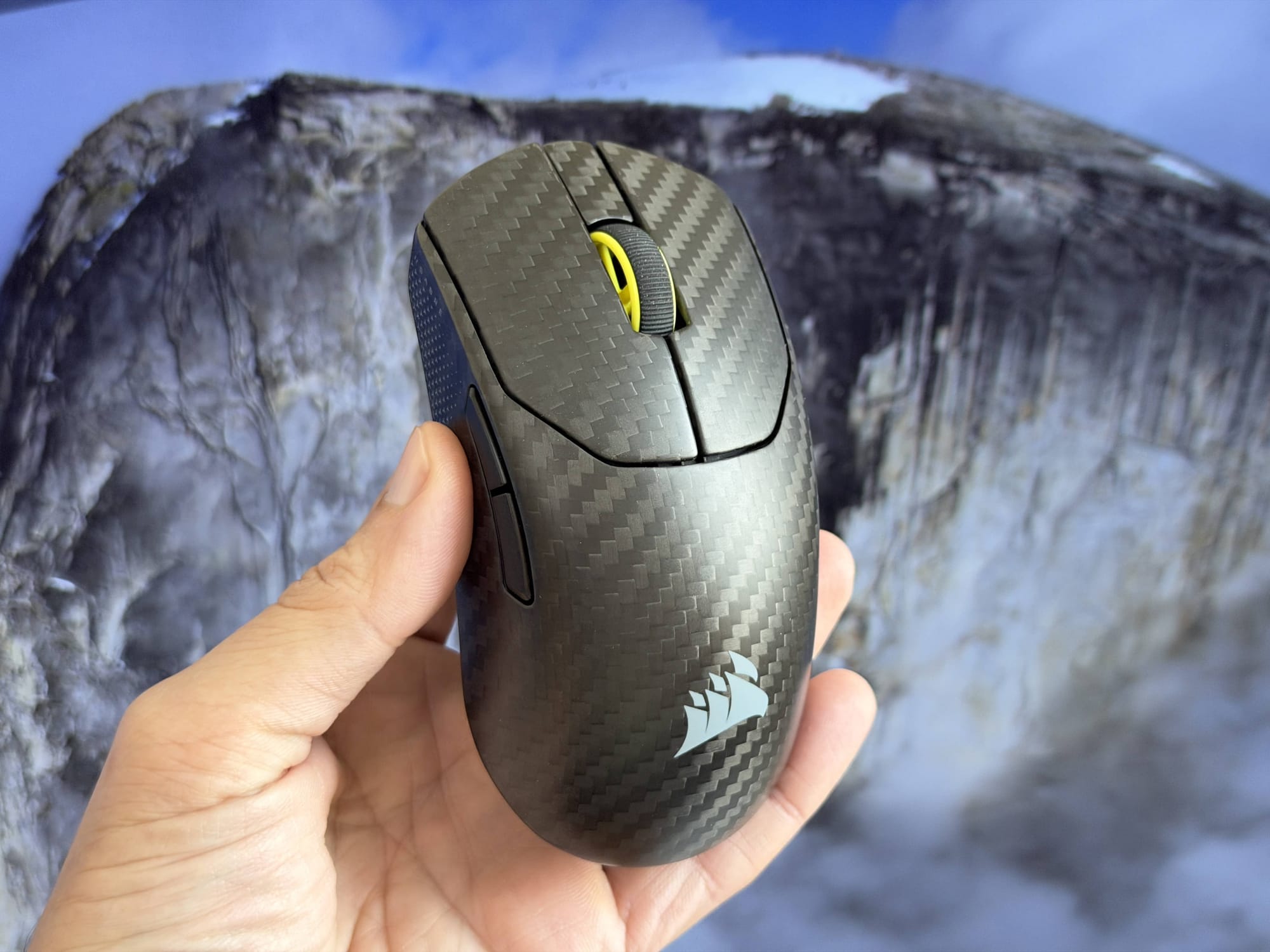
The carbon fiber body is the obvious headline here, and it deserves the attention. The classic woven CF pattern gives the mouse a genuinely sleek, premium look that sets it apart from the sea of matte plastic gaming mice. And beyond the looks, the material itself feels excellent - smooth, rigid, and slightly cool to the touch.
It's not so slippery that you feel like the mouse might escape your grip mid-game; the texture of the carbon fiber weave provides just enough natural friction for confident control. For more intense sessions where sweat might become a factor, Corsair includes pre-cut grip tape in the box, and it's pretty good quality - once applied, it adds meaningful stickiness without feeling cheap or plasticky.
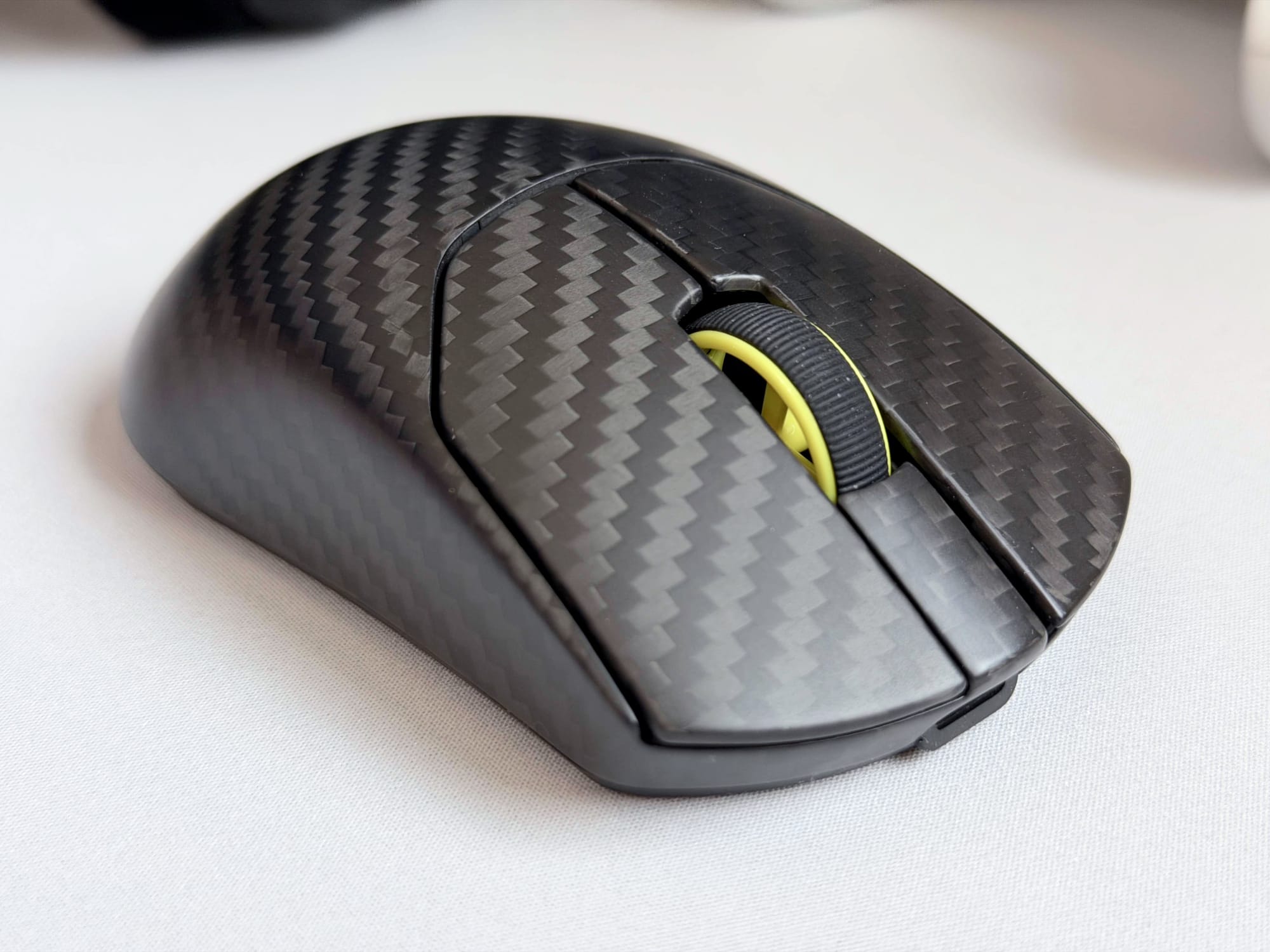
One of the more notable improvements the CF version brings over the standard Sabre V2 Pro is structural integrity. The original model had a known issue where the shell would flex noticeably if you squeezed the sides or pressed down on the top panel - a fairly unsettling feel in a mouse you are supposed to grip firmly. The CF version has none of that.
Switches, Scroll Wheel, and Button Feel
The unibody carbon fiber construction is completely rigid; squeeze it as hard as you want, and nothing moves. The same goes for the primary mouse buttons - there's no flex or mushiness to the left and right clicks. The entire surface area of both buttons registers a clean, instant click regardless of where exactly your finger lands on them, which is especially useful if your grip style means your finger doesn't always land in the same spot.
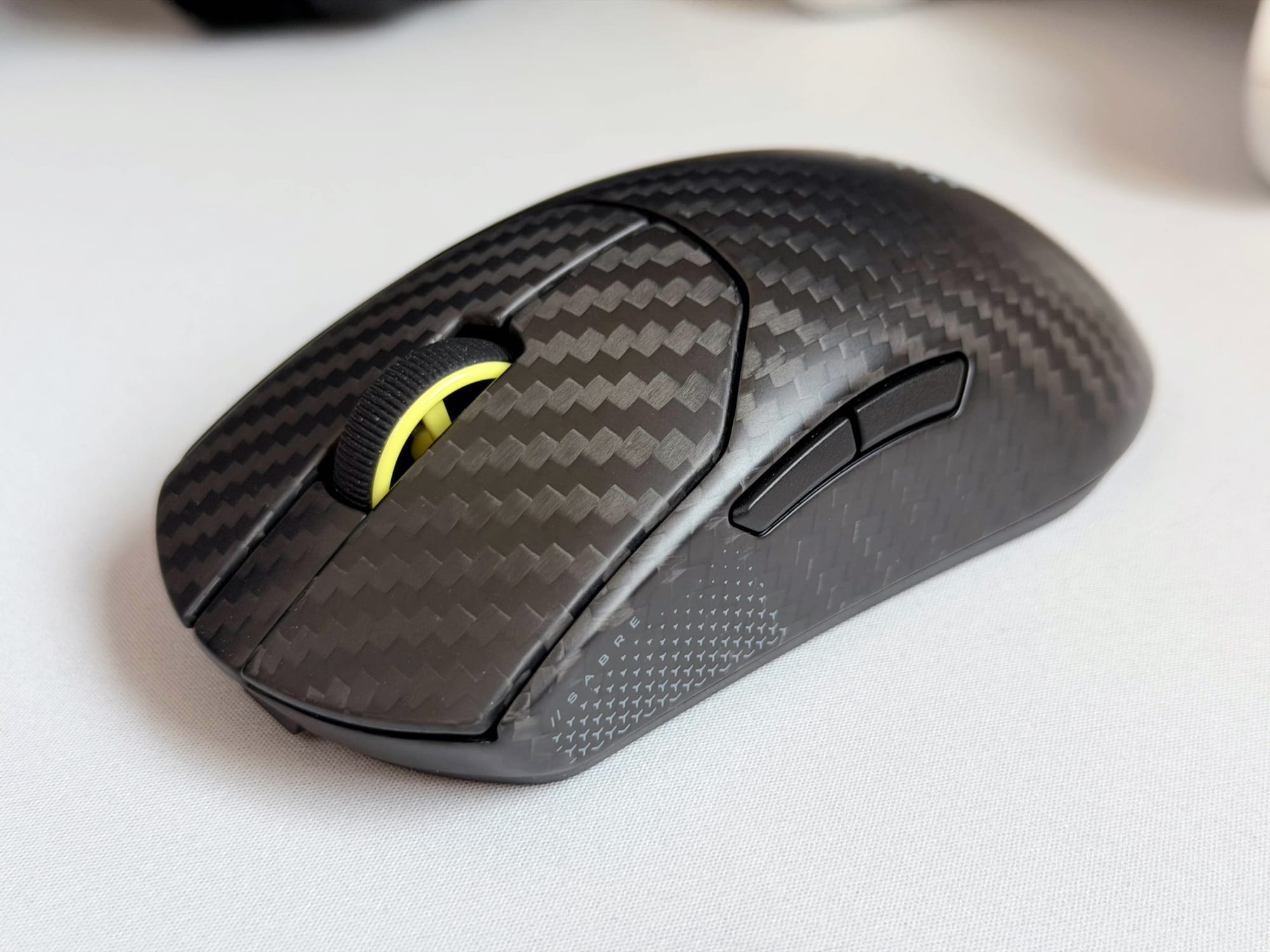
The primary switches are Corsair's custom-tuned mechanicals, rated for up to 100m clicks. They are crisp and tactile, with a satisfying, quick, lightweight actuation and a snappy rebound that feels deliberate and smooth. The side buttons are large and well-placed, easy to hit intentionally and hard to accidentally trigger. They share almost the same sound profile of the main switches - soft with sharp snap - and unlike the original model, it doesn't dig deep into the main shell either, offering stable clicks.
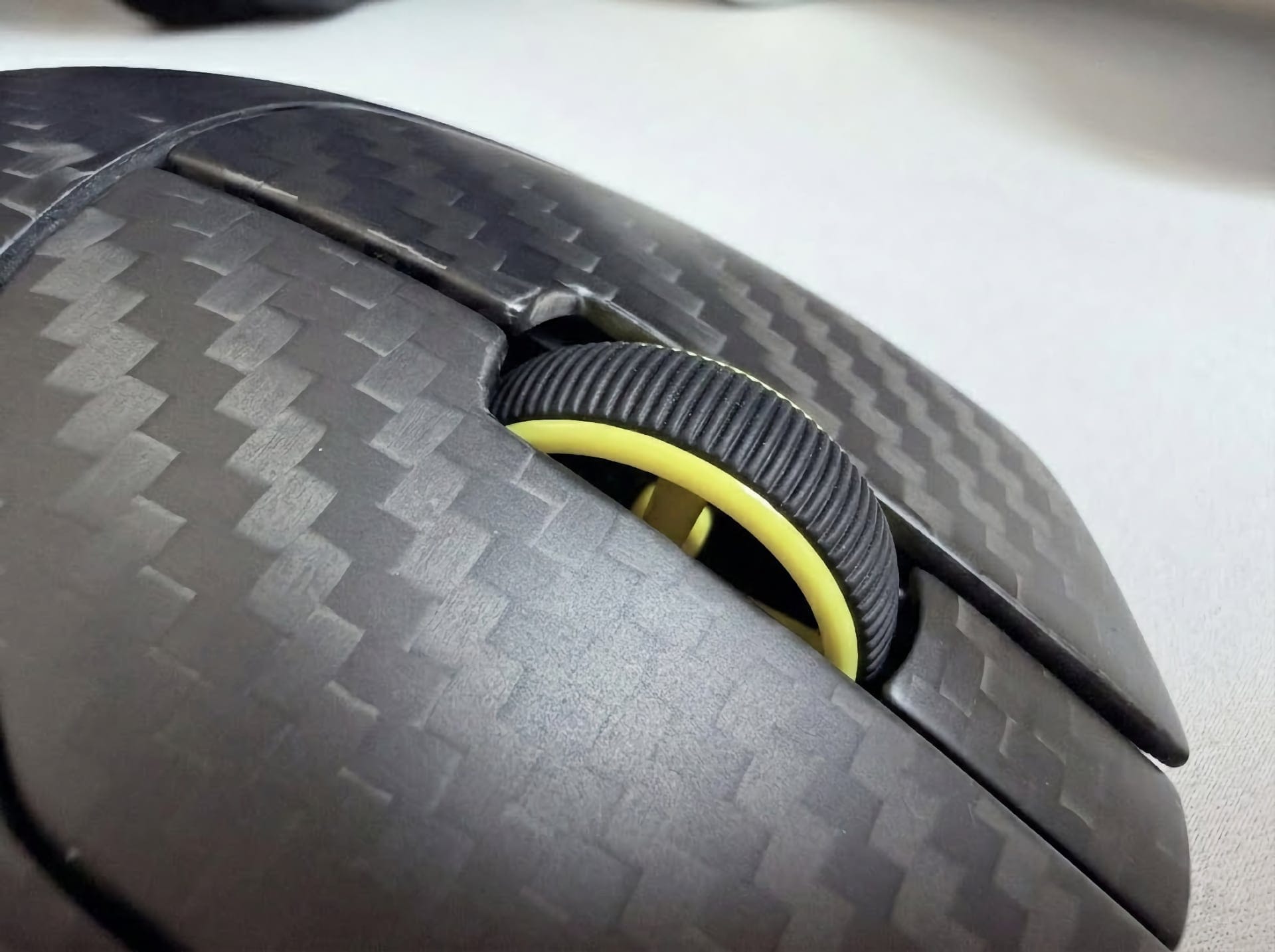
The scroll wheel is well-executed too: smooth in motion, with pronounced, clearly defined steps that make scrolling through inventory or cycling weapons in a game feel precise and controlled.
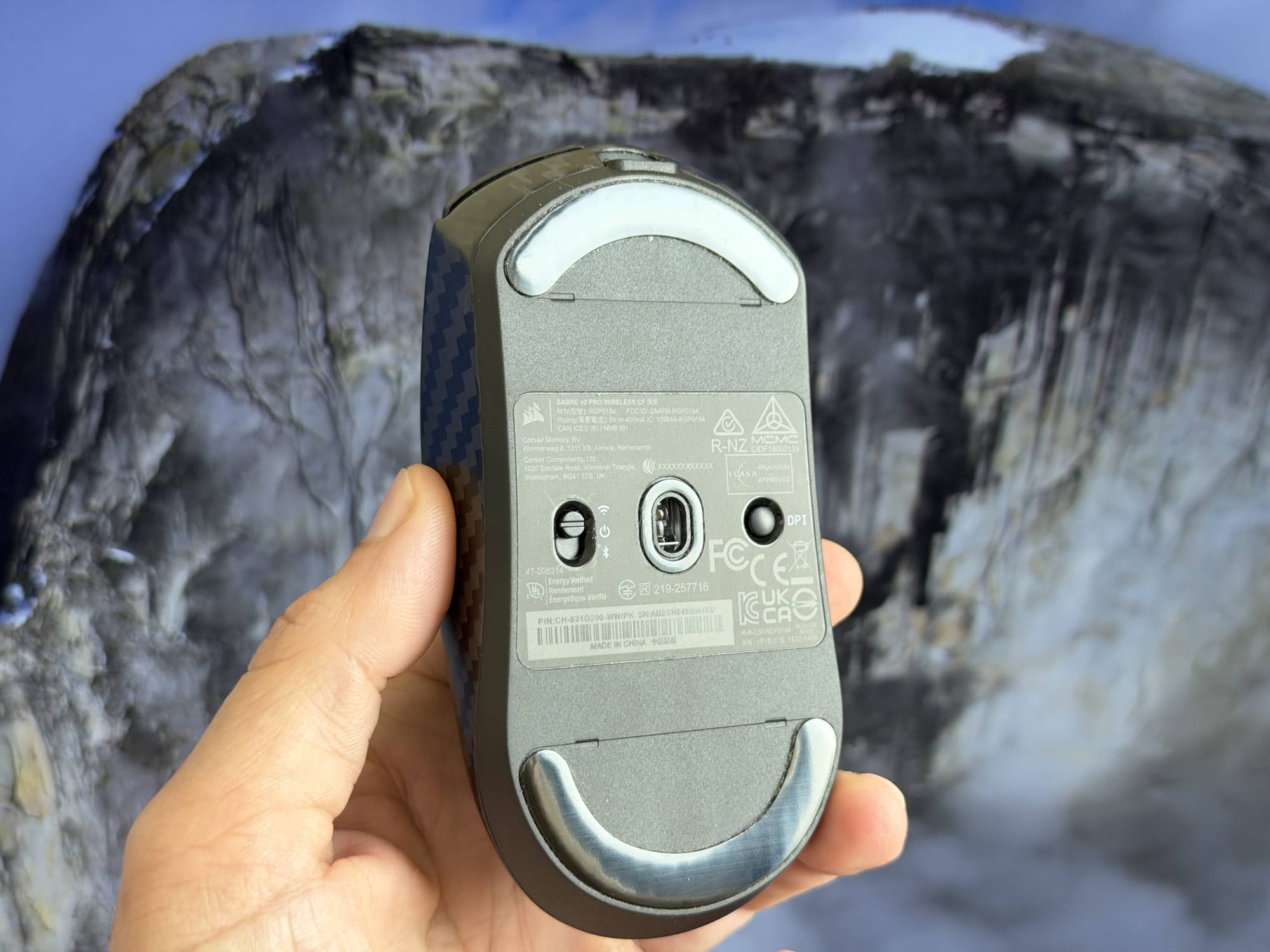
Spec-wise, the Sabre V2 Pro CF is running Corsair's MARKSMAN S optical sensor, which offers up to 33,000 DPI with 99.7% resolution accuracy, a maximum tracking speed of 750 IPS, and up to 50G acceleration. Polling rate options go all the way up to 8,000Hz - a step up from the 1,000Hz standard on most mice - with 4K and 2K also available.
Connectivity covers all three bases: 2.4Ghz wireless via SLIPSTREAM, Bluetooth, and wired via USB-C. The box also includes a 1.8m USBC to USBA cable, the wireless dongle, pre-cut grip tape, and a set of larger replacement mouse skates.
The default UPE skates on the bottom are medium-sized and provide smooth glide; the replacements in the box are larger and will give you a slightly faster, freer feel if that's your preference. Finally, and worth mentioning for anyone who travels with their setup - the mouse comes packed in a rigid, zippered carrying case that fits the mouse and all its accessories.
Software: Corsair Web Hub
Corsair has moved away from its heavier iCUE software for the Sabre V2 Pro line. Instead of installing yet another background process on your machine, configuration is handled through the Corsair Web Hub - a browser-based tool that loads reasonably quickly, covers all the essentials, even if it looks comparatively barebones.
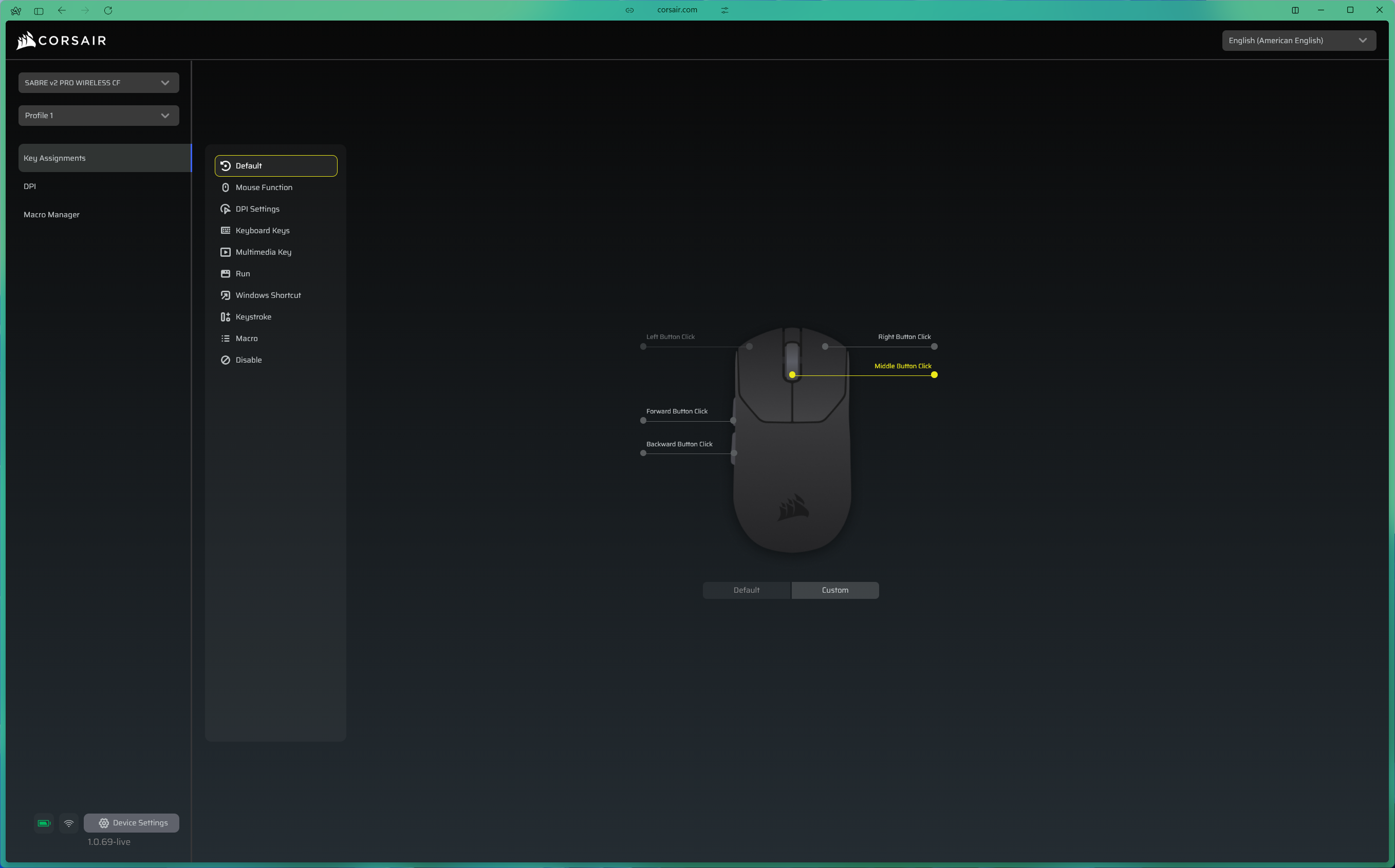
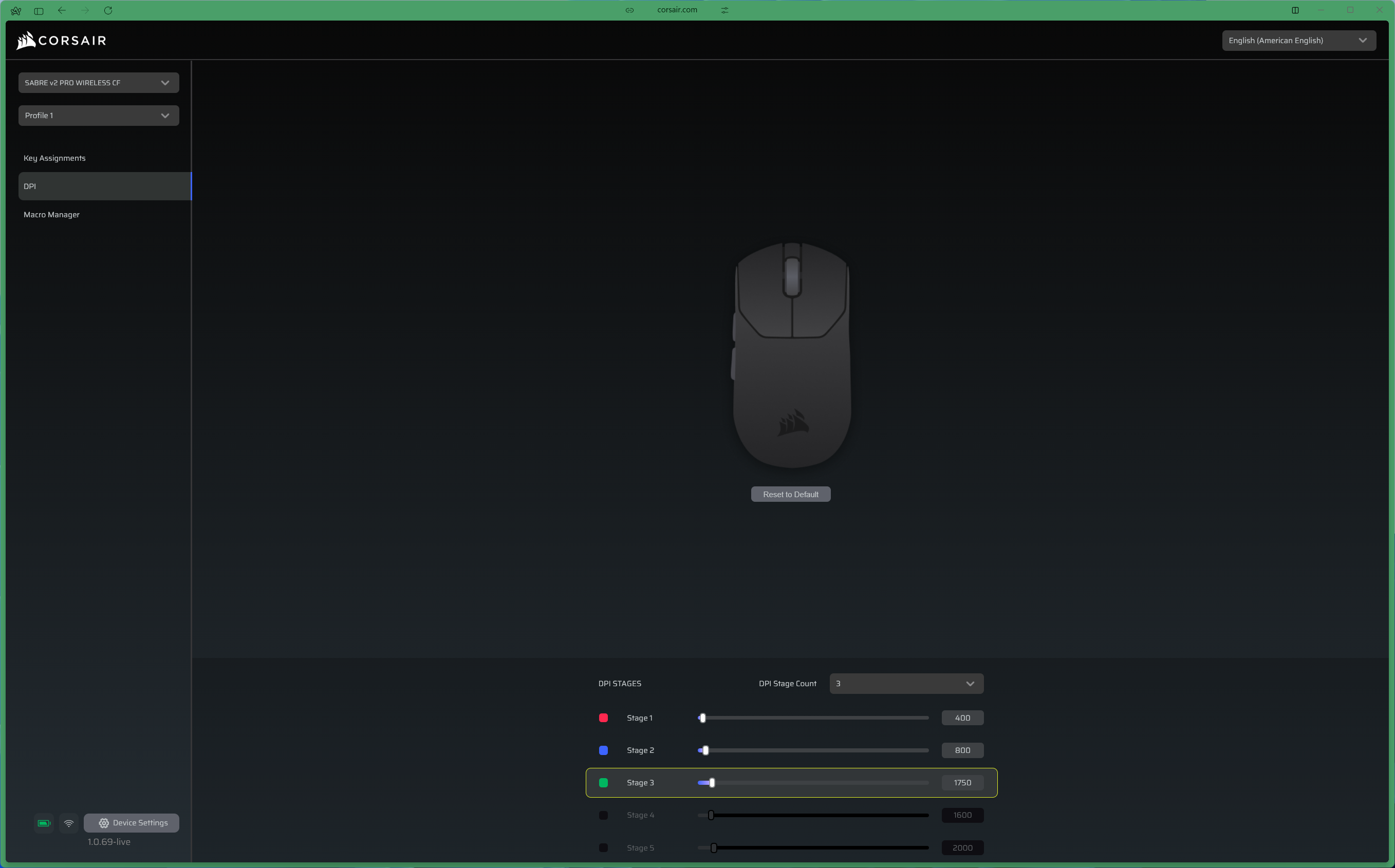
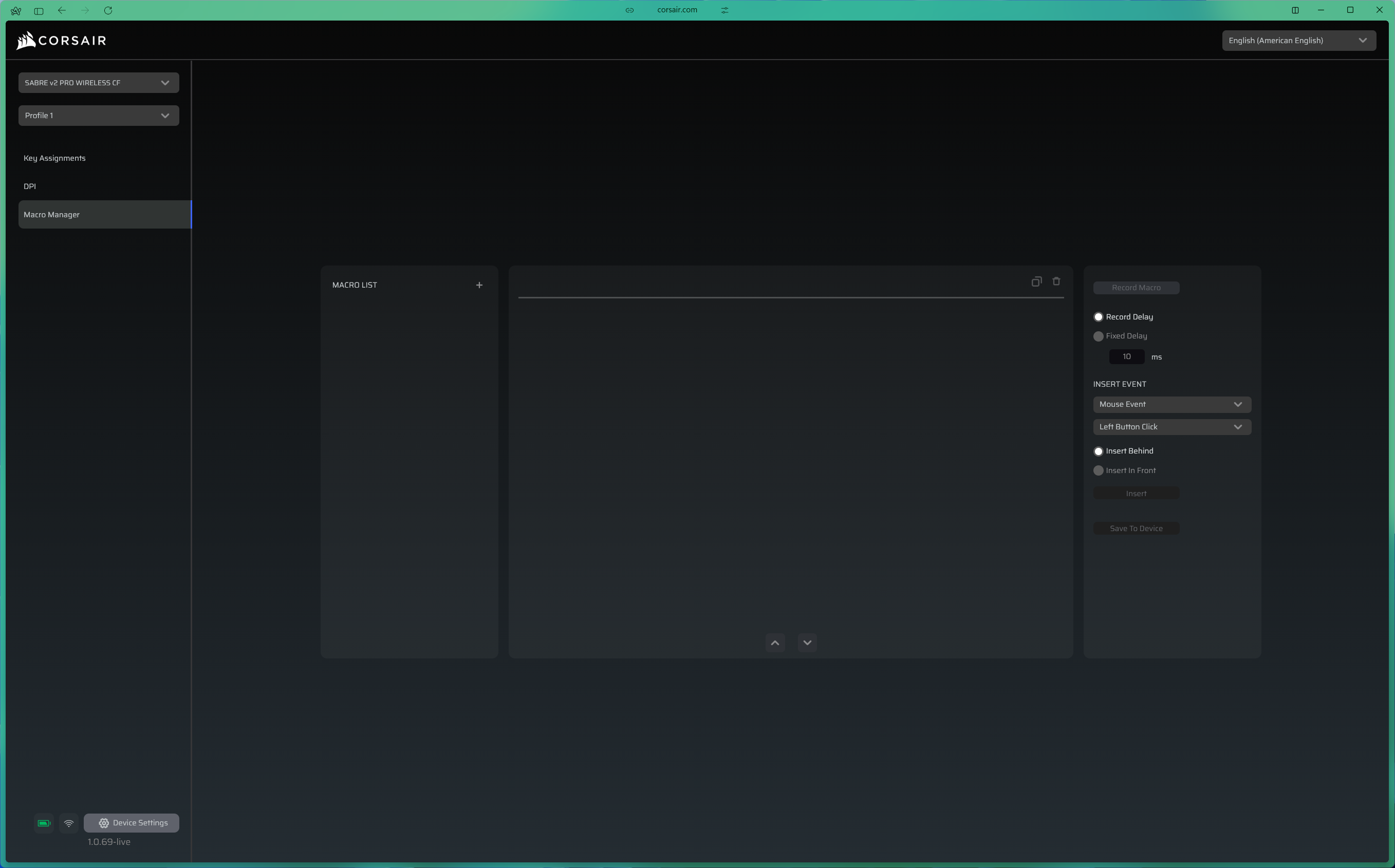
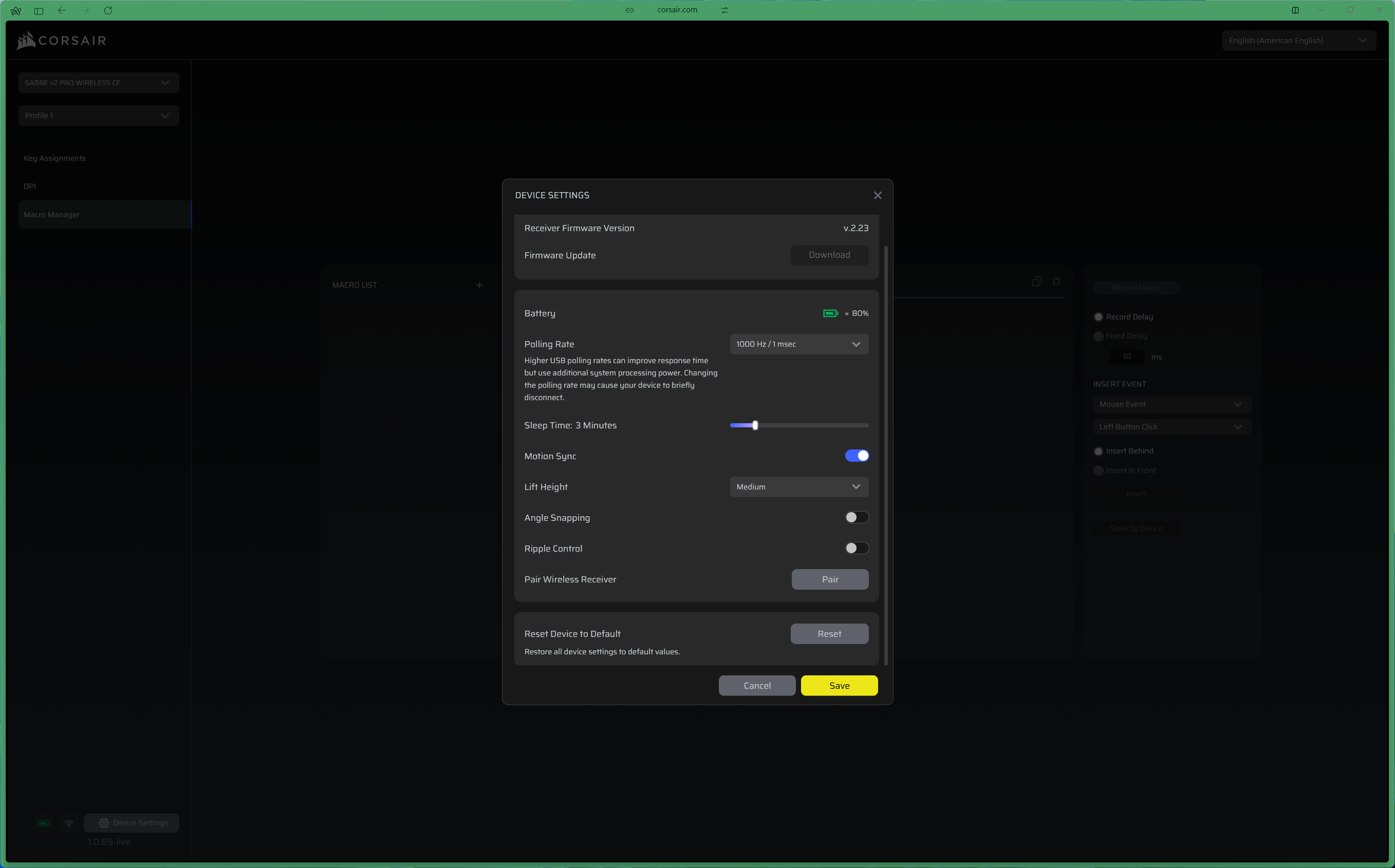
That said, it's not without quirks. The Web Hub requires you to authorise the mouse each time you open it, which gets old fast. It also only works on Windows, leaving macOS users without any native way to configure the device.
The interface itself is functional but bare - you get DPI stage configuration, button remapping, macro recording, polling rate adjustment, Motion Sync, angle snapping, ripple control, and firmware update. A noticeable omission is the lift-off distance control; I am sure it's because the setting requires a background app to work correctly, but it's worth noting.
Gaming Performance and Sensor Accuracy
Performance-wise, the MARKSMAN S sensor is exactly what you would expect from a flagship optical sensor in 2025 - meaning it’s excellent and largely a non-issue. I tested primarily across sessions of Marvel Rivals and the Marathon Server Slam; the tracking was accurate and consistent throughout, with no jitter, stuttering, or unexpected behaviour on a variety of surfaces, including hard surfaces like wood and cloth pads.
I largely stuck with the Corsair MM Pro Large Control mousepad that came with the mouse, which offers a smooth surface and balanced control for the mouse sensor. It measures 450mm by 400mm, so there is plenty of runway for wide swipes, while the 4mm thickness offers a comfortable amount of cushioning for your hand during marathon sessions. There is a hex-patterned polyurethane base that provides solid surface grip, ensuring the pad stays firmly planted on your desk at all times. I also appreciate the sloped, stitched anti-fray edges; they're minimal, soft, and don't dig into your arms.
Weight Distribution and In-Game Feel
At 55g, the mouse does require some adjustment time if you are coming from something lighter. Coming from a daily driver like the Zaopin Z1 Pro at 45g, the CF version's weight is noticeable - not uncomfortable, but someone awkward at first. More notable than the total weight, though, is the weight distribution. The battery and internal components create a slight bottom-heaviness toward the middle of the mouse, making the front end feel comparatively light. It's not dramatic enough to be a dealbreaker, but it's something you feel in fast flick movements, and a more even weight distribution would have made the mouse feel more planted and natural.
Wireless Dongle Design
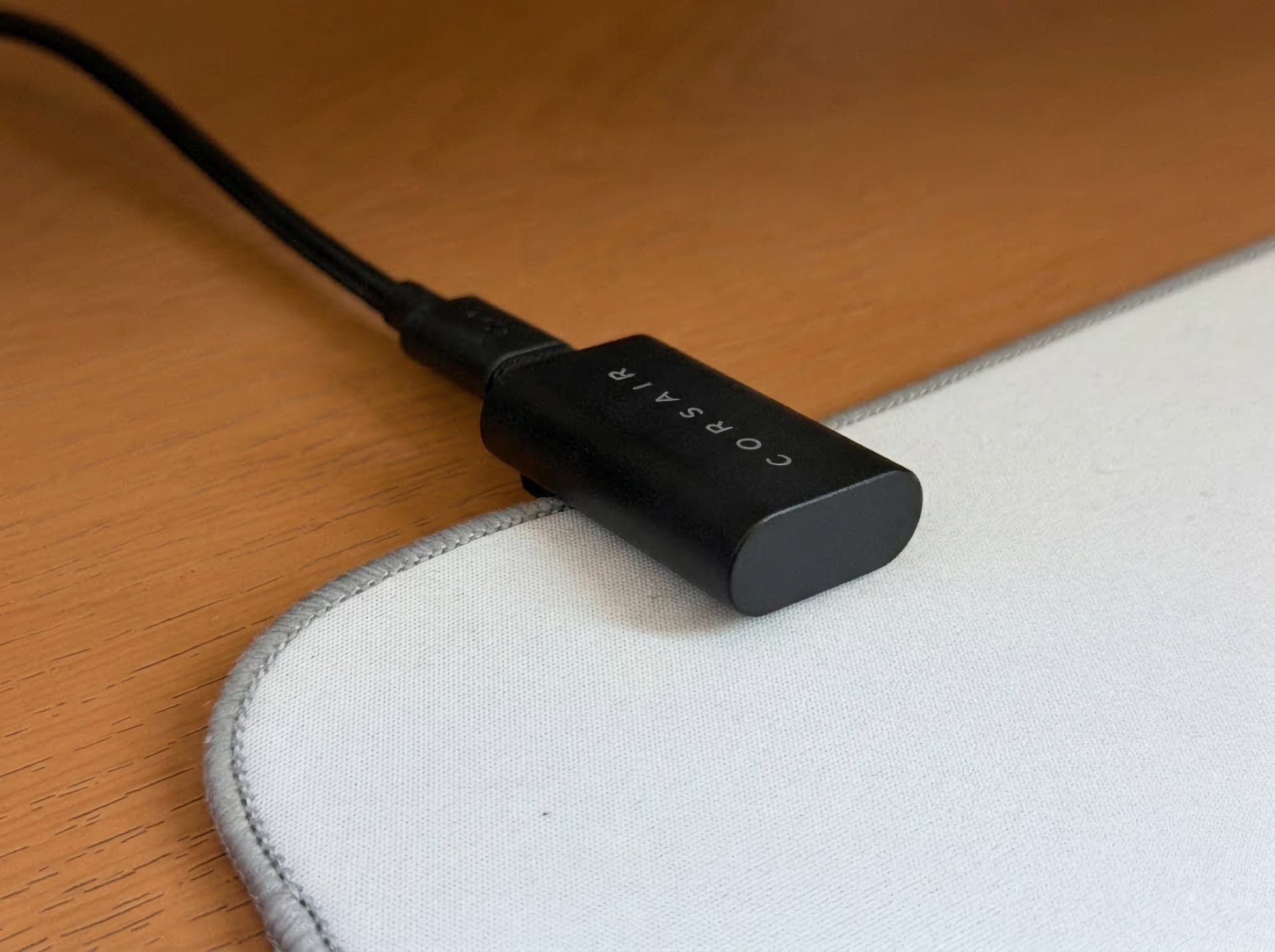
On the subject of the wireless dongle - this is the part of the setup that I did not exactly vibe with, purely because I hate clutter on my desk. Rather than a standard USB receiver that plugs directly into your machine, the Sabre V2 Pro CF uses a small rectangular dongle that requires a USB-C cable running to it. The reason for this design is the 8,000Hz polling rate, which requires a more direct line of sight for uninterrupted connection, as the bandwidth requirement is higher and more frequent.
MARKSMAN S Sensor: Tracking and Polling Rate Tests
I get the reasoning behind this, but now you have an additional cable to run, even if you don't use the 8,000Hz polling rate. Corsair includes a clip intended to attach the dongle to the edge of your mousepad, which solves the placement problem but creates a new one: a hard plastic clip pressing down on your mousepad over time will cause a permanent crease or indentation. I would rather Corsair offer a standard dongle that connects directly to the PC for those who want to use a 1,000Hz polling rate, and a separate high-polling adapter only for those who specifically need 8K polling.
That said, the 2.4Ghz wireless connection remained rock solid across the full testing period.
Battery Life: 1,000Hz vs 8,000Hz
Battery life, at least on 2.4Ghz with the default 1,000Hz polling rate, is good. Corsair rates it at up to 120 hours, which is better than most ultralight wireless mice and comfortably above the standard Sabre V2 Pro's 70hr rating. In my usage, while I didn't count the number of hours the mouse stayed alive, it easily lasted around a week (let's say 5-6 hours a day) before it started flashing red.
Bump up to 8,000Hz polling, and the battery life drops sharply - down to around 21hrs - so unless you specifically need hyper-polling, staying at 1,000Hz or 2,000Hz is the sensible choice for both battery life and system performance.
The Verdict: Should you buy the Corsair Sabre V2 Pro CF?
The Corsair Sabre V2 Pro CF is a genuinely good mouse. It feels premium, it performs well, and the carbon fiber construction solves the structural issues that held the original version back. The sensor is excellent, the switches are satisfying, and the overall package - especially with the carrying case and included accessories - reflects a level of care that matches the asking price in terms of presentation.
But AED 768 (US$200) is a lot of money for a mouse, and the honest answer is that the performance gap between this and something half the price is not nearly wide enough to justify the difference. You are paying primarily for the carbon fiber body and the Bluetooth addition - both worthwhile features, but not AED 384-worth for most people. The wireless dongle design, for me, is also an inelegant solution, and the weight distribution could be better.
For players who specifically want the CF aesthetic and the structural rigidity it brings, this is the best version of the Sabre V2 Pro available. For everyone else, the standard model or a similarly spec'd alternative deserves serious consideration before committing to the premium.
Corsair Sabre V2 Pro CF vs Sabre V2 Pro: What's Different?
The standard Corsair Sabre V2 Pro remains one of the best ultralight gaming mice you can buy at AED 384 (US$99). It shares the same MARKSMAN sensor and switch platform as the CF edition, but uses a plastic shell that weighs just 36g — 19g lighter than the carbon fiber version.
The tradeoff is noticeable shell flex when gripping, which the CF model eliminates entirely. The CF also adds Bluetooth connectivity, a longer-rated battery (120 hours vs 70 hours at 1,000Hz), and the premium carrying case. If structural rigidity and the CF aesthetic matter to you, the upgrade is justified. If raw weight and value are your priorities, the standard model is the smarter buy.
How Does the Sabre V2 Pro CF Compare to Other Gaming Mice?
At this price point, the Corsair Sabre V2 Pro CF competes with some strong alternatives.
The Razer DeathAdder V3 Pro offers an ergonomic right-handed shape with a proven Focus Pro 30K sensor at a similar weight class, though it lacks the carbon fiber build and Bluetooth.
The Logitech G Pro X Superlight 2, at around 60g, is one of the most popular esports mice globally and comes in at a lower price, but uses a plastic shell and tops out at 2,000Hz polling without an adapter.
The Pulsar X2, favoured in the competitive FPS community, undercuts the CF on price while delivering comparable sensor performance in a lighter package.
None of these alternatives offer a carbon fiber unibody, which remains the Sabre V2 Pro CF's unique selling point. Whether that material premium justifies the price depends on how much you value build rigidity and aesthetics over sheer weight savings.
Written by

Subscribe to our newsletter
Subscribe to our newsletter to get the latest updates and news








Member discussion