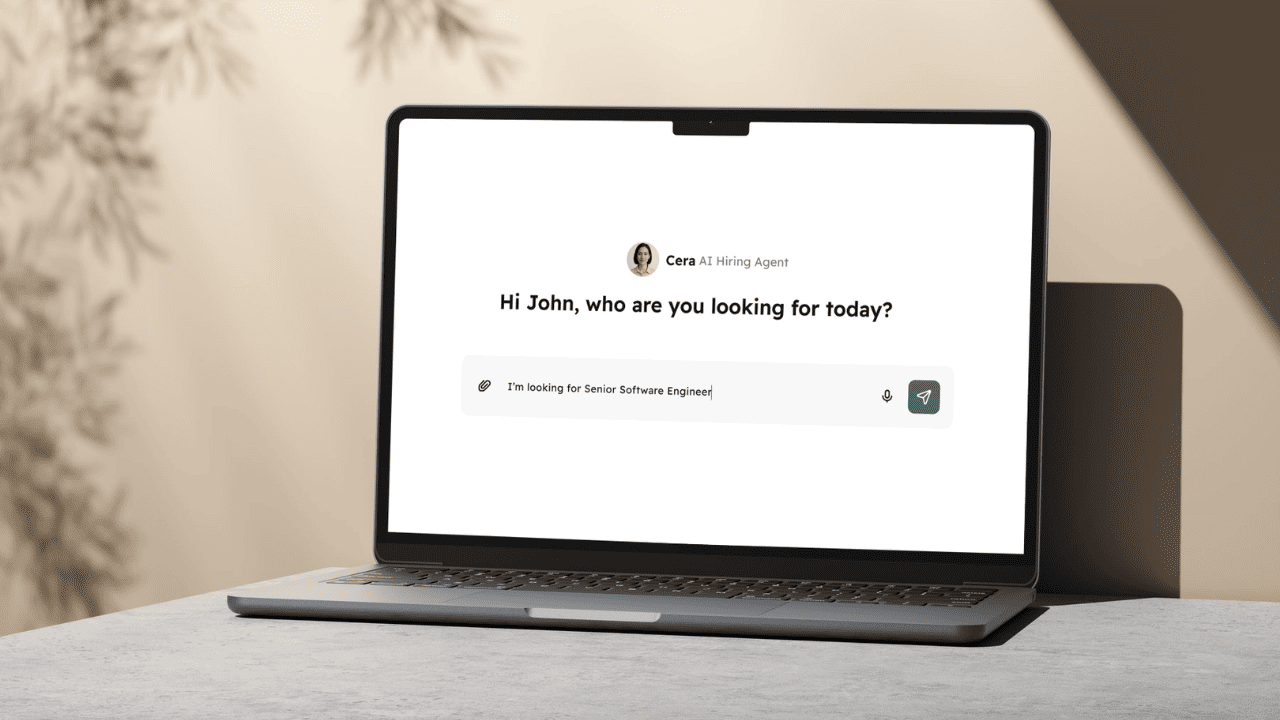
Cercli’s Cera launch is a recruitment story on the surface, but the larger bet is about where HR software is moving: away from passive admin tools and towards systems that help shape decisions. The Dubai-founded company said on 19 May 2026 that it has launched Cera, an AI hiring agent, alongside an applicant tracking system that connects to its existing HR and payroll platform.
Cercli is packaging recruitment, ATS, HR and payroll into one stack, with Cera positioned as the decision-support layer for screening and shortlisting candidates. The company says it has raised $12 million to date, but it has not published pricing, rollout limits or independent hiring-performance benchmarks.
That matters because the ATS market is crowded and mature. Greenhouse, Lever and Ashby already compete for hiring teams that want structured pipelines, interview workflows and reporting. Cercli’s wedge is different: it is trying to make recruitment the front door into a broader people-operations system, where the candidate who accepts an offer can move into HR records and payroll without a separate handover.
Cercli describes itself on its public site as an “AI-native” platform covering recruitment, HR and payroll. Its recruitment page says Cera can screen candidates, score them against job criteria, send follow-ups and move qualified applicants forward in the pipeline. Those are company claims, not independently verified performance results.
Cercli wants recruitment to become the wedge into payroll
The strategic logic is simple enough. Recruiting is messy, time-sensitive and visible to senior management when hiring slows down. Payroll is recurring, compliance-heavy and hard to rip out once embedded. If Cercli can make the hiring workflow useful enough, it gets a route into the system of record for employees.
The company’s new recruitment suite is pitched as a single flow from job post to onboarding. According to Cercli’s product page, the suite covers job description creation, CV screening, candidate scoring and ranking, interview coordination, feedback management, candidate summaries and role-compatibility scoring. It also says accepted candidates can be moved into onboarding and payroll in a few clicks.
That is a broader proposition than a standalone AI screening widget. It is also a harder one. The moat in HR software is rarely one clever feature; it is the accumulated data, workflow trust, compliance fit and margin discipline that come from becoming the place where teams actually run people operations.
Cera’s useful claim is structure, not magic
The most credible way to read Cera is as a structuring layer for high-volume hiring. Cercli says the agent can review applications against role criteria, produce candidate summaries, surface strengths and risks, coordinate follow-ups and help maintain candidate movement through the pipeline.
That could be valuable if it reduces recruiter busywork. It could also create new problems if hiring teams treat scores as objective truth rather than machine-generated judgement. The implication for employers is not “replace recruiters”. It is whether a recruiter can spend less time sorting CVs and more time testing role fit, compensation fit and cultural risk.
Cercli’s public copy says Cera is built for teams hiring for “5 roles or 500”. That is a useful ambition, especially in markets where application volume is rising and AI-generated CVs make first-pass screening noisier. But scale claims in recruiting software need evidence: time-to-shortlist, candidate quality, recruiter hours saved, false positives, false negatives and how the system handles edge cases.
The UAE angle is real because Cercli is building from Dubai
The regional relevance here is not that every UAE employer suddenly needs an AI hiring agent. It is that Cercli is a Dubai-founded HR tech company trying to move from MENA traction into a wider market. According to the company’s release, Cercli was founded by former Careem executives, serves customers across MENA and is expanding towards the US and Europe.
That puts Cercli in a familiar regional startup pattern: use the GCC and wider MENA as an operating base, solve a localised business workflow, then test whether the product can travel. The harder part is that HR and payroll are not generic software categories. Local labour rules, benefits, payroll practices, data handling expectations and hiring norms vary sharply by market.
For UAE and GCC employers, Cercli’s proposition will likely be judged less on AI branding and more on operational fit: does it handle hiring workflows cleanly, does it reduce manual reconciliation, does it keep audit trails, and does it integrate the post-offer process without creating new compliance risk?
For employers, the buying question is control
AI hiring tools sit in a sensitive part of the enterprise stack. They affect who gets seen, who gets rejected and how quickly candidates move through a process. That makes governance as important as speed.
For HR leaders, the practical questions are direct:
- Can hiring managers see why a candidate was scored highly or poorly?
- Can recruiters override Cera’s recommendations and record the reason?
- Does the system preserve feedback and interview notes in a way that can be audited later?
- How does it treat incomplete CVs, career gaps, non-standard experience or candidates switching industries?
- What data is used to generate role-compatibility scores?
Cercli’s public materials describe screening, scoring, summaries and workflow automation. They do not provide enough detail to assess the model’s decision logic, bias controls or measurable effect on hiring outcomes. That does not make the product weak. It means buyers should separate workflow efficiency from hiring judgment.
The proof gap is where buyers should slow down
The launch is strong on ambition, but thin on buyer-grade evidence. Cercli has not published public pricing for Cera or the ATS. It has not given a detailed implementation timeline, named public case studies for the new suite, or shared independent benchmarks for time-to-hire, quality-of-hire, cost-per-hire or recruiter productivity.
The company’s release references broader HR trend data, including recruiter time spent on repetitive work and limited AI adoption in HR, but the underlying reports were not provided for verification. Those figures should be treated as context for Cercli’s pitch rather than proof that Cera delivers specific results.
That caveat matters because the category is moving quickly. A hiring agent that schedules interviews and summarises CVs is useful. A hiring agent that becomes trusted enough to influence shortlists is a different level of regulatory exposure, especially as employers start asking vendors to explain how candidate decisions were reached.
Cercli is betting the HR system of record becomes a system of judgment
Cercli’s broader bet is that HR software will not stop at storing employee data, processing payroll and tracking approvals. The next layer is judgment: which candidates to prioritise, which employees need action, which workflows can be automated and where human review is still necessary.
That is why Cera is more strategically interesting than a normal ATS launch. Recruitment is the entry point, but payroll and HR are the platform leverage. If Cercli can make hiring teams trust the system before an employee even joins, it gets a stronger case to own more of the workforce lifecycle.
The unanswered question is whether that trust can be earned with evidence rather than positioning. In HR software, speed is attractive. Accountability is what keeps the system installed.
FAQ
What is Cercli Cera?
Cera is Cercli’s AI hiring agent. Cercli says it can screen candidates, score them against job criteria, create candidate summaries, send follow-ups and move qualified applicants through the hiring pipeline.
What did Cercli launch?
Cercli said on 19 May 2026 that it launched Cera and an applicant tracking system that connects to its existing HR and payroll platform. The company is positioning the suite as a recruitment-to-payroll workflow rather than a standalone hiring tool.
Is Cera available in the UAE?
Cercli is Dubai-founded, and its release describes the launch as global. Its public recruitment page is live, but the company has not published detailed market-by-market rollout limits or onboarding timelines.
How much does Cercli Cera cost?
Cercli has not published public pricing for Cera or the ATS in the materials reviewed. Employers would need to check directly with the company for pricing, contract terms and implementation details.
Does Cera replace recruiters?
Cercli presents Cera as an assistant for screening, scoring and workflow management, not as a full replacement for human recruiters. Hiring teams should still review candidate fit, final decisions and governance controls.
Who does Cercli compete with?
On recruitment workflow, Cercli competes for attention with established ATS vendors such as Greenhouse, Lever and Ashby. Its broader HR and payroll positioning also puts it closer to platforms that try to own more of the employee lifecycle.