
Satire Is Just Dessert in a Burning Kitchen, Says Bassem Youssef in Abu Dhabi
Bassem Youssef used BRIDGE Summit 2025 in Abu Dhabi to unpack why satire can’t fix the world, but still matters if we want to stay human.

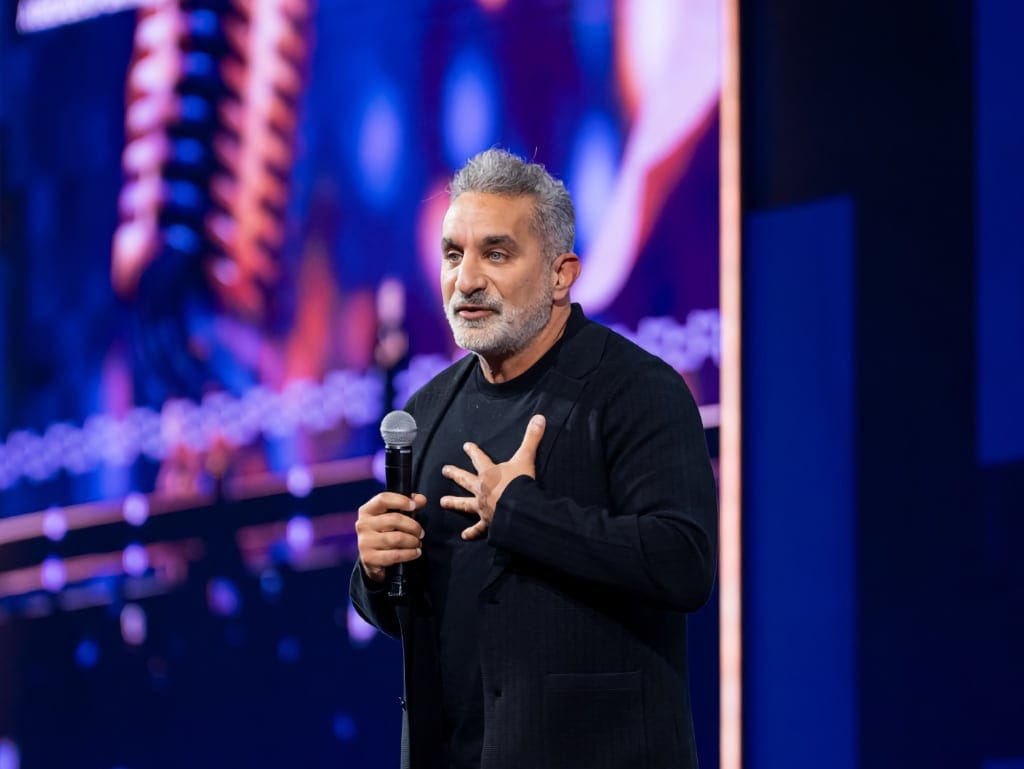
BRIDGE Summit 2025 has been packed with CEOs, policy people and tech leaders – and then there’s Bassem Youssef, the cardiothoracic surgeon turned satirist who openly joked he felt like a “fish out of water” on the programme.
KEY TAKEAWAYS
- Spoke at BRIDGE Summit 2025 in Abu Dhabi’s inaugural edition
- Session title: “A Decade of Satire. Did It Work?”
- Opened with trademark self-deprecating humour about spam invites and “too many rich CEOs”
- Called the summit the world’s largest debut media event
- Thanked UAE leadership and H.H. Mohammed bin Zayed for backing the summit
Held at ADNEC from 8–10 December, BRIDGE Summit has been pitched as Abu Dhabi’s new global meeting point for media, tech, gaming and the creator economy, with Meta, ChinaJoy, Priyanka Chopra Jonas and Gary Vaynerchuk also in the mix. Youssef’s slot sat in that context: less product launch, more existential audit of what satire can and can’t do when the world feels like it’s on fire.
If you’re following the rest of the summit, you can catch our other coverage under the BRIDGE Summit 2025 tag.
From operating room to 30 million viewers
Youssef reminded the room that before he was “the Jon Stewart of the Arab world”, he was a heart surgeon who made one very dramatic career switch.
- Left medicine during the Egyptian revolution to become a comedian
- Started with a five-minute YouTube show that jumped to TV
- Hosted AlBernameg, the region’s first major political satire show
- Reached around 30 million weekly viewers across the Arab world
- Recognised by TIME’s 100 Most Influential list and the CPJ’s International Press Freedom Award
He joked that leaving surgery probably “saved many patients”, but the shift had serious consequences: legal cases, an arrest warrant, and a tight link between his name and some of the region’s darkest headlines. AlBernameg became a blueprint for how political commentary could live on YouTube first, then move to broadcast – a path that’s now standard for creators the BRIDGE Summit is trying to attract.
“The circus became more trusted than the Senate”
A big part of Youssef’s argument is that power hasn’t exactly covered itself in glory, so people started looking elsewhere for truth – including comedy clips.
- Said a TikTok can get more engagement than a UN resolution
- Pointed out that a comedian’s Instagram post on Gaza can outrun a long human-rights report
- Argued people now trust comedy clubs more than “the outlets of the free press”
- Called this shift both flattering and “deeply concerning” for humanity
His point wasn’t that comedians are smarter than diplomats. It was that institutions have lost so much credibility that audiences treat satire as a kind of news filter. In a world of algorithmic feeds and information overload, a sharp joke feels more honest than a 50-page PDF. That’s great for reach, terrible for civic life – and exactly the kind of attention economy problem other BRIDGE sessions on media power and platforms have been wrestling with.
Did satire “work”? Not in the way people wanted
Youssef’s answer to his own session title was blunt: no, satire didn’t “work” – at least not if you expected it to topple governments or fix the climate.
- Defined satire as “an exaggerated reflection of reality”
- Framed it as critique wrapped in entertainment, like “serving dessert while the kitchen’s on fire”
- Said satire failed because people expected it to be a solution, not a mirror
- Compared modern satire to a “colosseum” that turns outrage into amusement
- Called it “group therapy with punchlines” – all the awareness, none of the action
He argued that we consume satire in a very specific way: we laugh, we share, we comment “so true”, then we order food and move on. The joke lets us feel seen without forcing us to act. That doesn’t make satire useless, but it does mean we should stop pretending it’s a substitute for organising, voting, or doing anything offline. In his view, holding comedians responsible for political outcomes is just another way of avoiding that work.
What satire actually does: keeps people human
So if satire doesn’t change policy, why bother? For Youssef, the answer is emotional, not legislative.
- Said satire “isn’t a revolution” and won’t “feed the hungry or stop the wars”
- Framed its value as something smaller but vital: keeping people human
- Claimed laughter stops us from mentally breaking while “watching the world fall apart”
- Described satire as a way to stay awake, not become “mindless consumers and silent spectators”
- Pledged to “keep making jokes at the powerful” even if the powerful ignore him
In his closing notes, he argued that as long as people are laughing together, they are still fighting in their own way – not like soldiers or activists, but like humans refusing to go numb. That might sound soft compared to the big numbers BRIDGE likes to cite – 60,000 attendees, 400 speakers, seven tracks across media, gaming and tech – but it fits the larger mood of the summit: tools and platforms matter, but so does what they do to us.
FAQs
Who is Bassem Youssef?
Bassem Youssef is an Egyptian cardiothoracic surgeon turned comedian, known for AlBernameg, the Middle East’s first major political satire TV show. Starting as a short YouTube series, it grew into a regional phenomenon with about 30 million weekly viewers and earned him recognition from TIME Magazine and the Committee to Protect Journalists.
What did Bassem Youssef talk about at BRIDGE Summit 2025?
At BRIDGE Summit 2025 in Abu Dhabi, Youssef’s session “A Decade of Satire. Did It Work?” unpacked how satire became a trusted voice in a broken system, why people expect too much from comedians, and why he thinks satire hasn’t “worked” in the political sense but still matters for keeping people human and paying attention.
Did he say satire can change politics?
Not really. Youssef was clear that satire doesn’t replace policy, protest or real-world action. He argued satire fails when people expect it to fix governments or end wars. Instead, he framed it as critique plus entertainment that helps people cope, stay awake and feel less alone, but not as a magic political tool.
How does satire help audiences in the Middle East and beyond?
According to Youssef, satire helps by turning fear and anger into laughter, acting like “group therapy with punchlines”. It gives people a way to process chaos without shutting down, and offers a space where power can still be mocked. That emotional relief, he argues, is what keeps people human in systems that would rather turn them into passive spectators.
Written by

Subscribe to our newsletter
Subscribe to our newsletter to get the latest updates and news







Member discussion