
Antigravity A1: You Can Finally Fly On a Dragon like Daenerys Targaryen
Antigravity A1 is the world's first all-in-one 8K 360 drone. We break down the specs, the price, and if this "invisible" drone is worth the AED 5,800+ price tag.


Antigravity A1 Officially Launches The Worlds First 8K 360 Drone Now Available
0:00
/251.712
If you have ever tried to tape a 360 camera to a Mavic Mini, you know the result: a wobbly mess that looks like a pendulum having a seizure. That era is officially over.
Antigravity, a company incubated by the folks at Insta360, has launched the Antigravity A1. It claims to be the world's first all-in-one 8K 360 drone. The promise is simple: the drone becomes invisible, capturing the entire environment in one pass without you needing to act like a pilot from Top Gun.
For creators in Dubai, where the architecture basically demands 360-degree coverage, this is an interesting piece of kit. But with a starting price of US$ 1,599 (approx. AED 5,870), it isn't exactly an impulse buy at the Virgin Megastore checkout.
What is the Antigravity A1?
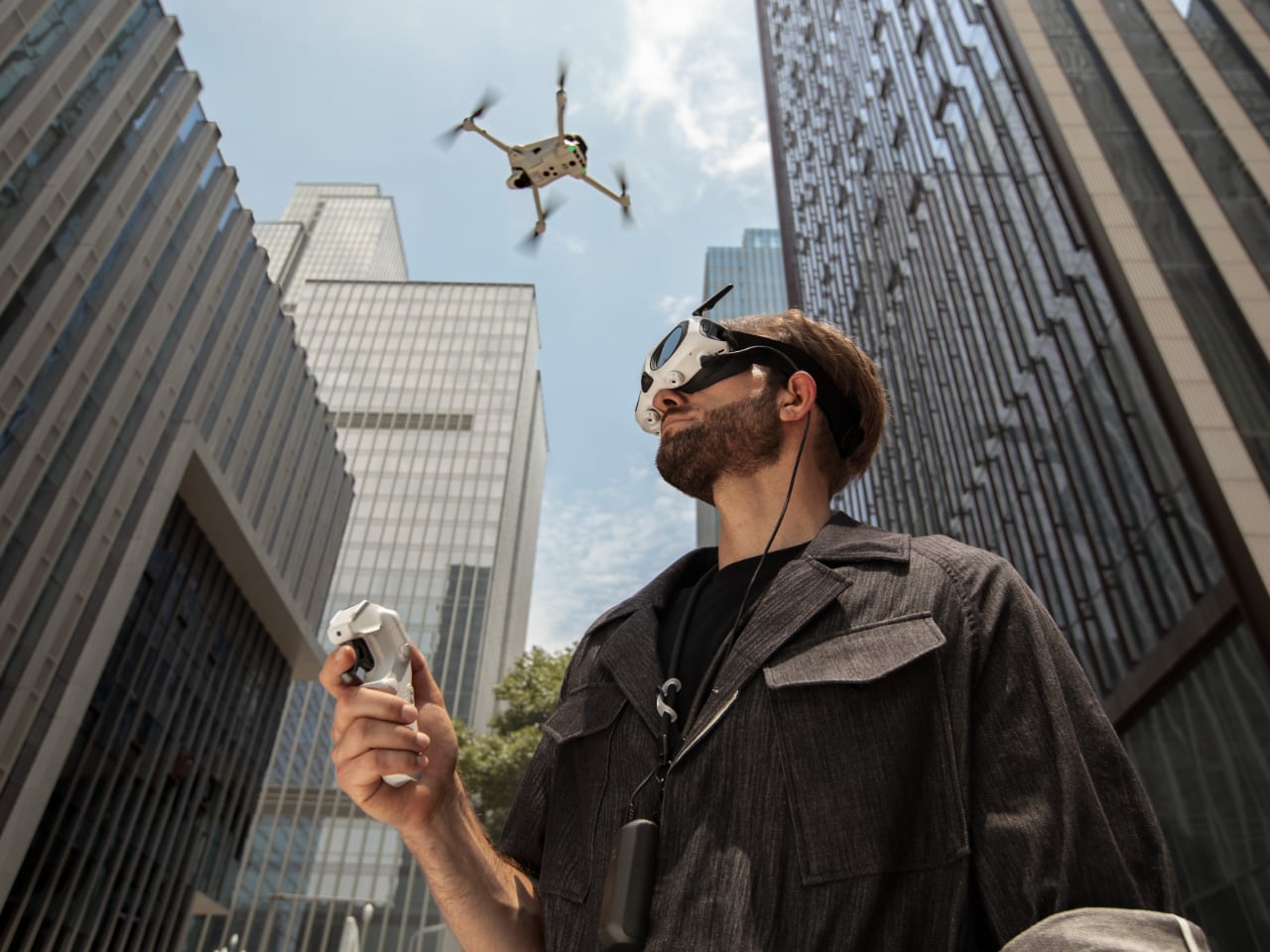
The A1 is a quadcopter built specifically around a dual-lens camera system. Unlike traditional drones where the camera is a payload on the front, the A1 is the camera. It uses a headset-first configuration with a motion controller, meaning you steer by pointing rather than managing complex stick inputs.
Here is the "too long; didn't read" breakdown:
- Weight: <249g (Standard battery).
- Camera: Dual 1/1.28-inch sensors, 8K 30fps / 4K 100fps.
- Flight Time: 24 mins (Standard) / 39 mins (Extended).
- Control: Motion Grip + Vision Goggles (Micro-OLED).
- Release Date: December 04, 2025.
Flight Mechanics and User Experience
The A1 ditches the traditional dual-stick remote for a "Grip" controller and "Vision Goggles." This creates a "point-to-fly" experience that lowers the barrier to entry but might annoy purists who prefer manual control.
- Headset-First Design: The goggles aren't an accessory; they are mandatory for the intended experience. They use Pancake optics and dual 1-inch Micro-OLED displays (2560x2560).
- FreeMotion Mode: You steer by moving your hand. It translates gestures into flight paths.
- FPV Mode: For those who want more control, traditional dynamics are available, though likely not as snappy as a dedicated race drone.
- Retractable Gear: The landing gear moves out of the way to ensure the 360 stitching has no blind spots.
This control scheme is clever because it masks the lack of mechanical gimbal. In a 360 drone, the "camera" never moves physically; the framing happens digitally. By tying the flight controls to your hand gestures, Antigravity creates a feeling of flight that mirrors how YouTube creators often simulate FPV shots. However, because it sits under the 250g mark, it technically falls into the Open Category - Low Risk classification in many regions, including the EU, which simplifies registration—though you should always check the local DCAA or GCAA apps here in the UAE before taking off near the Burj Khalifa.
Mastering the 360-Degree Shot
The core selling point here is the "fly first, frame later" workflow. Since the drone records everything, you don't need to worry if you missed the action happening behind you.
- Resolution: 8K is massive, but remember that pixels are spread across a full 360 sphere. The actual reframed view will likely look closer to sharp 4K.
- Stabilization: It uses FlowState stabilization. This is crucial because 360 drones are aerodynamically awkward and tend to wobble.
- Invisible Drone: The software automatically stitches out the drone body.
- Intelligent Features: "Sky Genie" performs automated moves (Orbit, Spiral) with a tap.
The 1/1.28-inch sensors are a significant step up from the smaller sensors found in older 360 cameras. This should help with the intense dynamic range we get in the Middle East—bright sun and dark shadows. The "Deep Track" feature also suggests that you can lock onto a subject (like a car dune bashing) and the software will keep them centered in the frame regardless of where the drone is actually pointing.
Antigravity A1 vs. The Competition
It is hard to compare the A1 directly because no one else is doing exactly this, but we can measure it against the DJI Avata 2 (for flight style) and the Insta360 X4 (for camera tech).
| Feature | Antigravity A1 | DJI Avata 2 | Insta360 X4 (Camera only) |
|---|---|---|---|
| Primary Video | 8K 360 | 4K Wide Angle | 8K 360 |
| Weight | 249g | 377g | 203g (Handheld) |
| Flight Time | 24 mins | 23 mins | N/A |
| Sensor Size | 1/1.28-inch | 1/1.3-inch | 1/2-inch |
| Price (USD) | $1,599 | ~$999 (Combo) | ~$499 |
While the Avata 2 is a better flying machine for speed and agility, the A1 offers creative possibilities the Avata cannot touch. The price creates a new bracket. You are effectively buying a high-end drone and a high-end 360 camera in one integrated chassis.
Setup and Maintenance Guide
Antigravity has included a few features to stop you from destroying your new toy immediately, but maintenance on a 360 drone is tricky because the lenses are exposed.
- Lens Protection: The landing gear retracts to protect the bottom lens during takeoff/landing. Do not hand-catch this unless you want to smudge the optics.
- Payload Detection: The system actively detects excess weight. If you try to strap extra batteries or lights to it, the software may ground you.
- Repairability: Lenses and propellers are user-replaceable. This is a massive win, as scratching a 360 lens usually means buying a whole new camera.
Battery care is also vital. The A1 uses high-performance cells to manage the weight-to-power ratio. Lithium-ion batteries can be volatile if mistreated; referencing safety data on Lithium Iron Phosphate battery fires reminds us to store these in cool, dry places—not the boot of your car in July. The optional high-capacity battery pushes the flight time to 39 minutes, but be warned: this will likely push the weight over 250g, changing your legal flight category.
Future Perspectives: Air Mobility and Aerospace Integration
The A1 feels like a consumer toy, but the tech inside mirrors larger shifts in aerospace. The integration of "vision-first" navigation aligns with broader trends in Air Mobility. As we move toward autonomous eVTOL taxis, the concept of a vehicle that "sees" in 360 degrees for safety is standardizing.
Furthermore, the autonomous "Sky Path" feature, which lets the drone fly itself while you pass the goggles to a friend, relies on precise positioning. This tech trickles down from developments by companies like Atherion Aerospace and the navigational data provided by modern Satellites. While the A1 uses local sensors, the future of drone flight involves constant communication with networks like those being built by Space42 to ensure airspace safety.
Final Verdict: Niche Luxury or Creator Essential?
The Antigravity A1 is not for everyone. If you just want a nice photo of the sunset, get a Mini 4 Pro. If you want to race, build an FPV rig.
The A1 is for storytellers who want the "impossible shot." It allows you to simulate a crane, a jib, and a chase cam all in one flight. The price is steep at US$ 1,599 for the Standard Bundle, but considering it includes the goggles and the unique camera system, it is a justifiable expense for professional content creators.
It officially goes on sale December 04, 2025.
Frequently Asked Questions
Is the Antigravity A1 legal to fly in the UAE?
Yes, but with conditions. At 249g, it falls into the light category. However, you must register it with the GCAA/DCAA and adhere to No-Fly Zones. The camera capability means you must be extra careful about privacy laws here.
Does it have obstacle avoidance?
The press release mentions payload detection and stabilization, but unlike standard camera drones, 360 drones struggle with traditional obstacle avoidance sensors because they would obstruct the camera view. Fly with caution.
Can I use the A1 indoors?
Technically yes. The 47 CFR Part 15 regulations generally allow for low-power transmission used in these controllers, making indoor flight feasible, but the lack of GPS signal indoors means you are relying entirely on visual positioning.
What happens if I crash?
Antigravity offers "Antigravity Care" for flyaway protection and replacements. Given the exposed lenses, we highly recommend getting the insurance.
Is it good for beginners?
Surprisingly, yes. The motion controller is much more intuitive for non-gamers than dual sticks. The FAA and other bodies generally regard these intuitive flyers as accessible, provided you follow recreational safety guidelines.
Written by
Subscribe to our newsletter
Subscribe to our newsletter to get the latest updates and news










Member discussion