
Claude users face 50x price hike as Anthropic blocks popular AI tool
Claude subscribers lose access to popular AI agent tools from April, forcing costly API upgrades. OpenClaw users face 50x price hikes as Anthropic pushes proprietary alternatives over open-source frameworks.

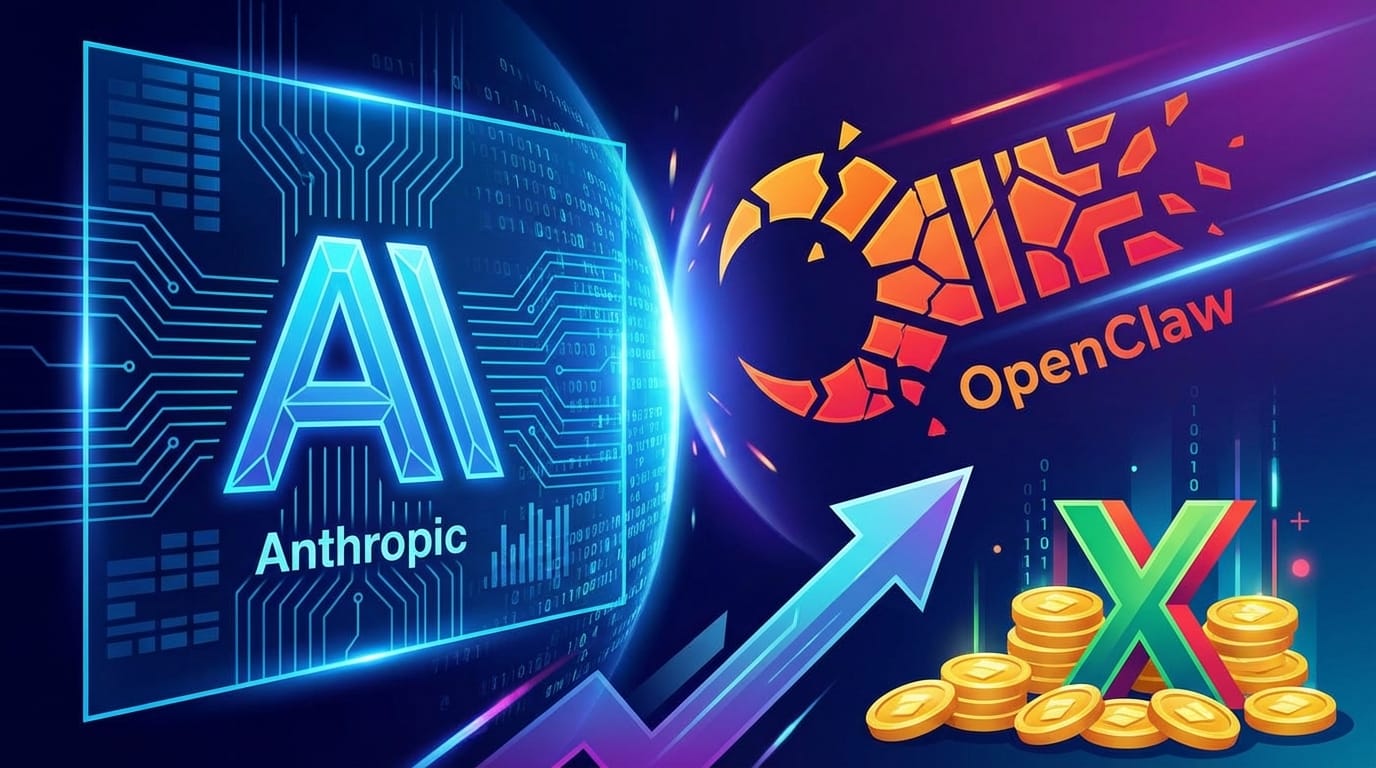
Anthropic has blocked Claude Pro and Max subscribers from using third-party AI agent frameworks, effective April 4, 2026. The move forces users of popular tools like OpenClaw to switch to pay-as-you-go API billing, with some facing cost increases of up to 50 times their previous monthly subscription. The decision affects over 135,000 active OpenClaw instances and has sparked fierce criticism from the open-source AI developer community.
Key Takeaways
- Starting April 4, 2026, Claude Pro and Max subscribers cannot use third-party frameworks like OpenClaw with their flat-rate plans.
- Users now face potential monthly costs of $1,000–$5,000 compared to the previous $200 Claude Max subscription fee.
- Over 135,000 OpenClaw instances were running when Anthropic announced the restriction.
- The OpenClaw founder, who recently joined OpenAI, called the decision a 'betrayal of open-source developers'.
- Anthropic offered one-time credits and 30% discounts on pre-purchased usage bundles as transition assistance.
What is the cost impact for Claude users?
According to Anthropic's internal analysis, users running autonomous AI agents through OpenClaw could face monthly costs between $1,000 and $5,000 under the new pay-per-use model. This represents a dramatic increase from the $200 monthly Claude Max subscription fee that previously covered unlimited usage through third-party frameworks.
The cost disparity stems from how AI agents consume compute resources. While conversational use typically involves short exchanges, autonomous agents continuously process large amounts of data — browsing websites, managing calendars, and executing code without human oversight. A single agent running 24/7 can consume thousands of API calls daily.
Anthropic offered affected users a one-time credit equal to one month's subscription cost, redeemable until April 17, 2026. The company also provided up to 30% discounts on pre-purchased extra usage bundles, though these measures do little to bridge the substantial cost gap.
Why did Anthropic make this decision?
Anthropic cited unsustainable compute demand as the primary reason for blocking third-party frameworks. The company's subscription tiers were designed for conversational AI use — brief exchanges between humans and Claude — not the heavy token consumption patterns of autonomous agents.
Internal data revealed that agentic workloads were consuming compute resources at rates up to five times higher than equivalent API usage would cost. This created an economic imbalance where Anthropic was effectively subsidising intensive AI agent operations through flat-rate subscriptions designed for casual users.
The timing coincides with Anthropic's push to monetise AI agent capabilities through its own proprietary tools. Claude's recent expansion included new developer environments like Claude Code and Claude Cowork, which remain unrestricted on Pro and Max plans — a deliberate signal about the company's strategic direction.
What is the developer community response?
The OpenClaw community has reacted with fierce criticism, viewing the restriction as a betrayal of the open-source principles that initially made Claude popular among developers. The framework's creator, who recently joined OpenAI, characterised Anthropic's decision as a "betrayal of open-source developers" in a statement that has amplified tensions within the AI development community.
Over 135,000 OpenClaw instances were running at the time of the announcement, indicating massive adoption of the framework. Developers argue that Anthropic knew about heavy agentic usage patterns but failed to address pricing models proactively, instead choosing to cut off access entirely.
The controversy extends beyond immediate cost concerns. Many developers see this as part of a broader industry trend where AI companies initially court open-source communities before pivoting to restrictive, proprietary ecosystems once they achieve market dominance.
What this means for AI development
Anthropic's decision signals a fundamental shift in how AI companies approach the balance between open access and sustainable business models. The move effectively creates a two-tier system where casual conversational use remains affordable, while serious AI agent development becomes prohibitively expensive for many developers.
This has immediate implications for the UAE's growing AI development scene, where startups and researchers have increasingly relied on accessible AI tools to build innovative applications. The cost barrier could slow adoption of advanced AI agent technologies in the region, particularly for smaller companies without substantial venture funding.
The restriction also highlights the fragility of building on third-party AI platforms. Developers who invested months creating OpenClaw-based solutions now face expensive migrations or complete project restructuring — a cautionary tale about platform dependency in the rapidly evolving AI landscape.
Alternative options and pricing
Affected users have several migration paths, though none match the previous cost structure. Direct API access through Anthropic costs $3 per million input tokens and $15 per million output tokens for Claude Sonnet 4.6, while Claude Opus 4.6 pricing reaches $15 and $75 respectively.
Alternative frameworks like LangChain and AutoGPT support multiple AI providers, offering some protection against future restrictions. However, most require significant code changes and lack OpenClaw's simplified interface that made Claude accessible to non-technical users.
For UAE developers, the timing is particularly challenging given the region's push toward AI innovation. The cost increases could force many projects to explore alternative AI providers or scale back ambitious agent-based applications that were previously economical under Claude's flat-rate model.
Frequently Asked Questions
When does the OpenClaw restriction take effect?
The restriction became effective on April 4, 2026. Claude Pro and Max subscribers can no longer route usage through OpenClaw or other third-party frameworks from this date.
What compensation is Anthropic offering affected users?
Anthropic provided a one-time credit equal to one month's subscription cost, redeemable until April 17, 2026. They also offer up to 30% discounts on pre-purchased extra usage bundles.
Are there alternatives to OpenClaw for Claude users?
Users can switch to direct API access through Anthropic or migrate to alternative frameworks like LangChain. However, these options require code changes and typically cost significantly more than the previous flat-rate model.
Why did Anthropic block third-party frameworks?
Anthropic cited unsustainable compute demand from AI agent frameworks that consume resources at much higher rates than conversational use, creating an economic imbalance with their subscription pricing model.
Will this affect other AI companies' policies?
The move could set a precedent for other AI providers to restrict third-party framework access, particularly as companies seek to monetise advanced AI agent capabilities and protect their compute resources from heavy usage patterns.
Written by

Subscribe to our newsletter
Subscribe to our newsletter to get the latest updates and news









Member discussion