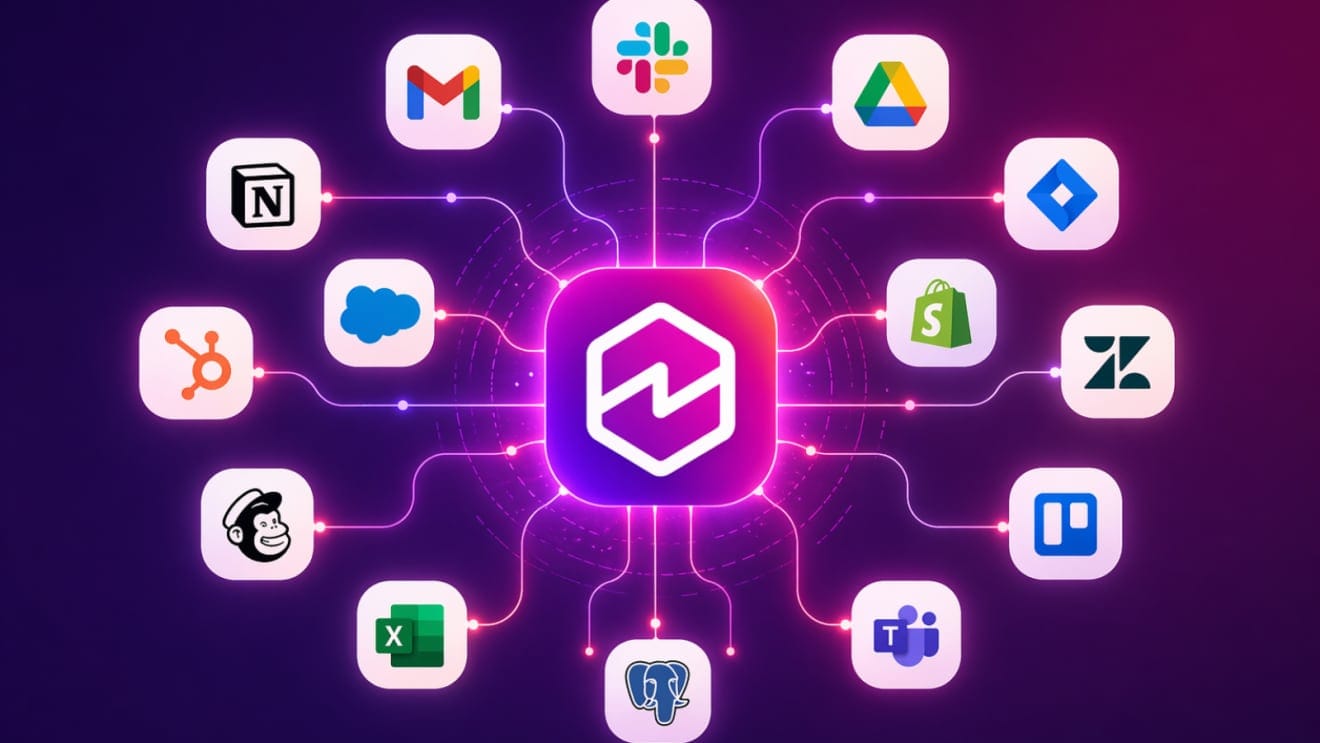
AWS is trying to move Amazon Quick from a work chatbot into an always-on desktop assistant, but the useful question for UAE businesses is less about “AI magic” and more about rollout, controls and whether it can safely work across the tools employees already use.
Amazon Quick’s new desktop app is designed to stay connected to local files, email, calendar and workplace apps, while some Microsoft 365 and app-building features remain in preview. AWS has not confirmed UAE-specific availability, pricing or detailed enterprise admin controls in the supplied announcement.
The pitch is persistent workplace context, not another chat tab
Amazon Quick is AWS’s AI assistant for work. The new push is a desktop app that AWS says can run natively on a user’s computer, connect to local files, calendar, email and other apps, and learn from previous sessions to become more personalised.
That is a different pitch from a standard prompt box. AWS is positioning Quick as a persistent assistant that can understand what a user is working on, remember preferences and surface relevant context before being explicitly asked.
The company’s own launch article describes Quick as a desktop AI assistant that can help build presentations, dashboards and other work assets. Its feature page also frames Quick around research, automation, business intelligence and shared team workspaces.
What is new, what is preview, and what is still not clear
The main change is the desktop presence. AWS says Quick can work directly with local files, stay connected to calendar and email, and run in the background across workplace apps. That is the part that could matter if it actually reduces copy-paste work and app switching.
But the announcement mixes shipped features, preview features and broad integration claims. For enterprise buyers, those labels matter.
Area | AWS claim | Status for buyers |
|---|---|---|
Desktop app | Connects to local files, calendar, email and apps, and learns from sessions. | Launched as a desktop experience, but UAE rollout details are not specified. |
Content generation | Creates documents, presentations, infographics and images from chat. | Described by AWS as available now; regional and licensing details still need checking. |
Custom apps and dashboards | Creates apps, dashboards and web pages connected to live business data. | In preview. |
Microsoft 365 extensions | Brings Quick into Outlook, Word, PowerPoint and Excel. | In preview, not a fully proven general rollout. |
Expanded integrations | Adds or supports tools including Google Workspace, Zoom, Airtable, Dropbox and Microsoft Teams. | Useful for mixed-stack offices, but connector depth and admin controls need verification. |
Cross-app support is the practical hook for UAE offices
Many UAE and GCC organisations do not operate within a single software ecosystem. A typical office may use Microsoft 365, Teams and Outlook, while also relying on Salesforce, Zoom, Google Workspace, Airtable, Dropbox or other department-level tools.
That is where Quick’s integration story could be useful. AWS says Quick connects apps, tools and data in one place, with named integrations including Google Workspace, Zoom, Microsoft 365, Salesforce, Airtable, Dropbox and Microsoft Teams.
The Microsoft angle is especially important. AWS says new Microsoft 365 extensions will bring Quick into Outlook, Word, PowerPoint and Excel so it can draft content, surface insights, and take actions inside those apps. Those extensions are in preview, so IT teams should treat them as a capability to test rather than something to assume is ready for every department.
The security pitch is doing most of the enterprise work
AWS is not only selling productivity. It is selling trust. The company says Quick is built on AWS with security, compliance, and governance in mind, and that it does not use customer data to train someone else’s model.
That is an important claim, but it is still a vendor claim. UAE enterprises in regulated sectors should ask for specifics before allowing a desktop assistant to touch local files, email, calendars and internal tools.
The minimum due diligence list should include data residency options, retention policies, audit logs, permission boundaries, connector-level controls, admin disablement options, and how Quick separates personal memory from shared team knowledge.
Always-on AI creates a governance problem as well as a productivity one
The more useful Quick becomes, the more sensitive it gets. A desktop assistant that can access local files, read context from apps, and remember work patterns may save time, but it also raises new questions for IT, legal, and HR teams.
For UAE businesses, the key question is not simply whether Quick can summarise a meeting or draft a deck. It is whether the organisation can prove who gave it access, what data it indexed, where that data is processed, and what happens when an employee changes role or leaves.
AWS also cites customer adoption and productivity examples from large companies, including New York Life, Mondelēz, and 3M, as well as internal Amazon use cases. Those examples are useful signals, but they are vendor-selected and should not be treated as independent performance benchmarks.
What UAE buyers should check before trialling Quick
- UAE availability: AWS has not provided UAE-specific launch timing in the announcement material.
- Pricing: No UAE pricing, licensing tier or packaging detail is provided.
- Preview scope: Microsoft 365 extensions and app-building features are not all described as generally available.
- Admin controls: Enterprises should verify how connectors, local file access, retention, audit logs and role-based permissions work.
- Data policy: AWS says Quick does not use user data to train someone else’s model, but organisations still need contractual and technical details.
The bottom line: promising for mixed stacks, unproven for local rollout
Amazon Quick’s desktop move is a credible response to the real workplace problem: information is spread across too many apps. If Quick can safely connect local files, email, calendars and third-party tools without creating new governance headaches, it could be useful for UAE enterprises with complex workflows.
For now, the gaps are just as important as the launch. AWS has not confirmed UAE pricing or availability, some headline features are still in preview, and the practical value will depend on admin controls, connector quality and real-world adoption outside AWS’s own examples.
FAQ
Is Amazon Quick available in the UAE?
AWS has announced and promoted the Amazon Quick desktop app, but the supplied material does not confirm UAE-specific availability, rollout timing or local packaging.
How much does Amazon Quick cost in the UAE?
No UAE price or licensing structure is provided in the announcement material. Enterprises should verify pricing directly with AWS or their AWS account team before planning a rollout.
Which apps does Amazon Quick connect to?
AWS offers integrations with Google Workspace, Zoom, Microsoft 365, Salesforce, Airtable, Dropbox, and Microsoft Teams. The exact depth of each connector, including admin controls and permissions, still needs to be checked.
Are Amazon Quick’s Microsoft 365 extensions fully available?
No. AWS describes the Microsoft 365 extensions for Outlook, Word, PowerPoint and Excel as being in preview.
Does Amazon Quick train models on company data?
AWS says Quick does not use user data to train models for others. That is a vendor statement, so regulated organisations should verify the contractual, technical and audit details before deployment.
Why does the desktop app matter?
The desktop app matters because AWS says it can work with local files and stay connected to calendar, email and other apps in the background. That could make Quick more useful than a browser-only chatbot, but it also raises stronger governance questions.