
Man vs Machine: Who won the high-speed drone race in Abu Dhabi?
Technology Innovation Institute’s TII Racing set the fastest lap of the championship, clocking in at 12.032 seconds.

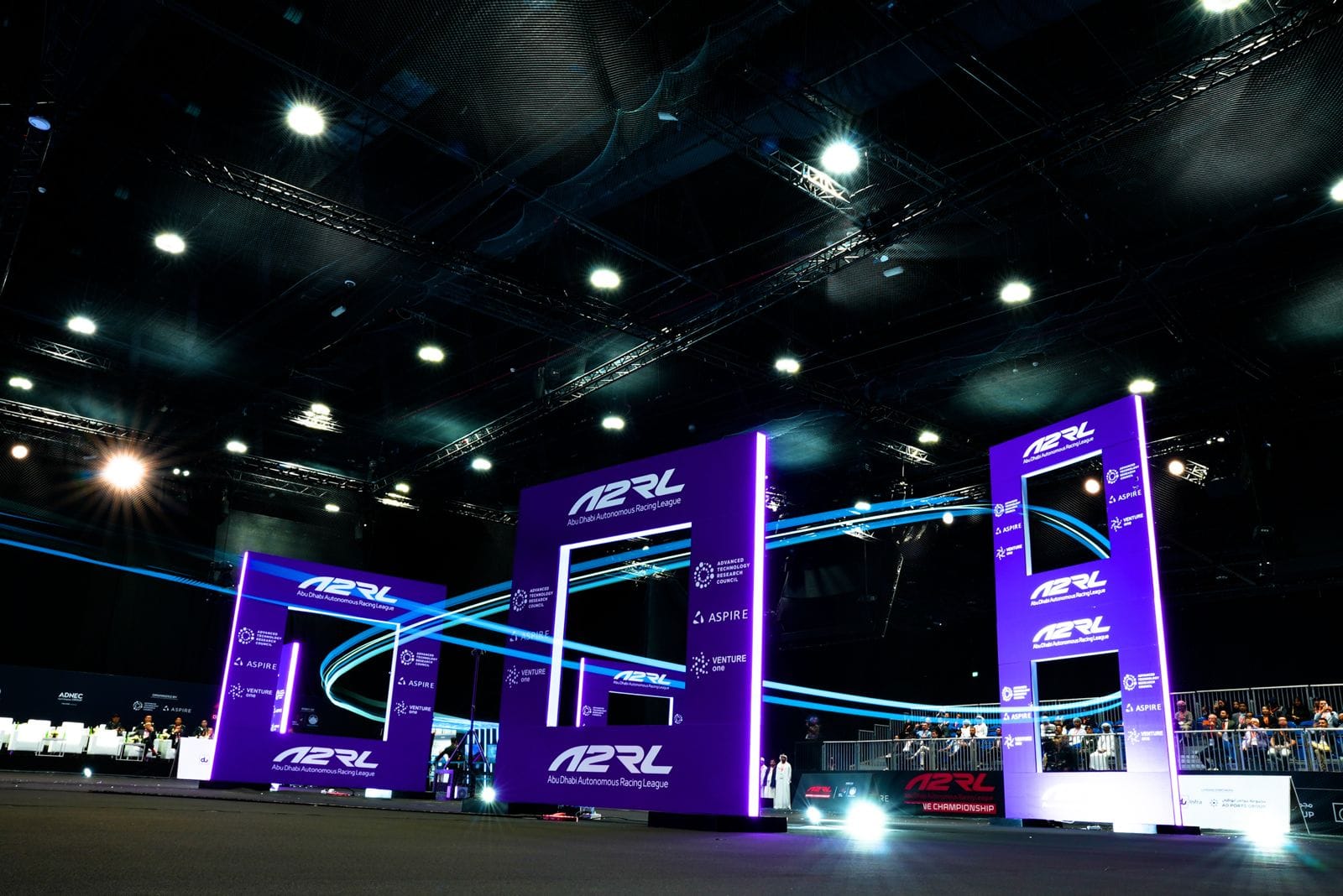
A human pilot narrowly defeated an AI competitor at the Abu Dhabi Autonomous Racing League (A2RL) Drone Championship in January 2026. According to ASPIRE's announcement, World FPV Champion Minchan Kim won a tense final race, but the event showcased massive strides in autonomous flight, proving AI is closing the gap with human instinct.
AI shows its speed
In the pure autonomous speed tests, the machines were dominant. Technology Innovation Institute’s TII Racing set the fastest lap of the championship, clocking in at 12.032 seconds. This result established a new benchmark for high-speed, vision-based autonomy.
Giovanni Pau, Technical Director at TII Racing, said the result reflects the team's software development. "Performing at this level in a pure autonomy challenge shows what disciplined, vision-led systems can deliver when pushed to their limits," he stated.
Human vs AI comes down to the wire
The main event was the Human vs AI showdown, a best-of-nine battle between Minchan Kim and TII Racing's AI. The contest was pushed to its limit, with the score tied at four wins each heading into the final race.
In the decisive run, Kim held his nerve and his lead. The autonomous drone, pushing to keep pace, struck a gate and could not recover, handing the victory to the human pilot. While the human won, the AI's ability to force a final-race decider shows how close it is to world-champion-level performance.
The catch: racing with one eye open
What makes the AI's performance impressive is the hardware limitation. All autonomous drones competed using only a single forward-facing monocular RGB camera and an inertial measurement unit. No LiDAR, stereo vision, GPS, or external positioning systems were allowed.
This minimal sensor setup is designed to mirror what a human pilot sees. It forces performance gains to come from software and algorithmic improvements, not from more complex sensors. It’s a direct, like-for-like comparison that has real-world relevance for future commercial drone delivery and logistics.
A testbed for Abu Dhabi's AI future
Beyond the competition, ASPIRE positions the A2RL Drone Championship as a public science testbed. The goal is to accelerate research into autonomous systems by exposing them to extreme conditions. The event provides clear benchmarks that can inform real-world applications in logistics and emergency response.
Stephane Timpano, CEO of ASPIRE, noted the rapid improvement. "Compared to Season 1, teams are achieving higher speeds with greater stability and consistency, driven almost entirely by software advances," he said. This progress reinforces Abu Dhabi’s ambition as a global hub for AI research, though it also highlights the need for companies to keep addressing the UAE's AI skills gap to support this growth.
A2RL Drone Championship: Key Results
The competition awarded a total prize pool of USD 600,000 across several race formats. The primary winners included TII Racing for raw speed, MAVLAB for multi-drone coordination, and Minchan Kim for the human vs AI challenge. The full breakdown of key results is below.
Frequently Asked Questions
What is the A2RL Drone Championship?
The A2RL Drone Championship is a competition in Abu Dhabi that tests advancements in autonomous and human-piloted drone racing. Organised by ASPIRE, it features multiple race formats designed to push the limits of AI-driven flight technology.
Who won the AI Speed Challenge at A2RL?
TII Racing won the AI Speed Challenge by setting the fastest autonomous lap time of the event. Their AI-powered drone completed the circuit in just 12.032 seconds, establishing a new performance benchmark for the championship.
Who won the Human vs AI finale at A2RL?
World FPV Champion Minchan Kim won the Human vs AI finale. He defeated the AI competitor from TII Racing in a tense best-of-nine series that went to a final, decisive race after being tied at four wins each.
What is the significance of the A2RL Drone Championship for AI development?
The championship acts as a public testbed to accelerate autonomous systems research. It pushes AI to perform in extreme conditions, creating benchmarks for real-world applications like logistics and reinforcing Abu Dhabi's position as an innovation hub.
What sensors were used by the autonomous drones in A2RL?
All autonomous drones competed with a minimal sensor setup. They were only permitted to use a single forward-facing monocular RGB camera and an inertial measurement unit, with no LiDAR, GPS, or stereo vision allowed to aid navigation.
Written by

Subscribe to our newsletter
Subscribe to our newsletter to get the latest updates and news











Member discussion