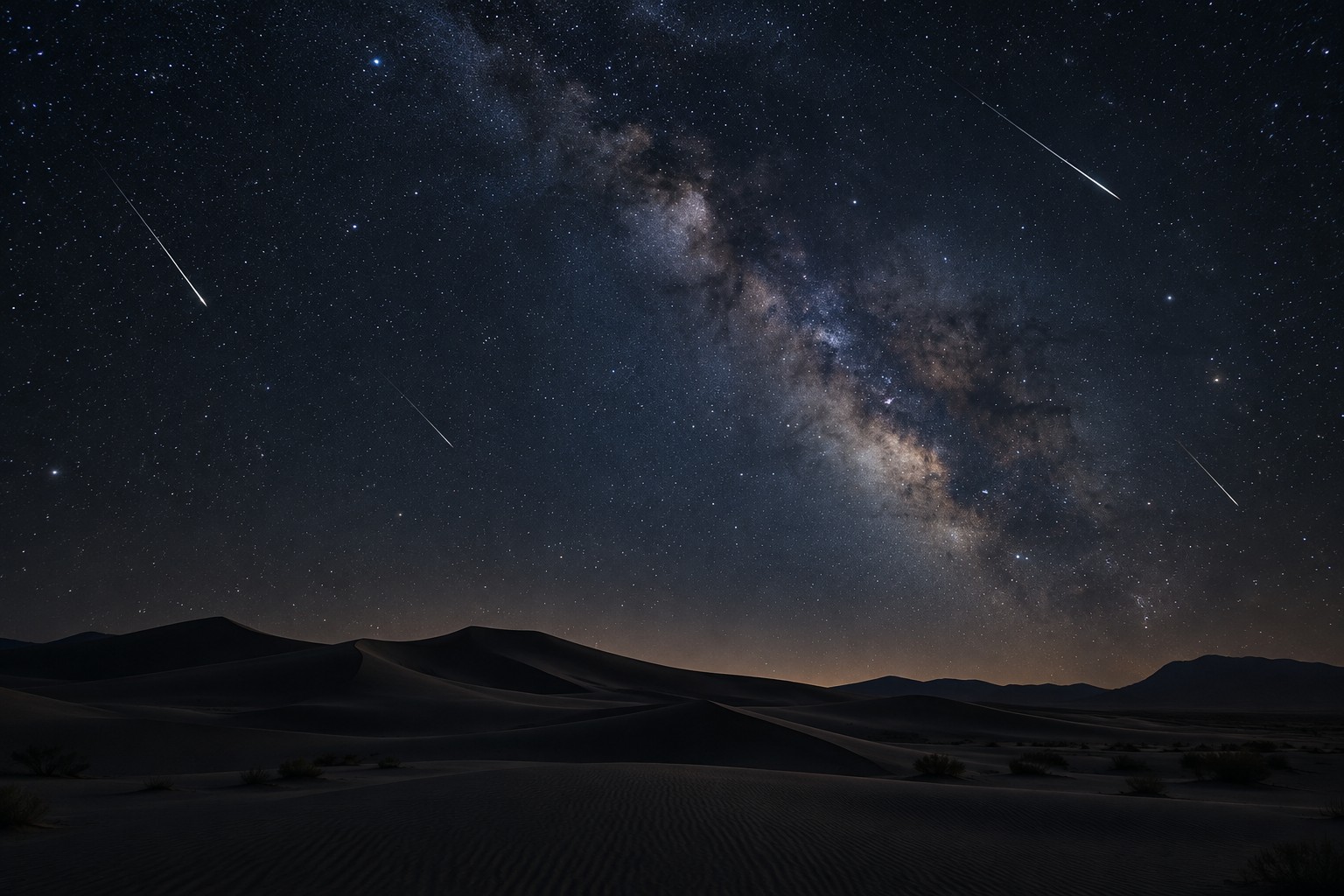
The Orionids meteor shower peaks over the UAE on the night of 21–22 October 2026, and a bright Moon will wash out part of it. The best window for casual watchers is the early hours of 22 October, after the Moon sets.
What’s On reports the shower will be visible from 21 to 22 October. The meteors come from debris shed by Halley’s Comet, and the shower is named for the constellation Orion, where the meteors appear to originate. Most grains are about the size of sand, according to What’s On, but they hit the atmosphere at tens of kilometres per second.
What to expect from the sky
NASA describes the Orionids as bright and fast, travelling at about 66km per second. That speed can leave glowing trains that last for seconds to minutes, and occasionally produce fireballs. NASA says the shower is best seen in the hours after midnight.
Don’t expect a meteor storm, though. Dubai Astronomy Group puts the peak at around 20 meteors per hour under ideal conditions and warns that the Moon’s brightness may hide the fainter ones. UAE stargazing site Skydust calculates moonset in Dubai at about 02:27 and astronomical dawn at 05:04, which leaves roughly 03:00 to 05:00 on 22 October as the darkest stretch. In Abu Dhabi, it puts moonset at about 02:31 and dawn at 05:07. Skydust adds that cloud, haze and city glow can cut the count well below the ideal figure.
Where to watch in the UAE
Light pollution matters more than anything else. What’s On suggests Al Qudra in Dubai, Mleiha National Park in Sharjah, or the Al Quaa Milky Way spot in Abu Dhabi. Check access and any entry rules before you drive out, particularly for a night-time visit.
If you prefer a guided session, Dubai Astronomy Group is hosting one in the Al Qudra desert from 10pm on 21 October to 2am on 22 October. Tickets cost AED 150-180. The programme includes a talk on the shower, telescope observation, help with phone astrophotography, and a session on Arabian star lore and sky maps. The organiser says:
- It emails a precise location pin after registration.
- A standard car can reach the site, but taxis and public transport can’t.
- Closed-toe shoes are required on the uneven terrain.
- Seating, water, snacks, and hot drinks are provided, and alcohol, smoking, open flames, and pets aren’t allowed.
The session ends before the Moon sets in Dubai, so it covers the brighter part of the night. Dubai Astronomy Group also says cloud cover is beyond its control.
How to watch
NASA recommends lying flat with as much sky as possible in view and allowing about 30 minutes for your eyes to adapt. Bring a blanket or reclining chair. Skip the telescope, since its field of view is too narrow for meteors, and keep phone screens dim. Meteors can appear anywhere in the sky, so you don’t need to stare at Orion.
When is the best time to watch the Orionids in Dubai?
Skydust’s calculations show the peak night is 21–22 October, and the Moon interferes until it sets at about 02:27 in Dubai. The 03:00-05:00 window on 22 October offers the darkest sky.
How much does the Dubai Astronomy Group event cost?
Tickets run from AED 150 to AED 180 for the 10pm to 2am session at Al Qudra. Children under 13 must come with a ticketed parent.
Do I need a telescope to see the Orionids?
No. You see meteors best with your eyes alone from a dark site, so a mat or chair matters more than optics.