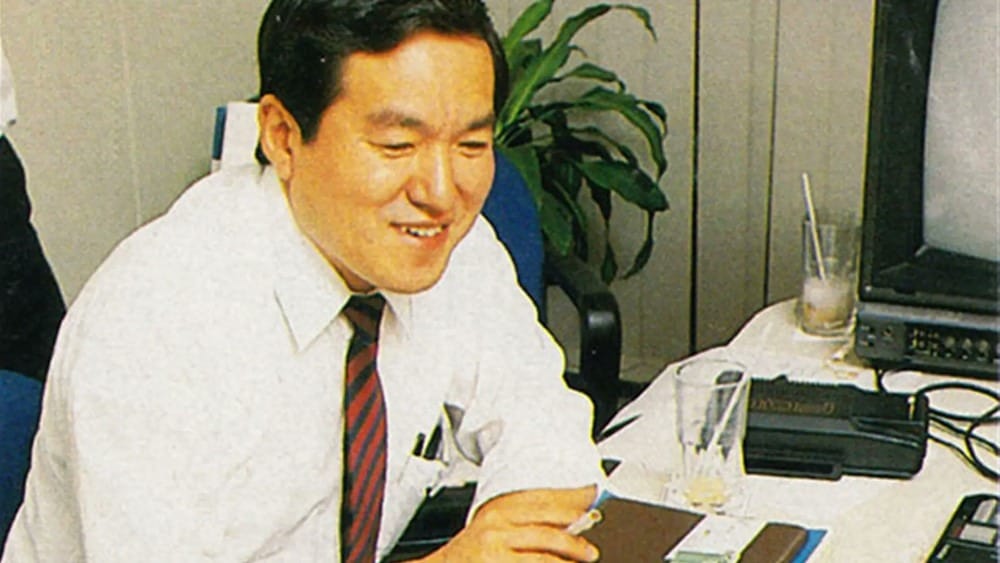
Hideki Sato, the engineer behind virtually every major Sega console and the company’s former president, has died at age 77, according to VGC citing Japanese games outlet Beep21. Sato and his R&D team were responsible for creating Sega’s arcade and home console hardware, including the Master System, Genesis/Mega Drive, Saturn, and Dreamcast. His passing marks the loss of one of gaming’s most influential hardware designers.
A 37-year legacy at Sega
Sato joined Sega in 1971 and spent nearly four decades shaping the company’s hardware direction. He served as acting president between 2001 and 2003 before leaving the company in 2008. His approach to console development was deeply rooted in Sega’s arcade heritage.
“From the beginning, Sega’s home console development has always been influenced by our arcade development,” Sato told Famitsu in a comprehensive interview about Sega’s history. This philosophy would define every console he worked on, bringing cutting-edge arcade technology into homes worldwide.
From 8-bit beginnings to 16-bit dominance
Sato’s first major challenge came with the SC-3000, a PC designed for beginner users. “This was a PC for beginner-level users. At that time, Sega only did arcade games, so this was our first challenge. We had no idea how many units we’d sell,” he recalled.
His most successful creation was the Mega Drive (known as Genesis in North America). “By then, arcade games were using 16-bit CPUs,” Sato explained. “Arcade development was something we were very invested in, so we were always using the most cutting-edge technology there. Naturally, it started us thinking: what if we used that technology in a home console?”
The timing proved perfect: “Two years after we started development, it was done: a 16-bit CPU home console, the Megadrive. The 68000 chip had also recently come down in price, so the timing was right.”
The Dreamcast’s ambitious vision
Sato’s final major console, the Dreamcast, embodied his forward-thinking approach to gaming hardware. The keyword for its development was “play and communication” – a concept that would prove ahead of its time.
“The ultimate form of communication is a direct connection with another, and we included the modem and the linkable VMUs for that purpose,” he explained. “We had also planned to have some sort of linking function with cell phones, but we weren’t able to realise it.”
Even the console’s marketing reflected Sato’s pragmatic understanding of the industry. “Consumers were now used to the raging ‘bit wars’, so even though we knew it was a lot of nonsense, we needed to appeal to them in those terms with the Dreamcast,” he said with characteristic honesty. “And so we marketed it as having a ‘128 bit graphics engine RISC CPU’, even the SH-4 was only 64-bit.”
Industry impact and legacy
Sato’s influence extends far beyond Sega’s own hardware. His emphasis on bringing arcade-quality experiences to home consoles helped establish the foundation for modern gaming. The Dreamcast’s online capabilities and innovative features like the Visual Memory Unit (VMU) were years ahead of their time, predicting trends that would become standard in later console generations.
His passing comes as another significant loss for the gaming industry, following the recent death of David Rosen, Sega’s co-founder, highlighting the end of an era for the company that helped define arcade and console gaming.
Today, Sega continues to expand globally, but the hardware foundation that Sato built remains the bedrock of the company’s gaming legacy.