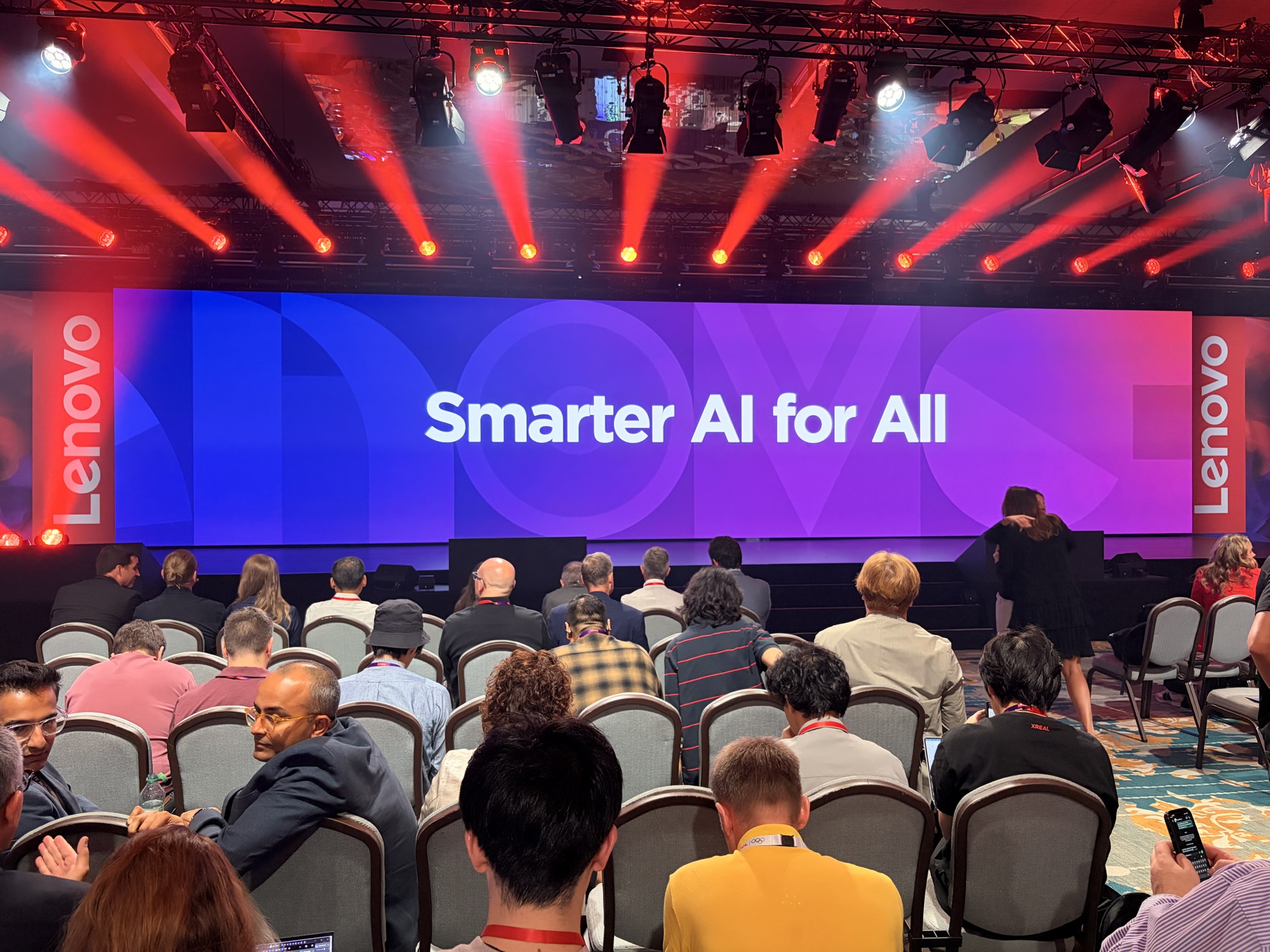
Lenovo and AMD spent half an hour on stage in Berlin this week without announcing a single product. The message from both companies: the “AI PC” label you have been sold for two years is about to stop meaning anything, because the machines are being asked to do something much harder than run a chatbot.
Agentic computing is the next inflection point, and it taxes the whole machine
Frank Azor, corporate vice president for client and graphics marketing at AMD, put a stake in the ground early. “What I’m most excited about right now is agentic computing,” he said, arguing that after years of lab demos, local AI is finally reaching customers in 2026 as orchestrators and harnesses ship.
Chatbots were, in Azor’s framing, an accelerator story — how fast a GPU can push tokens back at you. Agents are not. “Agentic computing is a solution story,” he said. “It puts an enormous amount of demand on the entire PC — the CPU, the GPU, the NPU, the memory, and overall the user experience that it delivers.”
He placed it alongside Windows, multimedia and the internet as one of the handful of shifts that reset how PCs are used, and predicted the way we interact with computers will be “drastically different over the next 12 to 36 months than how we’ve interfaced with it over the last thirty years.”
That timeline should be treated with skepticism any vendor forecast deserves. The architectural claim is correct: an agent that plans, calls tools and runs in the background hammers memory bandwidth and sustained CPU performance in a way that a quick chat query never did. That is why the next round of laptop marketing will be about the whole platform rather than a single TOPS number on a sticker.
The buying advice hidden in the pitch: AI PCs are not one thing
The most quotable moment was Azor conceding that AI capability now varies as sharply across a price list as graphics performance always has.
On an entry-level machine, he said, users will “maybe be able to run one agent at a time”, with smaller models and correspondingly lower precision. At the other end — a Lenovo workstation, in his example — buyers can run multiple agents at once and much larger local models. He referred to local models “in the billions or maybe even trillions of parameters” and pointed to the following day’s keynote for detail, so file that upper figure as a claim awaiting proof rather than a spec.
Then came the honest bit: “An AI PC is not going to be a one-size-fits-all solution, but a lot of people will market them as such.”
That sentence is the practical takeaway for a UAE buyer walking into a store where every laptop on the shelf has an AI sticker on the palm rest. Two machines carrying identical badging can differ enormously in what they will actually run locally, and the badge does not tell you which is which. Until vendors publish something more useful than a marketing tier, the questions to ask are boring and specific: how much memory, how fast, and how long can the chassis hold its clocks before it throttles. Our picks in the best laptops you can buy in the UAE are graded on exactly those fundamentals.
Ketchen on the marketing problem: sell the outcome, not the silicon
Lenovo’s side of the conversation came from Emily Ketchen, Lenovo’s chief marketing officer and senior vice president for its Intelligent Devices Group and international markets — the division that spans PCs, AI software and Motorola. Her argument was that the industry keeps selling capability to people who are buying outcomes.
“The story has to help me understand how I save time, how I’m more productive, how my creativity is better,” she said, adding that most consumers are “looking for the key benefit, not the speed and the feed.”
She also made the case for judging devices as an ecosystem rather than one box at a time, describing a day that runs from enterprise work through a small-business board meeting to family life, moving between a Motorola phone, a tablet and a business laptop. “The technology needs to meet me, not me meeting the technology,” she said.
It is a marketer’s framing, and it conveniently describes a portfolio Lenovo happens to sell end to end. It is also, for once, aimed at the right problem. Spec-sheet marketing has been useless for explaining AI features to normal buyers, and the vendors know it.
Blurred users, and one gaming detail worth noting
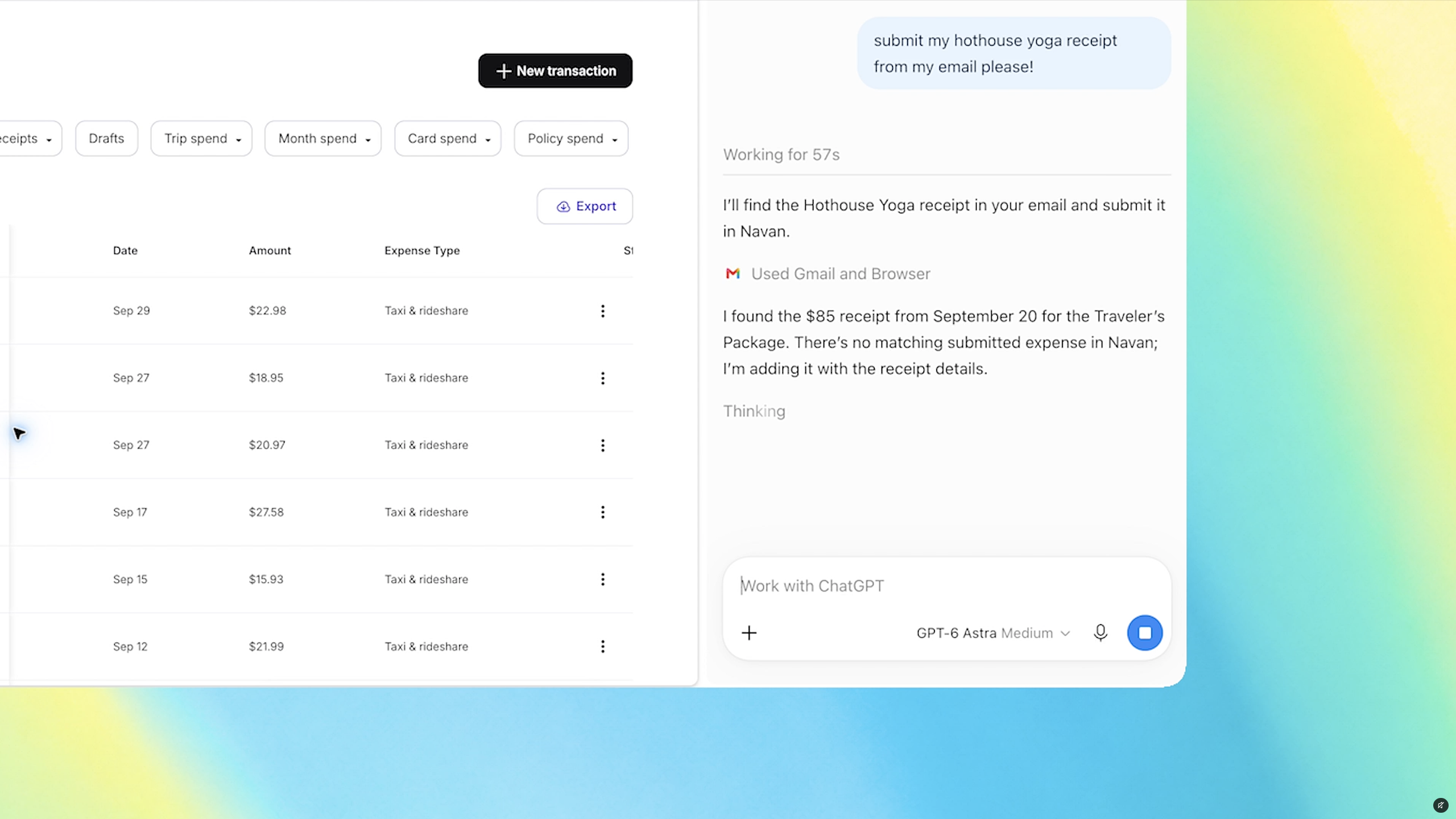
The panel’s other theme was that the old personas — gamer, student, creator, worker — no longer sort neatly into separate machines. Azor’s own example: he now plays games on the enterprise laptop he travels with, switching on AMD’s FSR 4 upscaling when performance dips, and on the same machine runs agentic workloads through tools he named as CoWork, ChatGPT desktop and Codex.
Nobody was doing that on a corporate ultrabook five years ago. It is the clearest evidence for the panel’s broader claim, and it is the reason “which laptop is for me” is getting harder to answer rather than easier.
What this means before you buy
Nothing here changes a purchase you make this week. What it does change is the question you ask about a purchase you make next year. If agents are going to run locally and continuously, the components that decide whether that is pleasant or miserable are memory capacity, memory bandwidth and sustained thermal performance — not the AI logo.
Both companies said the detail would come in the keynote that followed. We will hold them to it, and to the promise that they will explain those differences to customers rather than flatten everything into one badge.
Frequently asked questions
What is agentic computing on a PC?
Software that plans and carries out multi-step tasks for you, calling tools and running in the background, rather than answering one prompt at a time. It uses the CPU, GPU, NPU and memory together, which is why AMD frames it as a whole-system workload rather than a GPU one.
Does a cheap AI PC run the same AI features as an expensive one?
No. On AMD’s own account, entry-level machines will typically run a single agent with a smaller, less precise model, while workstation-class hardware can run several agents and much larger local models at once. The AI branding on the box does not distinguish between them.
Do I need an AI PC to use AI in the UAE?
Not for cloud tools, which run on any modern machine with a connection. Local processing matters when you want tasks to run offline, keep data on the device, or run continuously without a subscription burning through cloud credits.
What is FSR 4?
AMD’s AI-assisted upscaling technology, used to lift frame rates in supported games. Azor cited it as what makes gaming viable on a thin business laptop away from a power socket.